
Chuka Soba Fukamidori belongs to Japan’s serious ramen-counter tier: small, low-priced, tightly formatted and judged by repeat recognition rather than ceremony. Its Tabelog Ramen EAST “Tabelog 100” selections from 2021 through 2025, 3.89 score and eight-seat counter place it in the category where sourcing, broth discipline and queue patience matter more than comfort extras.
Pearl is the En Primeur Club membership app — saves, bookings, and concierge access live there. Same editors, same standards.
- Address
- 297-11 Imaizumi, Higashimatsuyama, Saitama 355-0042, Japan
- Phone
- +81 49-297-5192
- Website
- yotsubasoba.com
 Saves & bookings on Pearl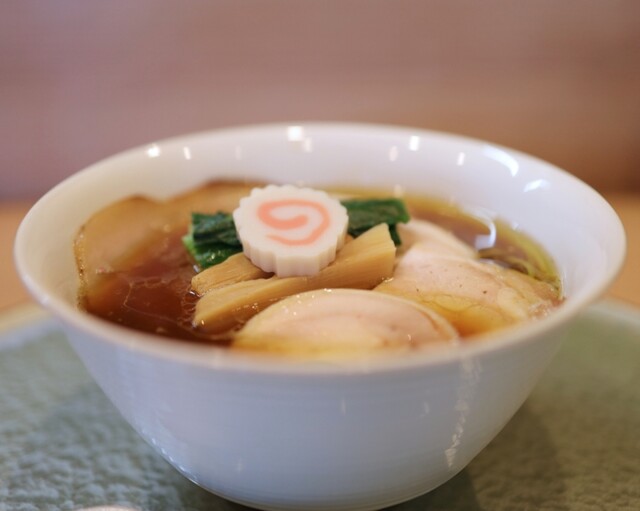
The approach to a serious suburban ramen counter is rarely theatrical. The cues are practical: a short frontage, cars turning in, a line that moves according to bowls rather than reservations, and a room built around speed, heat and concentration. In that setting, ramen is judged less by décor than by extraction, noodle handling and the kitchen’s ability to repeat a bowl across a compressed service window. Chuka Soba Fukamidori fits that model: eight counter seats, no private-room padding, and a reputation measured through sustained Tabelog Ramen EAST “Tabelog 100” selections from 2021 through 2025.
That matters because Japan’s ramen culture has split into several tiers. There are station-area utility shops, regional comfort specialists and destination counters where the price remains modest but the scrutiny is severe. The last group can look deceptively casual to visitors used to tasting-menu pricing. A bowl in this category may cost a fraction of a luxury dinner, yet the competitive field is unforgiving: broth clarity, fat balance, tare precision and noodle texture decide whether a shop becomes a repeat stop or a curiosity. A 3.89 Tabelog score in ramen is not decoration; it signals a shop operating inside a crowded, opinionated public ranking culture.
A counter format built for sourcing, not ceremony
The name is not the main story here. The format is. Counter-only ramen shops strip the meal back to a sequence that exposes ingredient choices with little cover. Stock, seasoning base, aroma oil and noodles have to carry the room because there is no multi-course progression and no wine list to blur the verdict. Ingredient sourcing in this context is less about a farm-name recital than about whether the kitchen’s raw materials can sustain depth, aroma and finish in a single bowl.
Chuka soba, as a category, usually reads cleaner and more restrained than heavier modern ramen styles. It gives less space for excess: poultry, pork, seafood, soy-based tare or salt seasoning can all appear across the broader genre, but the successful bowls tend to make sourcing legible through balance rather than weight. That is why small counters connected to respected ramen groups matter. Fukamidori is identified as a new brand of Chinese noodles from the Yotsuba orbit, placing it near Chuka Soba Yotsuba in the comparison set rather than among casual noodle stops such as Hon Teuchi Udon Shoji, amrit, Jinenjo or Kagacha. The point is not family-tree trivia; it is an indicator of production standards in a category where broth work and ingredient procurement decide the ceiling.
The room’s eight-seat capacity sharpens that reading. Small ramen counters do not have the margin for broad menus or leisurely pacing. They work when the kitchen can prepare a narrow range with consistency and when guests understand the compact social contract: order, eat, move. For travelers, that makes the experience culturally specific without being precious. The meal is short, but the craft is not casual.
Why repeated Tabelog 100 recognition changes the calculation
Tabelog’s Hyakumeiten lists function differently from Western star systems. They reward category depth and local consensus across genres where specialist knowledge is high. Ramen is especially dense because a shop can be judged against dozens of nearby counters serving at similar prices. Fukamidori’s repeated appearance on the Ramen EAST list from 2021 through 2025 gives it a stronger signal than a single-year mention. It suggests not a spike of novelty, but enough consistency to remain visible after the opening effect faded.
That is the useful lens for deciding whether to prioritise it. The shop opened in 2020, so its recognition has largely developed in the post-opening years rather than resting on heritage. In ramen, that is meaningful: the first wave of attention can follow a known affiliation, but repeat attention usually depends on execution. The low ticket also changes the value equation. Compared with premium sushi, kaiseki or hotel dining, ramen’s serious tier asks for less money and more patience. The trade-off is comfort: compact seating, a focused menu structure and a service rhythm built around turnover.
For EP Club readers mapping a wider Japan itinerary, this is the kind of stop that explains how everyday price points can hold specialist ambition. It pairs intellectually with more formal Japanese dining, not because the formats resemble each other, but because both rely on sourcing discipline and repetition. In Matsuyama planning, compare the broader regional dining picture through Bettei Oborozukiyo, Dogo Kaishu (Japanese Cuisine), Hinode, Ino and Kiri no Mori Kashi Kobo Matsuyama ten. For city-wide context, use Our full Matsuyama restaurants guide, Our full Matsuyama hotels guide, Our full Matsuyama bars guide, Our full Matsuyama wineries guide and Our full Matsuyama experiences guide.
Who should make the detour
This is a specialist ramen decision, not a broad hospitality decision. The strongest case is for diners who care about how a low-priced bowl can carry serious sourcing and technique, and who do not need a long meal to feel that a stop has earned its place. Counter ramen also suits solo diners better than many Japanese formats; the seat plan rewards focus, and the absence of reservations keeps the meal democratic, if less predictable.
The weaker case is for travelers seeking a lingering evening, group comfort or a fully scripted English-language dining experience. The practical posture should be simple: treat the shop as a targeted meal, not a flexible social venue. Its recognition, compact capacity and cash-only payment setup point toward a classic ramen rhythm where planning reduces friction but does not turn the visit into a luxury appointment.
For readers comparing Japan’s specialist dining across regions, the broader EP Club map also includes -Grilled beef Sukiyaki- KAMAKURA TANUKIAN 鎌倉 たぬき庵 in Kamakura. 鮪と炭火焼き うお炭 秋葉原店 in Tokyo.cafe in Osaka.know in Kumamoto, (Shoku) Vietnam in Kawasaki, [Curry Senmon Ten] Maruyama Kyoju. in Sapporo, plus overseas Japanese-leaning references such as Jōdo Saké Bar in Los Angeles and Onigiri Time in Pasadena. Fukamidori’s place in that wider conversation is clear: small format, modest spend, serious repetition.
At-a-Glance Comparison
Comparable venues by cuisine and price in the same metro.
| Venue | Cuisine | Price | Notes |
|---|---|---|---|
| Chuka Soba FukamidoriThis venue — the venue you are viewing | Ramen (Chuka soba) | $ | Not listed |
| Oborozukiyo (別邸 朧月夜) | Seasonal Kaiseki | $$$$ | Dogo |
| ベトナムフード | Traditional Vietnamese | $ | Katsuyama |
| 上海点心 豫園 | 上海点心専門店 | $$ | 朝生田町 |
| Kotori | Japanese Udon | $ | Minatomachi |
| Shokudo Hasegawa | Traditional Kitakata ramen shop | $ | Kitakata |
Recognition history
Dated appearances from independent guides and award organizations, with the underlying list record or original source where available.
Tabelog 100 #95 · No. 95
Tabelog · Tabelog 100 - Ramen - EAST - 2025
Continue exploring
More in Matsuyama
Restaurants in Matsuyama
Browse all →



Bars in Matsuyama
Browse all →




Hotels in Matsuyama
Browse all →



Wineries in Matsuyama
Browse all →
At a Glance
- Cozy
- Modern
- Solo
- Casual Hangout
- After Work
- Family
- Chefs Counter
- Standalone
- Local Sourcing
Current opening hours
- Monday
- 11 AM–3 PM
- Tuesday
- 11 AM–3 PM
- Wednesday
- 11 AM–3 PM, 5:30–8 PM
- Thursday
- 11 AM–3 PM, 5:30–8 PM
- Friday
- 11 AM–3 PM, 5:30–8 PM
- Saturday
- 11 AM–3 PM, 5:30–8 PM
- Sunday
- 11 AM–3 PM, 5:30–8 PM
Hours can change for holidays and private events. Last verified .
Small counter-only ramen shop with a simple, modern design and a relaxed, focused atmosphere centered on the craft of the noodles and broth.