
Tabelog Bronze #135
Our verdict
Sushi Ino holds consecutive Tabelog Bronze awards (2025 and 2026) and repeated selection to the Tabelog Sushi WEST 100 list, making it the most decorated sushi counter in Matsuyama. The ten-seat counter on the third floor of a Nibancho building serves Edo-style nigiri built on Ehime's local fish. Dinner runs JPY 20,000–29,999; lunch, reservation-only, comes in at JPY 10,000–14,999.

Pearl is the En Primeur Club membership app — saves, bookings, and concierge access live there. Same editors, same standards.
- Address
- MITSUWA320, 3F, 1 Chome-10-9 Nibancho, Matsuyama, Ehime 790-0002, Japan
- Phone
- +81 89-948-9986
- Hours
- Mon ClosedTue–Sun 12–2 PM, 6 PM–12 AM
- Website
- sushi-ino.com
- Directions
- Get directions
- Booking
- Book on TableCheck
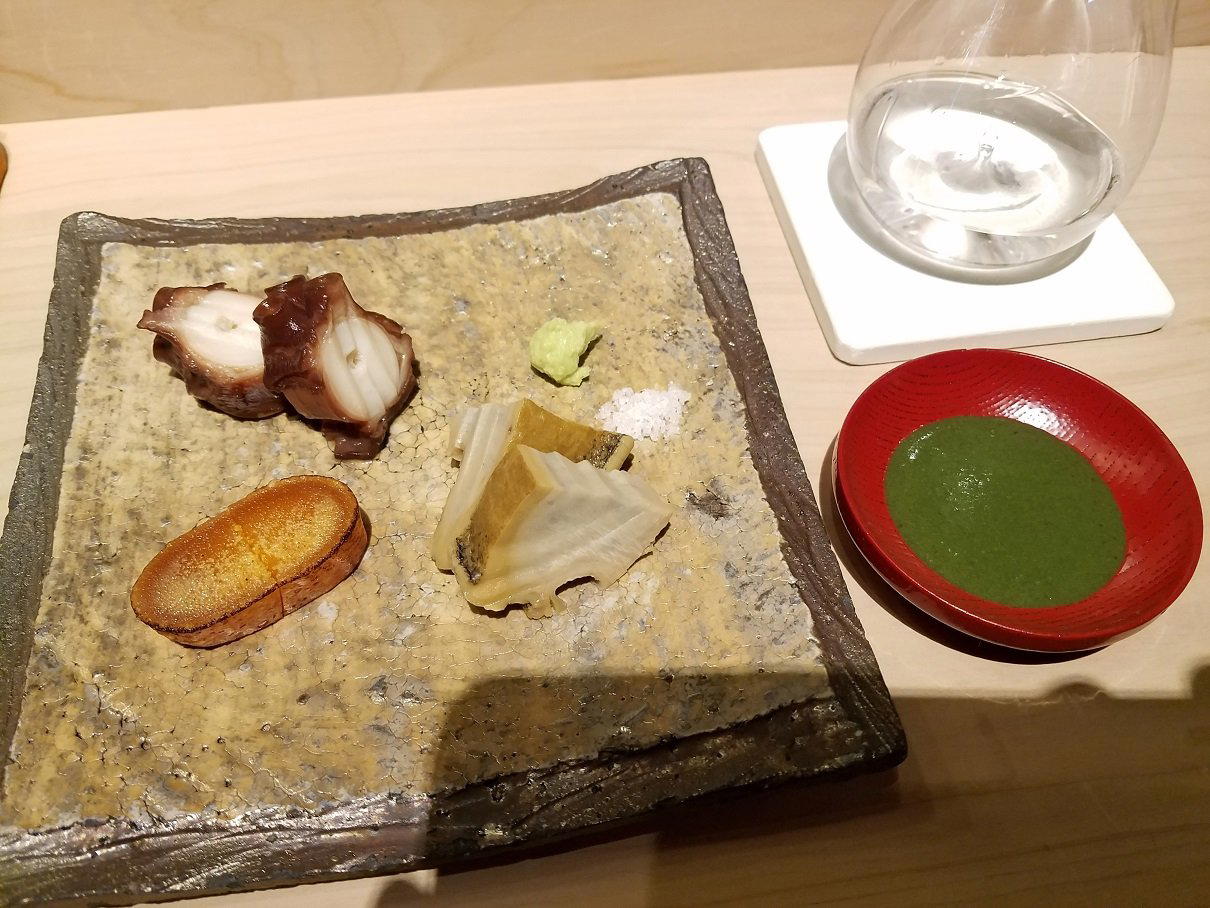
Edo Technique in Shikoku Waters
Japan's dominant sushi narrative centres on Tokyo and Osaka. The premium omakase counter is assumed to exist in a major metropolis, above a fashionable street, inside a city where critics and reservation apps generate constant noise. Matsuyama, Ehime's largest city on the island of Shikoku, sits outside that narrative almost entirely — which is precisely why what the city's most awarded dining room is doing matters to anyone paying attention to Japanese seafood cuisine beyond the obvious circuits.
The Seto Inland Sea and the fishing grounds off Shikoku's coast produce fish that rarely travel far. Sea bream (tai) is so closely associated with Ehime that the prefecture treats it as a cultural emblem; the local hairtail, horse mackerel, and seasonal shellfish cycle through fishing ports that supply regional kitchens rather than the Tokyo tsukiji distribution chain. Edo-style sushi — the form that emerged in nineteenth-century Tokyo, built on precision-seasoned rice, rapid curing techniques, and fish sourced that morning, carries its own discipline regardless of geography, but when applied to Seto Inland Sea catches, it produces a conversation between a mainland tradition and a regional larder that most of Japan's leading counters simply cannot replicate.
Sushi Ino has occupied its third-floor counter at MITSUWA320, on the corner of Yasaka-dori and Nibancho intersection, since opening in November 2014. The building's ground floor is a sweets shop; the sushi counter is three floors above, ten seats arranged at the counter, no private rooms. The approach to the space tells you something about the register: this is counter sushi in the classic sense, where the distance between diner and the preparation surface is the whole point, and where the absence of a separate dining room signals that the counter itself is the meal.
What Tabelog Recognition Means Here
The Tabelog award system operates on a national scale that treats regional Japan with the same scrutiny it applies to Tokyo. Bronze status in the Tabelog Awards requires a sustained score that places a restaurant among Japan's leading few hundred, nationally ranked. Sushi Ino holds that status for both 2025 and 2026, with a current score of 4.19, and has been selected to the Tabelog Sushi WEST 100 list in 2021, 2022, and 2025. The Sushi WEST 100 is a geographic cut that covers western Japan, a region where the competition includes Osaka and Kyoto counters with decades of reputation behind them.
For comparison, the Tabelog framework that recognises Harutaka in Tokyo or counters in Osaka at the level of HAJIME applies the same reviewer community standards to Sushi Ino. The scores are not inflated by regional weighting. A 4.19 from Matsuyama is the same scoring instrument as a 4.19 from Ginza. That consistency is the reason the Tabelog Sushi WEST 100 carries credibility with the dining community across Japan rather than serving as a consolation bracket for non-metropolitan venues.
The Cultural Logic of Applying Edo Sushi to Shikoku Fish
Edo-mae sushi was developed as an urban fast food in nineteenth-century Edo (present-day Tokyo), dependent on the specific catches of Tokyo Bay. The techniques, vinegar-curing, brief marination in soy, precise temperature management of shari (seasoned rice), were calibrated for the fish of that particular sea. As the form became Japan's dominant sushi tradition, it travelled nationally, and the interesting culinary question became what those techniques produced when applied to different regional catches.
Ehime's fish have a different character. Sea bream from the Uwa Sea carries a delicacy and sweetness that sushi chefs elsewhere actively seek out. The seasonal variety available through Shikoku's coastline gives a counter like Sushi Ino access to ingredients that a Tokyo counter working through the central market system cannot match for freshness or provenance transparency. The stated position, honouring local fish and food culture with Edo-style craftsmanship, describes exactly this tension: a highly formalised mainland technique applied to an ingredient base that the technique was not originally designed for, producing something the originating tradition cannot reproduce.
This same dynamic plays out in western Japan's premium dining more broadly. Restaurants like Gion Sasaki in Kyoto or akordu in Nara work at the intersection of rigorous technical frameworks and hyper-local ingredient access. The resulting cuisine is not a lesser version of a Tokyo model; it is a regionally specific one that makes different arguments about what Japanese cooking can be.
Counter, Sake, and the Structure of the Meal
Ten seats. That is the capacity, and the maximum party for a standard sitting. The venue can accommodate up to twenty for private hire, but in standard operation, the ten-seat counter defines the experience. At that scale, the kitchen has no buffer: every course is prepared against the specific timing of the people sitting in front of it.
The drink programme skews strongly toward sake, which is the appropriate pairing for Edo-style nigiri. The list is described as particular about nihonshu, meaning it goes beyond a token selection; sake pairings at this price point typically move through several different brewing regions and styles across the course of a counter meal. Wine and shochu are available for guests who prefer them, but the sake emphasis reflects the counter's commitment to the culinary tradition it is working within.
Pricing sits at JPY 20,000–29,999 for dinner and JPY 10,000–14,999 for lunch, with the average review-based dinner spend landing in the JPY 20,000–29,999 range. A 3% service charge applies. Credit cards are accepted for dinner; lunch payments are cash only. The cancellation policy carries weight: cancellations within two days of the reservation date incur a 100% fee, and cancellations three days prior incur 50%. These are standard terms for a small-counter format where a no-show removes a meaningful fraction of that evening's covers.
Finding Ino and Planning the Visit
Sushi Ino opens for dinner Tuesday through Sunday from 18:00, with a second seating from 20:30. Lunch (Wednesday through Sunday, 12:00–14:00) is reservation-only. The counter is closed on Mondays. The restaurant is approximately 229 metres from Okaido, Matsuyama's covered shopping arcade, in the MITSUWA320 building on the Yasaka-dori and Nibancho intersection; the building's first floor is a confectionery shop. Reservations can be made online through the venue's website at sushi-ino.com or by phone at 089-948-9986 (phone lines are available 10:00 AM to noon, outside service hours). No parking on-site; paid parking is available nearby. The dress code asks guests to avoid strong fragrances and tank tops. The counter is non-smoking, with an ashtray at the entrance for use outside.
Matsuyama is accessible from Osaka via the JR limited express and Shimanami Kaido routes, or by short flight into Matsuyama Airport. For a broader orientation to dining and staying in the city, see our full Matsuyama restaurants guide, our full Matsuyama hotels guide, and for the full picture of the city's food and drink scene, our Matsuyama bars guide, Matsuyama wineries, and Matsuyama experiences. Locally, the kaiseki counter Dogo Kaishu (JPY 15,000–19,999) represents the city's Japanese cuisine offer at a comparable price tier, while Kurumasushi provides another reference point within Matsuyama's sushi scene. For the broader regional picture, counters like Goh in Fukuoka, 1000 in Yokohama, and 6 in Okinawa illustrate what the Tabelog recognition system looks like across Japan's non-Tokyo dining geography. Outside Japan, the fish-forward commitment at the counter level finds its clearest Western analogue in the programme at Le Bernardin in New York City, while the Korean precision counter Atomix in New York City operates a comparable small-format, high-scrutiny model.
Frequently asked questions
Is Ino child-friendly?
At JPY 20,000–29,999 per head for dinner across ten counter seats, Sushi Ino is structured around adult dining. The counter format, course-only service, and 3% service charge position it as a focused omakase experience rather than a flexible family meal. Tabelog reviewers consistently log it under solo dining and friends occasions.
How would you describe the vibe at Ino?
Ten seats, counter-only, non-smoking throughout, and a drinks list weighted toward nihonshu — the format signals concentration over conviviality. It sits on the third floor of the MITSUWA320 building in Nibancho, removing it from street-level noise. The venue's own notes flag a preference for guests without strong perfumes, which tells you something about the sensory seriousness at play.
Is Ino Michelin-listed?
Ino has received recognition including: {"Year":"2026","Award Source":"Tabelog","Award Type":"The Tabelog Award","Award Group":"bronze","Award Group Rank":"135","Restaurant Name":"Sushi Ino","Score":"4.19","Budget":"Dinner: JPY 20,000 - JPY 29,999; Lunch: JPY 10,000 - JPY 14,999"….
What should I eat at Ino?
The counter course is the visit. Sushi Ino operates omakase, sequencing the meal around the day's catch with an explicit emphasis on Ehime fish and local food culture applied through Edo-style technique. Dinner runs JPY 20,000–29,999; lunch (Wednesday through Sunday, reservation only) comes in at JPY 10,000–14,999 and does not accept credit cards.
When can I go to Ino?
Hours at Ino: ■Business hours[Tuesday]From 18:00From 20:30[Wednesday - Sunday]12:00 - 14:00 (Reservation only)From 18:00From 20:30*Credit cards are not accepted for lunch.■Closed onMonday.
What's the address for Ino?
Ino is located at MITSUWA320, 3F, 1 Chome-10-9 Nibancho, Matsuyama, Ehime 790-0002, Japan, Matsuyama.
Booking and Cost Snapshot
Comparable venues nearby, for context on price, style, and recognition.
| Venue | Cuisine | Price | Awards | Notes |
|---|---|---|---|---|
| InoThis venue — the venue you are viewing | Edomae-Style Sushi | $100–150 | Tabelog Bronze #135 | Not listed |
| Sumishin | Traditional Yakitori & Chicken Dishes | $50–100 | Tabelog 100 #51 | Okaido, Traditional Yakitori & Chicken Dishes |
| Yoshokuya Shii | Japanese-style Western Cuisine (Yoshoku) | $10–20 | Tabelog 100 #58 | Sambancho, Japanese-style Western Cuisine (Yoshoku) |
| Kurumasushi | Modern Edomae Omakase | $150–200 | Tabelog Silver #64 | Ichibancho, Modern Edomae Omakase |
| No Name | Italian (French influences) | $100–150 | Tabelog Bronze #321 | Matsuyama, Traditional Matsuyama Regional Cuisine |
| Shanghai Tenshin Yoen | Casual Dim Sum & Chinese Comfort Food | $20–30 | Tabelog 100 #29 | .null, Casual Dim Sum & Chinese Comfort Food |
Recognition history
Dated appearances from independent guides and award organizations, with the underlying list record or original source where available.
Tabelog Bronze #135
Tabelog
Full recognition history (3 entries)
Tabelog 100 #61 · No. 61
Tabelog · Tabelog 100 - Sushi - WEST - 2025
Tabelog Bronze
Tabelog
Continue exploring
More in Matsuyama
Restaurants in Matsuyama
Browse all →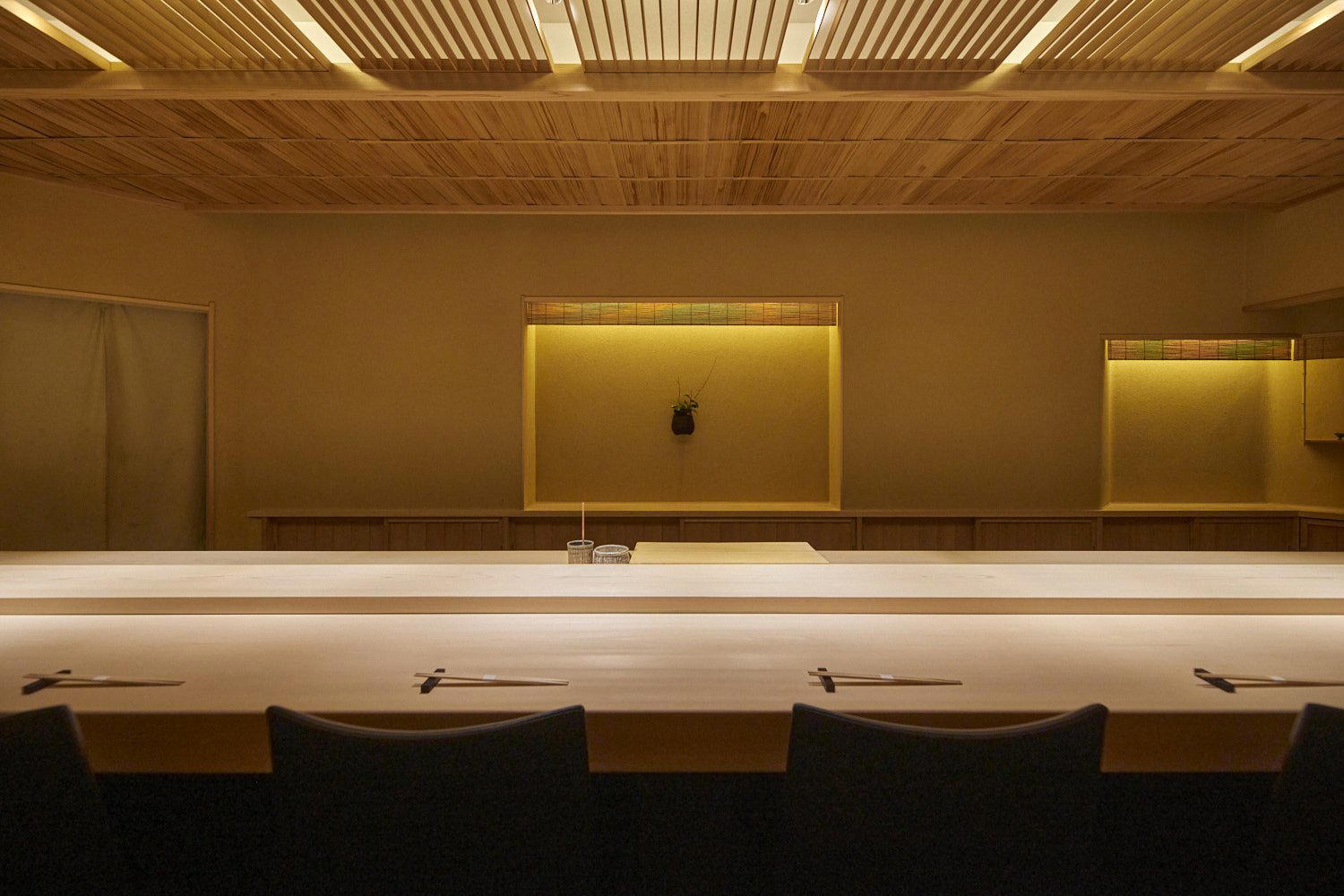
Details
- Intimate
- Serene
- Elegant
- Date Night
- Special Occasion
- Chefs Counter
- Sake Program
- Local Sourcing
- Counter Dining
- A La Carte
- Sake
Current opening hours
- Monday
- Closed
- Tuesday
- 12–2 PM, 6 PM–12 AM
- Wednesday
- 12–2 PM, 6 PM–12 AM
- Thursday
- 12–2 PM, 6 PM–12 AM
- Friday
- 12–2 PM, 6 PM–12 AM
- Saturday
- 12–2 PM, 6 PM–12 AM
- Sunday
- 12–2 PM, 6 PM–12 AM
Hours can change for holidays and private events. Last verified .
Serene and relaxed with luxurious, inviting interior, offering a calm adult space.