
Hinode puts Matsuyama’s okonomiyaki culture into a small counter format rather than a broad casual-dining template. Its Tabelog Okonomiyaki 100 selections from 2018, 2019, 2022, 2023, 2024, and 2025 give it a national signal in a category usually judged through local loyalty, repeat visits, and value.
Pearl is the En Primeur Club membership app — saves, bookings, and concierge access live there. Same editors, same standards.
- Address
- 11-8 Misugimachi, Matsuyama, Ehime 791-8065, Japan
- Phone
- +81 89-952-3676
- Website
- japoncompany.business
- Directions
- Get directions
 Saves & bookings on Pearl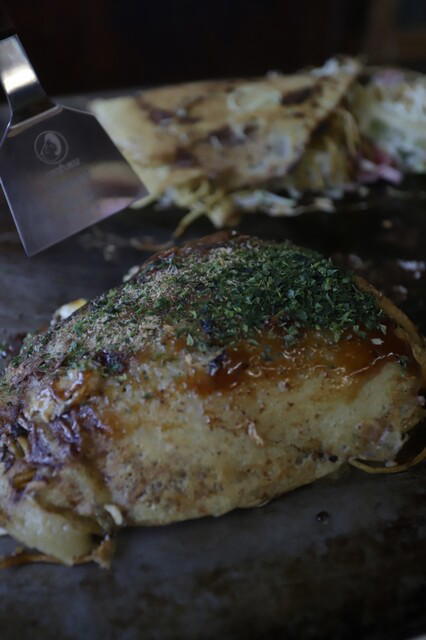
Approaching Mitsu, Matsuyama begins to feel less like a prefectural capital and more like a port town with its own eating rhythm. Okonomiyaki suits that scale: batter, cabbage, heat, sauce, and timing, handled close enough to the counter that the meal reads as craft rather than ceremony. In Ehime, where seafood, citrus, and inland produce shape much of the broader food identity, a small okonomiyaki room gives a different lesson in sourcing. The point is not luxury ingredients. The point is how ordinary staples become highly judged when the margin for error is narrow.
Hinode belongs to that compact, local-first end of Japanese dining where price, repetition, and trust matter more than spectacle. The restaurant’s place on Tabelog’s Okonomiyaki 100 list in 2025, after earlier selections in 2018, 2019, 2022, 2023, and 2024, is useful because the category is not dominated by formal service cues. Okonomiyaki recognition tends to reward consistency: batter structure, cabbage handling, griddle control, sauce balance, and the pace at which a small kitchen can feed regulars without flattening the food into routine.
Okonomiyaki as a sourcing test, not a comfort-food cliché
Okonomiyaki is often translated too simply as a Japanese savory pancake, which undersells the decision-making behind it. The dish depends on inexpensive inputs, but that makes sourcing and preparation more exposed, not less. Cabbage must hold sweetness and crunch under heat. Batter needs enough structure to bind without becoming heavy. Proteins and toppings have to sit inside the griddle sequence rather than dominate it. In cities such as Osaka and Hiroshima, regional styles become identity markers; in Matsuyama, the category reads more intimate, folded into neighborhood eating rather than tourist performance.
That is why a five-seat counter matters editorially. Small capacity changes the contract between kitchen and diner. Food is not buffered by a large dining room, a long menu, or a beverage program. The griddle becomes the operating system, and each order depends on attention rather than volume. This is also where ingredient sourcing becomes visible in a practical sense: not through provenance recitations, but through the way basic materials behave under direct heat. A place like this is judged on whether the everyday tastes deliberate.
Within Matsuyama’s broader dining map, the comparison is useful. Yoshokuya Shii sits in a higher casual price band, Teuchi Soba Maro works in a noodle tradition where flour, water, and handwork define the meal, and Kiri no Mori Kashi Kobo Matsuyama ten shows the city’s sweet side at a lower spend. Okonomiyaki occupies another lane: fast enough for an everyday meal, technical enough to earn specialist scrutiny. That tension explains why national recognition in this genre carries weight.
The Mitsu counter and the value of restraint
Matsuyama dining is often discussed through Dogo, castle-town history, and the refined end of ryokan cuisine, but the city’s smaller stations tell a more useful story for food travelers. Mitsu has a working-neighborhood feel, and counter restaurants in that setting ask for a different kind of attention. The room is not built around lingering performance. It is built around proximity: the cook surface, the order, the waiting rhythm, the handoff.
Hinode’s pricing places it in a bracket where repeatability is part of the appeal. That separates it from destination tasting-menu logic and from hotel-adjacent dining around more formal itineraries. For travelers pairing a city stay with food stops, it works as a corrective to over-planned meals. A day that includes Dogo dining, sweets, and a counter lunch gives a clearer reading of Matsuyama than a sequence of polished rooms alone. For that broader circuit, see Dogo Kaishu (Japanese Cuisine), Ino, Bettei Oborozukiyo, and Chuka Soba Fukamidori.
The absence of chef mythology is part of the appeal. Okonomiyaki does not need a grand personal narrative to be serious. Its seriousness comes from repetition, speed, ingredient behavior, and the local audience’s tolerance for mediocrity, which is usually low in specialist categories. A Tabelog score of 3.53 and repeat Okonomiyaki 100 selections are not decorative facts; they put the restaurant inside a national conversation about a dish that often stays local. That is a different kind of prestige from Michelin-style formality, and it is more relevant to this category.
How to fold it into a Matsuyama food day
The strongest way to read Matsuyama is by moving between formats rather than chasing a single grand meal. Start with the city’s everyday specialists, then widen into sweets, ryokan dining, bars, and neighborhood restaurants. The full city index is useful for that spread: Our full Matsuyama restaurants guide, Our full Matsuyama hotels guide, Our full Matsuyama bars guide, Our full Matsuyama wineries guide, and Our full Matsuyama experiences guide.
For readers building a wider Japan itinerary around humble formats with serious followings, the useful comparison is not only other okonomiyaki shops. It is the broader class of places where narrow specialization does the heavy lifting: -Grilled beef Sukiyaki- KAMAKURA TANUKIAN 鎌倉 たぬき庵 in Kamakura. 鮪と炭火焼き うお炭 秋葉原店 in Tokyo.cafe in Osaka.know in Kumamoto, (Shoku) Vietnam in Kawasaki, and [Curry Senmon Ten] Maruyama Kyoju. in Sapporo. Across the Pacific, Jōdo Saké Bar in Los Angeles and Onigiri Time in Pasadena show how Japanese categories change when transplanted into American dining habits.
The editorial case for Hinode is concise: it gives Matsuyama visitors a low-cost, high-signal reading of okonomiyaki as practiced at specialist scale. The meal belongs to the everyday register, but the repeat Tabelog recognition makes it more than a convenient neighborhood stop. For travelers who care where food comes from, this is a reminder that sourcing is not only about rare fish or named farms. Sometimes it is cabbage, batter, heat, and a counter small enough that every decision is exposed.
At-a-Glance Comparison
Comparable venues by cuisine and price in the same metro.
| Venue | Cuisine | Price | Notes |
|---|---|---|---|
| Hinode | Matsuyama-style okonomiyaki & teppan counter | $ | /null |
| Sumishin | Traditional Yakitori & Chicken Dishes | $$$ | Okaido |
| Teuchi Soba Maro | Handmade soba (buckwheat noodles) | $$ | Okaido |
| Ino | Edomae-Style Sushi | $$$ | Nibancho |
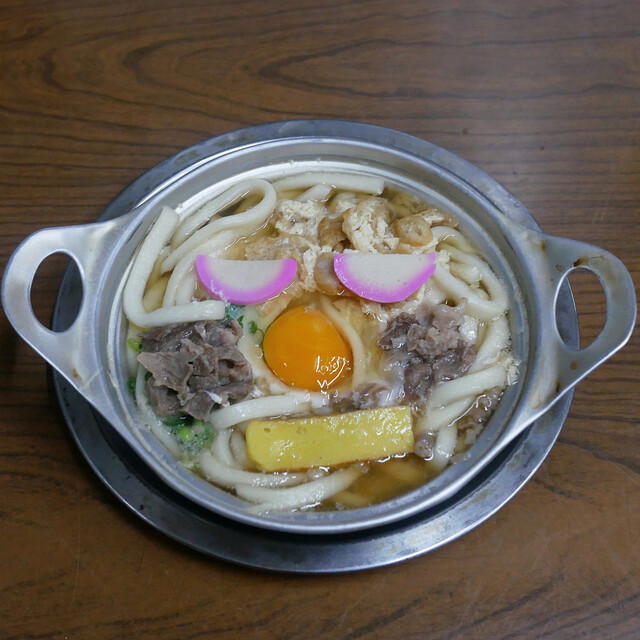
| Nabeyaki Udon Asahi | Traditional Matsuyama nabeyaki udon shop | $ | Okaido / Gintengai area |
| Shanghai Tenshin Yoen | Casual Dim Sum & Chinese Comfort Food | $$ | .null |
Recognition history
Dated appearances from independent guides and award organizations, with the underlying list record or original source where available.
Tabelog 100 #56 · No. 56
Tabelog · Tabelog 100 - Okonomiyaki - 2025
Continue exploring
More in Matsuyama
Restaurants in Matsuyama
Browse all →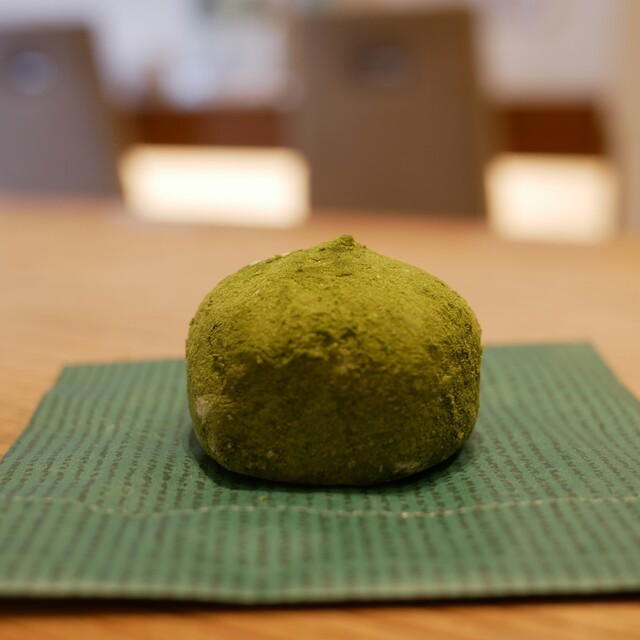
At a Glance
- Cozy
- Classic
- Intimate
- Solo
- Family
- Casual Hangout
- Chefs Counter
- Standalone
Current opening hours
- Monday
- 11 AM–6:30 PM
- Tuesday
- 11 AM–6:30 PM
- Wednesday
- Closed
- Thursday
- 11 AM–6:30 PM
- Friday
- 11 AM–6:30 PM
- Saturday
- 11 AM–6:30 PM
- Sunday
- 11 AM–6:30 PM
Hours can change for holidays and private events. Last verified .
A small, traditional okonomiyaki counter with only a few seats, a lived-in retro feel, and a relaxed, conversational atmosphere where guests sit close to the griddle and watch their food prepared.