橋本屋 occupies a first-floor address in Osaka's Minami-Senba district, a neighbourhood where traditional Japanese hospitality sits alongside some of the city's most formally ambitious dining rooms.
Pearl is the En Primeur Club membership app — saves, bookings, and concierge access live there. Same editors, same standards.
- Address
- 中央区南船場2-2-21 (1F), 大阪市, 大阪府, 542-0081
 Saves & bookings on Pearl
Minami-Senba's Quiet Register
Osaka's Minami-Senba district has developed a dining character distinct from the louder circuits around Dotonbori or Shinsaibashi's retail spine. The streets around Namba and the southern stretch of Midosuji lean toward destination dining, rooms that require advance planning, reward familiarity, and assume a guest who has already done the work of choosing. 橋本屋, addressed at 中央区南船場2-2-21 on the first floor, sits within that quieter register. The building is in Chuo Ward, a central Osaka zone that also contains some of the city's most formally recognised Japanese-cuisine addresses. Context matters here: a Minami-Senba address positions a restaurant closer to the working professional lunch and deliberate evening-out crowd than to the Osaka street-food visitor circuit.
That positioning is not accidental in a city where dining geography sends signals about audience and intent. Minami-Senba restaurants tend to operate for people who return, not people who are passing through. The area has fewer of the queue-heavy ramen and takoyaki institutions that define Osaka's food tourism narrative, and more of the discreet signage and reservation-assumed rooms that define how Osaka eats on its own terms.
What the Address Tells You About the Menu
In Minami-Senba, ground-floor rooms in this address band tend to fall into one of a few operating formats: a kappo or kaiseki counter serving a set-course structure; a neighbourhood izakaya with a broad à la carte reaching across categories; or a specialist room focused on a single protein or preparation tradition. Each format implies a different menu architecture, and menu architecture is how a Japanese restaurant communicates both its ambition and its assumptions about its guest.
A kaiseki or kappo structure, for instance, removes choice from the guest almost entirely. The sequence is determined by the kitchen, dishes arrive in an order calibrated to build, light to rich, raw to cooked, delicate to assertive, and the implicit contract is trust extended from guest to chef. Osaka's kaiseki tradition carries its own character, slightly warmer and more seasonal-ingredient-driven than Kyoto's more cerebral kaiseki lineage, and often more willing to allow the city's stronger flavours into a formal structure. Kashiwaya Osaka Senriyama and Taian represent the upper tier of that kaiseki tradition in Osaka, with Michelin recognition and price points (¥¥¥) that reflect the full formality of the format.
At the other end of the city's formal dining axis, rooms like HAJIME, La Cime, and Fujiya 1935 operate at the ¥¥¥¥ tier and apply European or innovative frameworks to Japanese ingredient sourcing, producing menus that read internationally while staying grounded in Kansai seasonality. 橋本屋's address and the absence of an international profile suggest it operates somewhere between these extremes: local in its orientation, deliberate in its structure, and not built for the Michelin-circuit tourist.
Reading a Japanese Menu's Architecture
In Japan broadly, and in Osaka specifically, the structure of a menu communicates as much as its individual dishes. Whether a kitchen offers omakase (full trust to the chef), a written course menu with minor personalisation, or a full à la carte spanning seasons, tells a guest what kind of relationship the restaurant is proposing. Omakase rooms in this city tier are typically smaller, eight to fourteen seats is common, because the format requires direct kitchen-to-counter service without a brigade large enough to manage independent tables simultaneously. Comparable Japanese-cuisine rooms in other cities operate on similar logic: Harutaka in Tokyo and Gion Sasaki in Kyoto both use limited-seat formats to anchor a highly personal service contract between kitchen and guest.
Across the broader Kansai and Japan circuit, rooms that operate with tighter format discipline tend to reward return visits more than single-occasion dining. Akordu in Nara and Goh in Fukuoka both demonstrate how smaller-format rooms outside Tokyo or Kyoto can sustain a high-discipline menu architecture without the pressure of a major city profile. Regional Japanese dining has increasingly followed this pattern, with rooms in addresses from Nanao to Sapporo, and from Takashima to Nishikawa Machi, maintaining course-menu discipline that would not look out of place in a capital city room.
International comparisons are instructive precisely because they reveal how structure functions independent of geography. Le Bernardin in New York City operates on a highly controlled menu architecture, a small number of formats, each with defined escalation, while Atomix in New York City demonstrates how a card-based tasting menu can carry cultural annotation into the guest experience. Both strategies communicate intention before a single dish arrives.
Planning a Visit
橋本屋's address in Minami-Senba, 中央区南船場2-2-21, 1F, is within the Chuo Ward district and is reachable from Osaka's major subway lines. The Shinsaibashi station on the Midosuji Line and Nagahoribashi station on the Nagahori Tsurumi-ryokuchi Line both serve this neighbourhood. The restaurant is walk-in friendly. This is common for smaller Japanese restaurants in Osaka's Minami-Senba quarter, where a reservation pipeline built through introductions rather than open online booking is both a practical choice and a signal about the intended audience. For comparison rooms operating at a similar regional scale, Birdland in Sakai and Bistro Ange in Toyohashi offer reference points for how city-adjacent rooms in the Kansai and Tokai regions position themselves relative to metropolitan benchmarks.
At a Glance
Comparable venues nearby, for context on price, style, and recognition.
| Venue | Cuisine | Price | Notes |
|---|---|---|---|
| 橋本屋This venue — the venue you are viewing | Minami-Senba, Japanese Curry House | $$ | |
| Osake to Gohan Taku | Kita, Tuna-focused Japanese Izakaya | $$ | |
| Yakiniku Horumon Mansen | Chūō, Yakiniku & Horumon Japanese BBQ | $$ | |
| Aaaa | Chūō, Japanese Stand-up Bar | $$ | |
| Sobabito Aki | $$ | Chūō, Traditional Soba & Japanese Small Plates | |
| Stand Tiger Lily | Kita, Standing Teppan Izakaya & Bar | $$ |









At a Glance
- Classic
- Rustic
- Casual Hangout
- Mountain
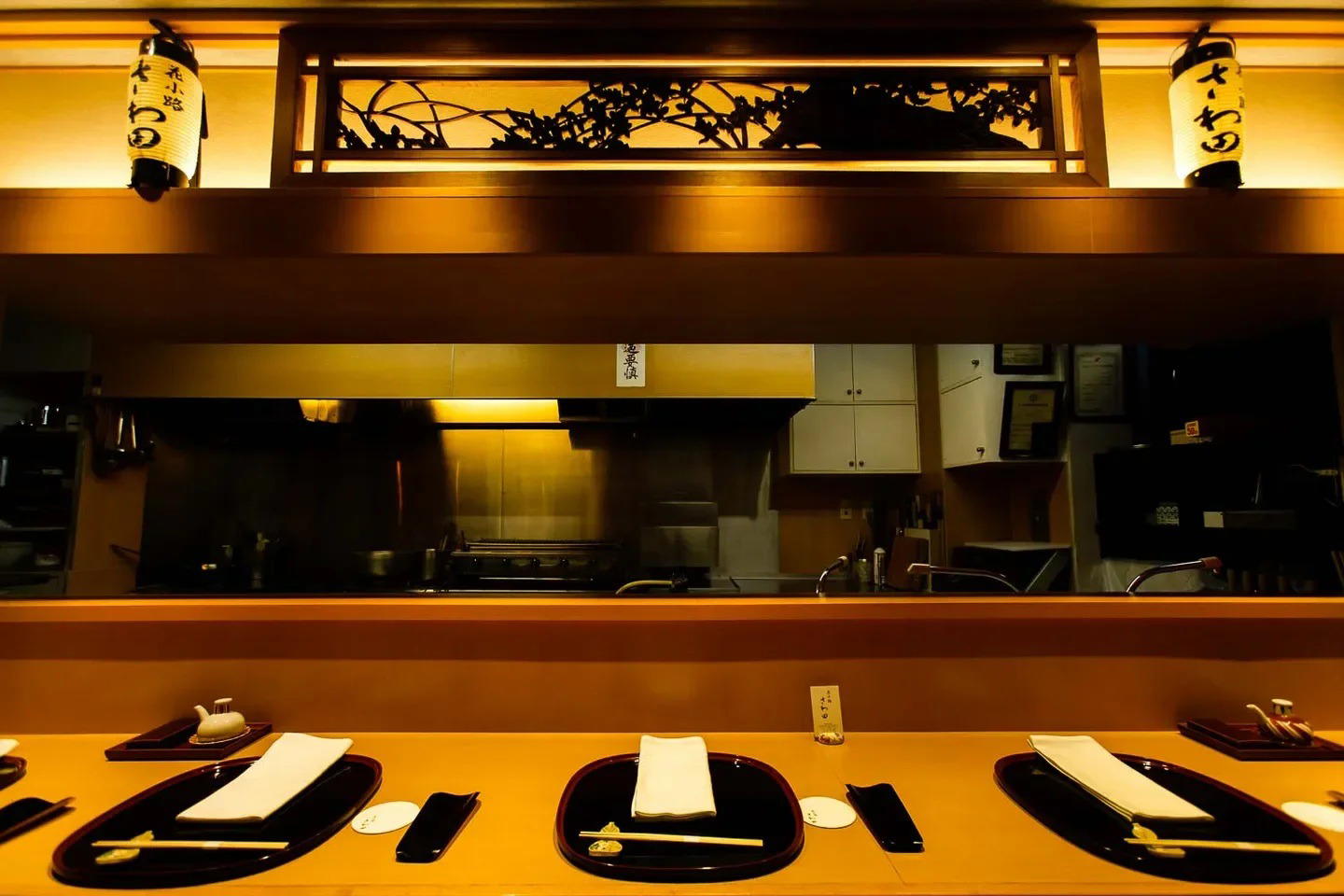
Casual counter and table seating in a small, no-frills space.