
Sobabito Aki places Osaka soba in a quieter register than the city’s louder street-food shorthand. The Kitahama address, Tabelog Soba WEST 100 selections in 2022, 2024, and 2025, and a drinks program built around sake and shochu make it a useful stop for readers who care as much about buckwheat and drinking culture as about the noodle bowl itself.
Pearl is the En Primeur Club membership app — saves, bookings, and concierge access live there. Same editors, same standards.
- Address
- 2 Chome-4-10 Fushimimachi, Chuo Ward, Osaka, 541-0044, Japan
- Phone
- +81 6-6202-0069
- Website
- dosanjin.com
 Saves & bookings on Pearl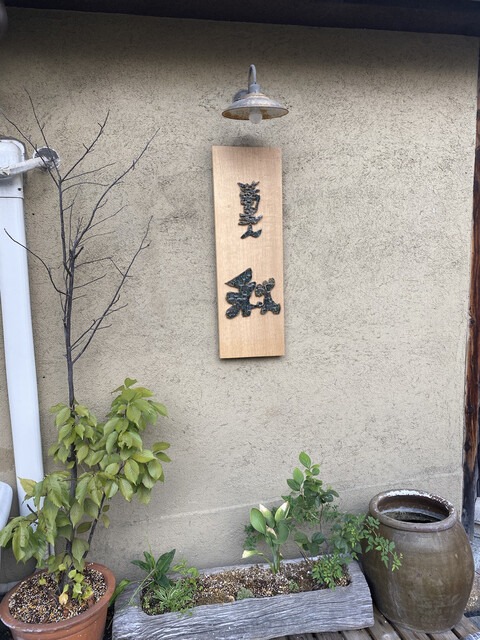
Kitahama changes the pitch of Osaka dining. Around the old financial district, the tempo drops from neon appetite to office-block precision: stone façades, narrow side streets, and restaurants that do not need to shout. In that context, soba reads differently. It is not the city’s usual shorthand of griddles, queues, and sauce; it is a slower grammar of buckwheat, dipping broth, seasonal side dishes, and drink pairings that reward attention rather than volume.
Sobabito Aki belongs to that quieter Osaka. Its recognition on the Tabelog Soba WEST 100 list in 2022, 2024, and 2025 gives it a clear position inside western Japan’s soba conversation, not as a luxury tasting-menu address but as a serious noodle house with izakaya range. That distinction matters. Osaka has French rooms such as SINAE, Japanese special-occasion counters such as Fushimimachi Kakoiyama, and grill-led formats such as Sumibi Yakitori Torimasa; soba occupies another lane, where price, rhythm, and drinking habits produce a different kind of evening.
Buckwheat in Osaka, with the meal shaped around sake and shochu
Good soba restaurants in Japan are rarely only about noodles. The better ones function as small drinking rooms before they become noodle rooms: vegetables, fish, and Japanese cooking set the table, then buckwheat closes the meal with discipline. Sobabito Aki’s category spread, soba, izakaya, and Japanese cuisine, points to that older pattern. The drinks list is not framed around wine prestige; its center of gravity is sake and shochu, which makes more sense with soba’s texture, dipping sauces, and the salt-sweet register of many small Japanese dishes.
For travellers used to judging a restaurant by the cellar, this is the useful translation: sake and shochu perform the same editorial work here that a focused wine list performs in a small European restaurant. They set pace, determine whether the meal leans sharp or round, and give the kitchen more range than a noodle-only stop would allow. A soba house with attention to nihonshu and shochu sits closer to a tavern culture than to a quick lunch counter, even when the final bowl remains the anchor.
The Osaka point is also worth making. The city’s culinary identity is often flattened into appetite and excess, but its better everyday restaurants are built on exact formats: okonomiyaki shops, udon counters, kissaten, yakitori rooms, sushi counters, and soba houses all ask the diner to understand the rules of the genre. Sobabito Aki’s repeated Soba WEST 100 selections put it among addresses where the genre itself is being judged, not merely the charm of the room or convenience of the location.
Kitahama gives soba a different social role
Neighbourhood affects how a meal feels. In Namba or around Dotonbori, soba can disappear behind a louder itinerary. In Kitahama, the form gains clarity. The area’s business-district bones suit a restaurant that can work for lunch, after-work drinking, and a composed dinner without needing ceremony. Private rooms and tatami-style seating add another clue: this is soba as social infrastructure, useful for small groups and local regularity, not only for visitors checking off a famous dish.
The budget range reinforces that reading. Lunch sits in a modest bracket, while dinner moves into the lower-mid restaurant tier for Osaka, the zone where drinks and side dishes can matter as much as the noodles. That makes the address useful for travellers who have already spent heavily on sushi, wagyu, or kappo and want a meal with craft without a formal dégustation structure. Compared with a higher-spend Japanese room such as Fushimimachi Kakoiyama, the pleasure here is narrower and more specific: buckwheat, tavern cooking, and Japanese spirits in a compact frame.
There is another practical implication, though it belongs to dining strategy rather than logistics. Soba rewards restraint. Ordering as if in an izakaya, then ending with noodles, usually makes more sense than treating the restaurant as a single-bowl stop. The presence of vegetable and fish-focused cooking supports that shape. The point is not abundance; it is sequence. A good soba meal has a beginning, a drinking middle, and a clean finish.
Where it fits in a sharper Osaka itinerary
For EP Club readers, the address makes strongest sense as a corrective to Osaka cliché. It will not replace the city’s counter sushi, kappo, or late-night bars, but it adds a quieter register that many itineraries miss. Pairing a soba dinner in Kitahama with a bar later in the city creates a more balanced night than stacking rich food on rich food. Readers building a broader plan can use Our full Osaka restaurants guide, then cross-check drinking options in Our full Osaka bars guide and hotel positioning through Our full Osaka hotels guide.
The surrounding Osaka map can pull in many directions. Casual daytime planning might include .cafe, 52CHO-ME BAKERY, or the city’s familiar steamed-bun culture at 551 Horai (551蓬莱). For a completely different dinner register, 99 Pizza Napoletana Gourmet and a canto (Italian) show how Osaka’s non-Japanese dining fits into the same city-wide appetite for specialist formats.
Travellers extending the itinerary beyond restaurants can widen the frame through Our full Osaka experiences guide and Our full Osaka wineries guide. Across Japan and beyond, related editorial reference points include -Grilled beef Sukiyaki- KAMAKURA TANUKIAN 鎌倉 たぬき庵 in Kamakura. 鮪と炭火焼き うお炭 秋葉原店 in Tokyo.know in Kumamoto, (Shoku) Vietnam in Kawasaki, [Curry Senmon Ten] Maruyama Kyoju. in Sapporo, [ki:] in Kyoto, Jōdo Saké Bar in Los Angeles, and Onigiri Time in Pasadena.
The editorial case for the restaurant is not that it offers spectacle. It is the opposite: a defined Osaka soba address with repeated category recognition, a beverage program rooted in sake and shochu, and enough izakaya structure to turn noodles into a full evening. In a city often sold through noise, that restraint is the reason to pay attention.
Cuisine and Recognition
Side-by-side context: comparable cuisine and price.
| Venue | Cuisine | Price | Notes |
|---|---|---|---|
| Sobabito AkiThis venue — the venue you are viewing | Traditional Soba & Japanese Small Plates | $$ | Not listed |
| Saru Shokudo Honmachi honten | Japanese Western (Yoshoku) | $$ | Chūō |
| Gomenne JIRO | Yoshoku (Japanese-style Western cuisine) bistro | $$ | Kita |
| Okonomiyaki Ajikuraya | Osaka okonomiyaki & teppanyaki | $$ | Tennōji |
| Man masa | Yakiniku (Japanese BBQ) | $$ | Ikuno |
| Shabu Tei Nishiumeda ten | Japanese Shabu-Shabu | $$ | Kita |
Recognition history
Dated appearances from independent guides and award organizations, with the underlying list record or original source where available.
Tabelog 100 #60 · No. 60
Tabelog · Tabelog 100 - Soba - WEST - 2025
Continue exploring
More in Osaka
Restaurants in Osaka
Browse all →




Bars in Osaka
Browse all →


Hotels in Osaka
Browse all →




Wineries in Osaka
Browse all →
At a Glance
- Classic
- Cozy
- After Work
- Group Dining
- Solo
- Casual Hangout
- Business Dinner
- Late Night
- Private Dining
- Standalone
- Design Destination
- Sake Program
- Beer Program
Current opening hours
- Monday
- Closed
- Tuesday
- 11:30 AM–2:30 PM, 5:30–9:30 PM
- Wednesday
- 11:30 AM–2:30 PM, 5:30–9:30 PM
- Thursday
- 11:30 AM–2:30 PM, 5:30–9:30 PM
- Friday
- 11:30 AM–2:30 PM, 5:30–9:30 PM
- Saturday
- 11:30 AM–2:30 PM, 5:30–9 PM
- Sunday
- 11:30 AM–2:30 PM, 5:30–9 PM
Hours can change for holidays and private events. Last verified .
Traditional wooden townhouse with a warm, relaxed atmosphere; intimate tatami and table seating, softly lit and quietly bustling, suited to both solo diners and small groups.