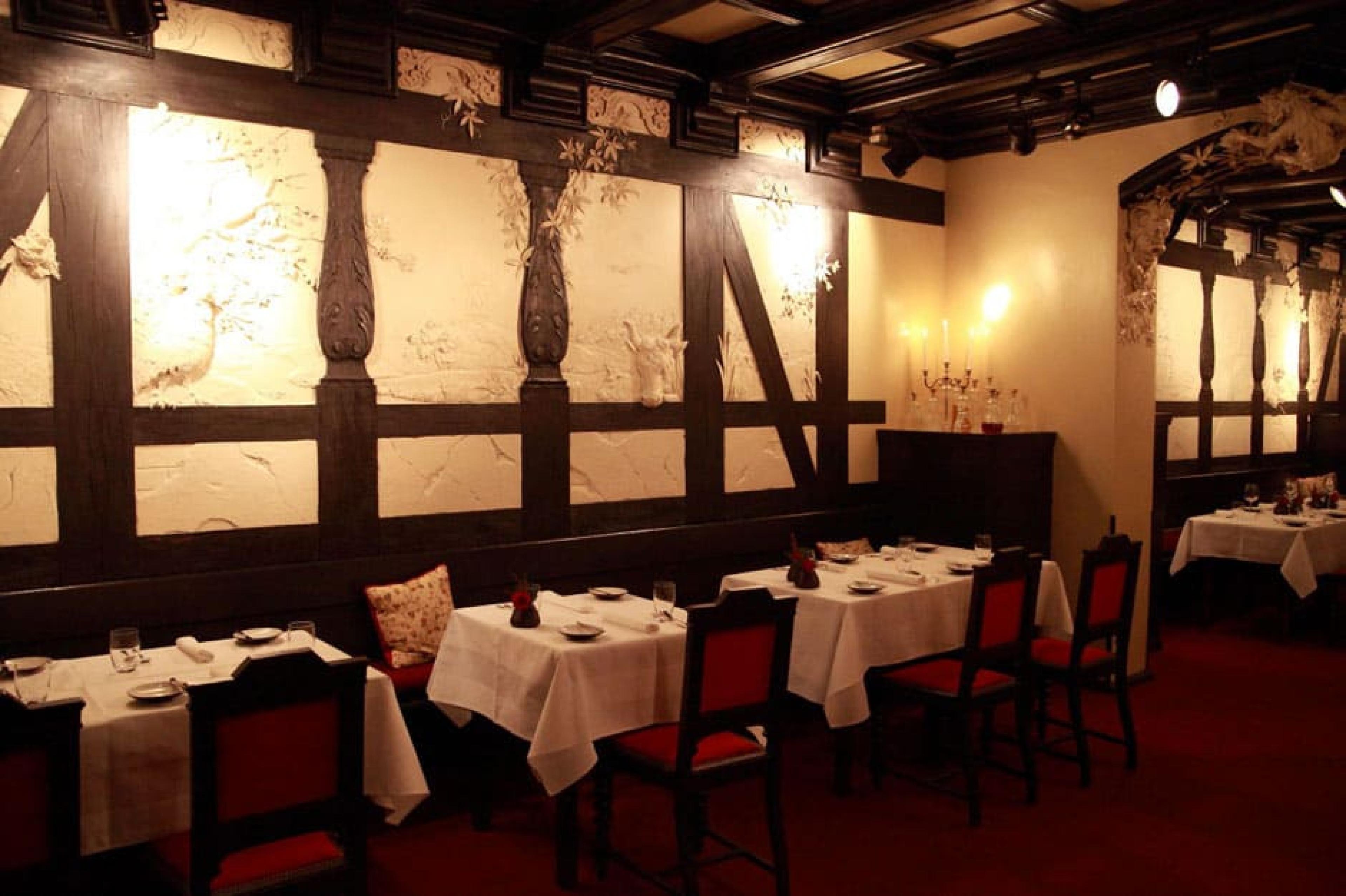
A Charlottenburg address that has tracked the shifting appetites of Berlin's dining scene across decades, Cassambalis on Grolmanstraße occupies a neighbourhood where old-city formality and contemporary ambition sit at the same table. The room carries the kind of earned familiarity that newer openings spend years trying to manufacture. For a city that reinvents itself constantly, this is a place that has chosen continuity as its editorial position.
Pearl is the En Primeur Club membership app — saves, bookings, and concierge access live there. Same editors, same standards.
- Address
- Grolmanstraße 35, 10623 Berlin, Germany
- Phone
- +4949308854747
- Website
- cassambalis.de
- Directions
- Get directions
 Saves & bookings on Pearl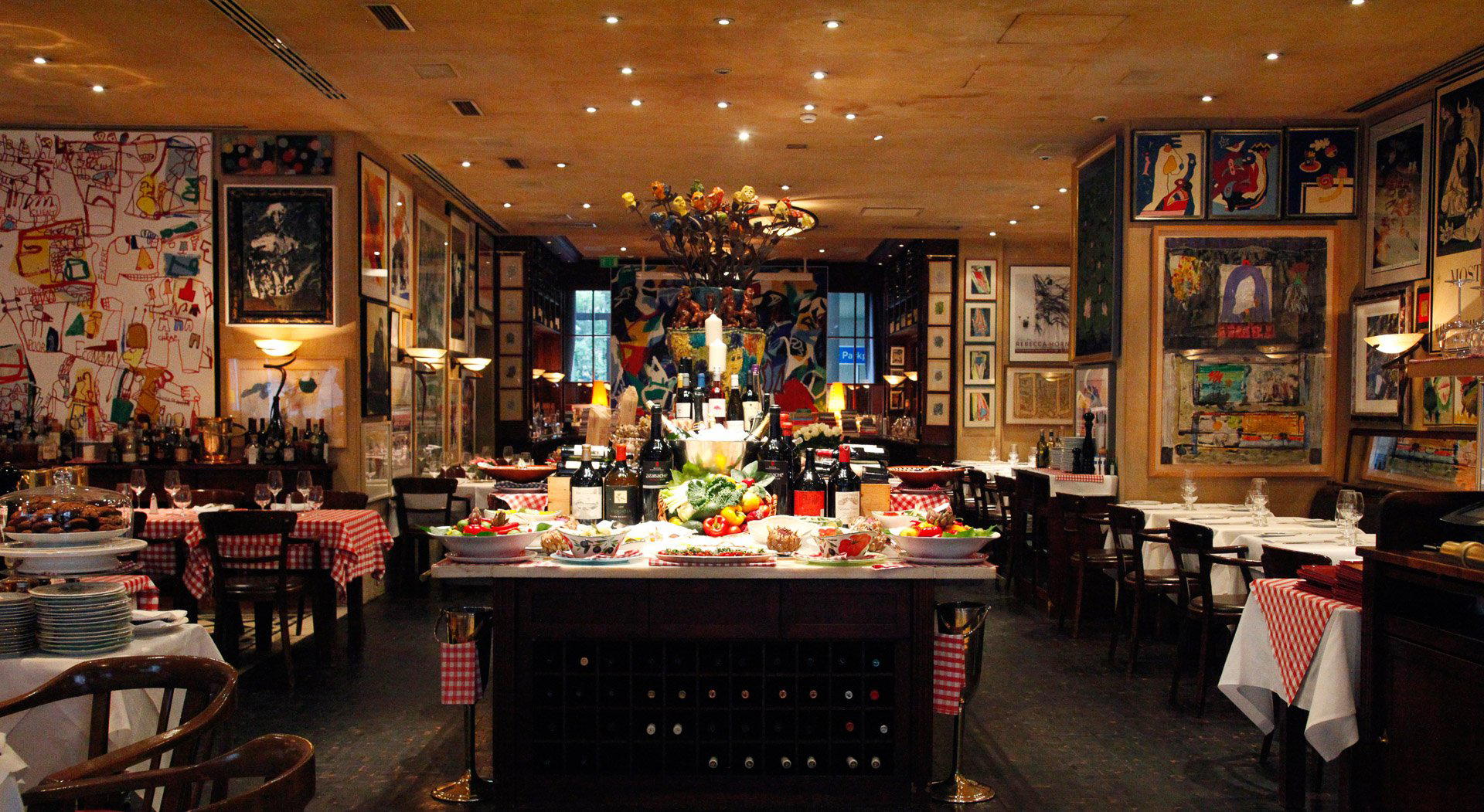
Charlottenburg's Long Game
Berlin's dining culture has always been easier to read in the west of the city than the east. Charlottenburg, specifically the stretch of Grolmanstraße that connects Savignyplatz to the Kurfürstendamm corridor, developed its restaurant identity during the decades when West Berlin was an island, self-contained and compelled to build its own civic life. The neighbourhood still carries that DNA: wider pavements, slower rhythms, a customer base that remembers when this part of the city was the only part that mattered. Cassambalis, at number 35, is a product of that formation and has been shaped by everything that followed it.
Where the current high-end Berlin conversation centres on venues like Rutz in Mitte or Nobelhart & Schmutzig on Friedrichstraße, both operating in the €€€€ tier with Michelin recognition and a distinct ideological position on sourcing and regionalism, Charlottenburg restaurants like Cassambalis occupy a different chapter of the city's story. They are not reactions to the post-reunification creative surge. They are, in some cases, the thing that creative surge was reacting against, and eventually learning to respect.
The Shape of Change Over Time
Restaurants that survive across multiple decades in any European capital do so through adaptation, not preservation. The ones that simply hold position, same menu, same service register, same room, tend to calcify into nostalgia operations, sustained by habit rather than appetite. The ones that evolve without losing the trust of a loyal neighbourhood audience are considerably rarer and considerably more interesting as editorial subjects.
Berlin's fine dining tier has restructured substantially in recent years. FACIL, operating within a hotel framework in Tiergarten, and CODA Dessert Dining, which has built a Michelin-recognised position around an unconventional format, represent the city's appetite for category-defining concepts. Against that backdrop, a Charlottenburg address on Grolmanstraße is making a different kind of argument: that place and continuity are themselves a form of editorial statement.
Across Germany's broader fine dining circuit, the pressure to define a clear identity has only intensified. Properties like Schwarzwaldstube in Baiersbronn, Aqua in Wolfsburg, and Vendôme in Bergisch Gladbach operate with the kind of accumulated recognition that places them on an international reference list. Berlin's contribution to that list has grown, but the city's restaurant identity resists the kind of singular narrative that the Michelin guide tends to reward most consistently.
The Neighbourhood as Context
Savignyplatz, a short walk from Grolmanstraße 35, functions as a kind of index for Charlottenburg's dining character. The square's restaurants are neither tourist-facing nor aggressively conceptual. They serve a neighbourhood clientele with expectations shaped by decades of quality-first dining rather than novelty-seeking. The audience here tends to be older, more patient with formality, and less interested in the kind of social-media legibility that drives reservation demand in Mitte or Prenzlauer Berg.
That audience shapes what a restaurant can do and what it needs to be. It rewards consistency over reinvention, though particularly durable Charlottenburg restaurants have found ways to update without announcement, adjusting wine programs, revisiting kitchen approaches, occasionally refreshing room details, in ways that feel organic rather than reactive. The evolution at venues in this neighbourhood tends to be cumulative rather than dramatic, which makes it harder to track but no less real.
For comparison, Restaurant Tim Raue in Kreuzberg represents Berlin's other mode: the highly personal, internationally legible concept built around a defined culinary identity that travels well on the global awards circuit. Charlottenburg restaurants are rarely in that conversation, not because of quality differentials, but because the neighbourhood's dining culture privileges different values.
Germany's Restaurant Tier and Where Berlin Fits
The broader German fine dining context is instructive. Outside the capital, restaurants like JAN in Munich, Restaurant Haerlin in Hamburg, Victor's Fine Dining by Christian Bau in Perl, ES:SENZ in Grassau, Schanz in Piesport, Waldhotel Sonnora in Dreis, and Bagatelle in Trier define a tier of serious cooking that operates largely outside Berlin's gravitational pull. Berlin itself is a city where the energy of the dining scene has always exceeded its formal recognition, partly because the audience is younger, more price-sensitive, and more interested in atmosphere than ceremony.
Internationally, the comparison points that matter for understanding a room like Cassambalis are less Le Bernardin in New York or Lazy Bear in San Francisco, both of which operate in explicit high-concept registers, and more the category of European neighbourhood restaurant that has earned its longevity through accumulated quality rather than awards-cycle positioning.
What Endurance Means on Grolmanstraße
The address itself carries weight. Grolmanstraße 35 sits in a part of Charlottenburg where the buildings predate the war, where the street-level commercial tenants have turned over repeatedly while a handful of restaurants have held. Surviving in that context is not passive. It requires ongoing decisions about what to change and what to protect, about which customers to follow and which directions to resist.
Berlin's dining scene will continue to generate new openings in Mitte, Neukölln, and Kreuzberg at a rate that makes it easy to overlook the west. The Charlottenburg restaurants that remain worth attention are the ones that have treated longevity as an active project rather than an accident. The question for any serious visitor to Berlin is whether the story of a place that has stayed, adapted, and held its neighbourhood trust matters as much as the story of a place that arrived with a manifesto. In most cities, the answer is yes. In Berlin, which romanticises reinvention, it takes a little more arguing.
Know Before You Go
- Address: Grolmanstraße 35, 10623 Berlin, Germany
- Neighbourhood: Charlottenburg, close to Savignyplatz
- Reservations: Recommended
- Nearest transport: Savignyplatz S-Bahn or Zoologischer Garten
- Practical note: Reservations are recommended, and the restaurant is open daily with late hours Monday through Saturday and Sunday evenings.
In Context: Similar Options
Comparable venues nearby, for context on price, style, and recognition.
| Venue | Cuisine | Price | Notes |
|---|---|---|---|
| CassambalisThis venue — the venue you are viewing | Mediterranean Taverna with Greek influences | $$$ | Not listed |
| Lu Liba | Mediterranean-Lebanese Fusion | $$$ | Tiergarten |
| Belmondo | Classic French Bistro | $$$ | Charlottenburg |
| Niko Izakaya | Authentic Japanese Izakaya | $$$ | Gesundbrunnen |
| Moon Exquisite | Southeast Asian-European Fusion | $$$ | Mitte |
| Blend Restaurant | International Fusion | $$$ | Tiergarten |
Continue exploring
More in Berlin
Restaurants in Berlin
Browse all →
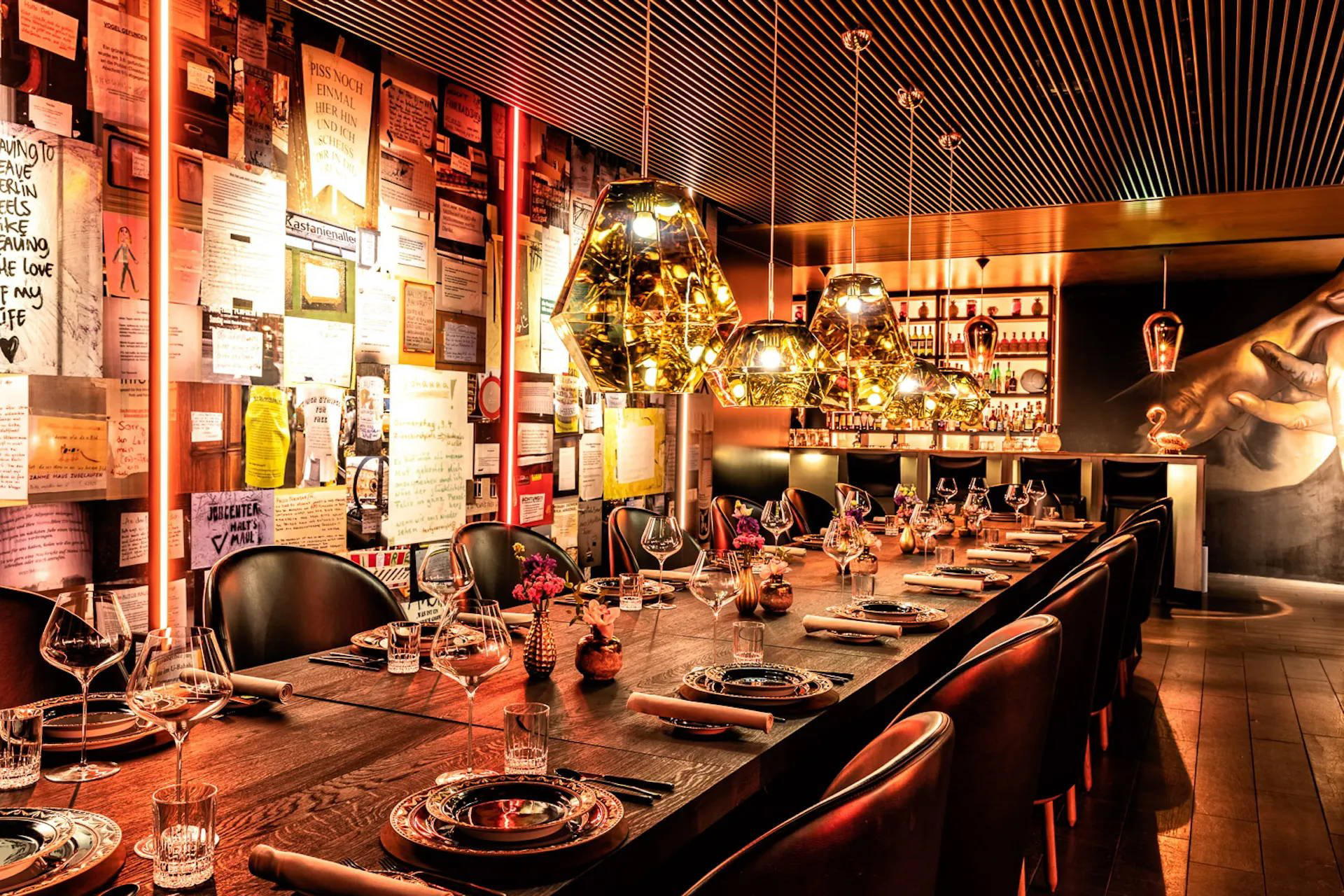
Bars in Berlin
Browse all →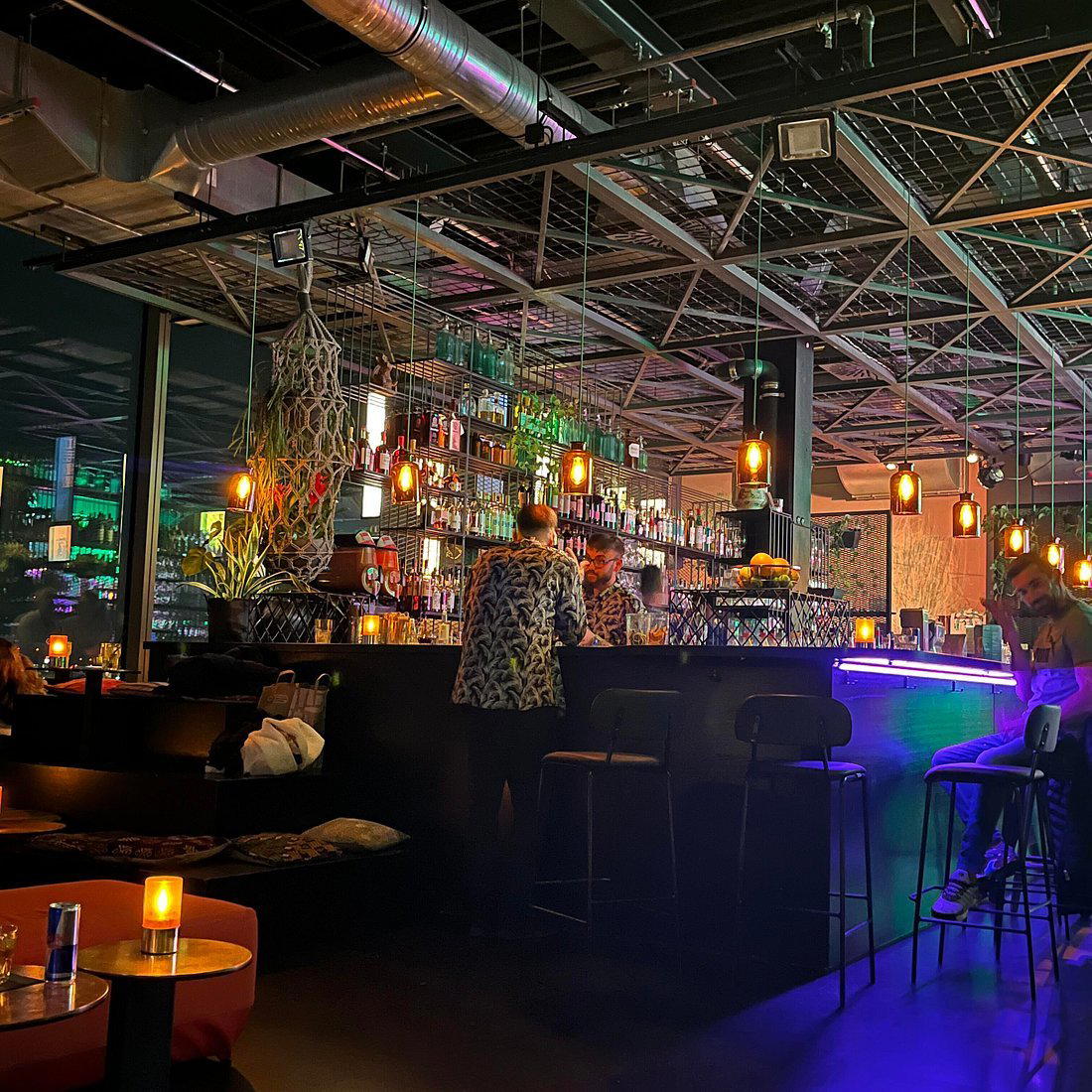
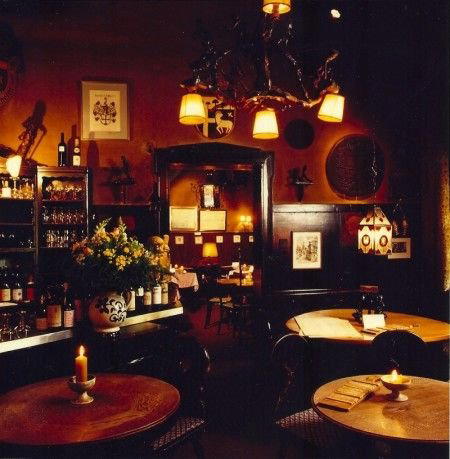
Hotels in Berlin
Browse all →

At a Glance
- Elegant
- Classic
- Cozy
- Sophisticated
- Date Night
- Group Dining
- Special Occasion
- Historic Building
- Extensive Wine List
Current opening hours
- Monday
- 12 PM–12 AM
- Tuesday
- 12 PM–12 AM
- Wednesday
- 12 PM–12 AM
- Thursday
- 12 PM–12 AM
- Friday
- 12 PM–12 AM
- Saturday
- 12 PM–12 AM
- Sunday
- 5–11 PM
Hours can change for holidays and private events. Last verified .
Imposingly decorated with numerous modern paintings covering the walls, large floral arrangements, and elegant table settings creating a warm, hospitable atmosphere.