Our verdict
An Italian osteria on the second floor of a Central Fukui address, オステリア ダ シルバーノ brings a European trattoria sensibility to a city better known for soba and seafood. The menu structure, rather than any single dish, carries the editorial weight here: a sequence of courses that reads like a conversation between Italian tradition and the produce rhythms of the Hokuriku coast. Booking details remain tightly managed at the local level.

Pearl is the En Primeur Club membership app — saves, bookings, and concierge access live there. Same editors, same standards.
- Address
- Japan, 〒910-0006 Fukui, Central, 1 Chome−19−11 2F
- Phone
- +81776978018
- Hours
- Mon 6–10 PMTue–Wed ClosedThu–Sun 6–10 PM
- Website
- osteriadasilvano.com
- Directions
- Get directions
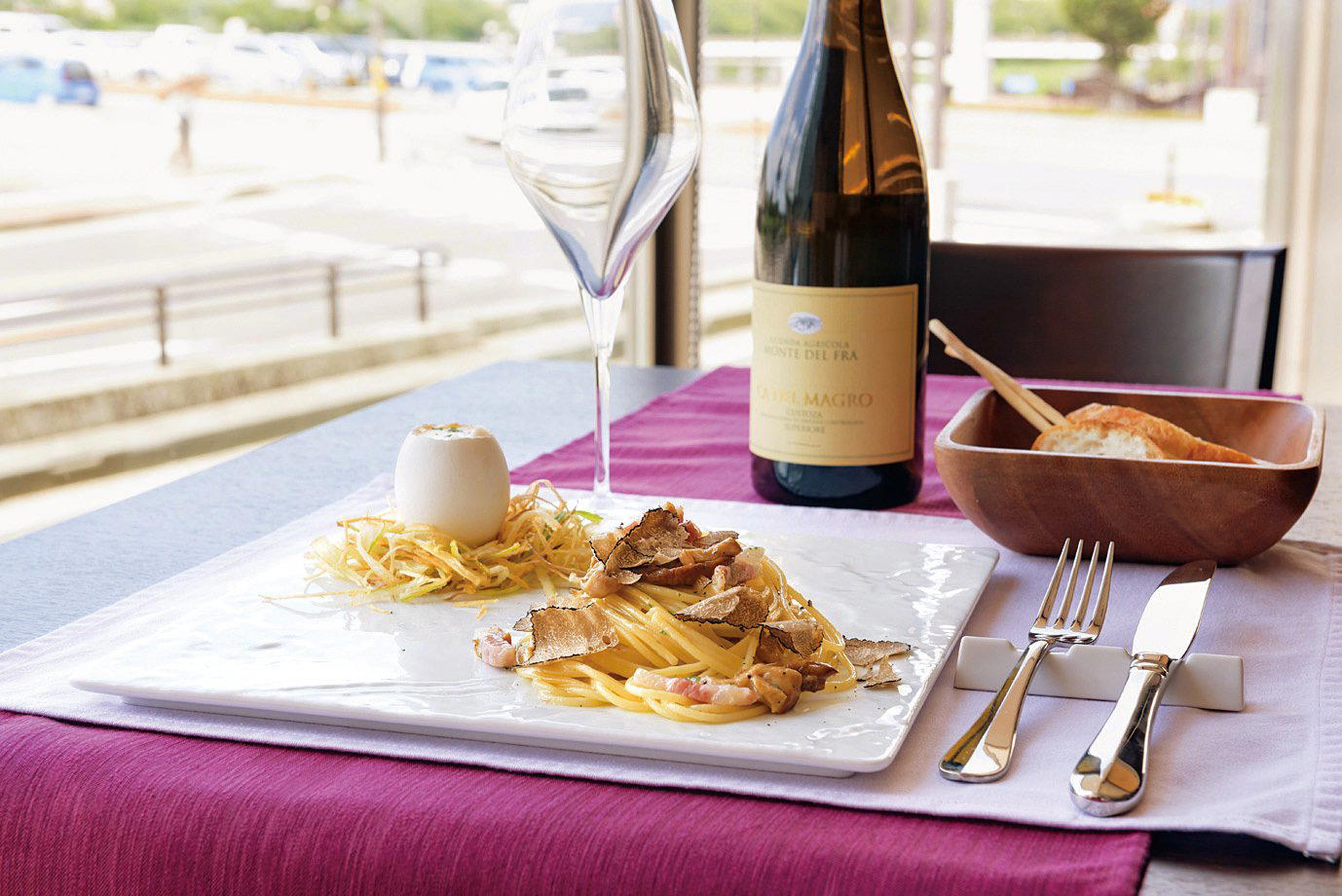
Italian in a Japanese Regional City: Reading the Room
Fukui does not position itself as a destination for European dining. Its culinary identity runs through echizen crab pulled from the Sea of Japan, aged soba from inland buckwheat, and the austere kaiseki rhythm that defines formal eating across the Hokuriku region. Into this context, an Italian osteria on a second-floor address in Central Fukui — 1 Chome-19-11, a walkable block from the city's commercial core — represents a deliberate act of culinary counterpoint. オステリア ダ シルバーノ is the kind of address that regional Japanese cities generate with more frequency than visitors expect: a specialist European kitchen, usually small, usually run with the same obsessive sourcing logic that characterises the leading Japanese cooking, planted inside a food culture that has no immediate need for it and yet sustains it through a loyal local clientele.
The Italian osteria format itself carries an implicit editorial argument. Unlike a ristorante, which signals formality and ceremony, an osteria traditionally organises its menu around seasonal availability, shorter lists, and a producer-first logic. The food is meant to feel discovered rather than engineered. In Japan, that format has found an unlikely second home: Japanese cooks trained in Italy, or Italian-influenced kitchens absorbing the Japanese seasonal sensibility, have produced a hybrid that fits Hokuriku produce particularly well. The fatty, cold-water fish of the Japan Sea, the mountain vegetables that push through snow in early spring, and the rice-culture pantry of Fukui prefecture translate into Italian frameworks with less distortion than you might expect. Understanding オステリア ダ シルバーノ means understanding that format first.
How the Menu Works
The editorial angle here is architecture rather than individual dishes. An osteria menu, properly constructed, tells you something about the kitchen's hierarchy of values: what the kitchen trusts, what it is willing to leave out, and where it chooses to let produce speak without interference. The structure at a well-run osteria typically moves from antipasti through pasta to secondi in a sequence that builds in weight and intensity, with the pasta course carrying the most technical argument. In Italian cooking, fresh pasta represents the kitchen's grammar, it signals technical fluency and seasonal awareness simultaneously. A kitchen that takes its pasta seriously is usually a kitchen that takes its sourcing seriously.
In a Fukui context, that pasta course also functions as the most revealing local negotiation. The region's proximity to exceptional seafood, echizen crab and winter yellowtail from the Sea of Japan appear on Fukui tables from autumn through early spring, creates specific opportunities for a kitchen willing to work across culinary systems. How an Italian-format kitchen in this city chooses to incorporate or ignore those ingredients tells you more about its identity than any biographical detail about who built it. The menu structure, in other words, is the argument. Regulars return not because the dishes are frozen in place but because the sequence has a logic they trust.
For visitors mapping Fukui's broader dining picture, the city offers a compressed range of serious options. Sushi Jubei and Miyazaki anchor the Japanese end of the spectrum, while Kaikatei holds the Chinese category. Italian sits in a different register entirely, and オステリア ダ シルバーノ occupies that space with the kind of quiet consistency that sustains neighbourhood regulars rather than chasing rotating visitors.
Fukui in the Wider Japanese Dining Circuit
Japan's regional cities are often discussed in relation to the three-city axis of Tokyo, Osaka, and Kyoto, but the country's most interesting food moments frequently happen at the edges of that conversation. Fukui is a useful case study: a prefecture with exceptional primary produce, a serious local food culture, and almost no international dining infrastructure. That last point matters for understanding why a European kitchen here functions differently from the same format in a major city. In Fukui, it competes on local terms against a food culture that demands rigour from every kitchen that asks for repeat business.
The parallel with other Japanese regional European kitchens is instructive. Akordu in Nara positions Basque-influenced cooking against the backdrop of ancient Japanese cultural heritage. Goh in Fukuoka brings contemporary Japanese technique to a city known for its casual food culture. In each case, the European or hybrid kitchen succeeds by earning the respect of a local clientele that applies Japanese standards of quality and seasonal honesty rather than European restaurant metrics. HAJIME in Osaka and Gion Sasaki in Kyoto represent what those standards can produce at the formally recognised level, and regional kitchens are measured, informally, against that bar.
For visitors arriving from outside Japan, the contrast with a high-profile international address is worth calibrating. Le Bernardin in New York City or Atomix in New York City operate in markets where every detail of the dining experience is publicly documented and benchmarked. A second-floor osteria in Fukui operates on almost opposite terms: word-of-mouth sustained, locally rooted, and largely opaque to the international review circuit. That opacity is not a flaw. It is the mechanism by which a certain kind of small regional kitchen maintains its identity.
Further afield in the Hokuriku and Sea of Japan corridor, addresses like 一本木 石川制 in Nanao and 湖邸庄屋 in Takashima point to a regional dining circuit that rewards extended itineraries. Harutaka in Tokyo provides a useful reference point for the kind of precision that the national circuit considers a baseline for serious kitchens.
Planning a Visit
The address at 2F, 1 Chome-19-11, Central Fukui places the restaurant within the city's walkable commercial district, accessible from Fukui Station in a short taxi or on foot depending on exact routing. Specific hours, pricing, and booking arrangements are not published in centralised databases and are best confirmed directly with the restaurant or through local concierge channels. Given the format, a small second-floor osteria in a regional city, the likelihood of walk-in availability on a busy evening is low, and advance contact before visiting makes practical sense. For a fuller map of what Fukui's dining circuit currently offers, our full Fukui restaurants guide covers the range across categories and price points, including 寿司濱 and 御料理 一乃, two further addresses worth cross-referencing for a multi-dinner itinerary.
Frequently asked questions
How do I find オステリア ダ シルバーノ?
オステリア ダ シルバーノ is located at Japan, 〒910-0006 Fukui, Central, 1 Chome−19−11 2F, Fukui.
What makes オステリア ダ シルバーノ different from other dining options in Fukui?
Fukui's dining identity is built around echizen crab and local Japanese cuisine, making a dedicated osteria format a genuine departure from the city's dominant culinary offer. Located on the second floor at 1 Chome-19-11 in central Fukui, the restaurant occupies a position in the city's commercial district where European restaurants of this type are sparse. That scarcity gives it a specific role for residents seeking Italian cooking outside the Tokyo-Osaka-Kyoto corridor.
What do regulars order at オステリア ダ シルバーノ?
The venue's records don't specify individual dishes, but an osteria format in a regional Japanese city like Fukui typically organises its menu around a short rotation of pasta and secondi rather than an extended à la carte. Given Fukui's proximity to the Sea of Japan, kitchens in the city have access to seasonal seafood that occasionally crosses into Italian preparations. Ask staff directly what arrived that week.
Is オステリア ダ シルバーノ reservation-only?
For a second-floor osteria in a mid-sized regional city like Fukui, walk-in availability tends to vary sharply by day of the week and season. Contacting the restaurant directly or arriving early on a weeknight is the most practical approach.
Reputation Context
Comparable venues nearby, for context on price, style, and recognition.
| Venue | Cuisine | Price | Awards | Notes |
|---|---|---|---|---|
| オステリア ダ シルバーノThis venue — the venue you are viewing | Venetian Osteria | $50–100 | Not listed | Not listed |
| ソワン | Local Fusion French | $50–100 | Not listed | Takagi |
| サラマンジェフ | French Bistro with Japanese Western Influences | $50–100 | Not listed | 北の庄 |
| グラン・シェフ クーゼー | Fukui French Fine Dining | $30–50 | Not listed | Harmony Hall area |
| 鮨 åå µè¡ | Traditional Fukui Omakase Sushi | Not listed | Not listed | Fukui |
| Tengiku Ten | Traditional Tempura & Unagi Counter | $50–100 | Tabelog 100 #26 | Junka, Fukui City |
Continue exploring
More in Fukui
Restaurants in Fukui
Browse all →
Details
- Cozy
- Intimate
- Rustic
- Date Night
- Special Occasion
- Open Kitchen
- Sake Program
- Local Sourcing
- Street Scene
- A La Carte
- Wine
Current opening hours
- Monday
- 6–10 PM
- Tuesday
- Closed
- Wednesday
- Closed
- Thursday
- 6–10 PM
- Friday
- 6–10 PM
- Saturday
- 6–10 PM
- Sunday
- 6–10 PM
Hours can change for holidays and private events. Last verified .
Relaxed and casual atmosphere with an at-home osteria feel.