
Tabelog 100 #19
Our verdict
Located in Sapporo's Chuo Ward, 東凪 sits within a city whose dining scene increasingly earns comparison with Japan's southern fine-dining capitals. The restaurant occupies a position in Sapporo's close-knit premium circuit, where Hokkaido's ingredient depth, cold-water seafood, mountain produce, dairy, sets the terms for what serious cooking can achieve. For visitors working through the city's top tables, it belongs on the itinerary alongside neighbours in the Minami 1-jo corridor.

Pearl is the En Primeur Club membership app, where members save venues, book tables and use the concierge.
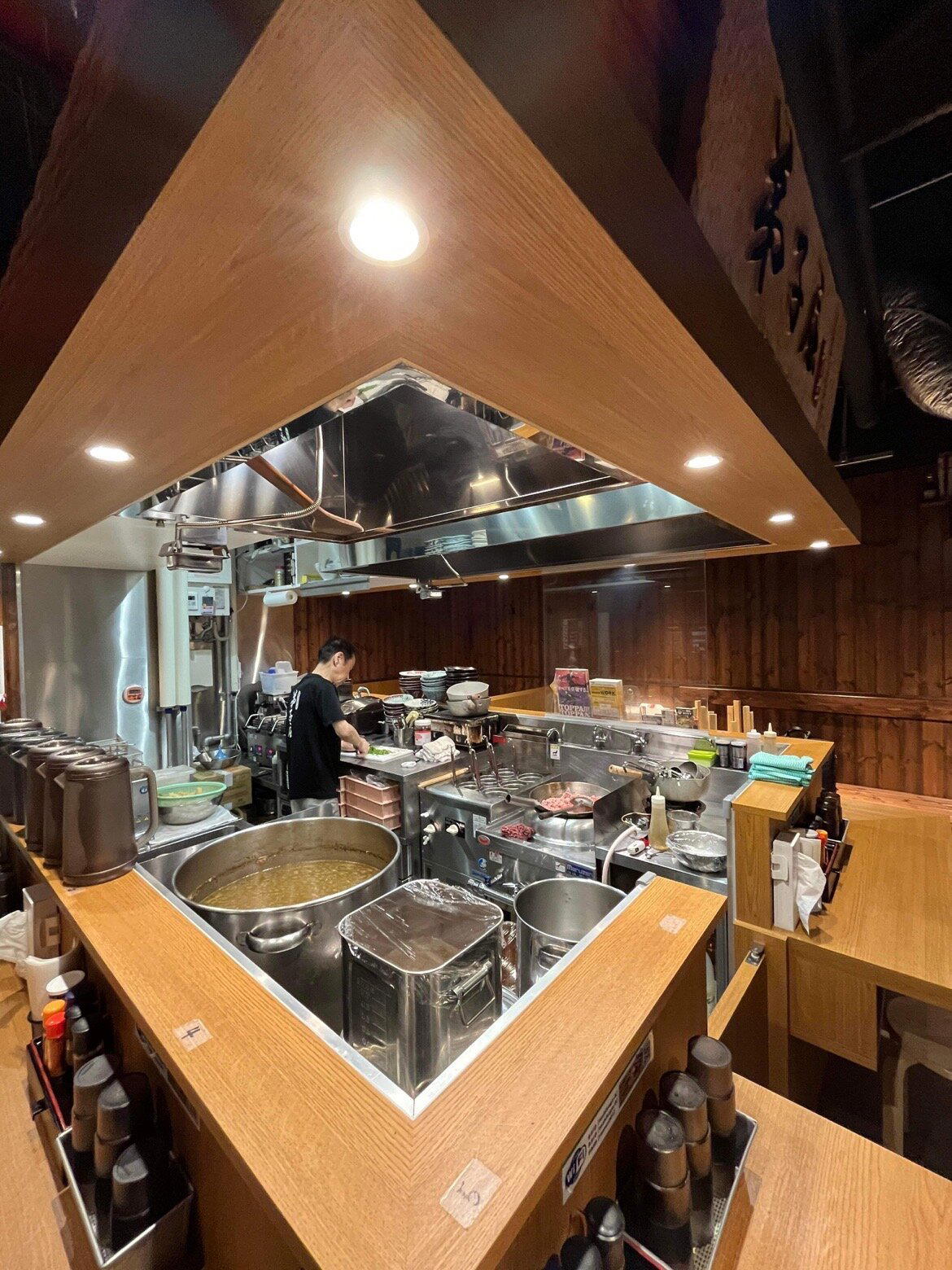
Sapporo's Premium Dining Ritual and Where 東凪 Sits Within It
Approach Sapporo's Chuo Ward on a winter evening and the city reads as a counterpoint to the noise of Tokyo's dining districts. The streets around Minami 1-jo are quieter, more deliberate in their density, and the restaurants that matter here tend to operate without the signage theatrics common further south. 東凪, addressed at 22-chome, 2-15 in the Seasons Building, follows that grammar. The entrance gives little away, which in Sapporo's premium tier is less an affectation than a statement about where attention is directed: inward, toward the table, toward the meal's unfolding structure.
That structure, the pacing, the sequencing, the etiquette of how a meal proceeds, is where Sapporo's leading rooms distinguish themselves from the city's more casual registers. Hokkaido dining at its upper end has absorbed both the kaiseki tradition of measured progression and the omakase model of chef-led sequencing, producing rooms where the diner's role is largely receptive. You arrive, you defer to the rhythm set by the kitchen, and the ingredients do the argument. Given that Hokkaido's cold-water seafood, its dairy belt, and its mountain-grown produce represent some of the most considered raw material in Japan, that argument is usually worth following.
The Hokkaido Ingredient Advantage and What It Demands of a Kitchen
Sapporo sits at a geographic intersection that makes its serious restaurants structurally different from their counterparts in Osaka or Tokyo. The sea access is multiple: the Sea of Japan to the west, the Pacific to the south and east, Ishikari Bay closer still. Uni from Rishiri, crab from the Okhotsk, scallops from Sarufutsu, these are not imported prestige items but local supply chain realities. A kitchen in Chuo Ward with the right relationships can work with produce that restaurants in other Japanese cities would regard as a splurge allocation.
That abundance shapes how the dining ritual reads at a place like 東凪. The emphasis falls on what the ingredient already is rather than on elaborate transformation. Cooking at this level in Sapporo tends toward restraint in technique and confidence in sourcing, a posture that aligns it with rooms elsewhere in Japan that built reputations on similar logic, among them Gion Sasaki in Kyoto and HAJIME in Osaka, where material quality and structural discipline define the experience more than any single signature flourish. Closer to home, Hanakoji Sawada (Kaiseki) and Arima (Sushi) operate on comparable terms within Sapporo itself, making Chuo Ward the natural address for this style of seasonal, ingredient-led dining.
Etiquette and Pacing: How the Meal Proceeds
In Japan's premium dining rooms, the meal is an agreement between kitchen and guest. Arriving on time is not a courtesy but a structural requirement: the sequencing at close-capacity rooms is calibrated to the group, and a late arrival disrupts a carefully timed progression. At the level 東凪 occupies, this is standard operating procedure rather than rigidity. The expectation is that the guest arrives prepared to follow rather than direct.
Conversation at the table, the handling of lacquerware and ceramics, the pace at which courses are consumed, all of these carry meaning in a Japanese fine-dining context. The convention is to wait, to observe, and to eat at a tempo that matches what the kitchen has sent out. This is not formality for its own sake but an acknowledgment that the dish arrives at the moment the kitchen judges it ready, and eating it at that moment is how the cook's intention survives contact with the guest. Rooms like Harutaka in Tokyo and akordu in Nara operate under comparable protocols, as does Goh in Fukuoka, where the chef's sequencing is the architecture of the evening.
Dress at Sapporo's premium tables generally trends toward smart-casual to formal; the city's dining culture is less ostentatious than Tokyo's but equally serious in expectation. The practical implication: avoid anything that signals indifference to occasion.
Placing 東凪 in Sapporo's Broader Dining Circuit
Sapporo's fine-dining geography has tightened in recent years. The concentration of serious rooms in Chuo Ward means that visitors constructing a multi-night itinerary can move between tables without crossing the city. 東凪 shares its postcode tier with Hidetaka, Higebozu, and aki nagao, each occupying a distinct register within the premium bracket. The cumulative effect is a dining circuit that rewards sequential visits: a kaiseki room on one evening, a sushi counter on another, a more genre-fluid kitchen on a third.
For context outside Hokkaido, the comparable concentration of serious rooms in mid-sized Japanese cities can be found in places like affetto akita in Akita and Abon in Ashiya, where geography forces a different relationship between chef and local ingredient. Internationally, the model of chef-led tasting experiences at small capacity and high precision has parallels at Lazy Bear in San Francisco and the more technique-intensive end of what Le Bernardin in New York City represents in terms of kitchen discipline. Sapporo's version of this approach is quieter in its self-presentation, more reliant on ingredient narrative than on production values.
Further afield within Japan, rooms like Aji Arai in Oita, Ajidocoro in Yubari District, and Akakichi in Imabari demonstrate the same regional logic: cities outside Japan's primary culinary triangle increasingly sustain serious fine-dining rooms on the strength of their local supply chains rather than proximity to established critical infrastructure.
Planning Your Visit to 東凪
東凪 is located in the Seasons Building at 22-chome, 2-15, Minami 1 Jonishi, Chuo Ward, Sapporo. The address places it within walking range of the central Susukino and Odori corridors, both accessible by Sapporo's subway network. The nearest major interchange is Odori Station on the Namboku, Tozai, and Toho lines, with the venue reachable on foot in under fifteen minutes from that hub.
Given the format conventions of comparable Sapporo rooms operating in this tier, reservations are advisable well in advance, particularly for weekend sittings and during Sapporo's peak travel periods: the Snow Festival in February and the summer festival season in late July. First-time visitors to this level of Japanese dining should account for the possibility that the menu is entirely chef-led, with no à la carte option. Our full Sapporo restaurants guide provides broader context for building a multi-day itinerary across the city's distinct dining registers.
Frequently asked questions
Where is 東雲 located?
東雲 is located at Japan, 〒064-0801 Hokkaido, Sapporo, Chuo Ward, Minami 1 Jonishi, 22 Chome−2−15 シーズンビル 2階, Sapporo.
What do regulars order at 東凪?
At Sapporo's premium-tier rooms, menus tend to be market-driven and guided by Hokkaido's seasonal catch and produce, which means the kitchen sets the direction rather than the guest. The address in Chuo Ward places 東凪 within a cluster of rooms operating on similar terms, where the menu is the chef's decision, not a list of options.
Is 東雲 reservation-only?
Reservations are recommended for 東雲 in Sapporo. Confirm current policy via the venue's official channels.
Is 東凪 reservation-only?
At Sapporo's premium Chuo Ward rooms, particularly those operating at close capacity in multi-tenant buildings like the Seasons Building on Minami 1 Jonishi, walk-ins are structurally impractical. Contacting the venue directly in advance is the standard approach for rooms at this tier.
What It’s Closest To
Comparable venues nearby, for context on price, style, and recognition.
| Venue | Cuisine | Price | Awards | Notes |
|---|---|---|---|---|
| 東雲This venue (the venue you are viewing) | japanese | Not listed | Tabelog 100 #19 | Not listed |
| Menya Suzuran | Sapporo ramen & soup curry-style ramen | $10–20 | Tabelog 100 #71 | Chūō |
| Sumire Sapporo susukino ten | Japanese Ramen | $10–20 | Tabelog 100 #1 | Chūō |
| IN CURRY | Sapporo soup curry | Not listed | Tabelog 100 #7 | Nishi |
| Koku Ichiban Ramen Midoriya | Ramen shop | $1–10 | Tabelog 100 #65 | Chūō |
| Curry House Colombo | Classic Japanese curry house near Sapporo Station | $10–20 | Tabelog 100 #84 | Chūō |
Recognition history
Dated appearances from independent guides and award organizations, with the underlying list record or original source where available.
Tabelog 100 #19 · No. 19
Tabelog · Tabelog 100 - Sushi - EAST - 2025
Continue exploring
More in Sapporo
Restaurants in Sapporo
All restaurants in Sapporo →![[Curry Senmon Ten] Maruyama Kyoju. restaurant in Sapporo](https://cdn.enprimeurclub.com/storage/v1/object/public/images/rehost/ccd9bb9e-2fd2-483e-85fa-c573b12dbc08/hero1.jpg?width=3840&quality=75)
Bars in Sapporo
All bars in Sapporo →
Details
- A La Carte