Braseiro da Gávea
On Praça Santos Dumont in Gávea, Braseiro da Gávea represents the kind of neighbourhood churrascaria that Rio does better than anywhere else in Brazil's southeast: unpretentious, smoke-forward, and rooted in a square that locals treat as a living room. The braseiro format, built around live-fire cooking and communal rhythm, makes it a useful counterpoint to the city's modern tasting-menu circuit.
Pearl is the En Primeur Club membership app — saves, bookings, and concierge access live there. Same editors, same standards.
- Address
- Praça Santos Dumont, 116 - Loja A - Gávea, Rio de Janeiro - RJ, 22470-060, Brazil
- Phone
- +55 21 2239 7494
- Website
- braseirodagavea.com.br
- Directions
- Get directions
 Saves & bookings on Pearl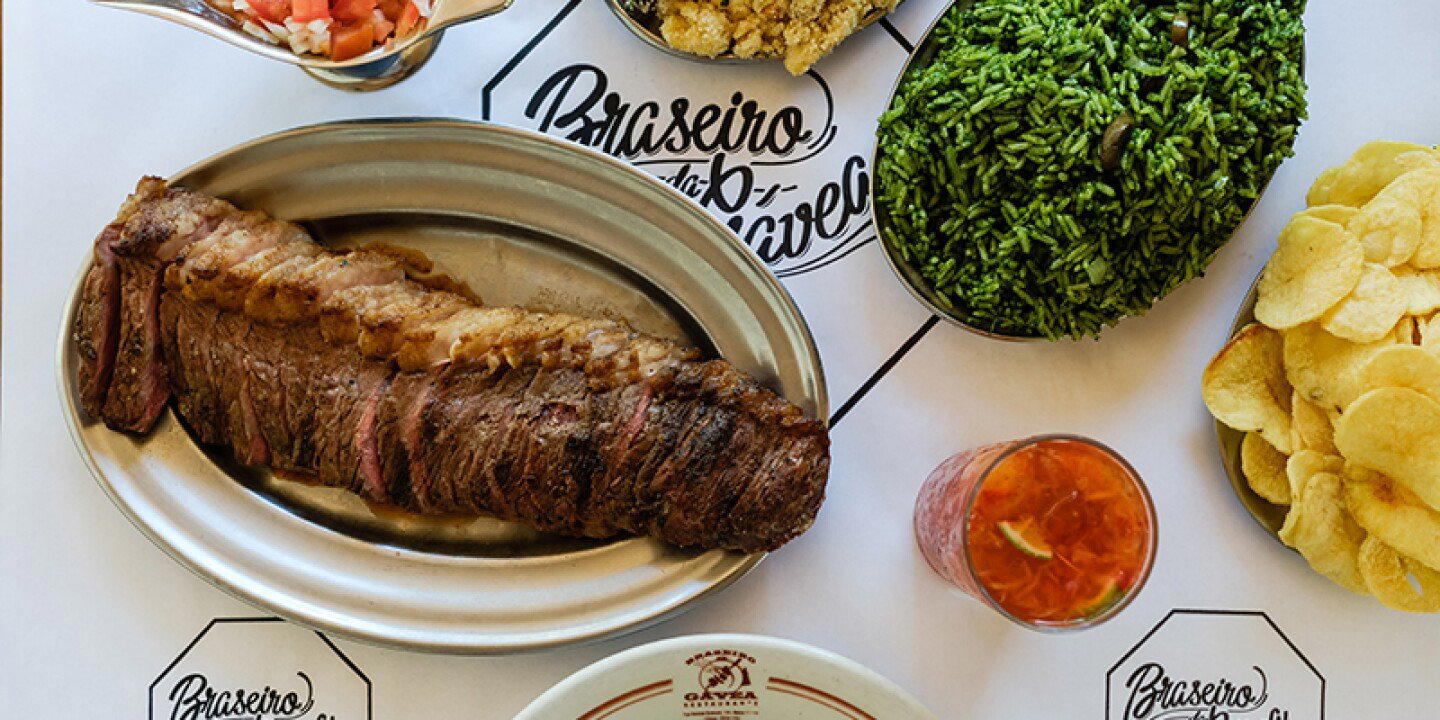
Fire, Square, and the Rhythm of Gávea
Praça Santos Dumont operates on a different clock to the rest of Rio. By early evening, the square in Gávea fills with a particular kind of steady noise: the low hum of conversation from people who have been coming to the same corners for years, the occasional motorbike crossing the cobblestones, and, from the direction of Braseiro da Gávea, the smell of charcoal and rendered fat drifting across the open air. That scent is the first thing you register before you see the place.
The braseiro format is defined by charcoal cooking, shared plates, and an informal pace. In Rio, live-fire neighbourhood restaurants occupy a distinct tier below the formal churrascaria rodízio chains and well above the corner grill stand. They tend to be small and positioned around a neighbourhood square where foot traffic and repeat custom drive the business. The counter or open kitchen is built around charcoal, not gas, and the social architecture of the meal is informal: orders come in pieces, sharing is assumed, and lingering is the expected mode. Braseiro da Gávea sits squarely in this format, addressing Praça Santos Dumont from Loja A at number 116, a position that puts the square's movement directly in view.
Gávea in the Rio Dining Map
Gávea is not where Rio's internationally recognised restaurant scene concentrates. That cluster sits primarily in Leblon, Ipanema, and Botafogo, where restaurants like Lasai, Oteque, and Oro represent the higher end of Brazil's contemporary dining output, operating at the $$$$ price tier with tasting menus and formal service structures. Gávea runs on different logic. The neighbourhood is residential and academic, and its restaurant culture reflects that: neighbourhood-facing, repeat-customer-driven, and less interested in destination dining than in consistent, dependable cooking.
That positioning is not a limitation; it is the point. The braseiro category in Brazil has its own legitimacy, separate from the modernist restaurants that draw international attention. Where D.O.M. in São Paulo or Manga in Salvador represent regional cooking filtered through formal technique, the neighbourhood braseiro represents something harder to manufacture: the continuity of an eating habit, the social function of a square, and the cumulative trust of people who return because the food does what it is supposed to do.
The Sensory Logic of Live-Fire Cooking
The braseiro kitchen is organised around heat management. Charcoal-based cooking requires reading the fire, adjusting distance, and timing cuts of meat against temperature rather than a clock. The results carry a light char on the exterior, retained moisture inside, and the low, persistent scent of wood smoke that settles into the air around a good braseiro. At Praça Santos Dumont, that atmosphere extends into the square itself on evenings when the air is still, which in Rio's subtropical climate means much of the year.
Rio's outdoor dining culture amplifies what a square-facing location does for a venue like this. The visual field from a table or standing position near the entrance typically includes the square's movement, the low canopy of trees, and the quality of Rio evening light. The combination of fire cooking smells, ambient square noise, and the unhurried pace of a Gávea evening produces an atmosphere that belongs to this neighbourhood and not easily replicated elsewhere in the city.
Where Braseiro da Gávea Sits Relative to Rio's Wider Table
Rio's restaurant range is wider than its international reputation suggests. At the formal end, venues like Cipriani and Casa 201 operate with the service architecture and price points of equivalent European addresses. At the accessible neighbourhood end, the braseiro and boteco format provides the daily eating infrastructure for most cariocas. The restaurant operates in the latter category, though Gávea's demographic leans more educated and middle-to-upper-middle than some other neighbourhood squares in Rio.
For context across Brazil's live-fire and regional traditions, the range is substantial: from the wood-fired approaches at Manu in Curitiba and Birosca S2 in Belo Horizonte to the coastal grilling traditions represented by venues like Orixás in Itacaré. Each reflects a regional relationship with fire and protein that is distinct from the southern churrasco tradition and from the modernist reinterpretation of Brazilian ingredients at restaurants like Mina in Campos do Jordão. The neighbourhood braseiro sits outside all of these framings; it is a format defined by social function as much as culinary technique.
Planning a Visit
The restaurant is at Praça Santos Dumont, 116, Loja A, in Gávea. The square is accessible from Leblon and Jardim Botânico by taxi or app-based transport in under ten minutes, and from Ipanema in fifteen. The neighbourhood's character is most legible in the early evening, when the square activates and the cooking smells from the braseiro carry furthest. For visitors building a Rio itinerary, the higher-end tasting-menu circuit sits elsewhere in the city alongside addresses like this one. Reservations are recommended.
The broader Brazilian dining circuit, for those extending the trip, runs through addresses as varied as Olivetto in Campinas, Primrose in Gramado, and Castelo Saint Andrews in Vale do Bosque, each representing a different register of Brazilian hospitality. For reference points outside Brazil entirely, the controlled-heat precision of Le Bernardin in New York and the communal format of Lazy Bear in San Francisco illustrate how fire and gathering can be approached at opposite ends of the formality spectrum, which helps clarify what the braseiro format in Rio is doing by staying in the middle: communal but uncomplicating, fire-led but neighbourly.
Peers in This Market
Comparable venues nearby, for context on price, style, and recognition.
| Venue | Cuisine | Price | Notes |
|---|---|---|---|
| Braseiro da GáveaThis venue — the venue you are viewing | Traditional Brazilian Churrascaria | $$ | Not listed |
| Celeiro | Organic Brazilian Buffet | $$$ | Leblon |
| Café do Alto | Northeastern Brazilian | $$ | Lapa |
| Confeitaria Colombo | Portuguese-Brazilian Pastries & Café | $$ | Centro |
| Puro | Contemporary Brazilian | $$$ | Jardim Botânico |
| Zazá Bistrô Tropical | Tropical Brazilian Fusion Bistro | $$$ | Ipanema |
Continue exploring
More in Rio de Janeiro
Restaurants in Rio de Janeiro
Browse all →
Bars in Rio de Janeiro
Browse all →

At a Glance
- Lively
- Rustic
- Classic
- Group Dining
- Casual Hangout
- Late Night
- Open Kitchen
- Beer Program
Current opening hours
- Monday
- 11:30 AM–1 AM
- Tuesday
- 11:30 AM–1 AM
- Wednesday
- 11:30 AM–1 AM
- Thursday
- 11:30 AM–1 AM
- Friday
- 11:30 AM–3 AM
- Saturday
- 11:30 AM–3 AM
- Sunday
- 11:30 AM–1 AM
Hours can change for holidays and private events. Last verified .