Our verdict
At 38 Trần Cao Vân in Hue, Bún Bò Cẩm represents the kind of address serious bún bò Huế devotees seek out: a neighbourhood spot operating inside Vietnam's most demanding regional culinary tradition. Hue's royal-court heritage placed extraordinary pressure on its cooks, and that legacy runs through every bowl of spiced beef broth served in the city's older quarters today.

Pearl is the En Primeur Club membership app, where members save venues, book tables and use the concierge.
The menu
What to order
- Bún bò thập cẩm
- Crab-meat balls
Where the Broth Comes From
Hue occupies a particular position in Vietnamese food culture that no other city quite replicates. As the seat of the Nguyễn dynasty until 1945, it developed a court cuisine defined by precision, regional specificity, and an almost obsessive relationship with local sourcing. That heritage did not stay inside palace walls. It filtered down into the city's street-level cooking, and nowhere is that more visible than in bún bò Huế, the spiced beef noodle soup that Hue considers its own, and defends fiercely against simplified versions served elsewhere in the country.
The difference between a bowl made in Hue and one made in Hanoi or Ho Chi Minh City is largely a question of ingredient provenance. Authentic bún bò Huế draws on the cattle raised in the central highlands and coastal lowlands surrounding Thừa Thiên-Huế province, on lemongrass harvested locally, and on mắm ruốc, the fermented shrimp paste from the central coast, that gives the broth its characteristic depth and salinity. These are not interchangeable inputs. The shrimp paste in particular varies considerably by region of production, and cooks in Hue will specify their source with the same care a French chef might apply to selecting anchovies.
Bún Bò Cẩm sits on Trần Cao Vân, a residential street in the older residential fabric of Hue city. This is the kind of address that operates within walking distance of the daily market and sources accordingly, which in Hue means access to produce that reflects the city's wet, subtropical growing conditions: herbs, saw-leaf coriander, banana blossom, shredded cabbage, that arrive at the table fresh enough to still carry morning-market moisture. The broth-forward tradition here is inseparable from that supply chain.
The Bowl Itself: A Culinary Tradition Under Pressure
Bún bò Huế as a category has faced two competing pressures over the past two decades. Tourism growth along the central Vietnam corridor, Hue, Hội An, Đà Nẵng, brought demand that some kitchens met by simplifying the spice profile and reducing cooking times to increase throughput. At the same time, a parallel current among older, locally-oriented shops has held to the longer simmer and the more assertive lemongrass-and-chilli base that regional diners expect.
The soup's construction involves a beef bone broth that requires several hours of simmering before the lemongrass and mắm ruốc are introduced. The noodles are thicker than those used in phở, with a slight chew that holds up against the weight of the broth. Accompaniments vary by shop but typically include sliced beef shank, pork knuckle, and in some preparations, Vietnamese pork sausage. The herb plate, presented separately so diners control the freshness and volume of each addition, is the most visible indicator of how seriously a kitchen takes the bowl. A thin, uniform herb plate suggests cost-cutting; a generous, varied one signals that sourcing is a priority.
For visitors already familiar with the depth that serious Vietnamese cooking can achieve, bún bò Huế sits in a different register from the refined contemporary interpretations served at places like Akuna in Ho Chi Minh City or Gia in Hanoi. It is not trying to reframe tradition; it is operating squarely within it, and the measure of quality is fidelity to the regional standard rather than departure from it. Similarly, the contrast with the formal French contemporary framework at La Maison 1888 in Da Nang is instructive: both represent serious cooking, but bún bò Huế spots like this one deliver that seriousness through restraint and sourcing discipline rather than through tasting-menu architecture.
Hue's Neighbourhood Eating Culture
Trần Cao Vân is not on the main tourist circuit that runs through the Citadel, Đông Ba market, and the Perfume River bank. That is, in practical terms, relevant information. The clientele at addresses like Bún Bò Cẩm skews heavily local, which affects both atmosphere and kitchen incentives. Shops that serve predominantly neighbourhood residents have a different accountability structure than those positioned near tourist accommodation: the repeat customer from two streets over is a harder judge than a traveller passing through once.
Hue's eating culture is, more broadly, one of the most stratified in Vietnam by meal type and time of day. Bún bò is a morning and midday food; it is rare to find it served in the evening in the city's older establishments. Arriving outside the morning window, most Hue bún bò spots begin winding down by early afternoon, risks finding the kitchen at reduced capacity or the broth at a point in its cycle where the balance has shifted. This is a logistical consideration that applies across the category, not just to this address. For more context on how to plan a day of eating in the city, our full Hue restaurants guide maps the meal-type structure in more detail.
Other Hue addresses worth considering alongside this one include Kim Chau and Saffron in Hue City, both of which operate within a different register of the local eating scene. Across the central Vietnam corridor, Cargo Club Cafe & Restaurant in Hoi An and Mi Quang Ba Vi in Thanh Khe offer points of comparison for regional noodle traditions at different price points and formats. Further afield, Bau Troi Do in Son Tra, Le Pont Club in Hai Phong, Phuong Nhung Restaurant in Cat Hai, Duyên Anh Restaurant in Phu Vang, Nhà hàng Madame Lân in Hai Chau, Phước Hòa 5 in Cam Le, Quảng Nam in Nam Giang, and Bien 14 Seafood Buffet Restaurant in Hao Long together sketch the breadth of central and northern Vietnamese dining at street and mid-market level. For those approaching Vietnam from a fine-dining reference point, Le Bernardin in New York City and Lazy Bear in San Francisco represent the international tier against which Vietnam's contemporary restaurant scene is increasingly measured, a useful calibration for understanding where Hue's traditional cooking fits in a global frame.
Planning Your Visit
Bún Bò Cẩm is located at 38 Trần Cao Vân in Hue. No website or booking infrastructure is listed for this address, which is consistent with the neighbourhood-shop format that defines most of the city's specialist noodle spots. Arriving on foot or by bicycle from the city centre is direct; the address sits within the residential grid south of the Citadel moat. Given that morning hours are standard for the bún bò category across Hue, planning arrival before midday is advisable. Prices at addresses of this type fall within the everyday street-food range that makes Hue one of the most accessible eating cities in Vietnam.
Frequently asked questions
Is Bún Bò Cẩm suitable for children?
Bún bò Huế is a spiced pork and beef broth, assertive in heat and lemongrass, which can be strong for young palates. That said, neighbourhood spots like this one on Trần Cao Vân typically serve locals of all ages, and portions are straightforward enough for families. If your children eat Vietnamese food regularly, this is a reasonable stop; if they are sensitive to chilli heat, order cautiously.
How would you describe the vibe at Bún Bò Cẩm?
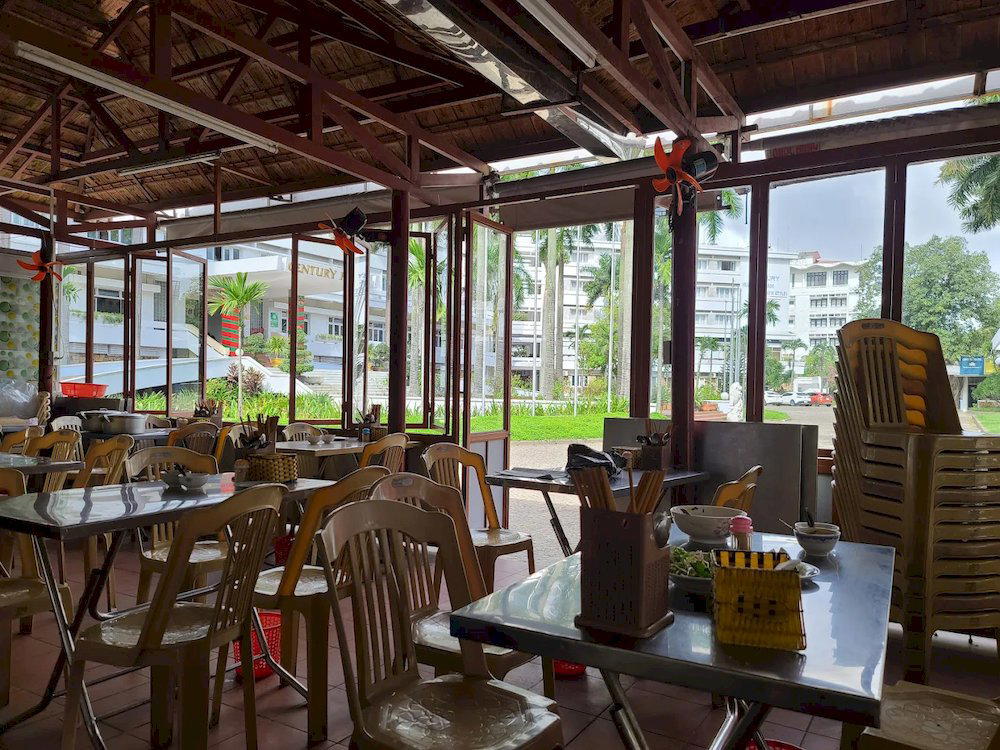
Trần Cao Vân sits off the main tourist corridor that connects Hue's Citadel, Đông Ba market, and the Perfume River, which means the room runs on local rhythm rather than visitor traffic. Expect plastic stools, fast turnover, and the particular focus of a place that does one thing repeatedly and well. There is no ambient soundtrack or mood lighting, the draw is the broth.
Is Bún Bò Cẩm the kind of place that closes early, and when should I go?
Hue's neighbourhood bún bò spots are built around the breakfast and early lunch rhythm, most sell out of broth by mid-morning, and arriving after 10am risks finding a depleted pot. An early visit, before 9am, gives the fullest bowl and the most active room.
What should I eat at Bún Bò Cẩm?
The address is a bún bò Huế house, so the spiced beef and pork noodle soup is the order. Bún bò Huế as a dish is defined by its lemongrass-forward broth, round rice noodles, and combination of shank, pork knuckle, and chả, a pressed pork element specific to the Hue tradition. Accompaniments typically include fresh herbs, banana blossom, and chilli paste served alongside.
A Quick Peer Check
| Venue | Cuisine | Price | Awards | Notes |
|---|---|---|---|---|
| Bún Bò CẩmThis venue (the venue you are viewing) | Traditional Bún Bò Huế | $1–10 | Not listed | Not listed |
| Anan Saigon | Modern Vietnamese Street Food Fine Dining | $50–100 | 1 Michelin Star · World's 50 Best #86 | Vietnamese Street Food, ₫₫ |
| La Maison 1888 | Michelin-Starred French Contemporary | $150–200 | 1 Michelin Star · La Liste Top Restaurants | French Contemporary, ₫₫₫₫ |
| Akuna | Modern Australian-Vietnamese Fine Dining | $150–200 | 1 Michelin Star · La Liste Top Restaurants | Innovative, ₫₫₫₫ |
| Coco Dining | Progressive Vietnamese Fine Dining | $150–200 | 1 Michelin Star | Innovative, ₫₫₫ |
| Gia | Modern Vietnamese Fine Dining | $100–150 | 1 Michelin Star · La Liste Top Restaurants | Vietnamese Contemporary, ₫₫₫₫ |
Continue exploring
More in Hue
Restaurants in Hue
All restaurants in Hue →

Details
- Rustic
- Cozy
- Casual Hangout
- Standalone
- Local Sourcing
- A La Carte
Functional, unpretentious atmosphere oriented toward local diners with no design investment.