
Michelin Selected
Azerai La Residence, Hue occupies a restored French colonial mansion on the southern bank of the Perfume River, positioning it among Vietnam's most architecturally coherent heritage hotels. The property sits within the former French Quarter, where colonial-era civic buildings still define the streetscape, placing guests in direct proximity to the Imperial Citadel and the city's principal historic sites.

Pearl is the En Primeur Club membership app, where members save venues, book tables and use the concierge.
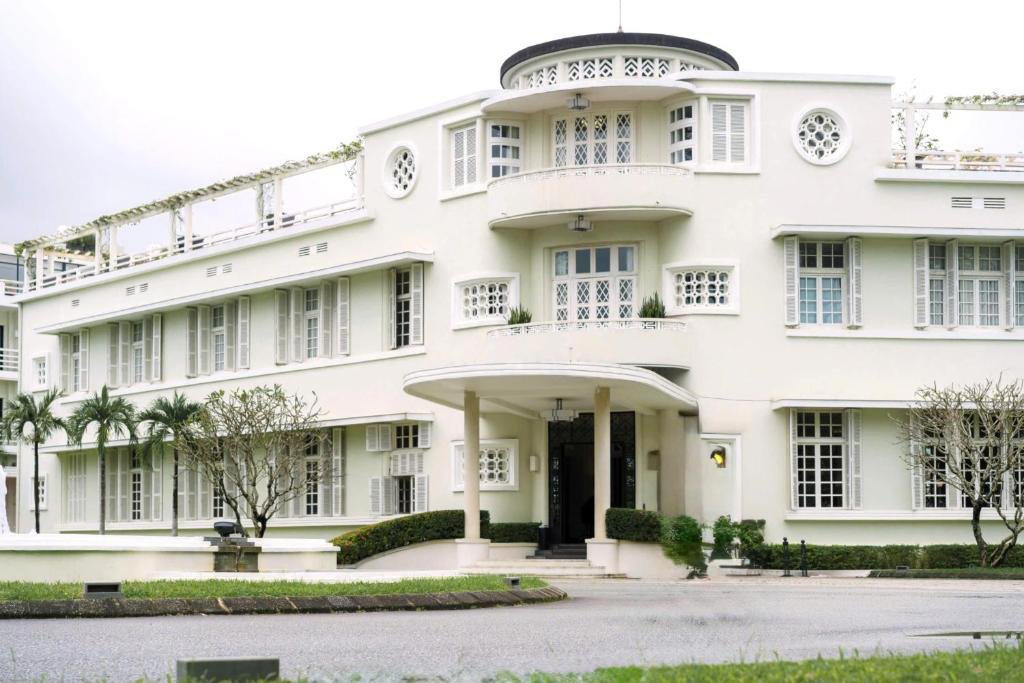
Colonial Architecture as the Main Event
There is a particular category of hotel in Southeast Asia where the building itself does more editorial work than any amenity list could. Azerai La Residence, Hue belongs to that category. The property is housed in a restored Art Deco mansion that served as the official residence of the French Governor-General during the colonial period, a provenance that gives the building genuine historical weight rather than nostalgic pastiche. The structure sits along Lê Lợi Street on the southern bank of the Perfume River, directly facing the wall of the Imperial Citadel across the water. That positioning is not incidental. Few properties in Vietnam can claim a sightline that connects two distinct eras of Vietnamese political history in a single glance.
The design intervention here follows the model that has defined the better end of colonial heritage restoration: respect the envelope, update the interiors with enough contemporary discipline to avoid the museum trap. The original Art Deco detailing, geometric facades, proportioned colonnades, high-ceilinged volumes, remains structurally intact. Inside, the palette runs to period-appropriate restraint rather than the exuberant maximalism that lesser heritage conversions use to signal luxury. For a city as architecturally layered as Hue, that editorial restraint reads correctly.
Hue's Hotel Tier and Where This Property Sits
Vietnam's central region has developed a recognisable luxury accommodation pattern over the past two decades. The coast near Da Nang and Hoi An has attracted large-scale resort development, properties like the Four Seasons Resort The Nam Hai, Hoi An and the Banyan Tree Lăng Cô represent that coastal resort tier. Hue itself operates differently. The city's draw is cultural and historical rather than beach-driven, which means the accommodation that performs leading here tends to be smaller, more architecturally specific, and oriented toward guests who are spending time with the Imperial Citadel, royal tombs, and the city's well-documented culinary tradition rather than a pool deck.
Within Hue's hotel market, Azerai La Residence occupies the heritage-mansion tier alongside properties like Ancient Hue Garden Houses and the Indochine Palace. What distinguishes the Azerai property specifically is the scale and administrative significance of the original building. Governor-General residences were built to project authority, they are categorically larger and more formally composed than merchant houses or colonial villas. That scale gives the property a spatial generosity that smaller heritage conversions cannot replicate.
The Azerai group's broader positioning in Southeast Asia also provides useful competitive context. The group operates properties across Vietnam and the wider region, with a design-led approach that prioritises architectural integrity over brand-standardisation. For comparison, the kind of considered restraint that defines Azerai's approach is closer to what Amanoi in Vinh Hy pursues in its own coastal context, properties where the physical environment is understood as the primary asset, not merely the backdrop.
The River-Facing Position and What It Means Practically
The Perfume River runs through Hue as both a geographic and symbolic axis. The Imperial Citadel sits on the northern bank; the French colonial quarter, including the hotel, developed on the southern side. For guests, this geography means the river view from the property is looking directly at the historic core of the Nguyen dynasty's capital. That view changes character across the day, early morning light on the citadel walls reads differently from late afternoon, and it provides a consistent spatial orientation that larger, campus-style resorts cannot offer.
Lê Lợi Street, where the hotel sits, functions as one of the main riverside promenades. Walking access to the central city, covered market, and the Truong Tien Bridge is measured in minutes rather than requiring transport. For guests visiting Hue to engage seriously with its historic sites, that walkability is a genuine operational advantage. The royal tombs further upriver require transport, but the density of the central city's cultural sites makes the hotel's position a practical asset for the type of itinerary Hue typically generates. See our full Hue restaurants and travel guide for how to structure time in the city around the major sites.
Dining in the Context of Hue's Food Culture
Hue maintains one of the most distinct regional cuisines in Vietnam. The city's culinary identity is tied to its imperial history: royal court cooking developed here over several centuries, producing a tradition of elaborate small dishes, precise presentation, and specific local ingredients that distinguish Hue cooking from both the northern and southern Vietnamese registers. Bún bò Huế, bánh khoái, and the city's particular approach to vegetarian cooking (historically connected to Buddhist temple culture) are all expressions of that regional specificity.
A property at this address, with this heritage, naturally connects its dining offer to that broader culinary context. The city's food culture is well-served by both street-level specialists and restaurant formats, and the concentration of these around the central market and the old quarter means guests are within easy reach of the full spectrum. For broader Vietnam hotel context, particularly if the Hue stay is part of a longer itinerary, the InterContinental Hanoi Westlake covers the northern end, while properties like the Almanity Hoi An Wellness Resort and the Novotel Danang Premier Han River serve the central coast corridor north and south of Hue.
Planning a Stay
Hue's climate divides sharply by season. The city sits in a rain shadow pattern that makes October and November particularly wet, with the typhoon corridor passing through central Vietnam during that period. The dry season running from February through August offers the most reliable conditions, with March to May generally considered the period when temperature and humidity are leading balanced for walking the outdoor historic sites. The imperial tombs and citadel require significant time on foot, which makes timing relative to heat and rain meaningful for how much ground guests can cover.
Reservations for the property should be made well in advance during the peak February-to-May window, when demand from international visitors combining Hue with Da Nang and Hoi An is at its highest. The hotel's central river position makes it a logical anchor for that central Vietnam itinerary, which typically runs Hue, Hoi An, and Da Nang across four to seven days. Other Vietnam properties worth considering along the broader country route include Amanaki Saigon Boutique Hotel in the south and Anantara Quy Nhon Villas further down the coast.
| Venue | Cuisine | Price | Awards |
|---|---|---|---|
| Azerai La Residence, HueThis venue (the venue you are viewing) | This venue | Not listed | Michelin Selected |
| Capella Hanoi | Not listed | Not listed | 3 Michelin Keys · Michelin Guide New Hotels New Hotel |
| Four Seasons Resort The Nam Hai, Hoi An | Not listed | $750–1,000 | 2 Michelin Keys · La Liste Top Hotels |
| InterContinental Danang Sun Peninsula Resort | Not listed | Not listed | 1 Michelin Key · La Liste Top Hotels |
| JW Marriott Hotel Hanoi | Not listed | $100–200 | Michelin Selected · Forbes Recommended |
| Park Hyatt Saigon | Not listed | $300–500 | 1 Michelin Key · La Liste Top Hotels |
Recognition history
Dated appearances from independent guides and award organizations, with the underlying list record or original source where available.
Michelin Selected
Michelin
Continue exploring
More in Hue
Details
- Elegant
- Sophisticated
- Quiet
- Scenic
- Intimate
- Romantic Getaway
- Honeymoon
- Anniversary
- Waterfront
- Historic Building
- Panoramic View
- Pool
- Spa
- Wi Fi
- Fitness Center
- Room Service
- Concierge
- Garden
- Waterfront
- Garden
Elegant colonial-era atmosphere with vaulted ceilings, polished wood floors, and subtle nautical Art Deco details in a tranquil riverside garden setting.