
Michelin Plate
Our verdict
Tucked behind a sibling restaurant on Yulin 8th Alley, Aurore operates a single tasting menu that applies Western technique to Sichuan's most immediate seasonal produce. The result is a format rare in Chengdu: a local chef and young kitchen team producing work that reads as genuinely inventive without losing its regional anchor. For a city that already sets the benchmark for Chinese regional cooking, that distinction carries weight.

Pearl is the En Primeur Club membership app, where members save venues, book tables and use the concierge.
A Back Room With Intentions
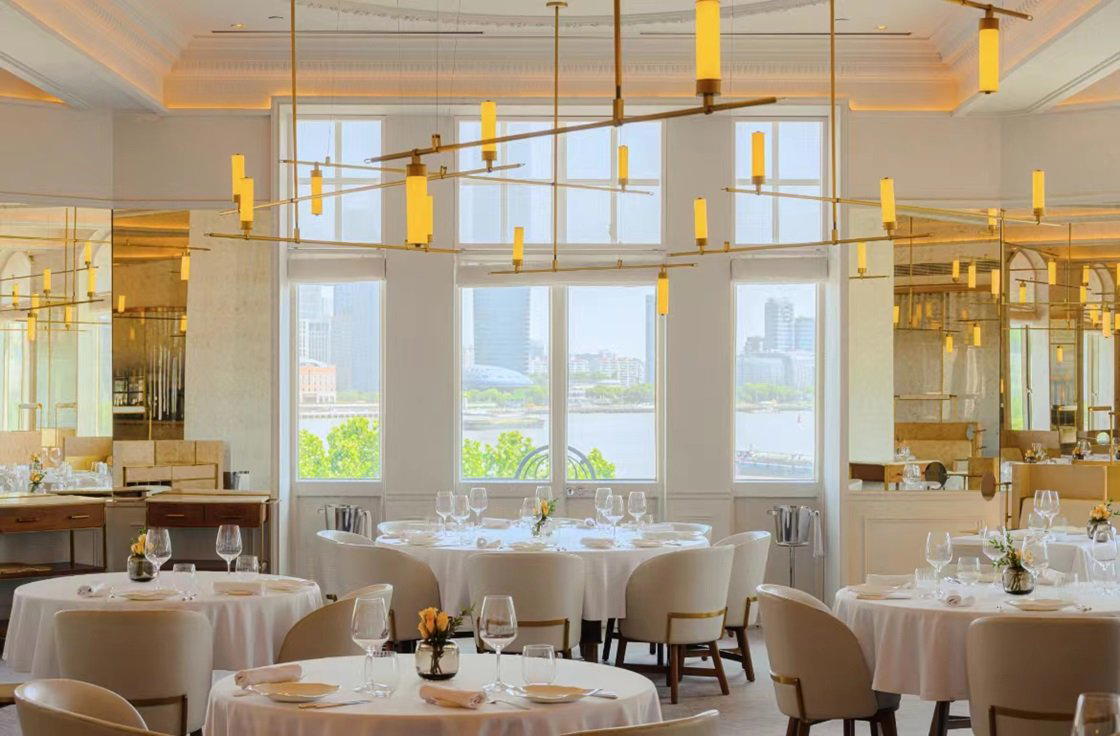
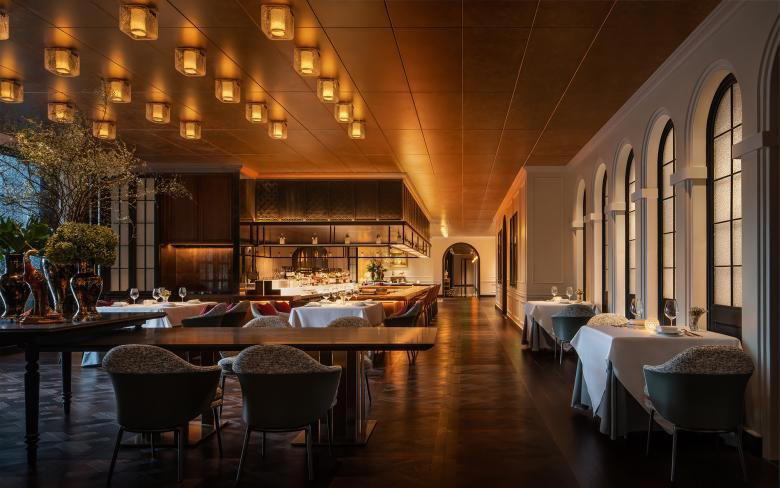
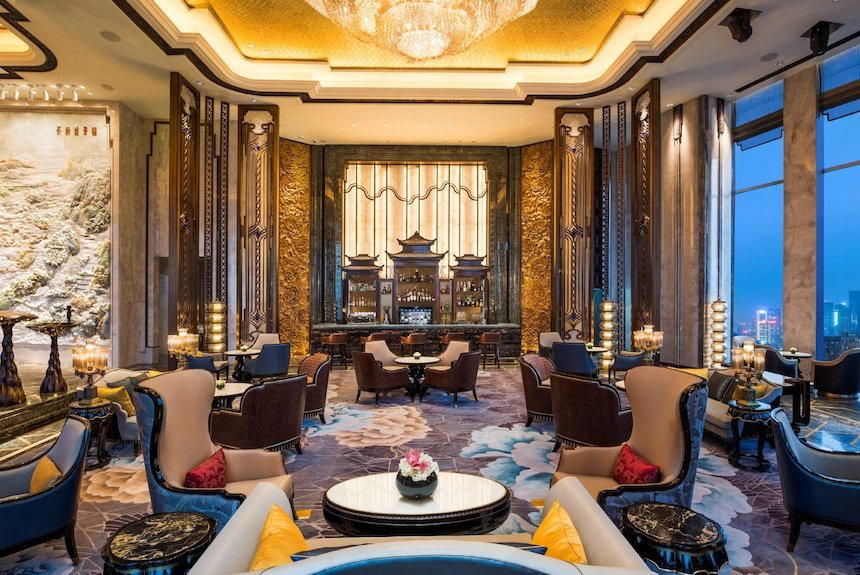
Yulin is one of Chengdu's more residential quarters, a neighbourhood defined less by flagship addresses than by the layered accumulation of teahouses, late-night stalls, and small operators that have held their corners for years. The dining room at Aurore occupies the second floor of No. 9, Yulin 8th Alley, and it is reached through, or past, a sibling restaurant at street level. That physical arrangement is not incidental: it creates a filter, ensuring that the people who arrive at the open kitchen counter upstairs have already made a deliberate choice. The room is unobtrusive by design, the kind of space where the cooking is expected to do the persuading.
Across Chinese fine dining right now, the tension between regional identity and international technique is producing two broadly distinct approaches. Some kitchens import frameworks wholesale, softening local ingredients to fit European tasting-menu conventions. Others treat Western method as a secondary toolkit, useful for precision and texture management, but subordinate to the flavour logic of the local tradition. Aurore belongs to the second camp. The kitchen's Sichuan foundation is not decorative; it shapes which produce gets sourced, how heat is applied, and where the menu's internal logic runs.
For broader orientation across Chengdu's dining options, see our full Chengdu restaurants guide.
What the Produce Says About the Menu
A single tasting menu built around the freshest local produce is, at one level, a familiar format globally. At this address it carries a different charge, because Sichuan's agricultural supply chain is among the most specific in China. The basin's climate, humidity, and soil conditions produce chillies, Sichuan peppercorns, preserved vegetables, river fish, and seasonal greens that carry flavour profiles unavailable elsewhere. A kitchen genuinely sourcing from that supply is working with different raw material than a kitchen importing against a price point.
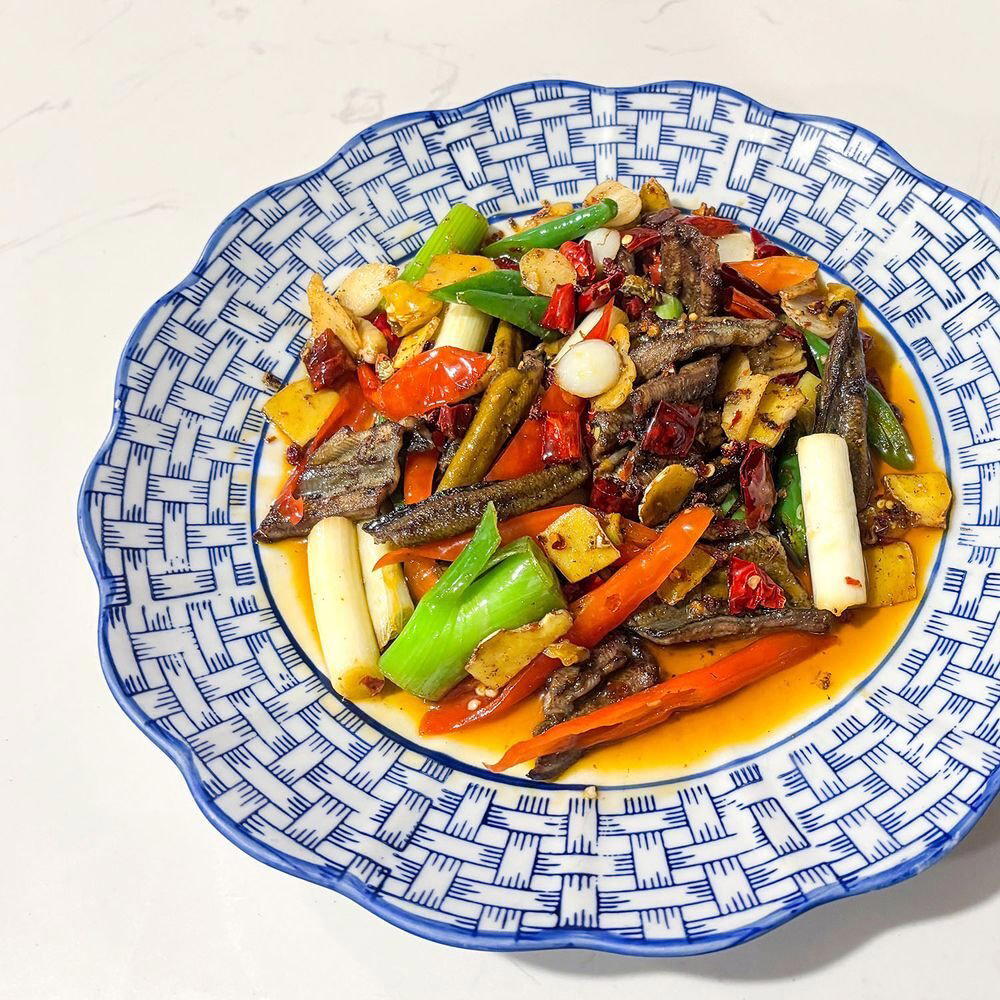
What separates Aurore's approach from a conventional local restaurant is the range of cooking methods applied to that sourced produce within a single sitting. The menu moves through pan-frying, deep-frying, steaming, and grilling, not as a demonstration of technique for its own sake, but as a way of drawing different qualities from the same ingredient base. A vegetable that steams into something subtle can be transformed entirely when grilled over high heat; a protein carries different fat and texture depending on whether it is pan-fried or deep-fried. That variety within one menu keeps the experience from flattening into a single register, which is a risk with tasting formats that over-rely on consistency of technique.
The broader comparison here is instructive. At the top end of Chengdu fine dining, Yu Zhi Lan and Xin Rong Ji operate at the ¥¥¥¥ tier with heavy institutional recognition behind them. Aurore operates differently: smaller, less visible, and shaped by a local chef working with a young team rather than by the gravitational pull of a national brand. That peer positioning matters for how to read the menu. The ambition here is closer to the kind of research-forward cooking that kitchens like 102 House in Shanghai or Ru Yuan in Hangzhou are pursuing in their own regional registers, rooted, technically considered, and operating outside the obvious headline tier.
The Role of the Open Kitchen
The open kitchen at Aurore is not theatrical in the way that some tasting-menu formats use exposure as entertainment. In a room this size and with this level of menu specificity, visibility between kitchen and dining room functions as accountability. The cooking choices are on display, the pacing is transparent, and the gap between what is promised and what arrives is immediately apparent. That format suits a young kitchen that appears to be working through ideas rather than executing a stable, long-settled repertoire. Some of the most interesting Sichuan-inflected tasting menus currently running in China share that quality of productive restlessness, compare the earlier trajectory of Fang Xiang Jing or Fu Rong Huang within the Chengdu context.
Internationally, the format of a single-menu, produce-led kitchen with visible cooking has become dominant among restaurants that attract sustained critical attention. Chef Tam's Seasons in Macau and Imperial Treasure Fine Chinese Cuisine in Guangzhou represent the more institutionally established end of that spectrum. Aurore sits in an earlier, less codified position, which for some diners is precisely the draw. The cooking at this stage carries more variability, and potentially more surprise, than a kitchen operating within a fixed critical consensus about what it should be doing.
For readers comparing the Chengdu fine-dining field more broadly, Hokkien Cuisine offers an interesting counter-point: a different regional tradition operating within the same city, which underlines how much Chengdu's restaurant scene absorbs influences that sit well outside the Sichuan framework.
Planning a Visit
Aurore is located at 2F, No. 9, Yulin 8th Alley, Wuhou District, Chengdu. The address places it comfortably within walking range of Yulin's broader network of bars and late-night options, making it a natural anchor for an evening that continues after the meal. Given the format, a single tasting menu in a small room, reservations are necessary, and the practical advice is to contact the sibling restaurant at street level or search for current booking channels through Chengdu dining platforms, as direct contact details for Aurore are not independently listed. The Yulin area is well-served by Chengdu's metro system, with additional taxi and rideshare access direct from the city centre.
For those planning a wider visit, our Chengdu hotels guide, bars guide, and experiences guide cover the full picture. For wine-focused evenings in the city, our Chengdu wineries guide is also worth consulting.
For comparison against tasting-menu formats outside China, Le Bernardin in New York City and Emeril's in New Orleans represent Western anchors in the produce-led, single-format conversation. Closer to home in spirit, Xin Rong Ji on Xinyuan South Road in Beijing and Dai Yuet Heen in Nanjing show how Chinese kitchens at different price tiers are resolving the same local-versus-technique question.
Frequently asked questions
Does Aurore have a Michelin star or similar recognition?
Aurore has received recognition including: This unobtrusive dining room with an open kitchen is hidden behind its sibling restaurant. The local chef leads a young kitchen team as they invent novel culinary gems that are rooted in Sichuanese traditions, but finessed with Western tech….
How do I find Aurore?
Aurore is located at 2F, No. 9, Yulin 8th Alley, Wuhou, Chengdu.
What do people recommend at Aurore?
Aurore operates on a single tasting menu, so there is no à la carte selection to choose from. The kitchen's approach draws on locally sourced Sichuan produce prepared across a range of techniques, pan-frying, deep-frying, steaming, and grilling, which means the menu's breadth is itself the recommendation. Arriving without expectations about a signature dish is the right posture; the format is designed to move through contrasts rather than anchor on one course.
What's the best way to book Aurore?
Aurore does not publish a phone number or website through standard channels. In Chengdu, restaurants at this format level are most reliably reached through WeChat, either a verified public account or direct contact via the sibling restaurant that shares the Yulin 8th Alley address. Arriving in person during service hours to make a reservation is also a practical option given the location in a walkable neighbourhood.
What's the signature at Aurore?
The signature is the format rather than any individual dish: a tasting menu in which Western culinary technique is applied to produce sourced from within Sichuan's supply network. The local chef leads a young kitchen team, and the through-line across courses is the tension between regional tradition and European-influenced finesse. That framing, not a single plate, is what distinguishes Aurore within Chengdu's current fine-dining tier.
Do they accommodate allergies at Aurore?
Given the single tasting menu structure, advance notice is more important here than at à la carte venues, since the kitchen builds the entire progression around a fixed framework and substitutions require preparation.
How does Aurore relate to its sibling restaurant, and does that affect the visit?
Aurore's dining room sits on the second floor of No. 9, Yulin 8th Alley, positioned behind its sibling restaurant, a layout that makes the address easy to miss on a first visit. The arrangement is deliberate: the front operation absorbs walk-in traffic while Aurore functions as a separate, reservation-focused room with its own kitchen team applying Western techniques to Sichuan produce. Knowing the building configuration before arrival is practical, particularly since no signage is noted in public records for the upper floor.
In Context: Similar Options
Comparable venues nearby, for context on price, style, and recognition.
| Venue | Cuisine | Price | Awards | Notes |
|---|---|---|---|---|
| AuroreThis venue (the venue you are viewing) | Sichuan-based Modern Chinese | Not listed | Michelin Plate | Not listed |
| Silver Cottage | Traditional Sichuan Cuisine | Not listed | Michelin Plate | Chengdushi |
| Cloud Arise (Chenghua) | Traditional Sichuanese | Not listed | Michelin Plate | Chengdushi |
| Infinite Luck | Modern Sichuan Fine Dining | Not listed | Michelin Plate | Chengdushi |
| Chanyue Vegetarian | Modern Sichuan Vegetarian | $20–30 | Michelin Plate | Chengdushi |
| Co-Chengdu | Modern Innovative Chinese Tasting Menu | $200–300 | Star Wine List | Chengdushi |
Recognition history
Dated appearances from independent guides and award organizations, with the underlying list record or original source where available.
Michelin Plate
Michelin · 2026 Michelin Plate
Continue exploring
More in Chengdu
Restaurants in Chengdu
All restaurants in Chengdu →
Bars in Chengdu
All bars in Chengdu →
Details
- Modern
- Elegant
- Sophisticated
- Special Occasion
- Open Kitchen
- Local Sourcing
- Tasting Menu