1 Michelin Star
Our verdict
A Chengdu outpost of a chain that began as a street stall in Weishan in 1923, Ma's Kitchen in the Jinjiang district brings century-old Sichuan classics to the Taikoo Li crowd. The duck blood curd with pork offal and crispy fen zheng rou are the dishes to know. Queues form from opening, plan accordingly.

Pearl is the En Primeur Club membership app, where members save venues, book tables and use the concierge.
The menu
What to order
- Roasted goose
- Mapo tofu
- Duck blood curd with pork offal
A Century of Sichuan, Reframed for Taikoo Li
Chengdu's dining scene has always sorted itself into tiers that don't always map neatly onto price. At one end sit the elaborate tasting-menu houses Yu Zhi Lan and its ilk, charging four-symbol prices for meticulously plated regional cooking. At the other, a denser, louder ecosystem of neighbourhood kitchens where the food is just as considered but the context is deliberately unglamorous. Ma's Kitchen, operating out of Dong Kangshi Street in the Jinjiang district, occupies a third position that has become increasingly common in Chinese cities: a historic provincial chain repositioned for an urban, design-literate audience.
The Taikoo Li retail and dining precinct, where this outpost sits, is itself a useful frame. It is the kind of development that attracts international names alongside local institutions, and the latter category tends to perform better here when it arrives with a credible backstory. Ma's Kitchen has that in quantity. The brand traces its origins to a stall in Weishan, a small city in Yunnan with deep culinary crossover into Sichuan traditions, that opened in 1923. Over a century of operation is not a marketing line; it is an editorial fact that changes how you read the menu.
What Sichuan Cooking Actually Looks Like at This Price Point
Sichuan cuisine is one of China's most globally misrepresented regional traditions. Outside the province, it tends to collapse into a single flavour note, the numbing heat of Sichuan peppercorn, the málà profile that has become a kind of shorthand for the whole cuisine. Inside Chengdu, the picture is considerably more differentiated. The city's most serious cooking rooms, places like Fang Xiang Jing and Fu Rong Huang, work with a palette that includes brined, fermented, smoked, and slow-braised preparations alongside the peppercorn-forward dishes that dominate export versions of the cuisine.
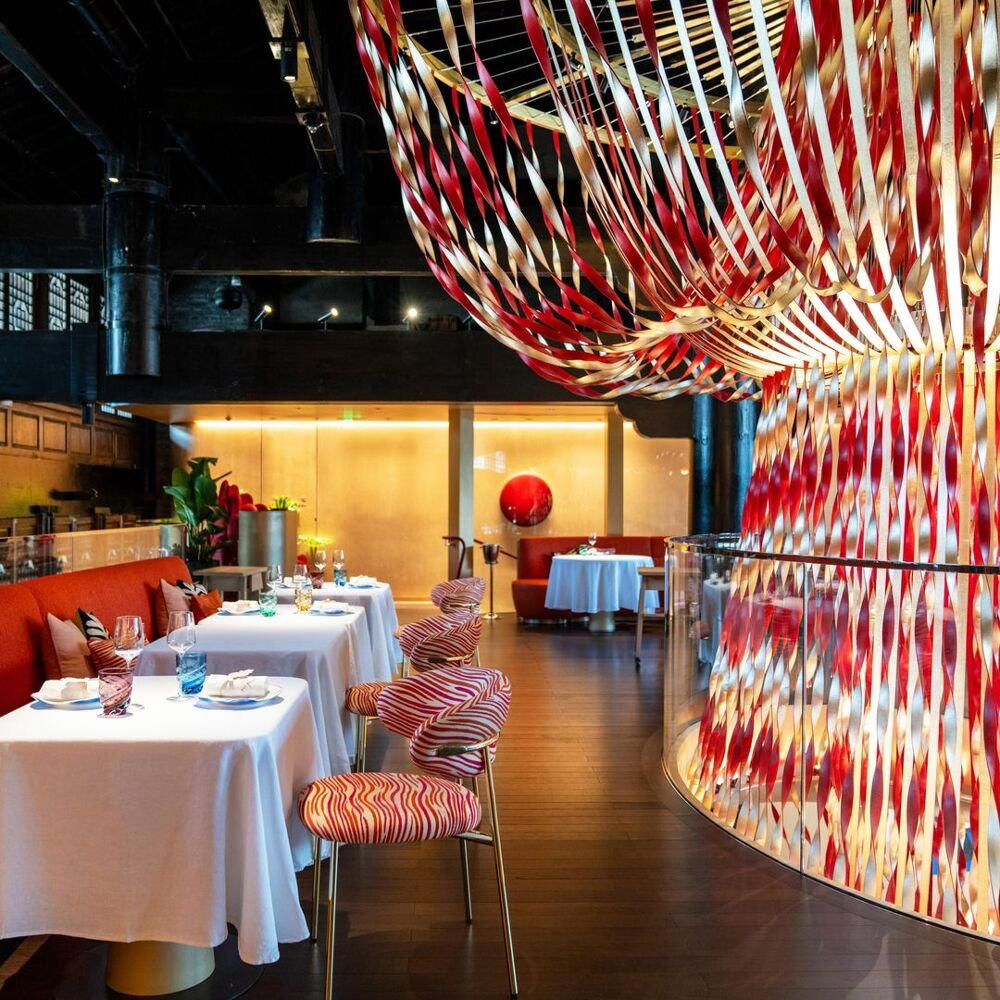
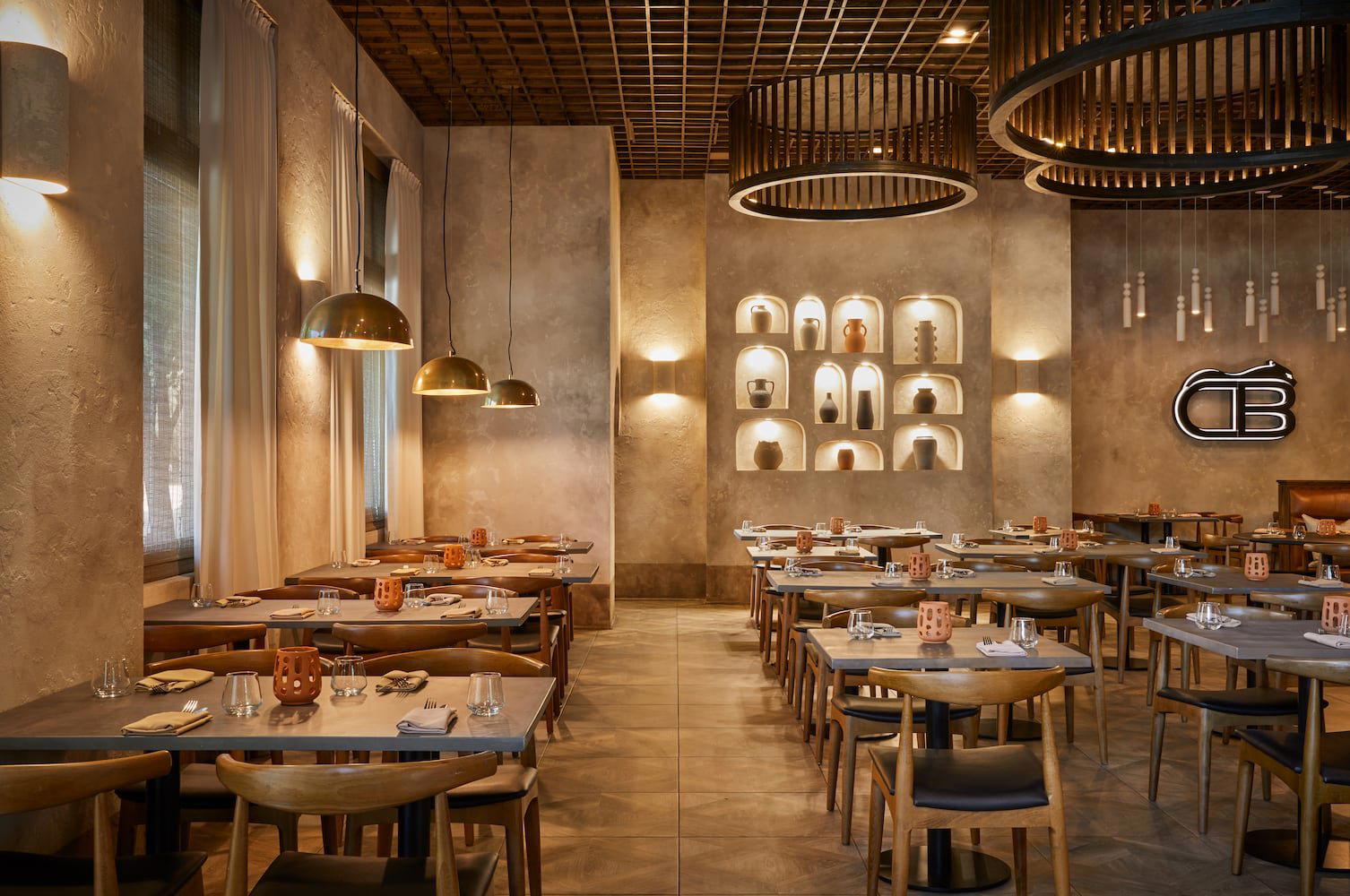
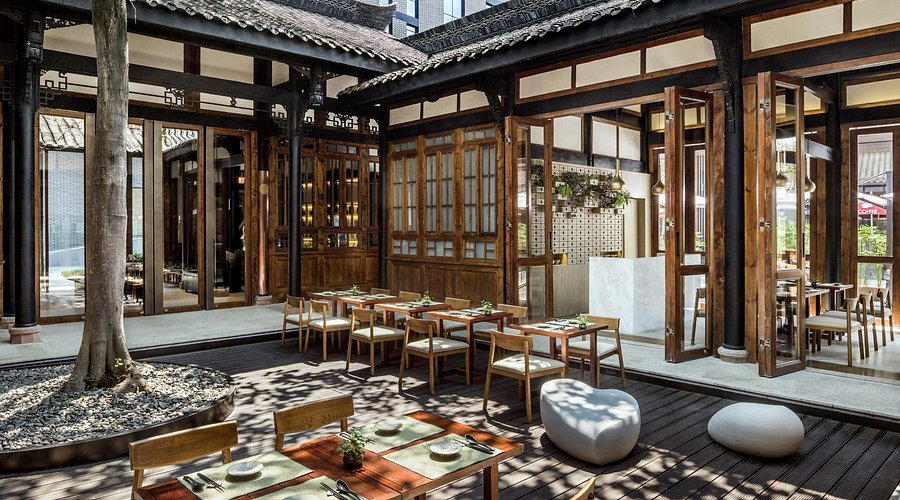
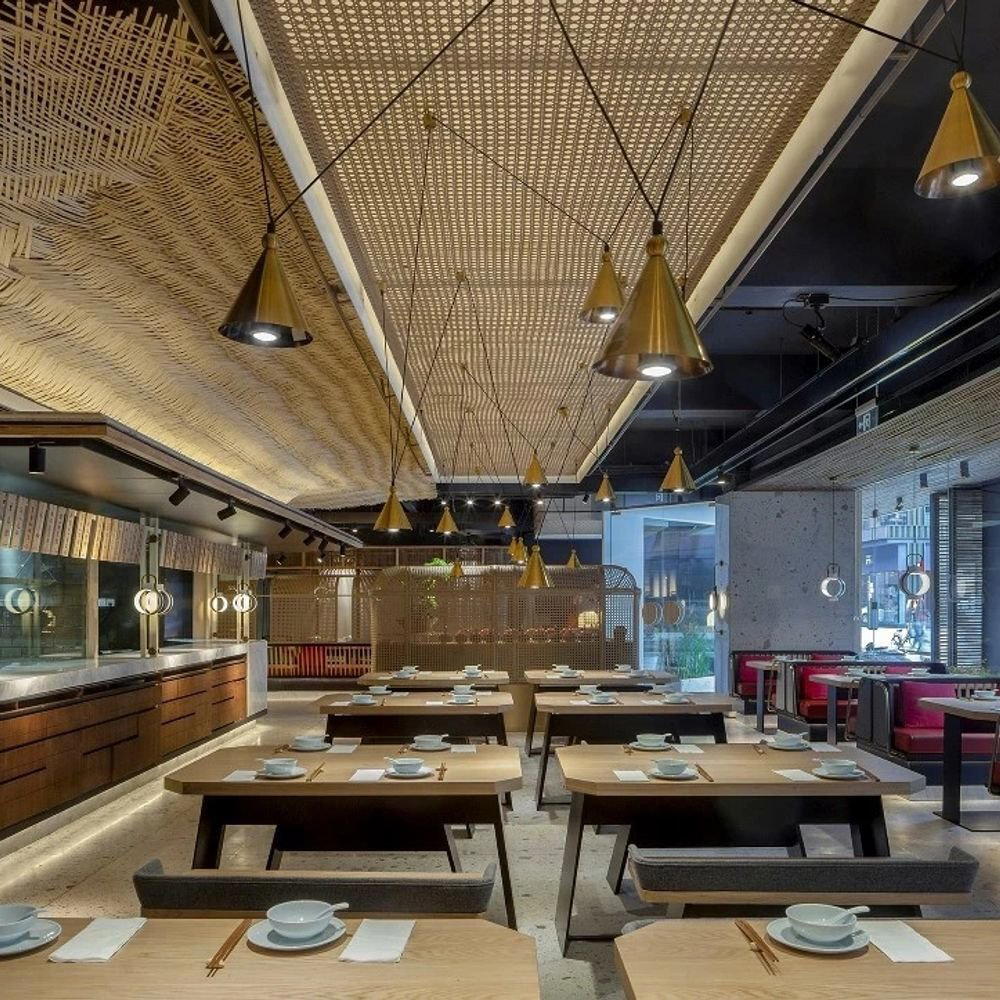
Ma's Kitchen sits in the ¥¥ tier, broadly accessible, closer in price to Hokkien Cuisine than to the four-symbol operations. What that price point buys here is not a simplified version of the cuisine but a more direct one: street-inflected preparations with long histories, served without ceremony in a space that nods at nostalgia without being enslaved by it. The interior has been described as vintage hipster, exposed materials, warm lighting, the visual grammar of a reclaimed Chengdu teahouse mapped onto a modern build-out. In a precinct like Taikoo Li, where the aesthetic competition is fierce, that positioning reads clearly.
The Dishes That Define the Visit
Duck blood curd with pork offal is the signature preparation here, and it is worth understanding what that means in Sichuan terms before ordering. Blood tofu, mao xue wang in its more heavily spiced form, is a staple of Chengdu's casual dining circuit, built around the same logic as French andouillette or British faggots: a commitment to whole-animal cooking that treats offal not as a provocation but as a natural ingredient. Ma's version leans into the original Weishan-inflected recipe, pairing the curd with sliced pork offal in a preparation that is closer to a warm assemblage than a stewed dish.
The other dish to prioritise is the crispy fen zheng rou: pork coated in seasoned rice flour, first steamed, then deep-fried. The technique produces a surface that fractures differently from a straight fry, the rice flour crust has a lighter, more brittle texture than wheat-based coatings, and the steam phase ensures the pork interior stays moist through the second cook. This two-stage method is well-established in Hunan and Sichuan home cooking but less frequently executed well in restaurant settings, where the timing gap between steam and fry is hard to manage at volume. The fact that this preparation is listed among the signatures suggests it is being produced consistently.
For wider regional comparison, the same interrogation of technique over flash is evident at Xin Rong Ji (Taizhou) in Chengdu, though that kitchen operates at a different price point and from a Zhejiang rather than Sichuan base. Across China's major dining cities, a similar pattern holds: the most respected mid-range rooms tend to be those with identifiable regional anchors and a refusal to adapt the cooking for perceived tourist preferences. Xin Rong Ji in Beijing and Ru Yuan in Hangzhou illustrate how this model translates across different provincial traditions.
Chengdu's Mid-Range Moment
The most interesting development in Chengdu dining over the past decade is not at the top of the market. Rooms like Yu Zhi Lan have attracted international attention and justified it, but they represent a small, capacity-constrained segment. The more consequential shift has been in the ¥¥ and ¥¥¥ bracket, where a generation of operators has found ways to pair credible culinary lineage with spaces that appeal to younger urban diners without abandoning the cooking that made the brand matter in the first place.
Ma's Kitchen is one of the cleaner examples of this repositioning. The Weishan origin story is genuine historical depth, not invented heritage. The Taikoo Li location places it inside one of Chengdu's highest-footfall precincts, which creates queue pressure from the first service. Arriving at opening is the practical answer to that pressure, the kitchen is reported to draw queues from the moment doors open, which at a ¥¥ price point in a tourist-adjacent precinct is a meaningful signal about repeat local patronage rather than just passing trade.
For those approaching Chengdu's food culture from a broader Chinese regional perspective, the city now supports a range of reference points. The formal end of the market has parallels at Chef Tam's Seasons in Macau and Imperial Treasure Fine Chinese Cuisine in Guangzhou, both operating in different regional registers. 102 House in Shanghai and Dai Yuet Heen in Nanjing offer additional cross-city context for how Chinese fine dining and heritage-brand casual dining are sorting themselves at the moment. Against that wider map, Ma's Kitchen occupies a specific and coherent niche.
Planning Your Visit
Ma's Kitchen sits at Dong Kangshi Street 1, Building 5, in the Jinjiang district, a short walk from the Taikoo Li shopping precinct in central Chengdu. The ¥¥ pricing makes this one of the more accessible rooms in the area, and it draws accordingly. The queue that forms at opening is not a recent phenomenon; it appears to be structural. Arriving at the start of service is the most reliable way to reduce wait time. No phone number or online booking channel appears in the public record for this location, so walk-in planning is the default. For broader orientation around where this fits in the city's restaurant ecosystem, see our full Chengdu restaurants guide. Additional city planning resources: Chengdu hotels, Chengdu bars, Chengdu experiences, and Chengdu wineries.
Frequently asked questions
Where do I go for Ma's Kitchen (Jinjiang)?
Ma's Kitchen (Jinjiang) is located at China, CN 四川省 成都市 锦江区 东糠市街 1 1号附5 邮政编码: 610023, Chengdu.
What style of cooking does Ma's Kitchen (Jinjiang) do?
Does Ma's Kitchen (Jinjiang) have a Michelin star or similar recognition?
Ma's Kitchen (Jinjiang) has received recognition including: This popular eatery in the bustling Taikoo Li area started out as a stall in Weishan in 1923. Light years from its humble beginnings, this outpost of the chain in Chengdu features a vintage hipster interior and Sichuan classics on the menu.….
What should I order at Ma's Kitchen (Jinjiang)?
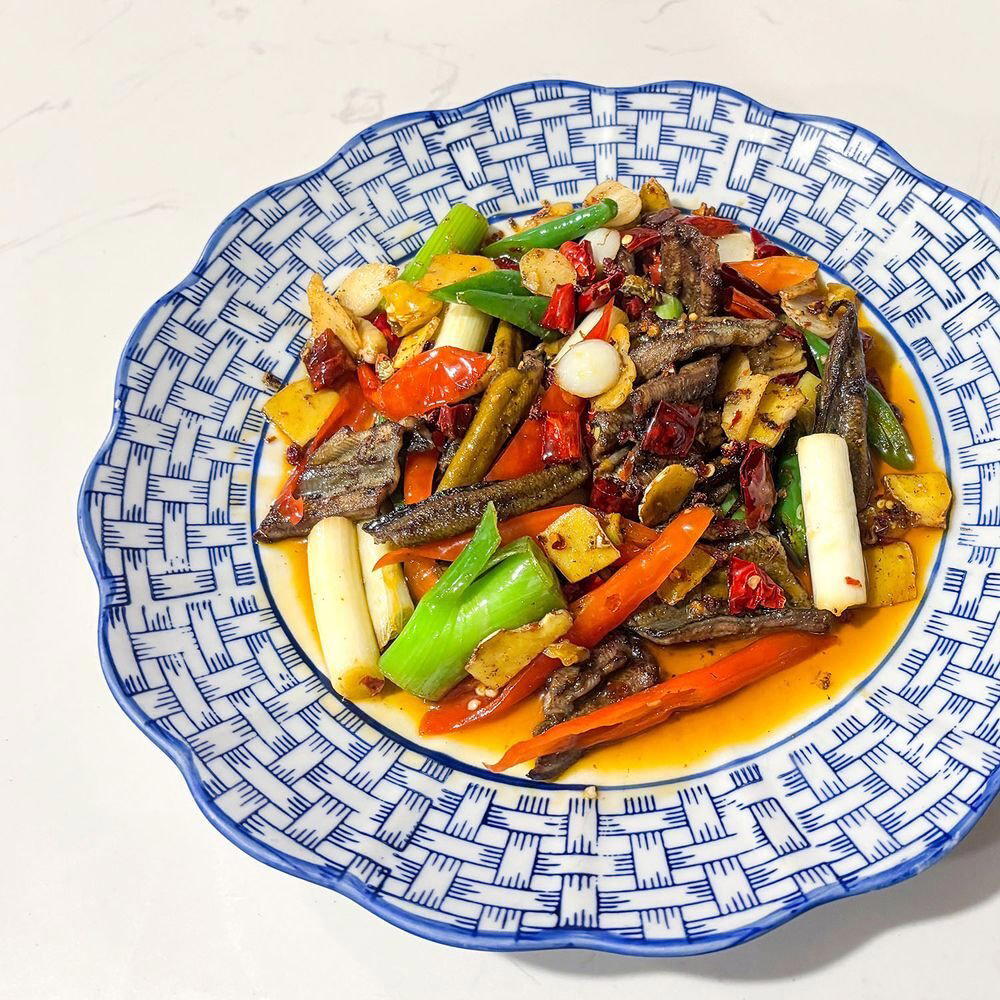
The two dishes that define the menu are duck blood curd with pork offal and crispy fen zheng rou, pork coated in seasoned rice flour, steamed, then deep-fried. Sliced eel is also listed among the signatures. These are the preparations the kitchen built its reputation on since the original Weishan stall opened in 1923.
How hard is it to get a table at Ma's Kitchen (Jinjiang)?
Queues form from the moment the restaurant opens, according to the venue's documented reputation. Located a short walk from the Taikoo Li precinct in Jinjiang district, it draws both locals and visitors consistently. Arriving at or before opening is the most reliable way to minimise wait time.
What's the defining dish or idea at Ma's Kitchen (Jinjiang)?
The defining idea is Sichuan offal cookery with a documented lineage: the chain traces back to a street stall in Weishan in 1923, and duck blood curd with pork offal remains the centrepiece preparation. The Chengdu outpost reframes that century-old format inside a vintage-styled interior in one of the city's most commercially active neighbourhoods, which makes the price-point and the cooking style an intentional contrast.
Comparison Snapshot
Comparable options at a glance, pulled from our tracked venues.
| Venue | Cuisine | Price | Awards | Notes |
|---|---|---|---|---|
| Ma's Kitchen (Jinjiang)This venue (the venue you are viewing) | Authentic Sichuan | $20–30 | 1 Michelin Star | Not listed |
| Xin Rong Ji | Taizhou | Not listed | Michelin 2 Star | Not listed |
| Yu Zhi Lan | Modern Sichuan Fine Dining | $200–300 | 2 Michelin Stars · La Liste Top Restaurants | Sichuan |
| Mi Xun Teahouse | Modern Vegetarian Sichuan Chinese | $30–50 | 1 Michelin Star | Vegetarian |
| Chen Mapo Tofu (Qinghua Road) | Authentic Sichuan Mapo Tofu | $10–20 | Michelin Bib Gourmand | Sichuan |
| Co- | Modern French Tasting Menu | $150–200 | 1 Michelin Star · World's 50 Best #69 | Innovative |
Recognition history
Dated appearances from independent guides and award organizations, with the underlying list record or original source where available.
Michelin 1 Star
Michelin
Opinionated About Dining Casual in Asia Ranked #150
Opinionated About Dining
Full recognition history (5 entries)
Michelin Bib Gourmand
Michelin
Michelin Bib Gourmand
Michelin
Michelin Plate
Michelin