

A Michelin Bib Gourmand Spanish rice specialist in Ginza, ARROCERÍA La Panza works through the regional breadth of Spain's rice tradition, Valencian paella, Basque clay-pot clams, and Mar Menor caldero, at a mid-range price point that sits well below the neighbourhood's kaiseki and omakase benchmarks.
Pearl is the En Primeur Club membership app — saves, bookings, and concierge access live there. Same editors, same standards.
- Address
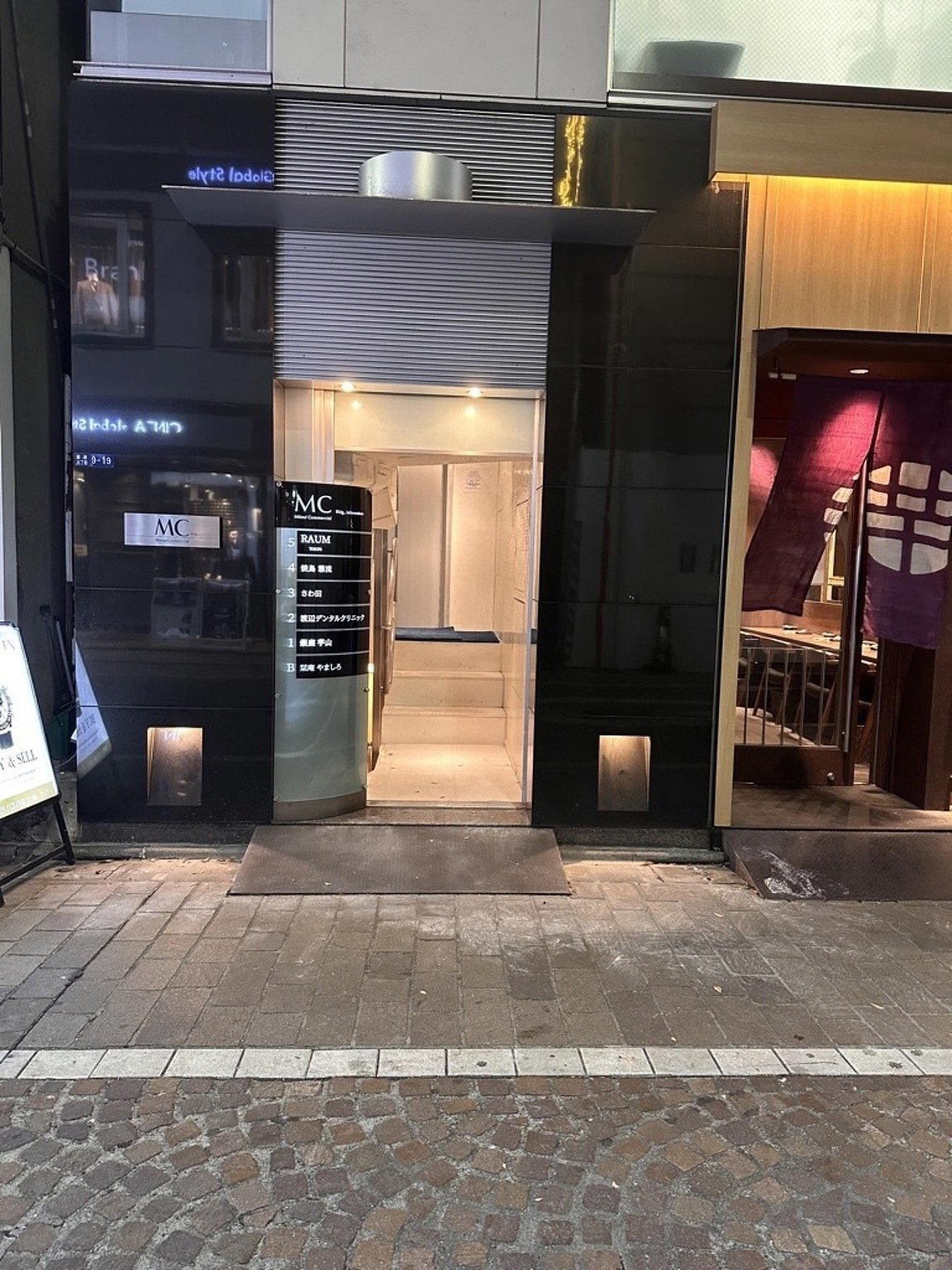
- Japan, 〒104-0061 Tokyo, Chuo City, Ginza, 1 Chome−15−8 1F
- Phone
- +81 50-1720-7784
- Website
- vandk.jp
- Directions
- Get directions
 Saves & bookings on Pearl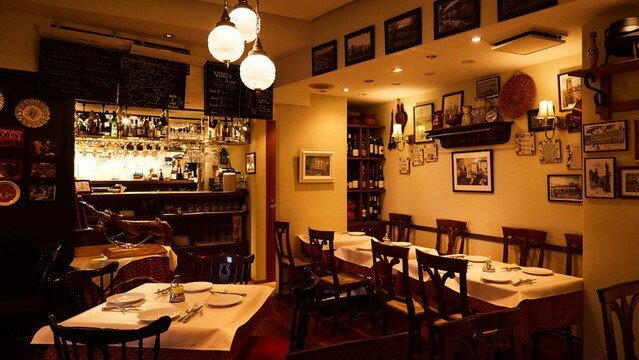
A Corner of Spain in the Heart of Ginza
Ginza's ground-floor addresses tend toward the ceremonial: white-tablecloth kaiseki, hushed omakase counters, French restaurants that price against the district's real-estate premium. The first-floor unit at 1 Chome-15-8 breaks from that pattern. Inside ARROCERÍA La Panza, the reference point is the communal table culture of Spain's rice-growing regions, where the pot arrives at the centre and everyone leans in. That distinction shapes the room, the menu format, and the reason the venue holds a Michelin Bib Gourmand (2024): the recognition is specifically for quality at a price that does not require a special occasion.
How Spain's Rice Tradition Arrives on the Plate
The Spanish rice canon is more regionally fragmented than its international reputation suggests. Valencian paella, socarrat crust, bomba rice, the saffron-and-stock base, is the version most travellers recognise, but it represents one node in a much wider set of preparations that vary by coast, by clay, and by what the local fishermen or farmers brought in that morning. ARROCERÍA La Panza organises its menu around that regional breadth, which means a meal here functions as a comparative survey as much as a dinner.
The progression typically moves through Spanish rice styles with distinct identities: paella from Valencia arrives with the textural expectations of a dry, socarrat-finished rice; clams and rice cooked in a clay pot draws from the Basque Country's preference for sea-driven broths and earthenware technique; caldero, simmered in an iron pot, references the Mar Menor lagoon tradition of the Murcia coast, where a softer, stock-saturated rice absorbs the flavour of the catch rather than showcasing it through technique. Each preparation represents a different answer to the same question: what does rice do when it is treated as the dish's protagonist rather than its background?
Appetiser sequence that runs alongside, dry-cured ham, tapas in the broader Spanish idiom, anchors the rice dishes in their cultural context. In Spain, a meal built around a shared rice pot typically begins with standing-up tapas and cold cuts, and the structure at La Panza follows that logic rather than abandoning it for a more formalised Tokyo interpretation. The name itself is instructive: panza translates from Spanish as pot belly, and the venue's framing as a place where you leave satisfyingly full is explicit in its positioning.
Where La Panza Sits in Tokyo's Iberian Circuit
Tokyo's Spanish restaurant scene is small relative to its French and Italian equivalents, but it is coherent and covers distinct price tiers. At the upper end, Basque-influenced fine dining venues operate with tasting-menu formats and wine pairings that push into the ¥¥¥¥ bracket. La Panza operates at ¥¥, which in Ginza represents a deliberate positioning: the price point is set against casual Spanish restaurants citywide, not against the neighbourhood's ambient luxury tier. The Bib Gourmand designation confirms this, Michelin awards that recognition to restaurants where a full meal can be had for a price below the starred category threshold, and the 2024 inclusion signals that the kitchen sustains consistency at that level.
Within Tokyo's Iberian dining circuit, the closest stylistic reference points include ZURRIOLA, which approaches Spanish cooking from a Basque fine-dining angle, and Arrocería Sal y Amor, another rice-focused Spanish address in the city. ENEKO Tokyo and LANBRoA complete the bracket of venues where Basque and broader Iberian traditions are taken seriously. Against this comparable set, La Panza occupies the niche of Spanish rice as a dedicated format, not as a single dish on a broader menu, but as the organising principle around which everything else is built. eman represents a further point of comparison for those mapping Tokyo's full European-in-Japan range.
The district's dining options are reviewed by a readership that includes both Japanese regulars and international visitors with high baseline expectations; sustained 4.3 performance across a sample size above 300 suggests consistent execution rather than occasional peaks.
The Communal Logic of Shared Rice
What distinguishes rice-centred Spanish cooking from other communal formats, fondue, Korean BBQ, Japanese nabe, is the asymmetry between preparation time and serving time. A paella or caldero requires sustained attention over heat before arriving at the table as a finished thing; it cannot be adjusted mid-meal in the way a hotpot can. This places more weight on the kitchen's judgment about seasoning, moisture, and timing, and means the guest experience depends on receiving a dish that was decided upon before it arrived. The communal aspect comes after: the shared pot, the division of portions, the conversation that happens around something that has already been completed. La Panza's framing of this as the joy of Spanish food culture is less marketing language than an accurate description of how the format works.
Planning a Visit
La Panza is located at 1 Chome-15-8, Ginza, Chuo City, Tokyo, a first-floor space on an address within walking distance of Ginza's central retail core. The ¥¥ price range places it at a level where a full dinner with appetisers and a shared rice dish is accessible well below the neighbourhood's kaiseki benchmarks. Given the Bib Gourmand recognition and a solid review volume, walking in without a reservation is higher-risk at peak dinner hours; an advance booking is the direct approach, particularly on weekends.
If your visit extends to other districts or cities, HAJIME in Osaka, Gion Sasaki in Kyoto, and akordu in Nara represent different points on Japan's restaurant spectrum. Goh in Fukuoka, 1000 in Yokohama, and 6 in Okinawa extend the picture further. For those tracking Spanish cooking in other international cities, Arco by Paco Pérez in Gdańsk and BCN Taste and Tradition in Houston offer two contrasting takes on the same culinary tradition outside Spain.
Nearby-ish Comparables
Comparable venues nearby, for context on price, style, and recognition.
| Venue | Cuisine | Price | Notes |
|---|---|---|---|
| ARROCERÍA La PanzaThis venue — the venue you are viewing | Authentic Spanish Arrocería | $$$ | Not listed |
| le bistrot des bleus | Traditional French Bistro | $$$ | Shibuya |
| Arrocería Sal y Amor | Authentic Spanish Arrocería | $$ | Shibuya |
| Le cabaret | Parisian Bistro | $$$ | Shibuya |
| LANBRoA | Authentic Basque Cuisine | $$$ | Setagaya |
| Tempura Shimomura | Michelin-Starred Tempura Omakase | $$$ | Taitō |
Recognition history
Dated appearances from independent guides and award organizations, with the underlying list record or original source where available.
Michelin Bib Gourmand
Michelin
Tabelog 100 #74 · No. 74
Tabelog · Tabelog 100 - Spanish cuisine - 2026
Michelin Bib Gourmand
Michelin






At a Glance
- Cozy
- Elegant
- Relaxed
- Rustic
- Date Night
- Group Dining
- Special Occasion
- Business Dinner
- Open Kitchen
- Extensive Wine List
- Sake Program
Current opening hours
- Monday
- Closed
- Tuesday
- 5–10:30 PM
- Wednesday
- 5–10:30 PM
- Thursday
- 5–10:30 PM
- Friday
- 11:45 AM–2:30 PM, 5–10:30 PM
- Saturday
- 11:45 AM–3 PM, 5–10 PM
- Sunday
- 11:45 AM–3 PM, 5–10 PM
Hours can change for holidays and private events. Last verified .
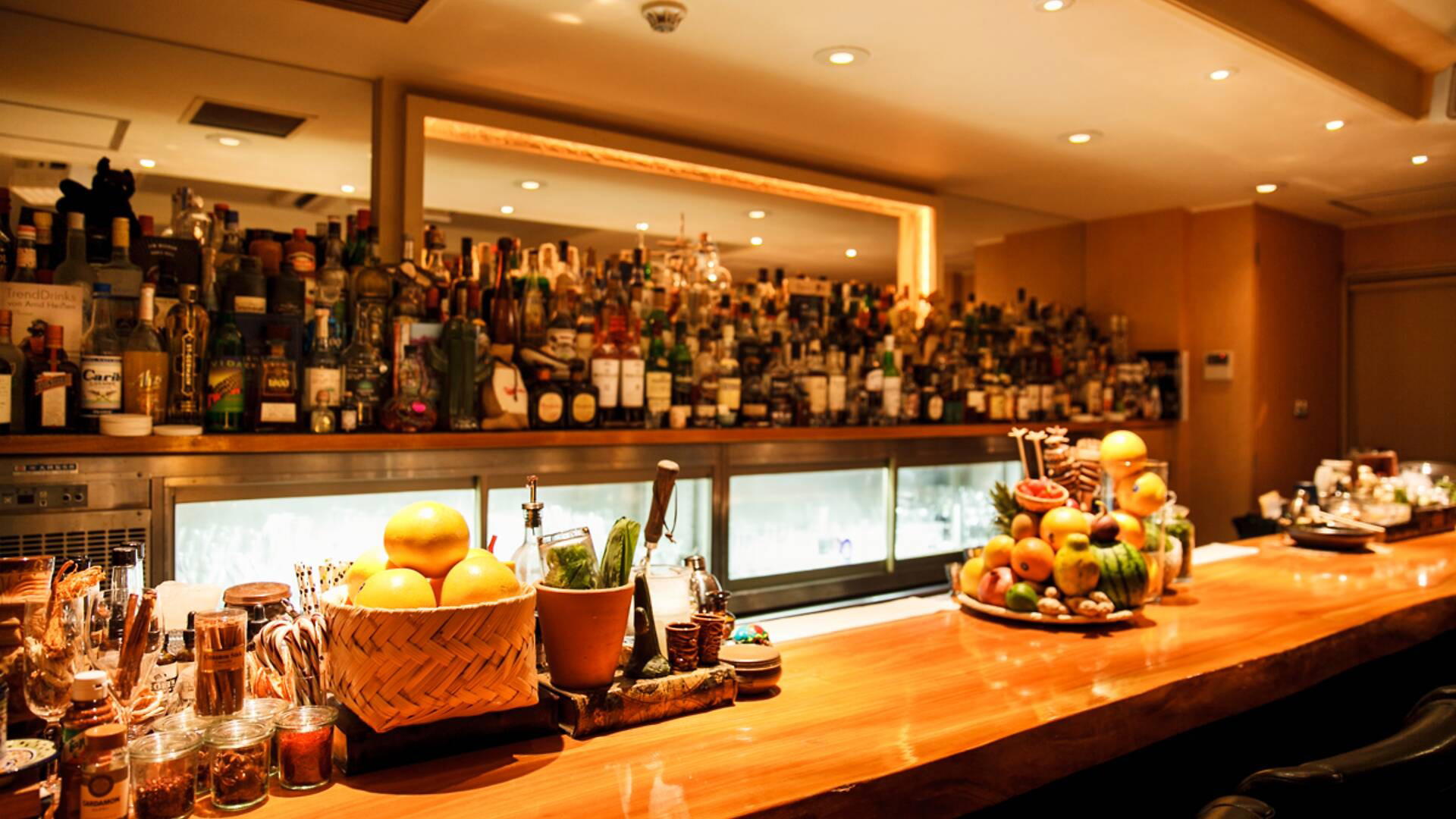
Cozy and warmly decorated with stylish, relaxing space evoking a Spanish bar atmosphere and rustic countryside warmth.