Amstel Restaurant
Amstel Restaurant serves French brasserie cooking with Mediterranean influences in a waterfront setting, with a leisurely pace, an extensive wine list, and local sourcing supporting lunch or dinner planning.
Pearl is the En Primeur Club membership app — saves, bookings, and concierge access live there. Same editors, same standards.
- Address
- Professor Tulpplein 1, 1018 GX Amsterdam, Netherlands
- Phone
- +31206226060
- Website
- amstelhotel.com
- Directions
- Get directions
 Saves & bookings on Pearl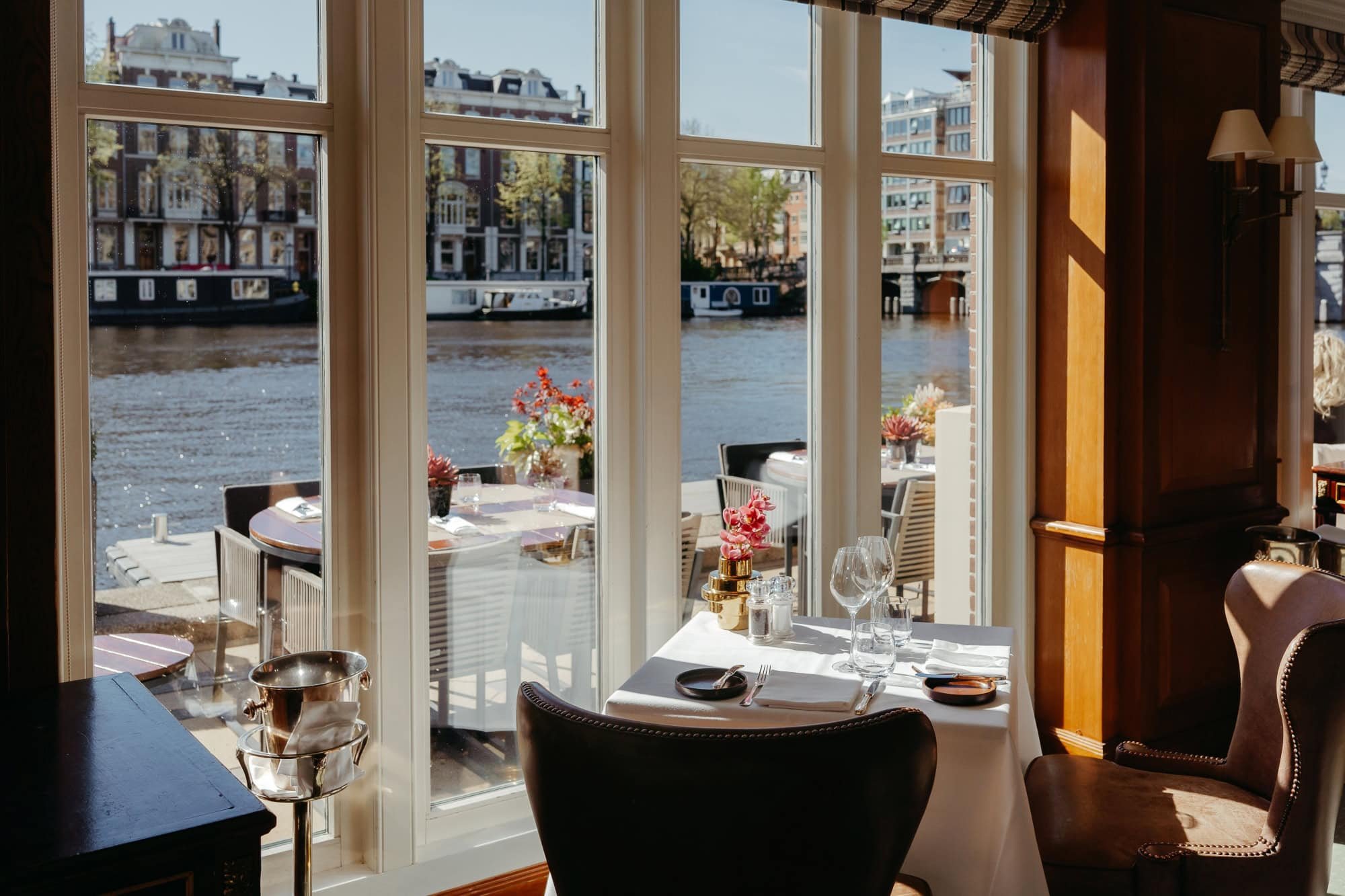
Arriving at Professor Tulpplein
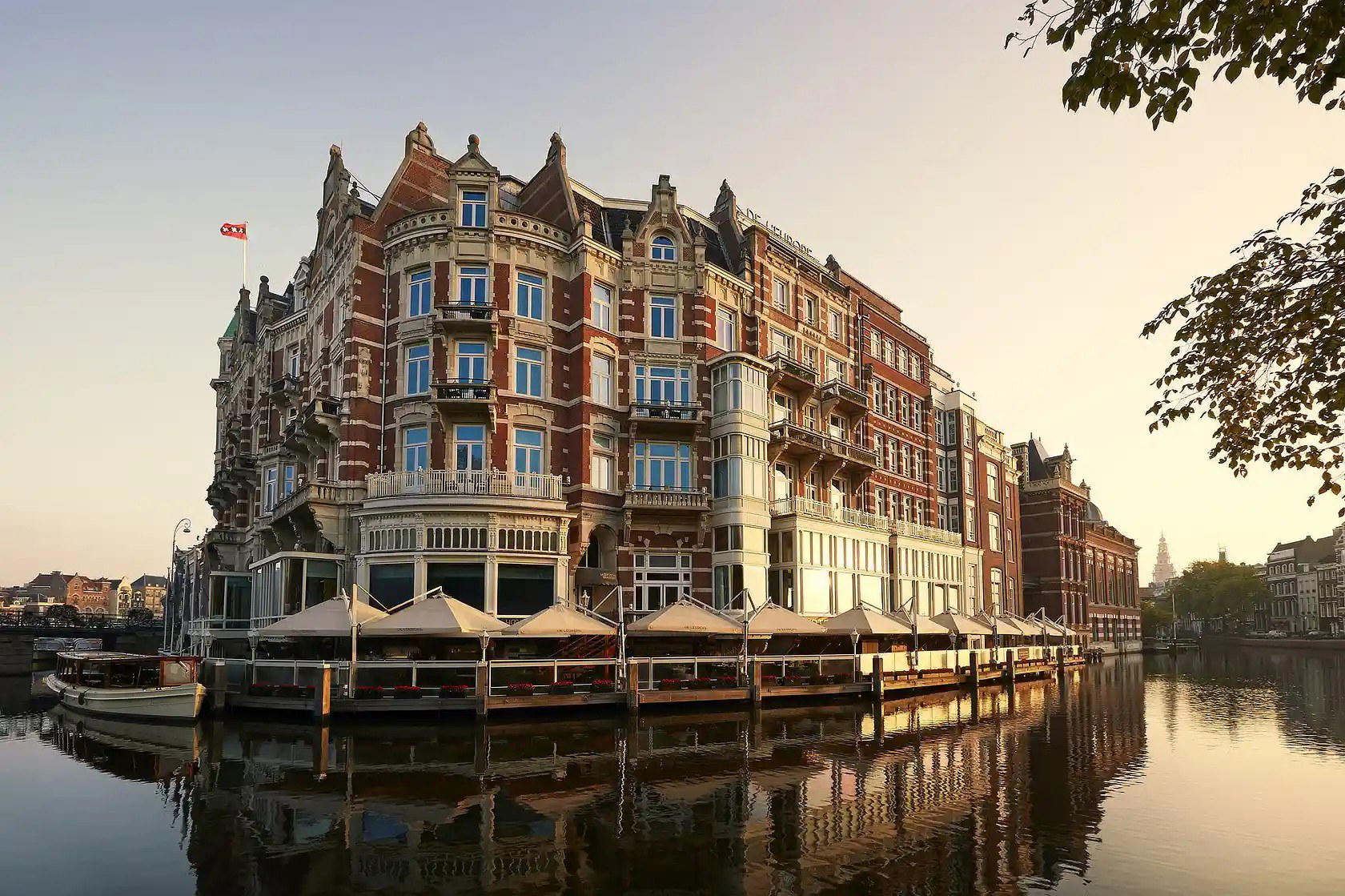
The address alone signals a particular kind of Amsterdam dining. Professor Tulpplein 1 sits on the Amstel riverbank in the Museum Quarter fringe, where the city's nineteenth-century confidence in grand civic architecture meets the quieter residential canal belt. The Amstel Hotel has anchored this address for generations. Arriving by water taxi from Centraal Station, the hotel's neo-Renaissance facade reads like a formal introduction to what Amsterdam considered its most prestigious address when the building first opened. That sense of institutional weight carries directly into the dining context: this is not a restaurant that arrived in a neighbourhood, it is a restaurant that has been part of a neighbourhood's identity for well over a century.
The Setting as Argument
Grand hotel dining in Amsterdam occupies a specific position in the city's restaurant scene, one that sits apart from the wave of contemporary Dutch cooking that has reshaped how the country is understood internationally. The city's current critical energy clusters around kitchens like Ciel Bleu, Flore, Spectrum, and Vinkeles, each operating within a creative or contemporary Dutch framework that has earned Amsterdam a serious place in European fine dining. Amstel Restaurant exists in a different register: the formal hotel restaurant as event venue, as occasion dining, as the kind of room where the architecture does as much work as the kitchen. Neither category is superior. They serve different purposes for different kinds of visits, and understanding which you are booking matters.
Across the Netherlands, the highest concentration of Michelin recognition has historically shifted toward smaller, often destination-format kitchens outside Amsterdam's city centre: De Librije in Zwolle, Inter Scaldes in Kruiningen, and De Nieuwe Winkel in Nijmegen represent the country's most decorated tier. Within Amsterdam itself, the conversation has broadened to include more accessible price points and neighbourhood-led concepts such as Bistro de la Mer. Grand hotel dining sits somewhat outside both trajectories, neither chasing contemporary Dutch innovation nor operating as the kind of focused tasting-menu destination that drives the Netherlands' international culinary reputation.
The Booking Reality
Framing the visit through logistics is useful because the booking experience at a hotel restaurant of this scale differs structurally from independent fine dining. At a counter-format kitchen or a chef-table tasting room, the scarcity is built into the format: six seats, one sitting, three months' lead time. At a grand hotel restaurant, capacity tends to be larger, tables turn more predictably, and the difficulty is less about securing access and more about choosing the right moment. Hotel restaurants at this tier generally prioritise in-house guests through concierge channels, which means the pathway to a table can be meaningfully shorter for guests staying at the Amstel than for those booking independently from outside. If your priority is securing the room rather than the menu, that asymmetry is worth factoring in when planning.
International travellers familiar with the booking protocols at, say, Le Bernardin in New York City or Lazy Bear in San Francisco will find hotel restaurant booking in Europe a more direct process, though no less worth planning. For Amsterdam visits in particular, the city's peak season runs from late April through September, when demand across all dining categories compresses availability. A reservation made two to four weeks ahead is typically viable in shoulder months; summer weekends warrant earlier planning.
What the Room Delivers
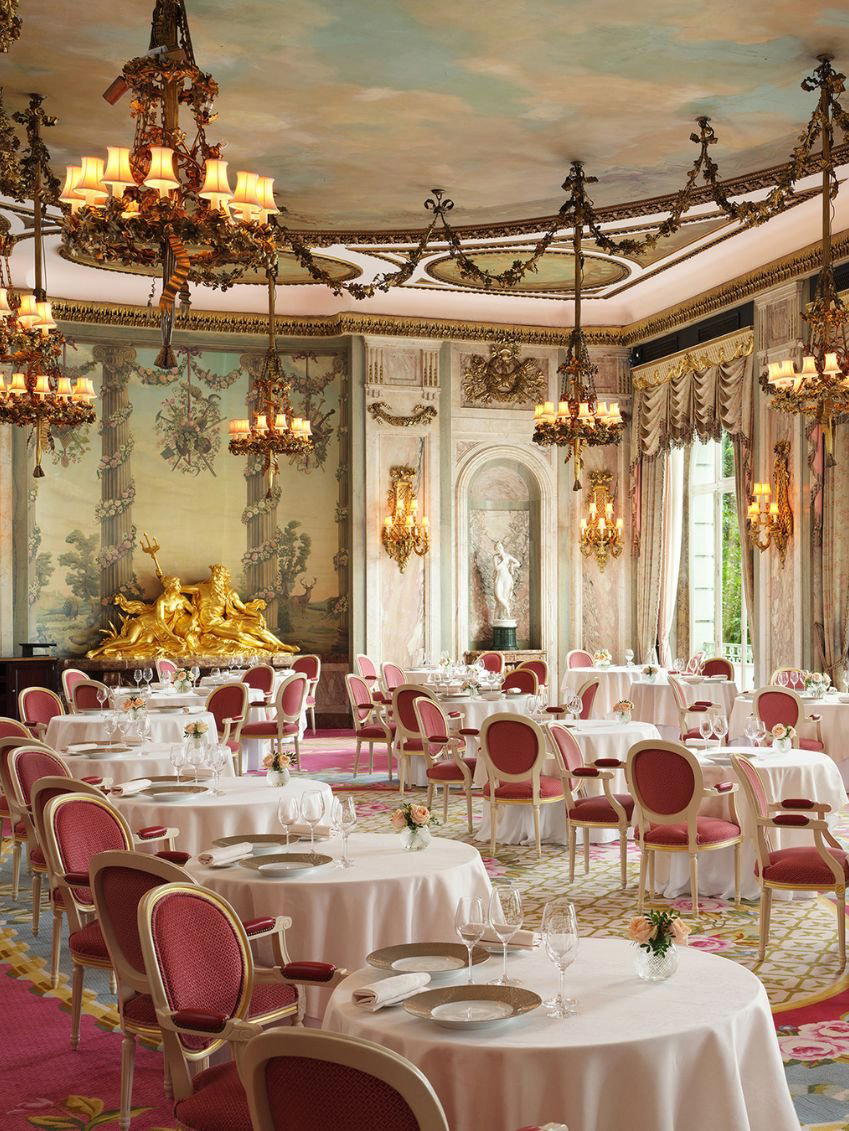
Hotel restaurants in the grand European tradition offer something that independent kitchens rarely replicate: a complete environment. The dining room at this address commands river views that shift with the season and the hour, and the room's proportions, the ceiling heights, the quality of light over the Amstel, create a context that no amount of interior design in a standalone restaurant can fully manufacture. That environmental argument is the primary reason this kind of booking makes sense, and it is the honest case for the reservation rather than a claim about menu innovation or culinary boundary-pushing.
Amstel Restaurant belongs with other grand hotel dining rooms in European cities where the room itself is the central proposition. Readers building an Amsterdam itinerary around food should treat Amstel Restaurant as a complement to, not a substitute for, the city's more focused tasting-menu options. A lunch or dinner here works well alongside a more technically demanding evening at one of Amsterdam's chef-driven rooms.
Amsterdam's Wider Dining Map
Understanding where the restaurant sits requires some sense of Amsterdam's dining categories overall. The city has a strong independent restaurant culture that runs from organic and produce-led kitchens through to creative European fine dining. Outside the capital, the Netherlands has produced a cluster of destination restaurants worth a separate journey: De Lindehof in Nuenen, De Bokkedoorns in Overveen, De Treeswijkhoeve in Waalre, Brut172 in Reijmerstok, De Groene Lantaarn in Staphorst, Tribeca in Heeze, and De Lindenhof in Giethoorn, among others. Within Amsterdam itself, our full Amsterdam restaurants guide maps the city's dining tiers in detail.
Planning Your Visit
The Amstel Hotel's riverside position makes arrival by water or on foot along the Amstel banks one direct approach from the city centre. Trams serving the Museum Quarter stop within a short walk of the hotel's entrance on Professor Tulpplein. Contact the hotel directly through its main reception line to make a reservation, and in-house guests should use the concierge to arrange priority access. Dress expectations at a hotel of this standing align with formal European dining norms: smart dress is appropriate and conspicuously casual attire will read as a mismatch with the room's register.
Reputation First
Comparable venues nearby, for context on price, style, and recognition.
| Venue | Cuisine | Price | Notes |
|---|---|---|---|
| Amstel RestaurantThis venue — the venue you are viewing | French Brasserie with Mediterranean Influences | $$$ | Not listed |
| Copain | Modern French Seasonal Bistro | $$$ | Terrasdorp |
| Cafe Americain | Modern French Brasserie | $$$ | Leidsebuurt Zuidwest |
| Johannes | Modern French Fine Dining | $$$ | Leidsegracht Noord |
| Hemelse Modder | Contemporary Dutch-French Cuisine | $$$ | Scheepvaarthuisbuurt |
| Bleu | French Bistro | $$ | Langestraat e.o. |
Continue exploring
More in Amsterdam
Restaurants in Amsterdam
Browse all →
Bars in Amsterdam
Browse all →
Hotels in Amsterdam
Browse all →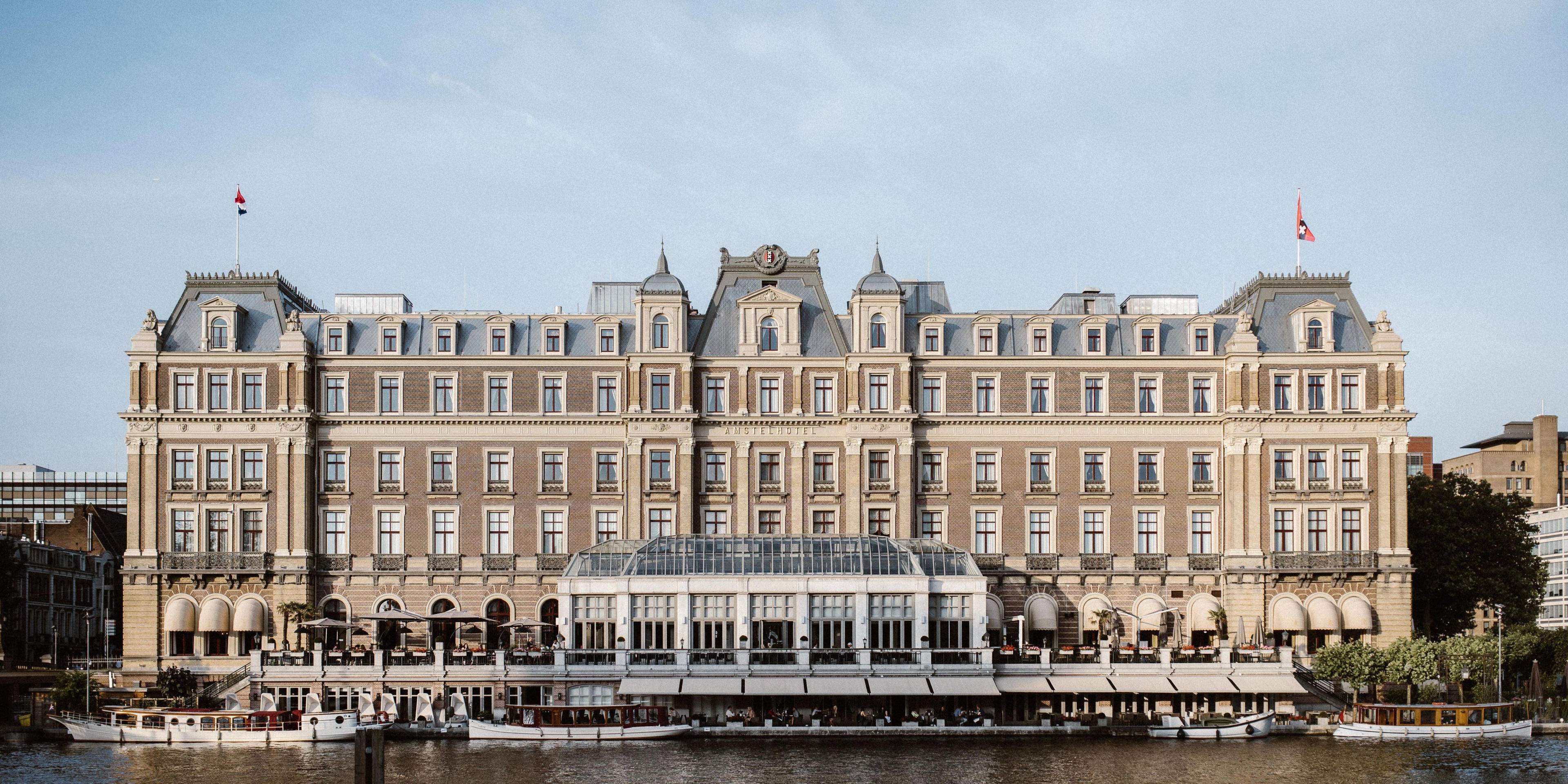
Wineries in Amsterdam
Browse all →
At a Glance
- Elegant
- Sophisticated
- Classic
- Date Night
- Special Occasion
- Business Dinner
- Waterfront
- Hotel Restaurant
- Historic Building
- Extensive Wine List
- Local Sourcing
- Waterfront
Current opening hours
- Monday
- 12–10 PM
- Tuesday
- 12–10 PM
- Wednesday
- 12–10 PM
- Thursday
- 12–10 PM
- Friday
- 12–10 PM
- Saturday
- 12–10 PM
- Sunday
- 12–10 PM
Hours can change for holidays and private events. Last verified .
Beautiful decor with wonderful interiors, terrace views over the Amstel river, and an elegant atmosphere blending heritage and modernity.