寿し 深川龍二 operates in Nakagyo Ward's residential quiet, removed from Kyoto's tourist corridors and positioned within a counter sushi tradition shaped by the city's kaiseki seasonal logic. The Matsumotocho address signals a deliberate, reservation-led experience calibrated for a returning clientele rather than passing foot traffic. For serious counter sushi in central Kyoto, the room occupies a niche that kaiseki-dominant venues like Gion Sasaki set the benchmark for.
Pearl is the En Primeur Club membership app — saves, bookings, and concierge access live there. Same editors, same standards.
- Address
- Japan, 〒604-0982 Kyoto, Nakagyo Ward, Matsumotocho, 576-2 ルレーブ寺町夷川
- Phone
- +81 75-211-0238
- Website
- sushi-fukagawa.com
- Directions
- Get directions
 Saves & bookings on Pearl
Nakagyo's Quiet Register: Sushi in Kyoto's Counter Tradition
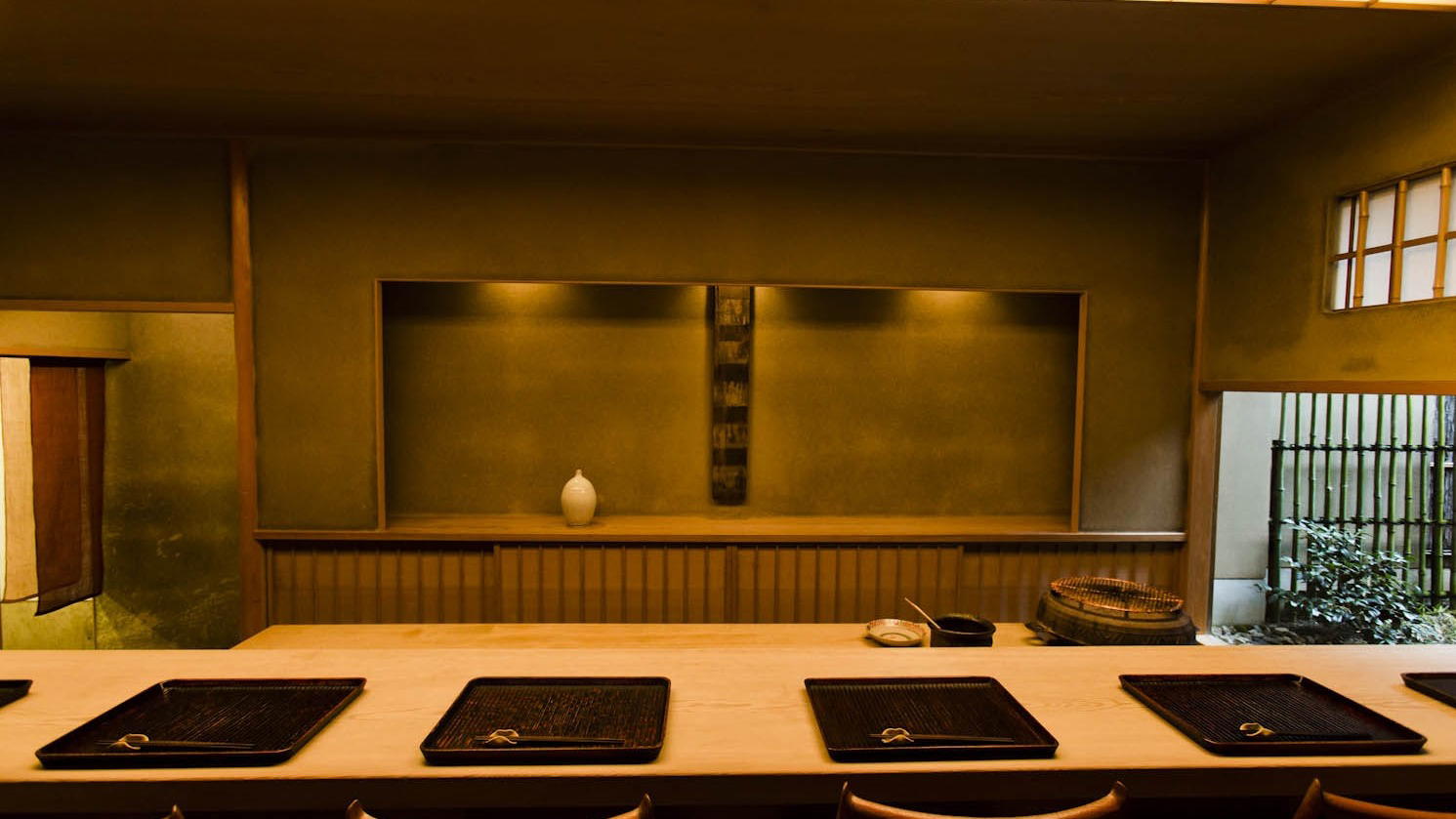
Kyoto's relationship with sushi has always sat at an angle to Tokyo's. Where Edo-style counters built their authority on the speed and precision of the nigiri sequence, Kyoto developed a slower, more contemplative mode of eating raw fish — one shaped by proximity to freshwater, mountain produce, and the rhythms of kaiseki. Matsumotocho, a residential pocket of Nakagyo Ward, is the kind of address that signals deliberate withdrawal from the tourist corridors of Gion and Pontocho. Arriving here, the street is quiet enough that you hear your own footsteps. That physical remove is part of the register.
寿し 深川龍二 operates inside this context. Nakagyo Ward sits roughly central in Kyoto's grid, far enough from the shrine-hopping circuits to attract a clientele that has made a specific decision to be there. Counter sushi in Kyoto at this level of address tends to be a studied, course-by-course proposition rather than a la carte picking — the meal has shape, it has a beginning and a direction, and the room's intimacy enforces a certain attention to that sequence.
The Arc of the Meal: How Counter Sushi Builds in Kyoto
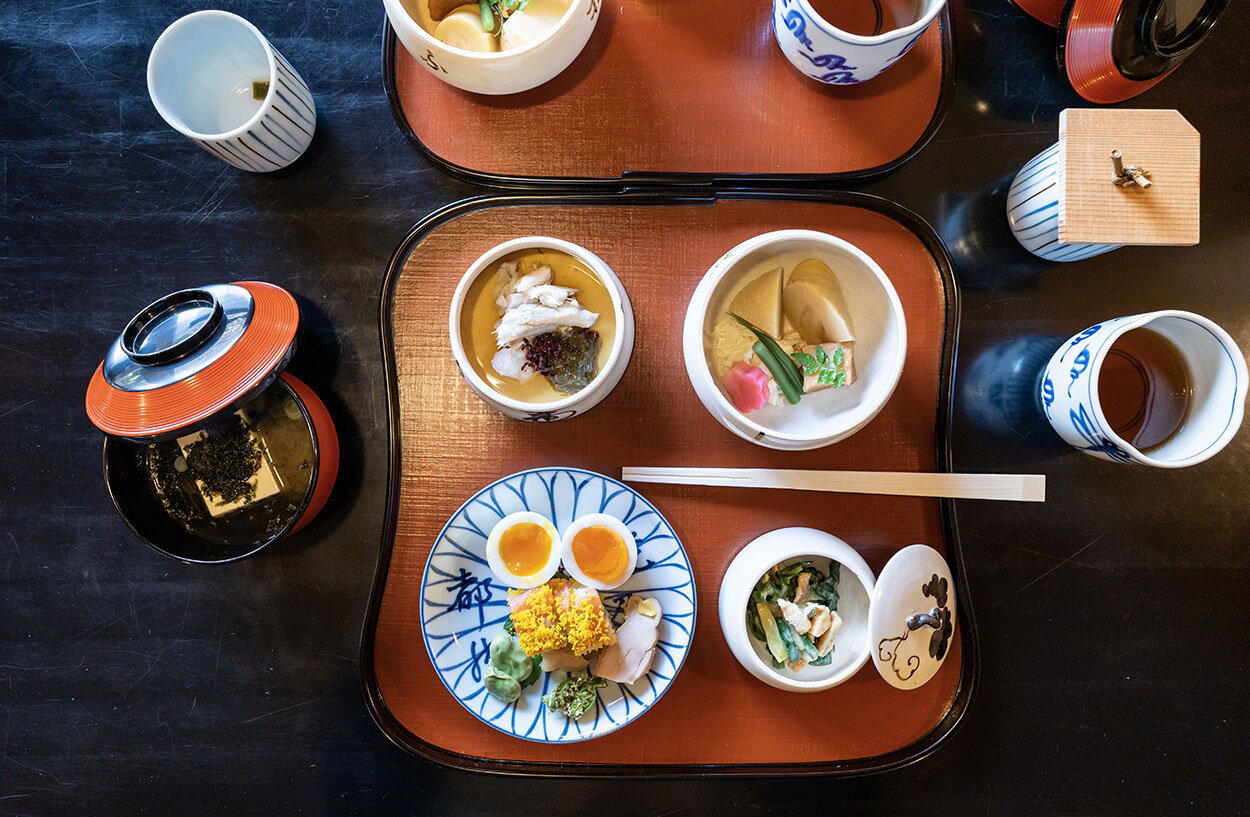
The tasting progression at a Kyoto counter of this type follows a logic that differs from Ginza's high-tempo omakase. There, the pace is accelerating, piece after piece arriving at interval, the chef reading the room for momentum. In Kyoto, the pacing tends to breathe more. A meal often opens with something that acknowledges the season and the city: a small composed dish, perhaps something pickled or gently cured, that positions the kitchen within a culinary tradition rather than simply launching into protein. This is the Kyoto way, informed by centuries of kaiseki sequencing, where context is considered as important as content.
Venues in the mid-to-upper tier of Kyoto's counter sushi scene, a category that includes rooms in Nakagyo, Shimogyo, and the quieter lanes east of the Kamo River, structure their menus so that lighter, more delicate preparations lead, building toward richer, more assertive pieces. Fatty tuna, if it appears, tends to arrive later in the sequence, its weight felt against the backdrop of what has come before. Comparable rooms in Kyoto's fine dining tier, such as Gion Sasaki and Mizai, demonstrate how deeply seasonal logic shapes the progression, and that standard extends into the city's better counter sushi rooms as well.
Kyoto is not a sushi city in the way Tokyo is. That insularity is a feature, not a flaw. It keeps certain rooms operating at a pitch calibrated for the local audience rather than for the international tourist who arrived via a magazine ranking.
For broader context on where Kyoto's counter sushi fits relative to the city's kaiseki tradition, it helps to understand that venues like Hyotei, Kikunoi Honten, and Isshisoden Nakamura set the seasonal and ingredient standard against which all serious Kyoto dining is implicitly measured. Counter sushi rooms that survive and attract repeat business in this environment generally demonstrate fluency in that same seasonal vocabulary. Across Japan, similar dynamics play out in cities where counter sushi exists in the shadow of a stronger local fine-dining tradition, Goh in Fukuoka and HAJIME in Osaka each illustrate how chefs in those markets build identity distinct from Tokyo's template. The ambition at 寿し 深川龍二 is leading understood in that regional frame.
For international comparisons, counters where progression and sequencing carry the editorial weight of the meal, Atomix in New York City demonstrates how the multi-course counter format translates across cuisines, and Le Bernardin in New York City has long shown how a kitchen built around one primary ingredient category can sustain critical authority across decades through sequencing discipline rather than menu breadth.
The Nakagyo Address: What the Location Tells You
Matsumotocho in Nakagyo Ward is not an address that generates footfall. Visitors who find 寿し 深川龍二 here have looked for it. In Kyoto's dining geography, this matters. The tourist-facing corridors, Gion, Higashiyama, Nishiki Market's immediate neighbourhood, operate at a different atmospheric temperature, with their own rhythms of noise and movement. Nakagyo's residential texture removes those variables. The meal unfolds without the ambient pressure of a busy street or a room designed to turn tables quickly.
Comparable positioning can be found in rooms like akordu in Nara, where the address is part of the dining proposition, not incidental to it. Our full Kyoto restaurants guide maps this geography in more detail, covering how neighbourhood character shapes the dining experience across the city's distinct wards.
Planning a Visit
Counter rooms of this type in Kyoto frequently operate on reservation-only schedules with limited covers per service, and the absence of an English-language booking interface is common at this address tier. If you are travelling from outside Japan, enlisting the assistance of a hotel concierge or a Japan-focused travel specialist is the most reliable approach, particularly for rooms that do not list contact details publicly. The address, 576-2 Matsumotocho, Nakagyo Ward, Kyoto 604-0982, places the venue accessible by Kyoto's subway and bus network, with Kyoto Station approximately 20 minutes by direct bus from the central Nakagyo area. Seasonal timing matters in Kyoto more than in most Japanese cities: spring (late March through April) and autumn (November) compress visitor numbers significantly, and counter sushi rooms that operate with small seat counts fill correspondingly faster during these windows. Booking outside these peaks, particularly in the quieter months of January through February or June through July, improves availability and, in some cases, produces a more relaxed service pace.
Compact Comparison
Comparable options at a glance, pulled from our tracked venues.
| Venue | Cuisine | Price |
|---|---|---|
| å¯¿å¸ æ·±å·é¾ä¸This venue — the venue you are viewing | Not listed | Not listed |
| Gion Sasaki | Kaiseki, Japanese | ¥¥¥¥ |
| cenci | Italian | ¥¥¥ |
| Ifuki | Kaiseki | ¥¥¥¥ |
| Kyokaiseki Kichisen | Japanese | ¥¥¥¥ |
| Kyo Seika | Chinese | ¥¥¥ |
Continue exploring
More in Kyoto
Restaurants in Kyoto
Browse all →
Bars in Kyoto
Browse all →
Hotels in Kyoto
Browse all →
Wineries in Kyoto
Browse all →
At a Glance
- Special Occasion
- Sake Program
elegant traditional Japanese
Know Before You Go
- Getting there
- Japan, 〒604-0982 Kyoto, Nakagyo Ward, Matsumotocho, 576-2 ルレーブ寺町夷川