Our verdict
æ occupies a quiet address in Roppongi, Minato City, positioning itself at the intersection of Tokyo's most rigorous fine-dining district and a neighbourhood better known for its international energy than its culinary restraint. With virtually no public-facing information, no listed menu, no published price range, it operates on the kind of deliberate opacity that Tokyo's top-tier reservation circuit has refined into an art form.

Pearl is the En Primeur Club membership app, where members save venues, book tables and use the concierge.
Roppongi's Quieter Register
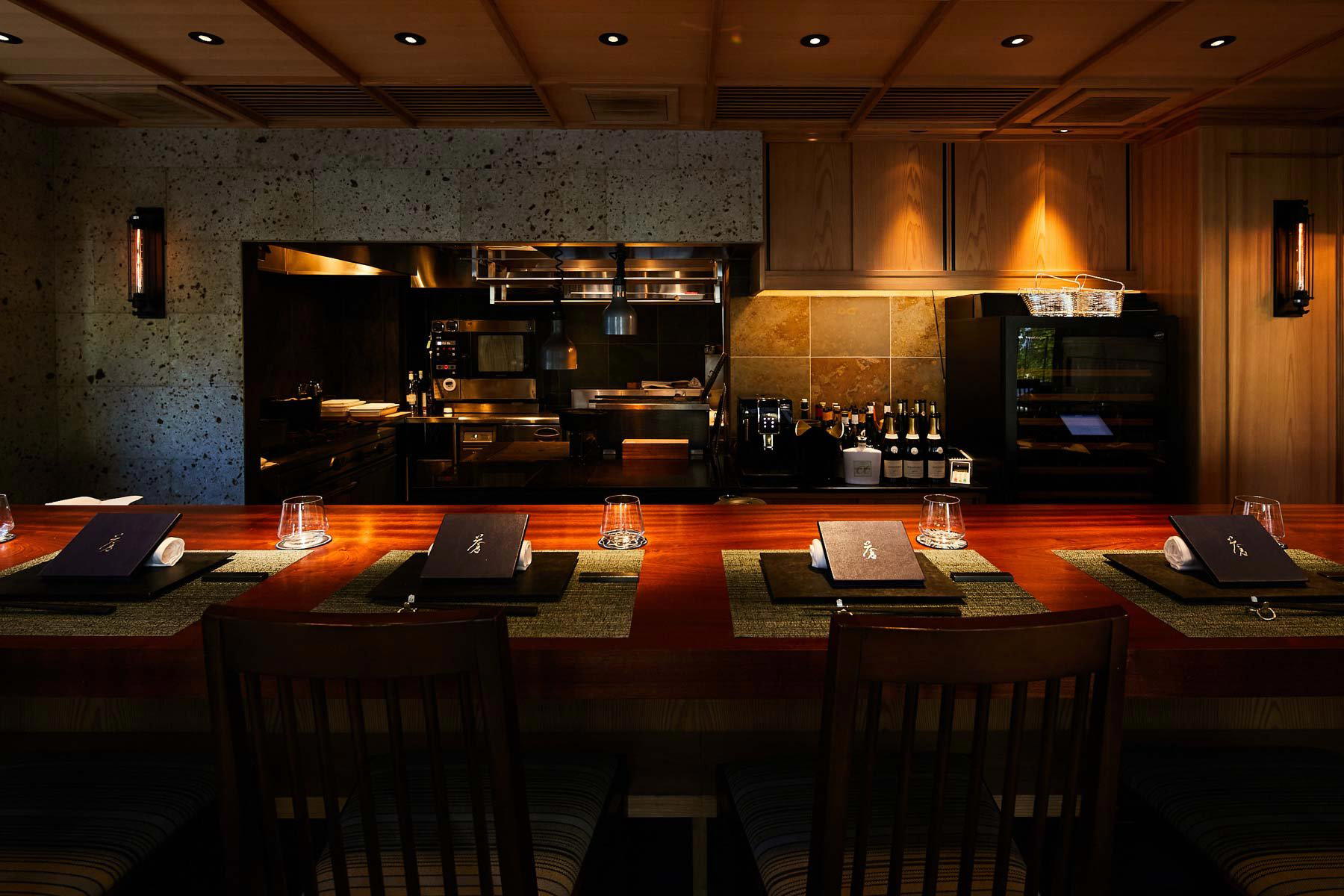
Roppongi carries a specific reputation in Tokyo's mental map: gallery district, late-night circuit, the address that international visitors learn first and locals sometimes approach with ambivalence. Yet within that postcode, a counter-current has been running for years. The neighbourhood's proximity to Azabu and Hiroo, two of the city's most considered residential and dining corridors, has quietly seeded serious fine-dining rooms alongside the spectacle. æ, at 7-5-9 Chome Roppongi in Minato City, sits inside that less-announced register of the district: no signage designed to attract passersby, no street-level presence calibrated for foot traffic.
That kind of address is a deliberate choice in Tokyo's fine-dining grammar. At the top of the city's restaurant tier, obscurity is not a failure of marketing, it is a signal. The rooms that occupy this bracket typically communicate through word of mouth, curated reservation networks, and the friction of actually obtaining a seat. The address becomes legible only after you already know what you are looking for. This is the spatial logic that governs much of what Tokyo does at its most serious, and æ adheres to it without apparent compromise.
For comparison, Harutaka, one of the city's most discussed high-end sushi counters, operates on a similarly controlled access model in Ginza, proof that this approach to presence is not eccentric but structural at the ¥¥¥¥ tier. RyuGin, the kaiseki room in Roppongi Hills, occupies the same neighbourhood with similar discipline around visibility and reservation.
What the Absence of Information Actually Signals
In most markets, this would indicate a venue still establishing itself. In Tokyo's fine-dining circuit, it more reliably indicates the opposite. The rooms that have least need to advertise are frequently those with the most committed reservation lists, and the restaurants that publish least publicly are often those communicating most effectively through private channels.
This pattern is not unique to Japan, but Japan executes it with particular consistency. L'Effervescence and Sézanne, two of the city's most decorated French-influenced rooms, maintain controlled information environments despite international recognition, Sézanne holds two Michelin stars, and L'Effervescence has held one. The deliberate management of public-facing information is a shared discipline across Tokyo's leading dining tier, not a quirk of any single venue.
At Crony, another Roppongi-adjacent room working at the intersection of French technique and Tokyo produce, the format is similarly spare in its public communication. What these venues share is a conviction that the dining room itself, rather than any preceding promotional layer, should be the primary point of contact.
The Roppongi Dining Ecology
Understanding æ's position requires a brief account of what Roppongi has become as a dining district. The area hosts RyuGin, a kaiseki room that has held three Michelin stars and appears consistently in the Asia's 50 Best rankings, alongside a cluster of serious international cuisine that benefits from the neighbourhood's density of diplomatic and corporate residents. The foot traffic is cosmopolitan in a way that Ginza or Nihonbashi are not, which means the area sustains a broader range of formats and price points without the competitive narrowness of, say, the sushi counters that cluster tightly around the fish markets.
That ecology gives a room like æ a particular kind of cover. It can operate at the serious end of the market without being compared only to sushi counters or only to kaiseki rooms, the neighbourhood allows for a more ambiguous positioning, which may be part of what the name itself, a single typographic character with deliberate minimalism, is designed to communicate.
Japan's broader fine-dining geography extends this kind of serious, low-profile room far beyond Tokyo. HAJIME in Osaka holds three Michelin stars with a similarly restrained public profile. Gion Sasaki in Kyoto operates in a neighbourhood where the physical environment communicates enough that venues need not oversell themselves. akordu in Nara and Goh in Fukuoka extend the pattern into smaller cities where fine dining has taken root without the promotional apparatus of the capital. Regionally, rooms like Abon in Ashiya, affetto akita in Akita, Aji Arai in Oita, Ajidocoro in Yubari District, Akakichi in Imabari, and aki nagao in Sapporo collectively demonstrate that this disciplined, low-visibility model is a national posture rather than a metropolitan affectation.
The international comparisons are instructive too. Le Bernardin in New York City and Lazy Bear in San Francisco both operate with strong reservation friction at their respective tiers, but neither achieves quite the same degree of deliberate opacity that Tokyo's most controlled rooms maintain as standard practice.
Planning a Visit
Because æ publishes no booking method, no hours, and no pricing publicly, the approach most consistent with how these rooms operate in Tokyo is through a hotel concierge with verified relationships in the city's fine-dining circuit. Luxury properties in Minato and Chiyoda districts typically maintain the contacts that can surface a reservation at rooms operating on this model. Alternatively, specialist reservation services that focus on Tokyo's high-end dining tier are the second-most reliable route.
Timing matters in Tokyo fine dining more broadly: the weeks surrounding cherry blossom season (late March to early April) and the autumn foliage window (mid-November) represent peak demand across the city's serious rooms, and lead times for reservation requests should be extended accordingly. For rooms operating without public booking infrastructure, the practical window for advance planning is typically three to six months ahead of the intended visit date. See our full Tokyo restaurants guide for broader context on the city's dining structure.
Know Before You Go
- Address: 7 Chome-5-9 Roppongi, Minato City, Tokyo 106-0032, Japan
- Booking: No public booking channel listed; approach via hotel concierge or specialist reservation service
- Price range: Not publicly disclosed; consistent with ¥¥¥¥ tier peers in the neighbourhood
- Leading season to plan ahead: Cherry blossom (late March to early April) and autumn (mid-November) require the longest lead times across Tokyo's top tier
- Neighbourhood context: Roppongi, Minato City, same district as RyuGin; walkable to Azabu-Juban
Frequently asked questions
What's æ's location?
æ is located at 7 Chome-5-9 Roppongi, Minato City, Tokyo 106-0032, Japan, Tokyo.
What should I order at æ?
æ publishes no menu publicly, and no dish list appears in verified sources at the time of writing. Rooms operating under this model in Tokyo, particularly in the Roppongi corridor near venues like RyuGin, typically run a fixed format determined by the kitchen. Arriving with dietary requirements communicated in advance, through whichever channel secures the booking, is the practical approach.
What's the best way to book æ?
Reservations are recommended for æ in Tokyo. Confirm current policy via the venue's official channels.
What is æ known for?
æ is best approached by focusing on the core concept and signature offerings.
Can æ handle vegetarian requests?
Dietary accommodations can vary. Flag restrictions in advance via the venue's official channels.
City Peers
| Venue | Cuisine | Price | Awards | Notes |
|---|---|---|---|---|
| æThis venue (the venue you are viewing) | Not listed | Not listed | Not listed | Not listed |
| Harutaka | Edo-Style Omakase Sushi | $200–300 | 3 Michelin Stars · World's 50 Best #76 | Sushi |
| L'Effervescence | Modern French with Japanese Influences | $200–300 | 3 Michelin Stars · World's 50 Best #69 | French |
| RyuGin | Modern Kaiseki | $500+ | 3 Michelin Stars · World's 50 Best #41 | Kaiseki, Japanese |
| Crony | Modern French with Japanese Influences | $150–200 | 2 Michelin Stars · World's 50 Best #34 | Innovative, French |
| Den | Modern Japanese Kaiseki | $150–200 | 2 Michelin Stars · World's 50 Best #51 | Innovative, Japanese |