タヴェルネッタ ダ キタヤマ serves an Authentic Italian Trattoria menu in Tennoji Ward, with a sake program and an open kitchen; dinner suits a leisurely, conversational visit.
Pearl is the En Primeur Club membership app — saves, bookings, and concierge access live there. Same editors, same standards.
- Address
- Japan, 〒543-0031 Osaka, Tennoji Ward, Ishigatsujicho, 1−6 石ヶ辻ビル
- Phone
- +81667773784
- Directions
- Get directions
 Saves & bookings on Pearl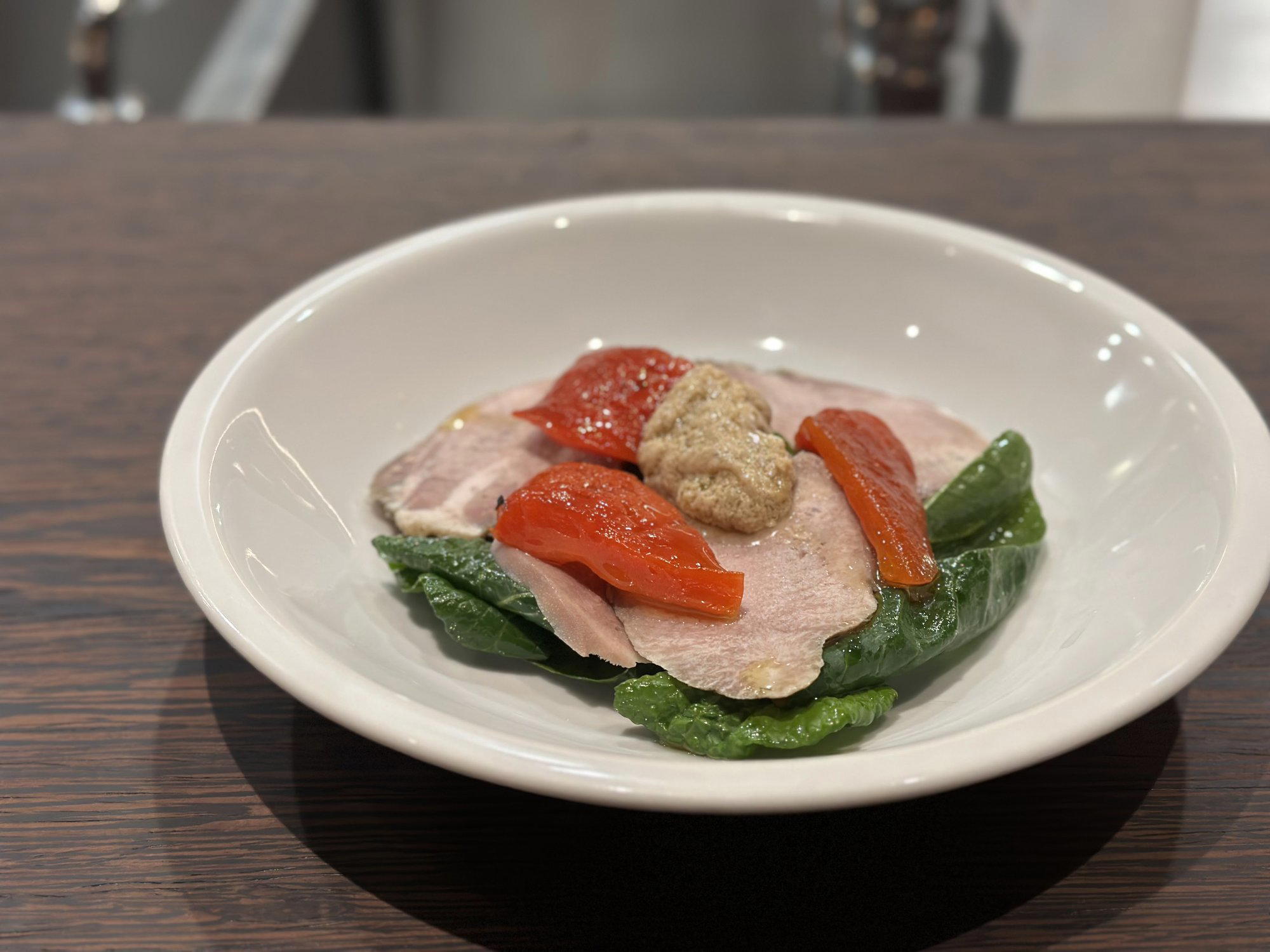
Tennoji Ward and the Quiet Grammar of Italian in Osaka
Ishigatsujicho is not the address most international visitors associate with Osaka dining. The neighbourhood sits within Tennoji Ward, south of the Shinsaibashi corridor and removed from the concentrated restaurant density of Namba or Fukushima. That distance is partly the point. In cities where Italian cooking has been absorbed and reinterpreted over decades, the rooms that endure longest tend to be the ones that do not compete for foot traffic. タヴェルネッタ ダ キタヤマ occupies a unit within the Ishigatsuji Building on a block that registers as residential rather than commercial at first approach, a pattern that recurs across Osaka's more considered dining addresses.
The name itself signals something about orientation. Tavernetta in Italian connotes a small, informal tavern, a room defined by conviviality and direct cooking rather than ceremony. Paired with Kitayama, it suggests a named lineage, a specific kitchen tradition carried into this address. In Osaka, where Western cuisines have been filtered through Japanese craft sensibilities since at least the postwar decades, this kind of naming convention carries weight. It implies that someone trained somewhere, brought something back, and built a room around it.
Where the Ingredient Sourcing Argument Is Actually Made
The editorial argument for ingredient sourcing in Italian restaurants operating inside Japan is not abstract. Japan's distribution infrastructure for domestic produce is among the most developed in the world, and the country's regional agricultural output, from Kyushu vegetables to Hokkaido dairy, competes seriously with imported European equivalents. For an Italian-influenced kitchen in Osaka, this creates a genuine decision point: source for authenticity to the originating cuisine, or source for quality and proximity, using Japanese materials that often outperform their Italian counterparts on freshness and seasonal precision.
Better Italian rooms in the Kansai region have generally moved toward the second position. HAJIME in Osaka operates within a French framework but demonstrates the broader principle: that rigorous local sourcing, rather than imported-ingredient orthodoxy, produces the more compelling result in this market. Across the dining tier in which タヴェルネッタ ダ キタヤマ sits, the sourcing logic tends to follow seasonal Japanese produce calendars, with the Italian structural framework applied to ingredients that are defined by where they were grown rather than where the dish originates.
This matters to the diner because it shapes what the kitchen can and cannot do across the year. A menu built around Japanese seasonal produce will shift more aggressively between spring, summer, autumn, and winter than a menu anchored to imported staples. Tennoji Ward's proximity to the Osaka central wholesale market system means access to Kansai-region vegetables and seafood is not a logistical challenge. The question is how that access is used.
The Tennoji Dining Context
Tennoji Ward has a different dining character from the central wards. The population is denser and more local; the restaurant mix skews toward neighbourhood regulars rather than destination visitors. Within that context, a room with Italian reference points occupies a specific position. It is not competing against the kushiage counters or unagi specialists that define the ward's more historically rooted dining tradition. It is serving a clientele that has grown up eating both washoku and yoshoku, that treats Italian pasta and risotto as familiar idioms rather than exotic imports.
That familiarity changes what the kitchen needs to do to hold attention. In this environment, quality of execution and sourcing discipline matter more than novelty of concept. Diners who eat Japanese-Italian food regularly have calibrated palates for the category. Contrast that with the higher-profile Osaka dining addresses covered in our full Osaka Shi restaurants guide, where destination-seeking visitors often encounter the cuisine for the first time.
For a frame of comparison within the city, Aka to Shiro and Calendrier represent the Western-influenced fine dining tier in Osaka that commands significant advance planning. Ajikitcho Bunbuan and Ajihei Sonezaki sit within the kaiseki tradition, illustrating the breadth of what Osaka supports at the serious end of the table.
Placing タヴェルネッタ ダ キタヤマ in a Regional Frame
Across the Kansai and Chugoku regions, the pattern of serious Western cooking operating in quieter residential or mixed-use addresses has become more pronounced over the past decade. Gion Sasaki in Kyoto demonstrates how a neighbourhood with non-obvious tourist density can support a kitchen of real ambition. akordu in Nara makes a similar argument from an even less expected address. The geography is not incidental. These locations are chosen because lower rents and local clientele allow the kitchen to focus resources on what is on the plate rather than on the overhead structure required to operate in a high-visibility district.
At the national level, the same logic applies to rooms like Goh in Fukuoka, which has built serious recognition from a city that does not benefit from Tokyo's media concentration. The restaurants that represent comparable craft outside the obvious capitals, including addresses in Nanao (一本木 中川製), Sapporo (夕佳山乃), and Takashima (湖羽庵), all follow a pattern of precision within local context rather than performance for visitors.
For reference outside Japan, the principle of sourcing-led Italian cooking in an informal room format is well established at addresses like Le Bernardin in New York City and the more technically rigorous Korean-American work at Atomix in New York City, where ingredient provenance is foregrounded in the dining experience rather than treated as background detail. Harutaka in Tokyo similarly demonstrates that commitment to sourcing specificity, expressed through sushi, creates a different category of dining experience from rooms where provenance is treated as marketing.
Know Before You Go
Address: 1-6 Ishigatsujicho, Tennoji Ward, Osaka 543-0031 (Ishigatsuji Building)
Area: Tennoji Ward, south Osaka. The address is within walking distance of Tennoji Station (JR, Osaka Metro), making it accessible from central Osaka without significant transit complexity.
Booking: Contact details are not listed publicly. Given the building context and neighbourhood positioning, advance enquiry through third-party reservation platforms or direct visit during service hours is the most reliable approach.
Cross-referencing the neighbourhood tier and format, expect positioning consistent with mid-to-upper neighbourhood Italian in the Kansai market.
Comparable Osaka addresses: Az and Birdland in Sakai provide a sense of the broader Western dining tier in the greater Osaka area.
Further reading: 羽後屋 in Nishikawa Machi offers context on how serious regional Japanese rooms operate outside the major cities.
How タヴェルネッタ ダ キタヤマ Osaka Shi compares with similar nearby venues.
| Venue | Cuisine | Price |
|---|---|---|
| Okonomiyaki Ajikuraya | Not listed | JPY 3,000 - JPY 3,999 JPY 1,000 - JPY 1,999 |
| Udon Ubara | Not listed | JPY 1,000 - JPY 1,999 |
| Yugen | Japanese | ¥¥¥ |
| Ueroku wine | Spanish | ¥¥ |
| Nakatani Tei | Not listed | JPY 999 JPY 1,000 - JPY 1,999 |
Continue exploring
More in Osaka
Restaurants in Osaka
Browse all →




Bars in Osaka
Browse all →


Hotels in Osaka
Browse all →



Wineries in Osaka
Browse all →
At a Glance
- Rustic
- Cozy
- Elegant
- Date Night
- Special Occasion
- Open Kitchen
- Sake Program
Current opening hours
- Monday
- 6–10 PM
- Tuesday
- 6–10 PM
- Wednesday
- 6–10 PM
- Thursday
- Closed
- Friday
- 6–10 PM
- Saturday
- 6–10 PM
- Sunday
- 6–10 PM
Hours can change for holidays and private events. Last verified .
Warm and engaging atmosphere with an open kitchen allowing diners to watch the culinary artistry, paired with a lively wine experience in a cozy, rustic setting.
Know Before You Go
- Getting there
- Japan, 〒543-0031 Osaka, Tennoji Ward, Ishigatsujicho, 1−6 石ヶ辻ビル