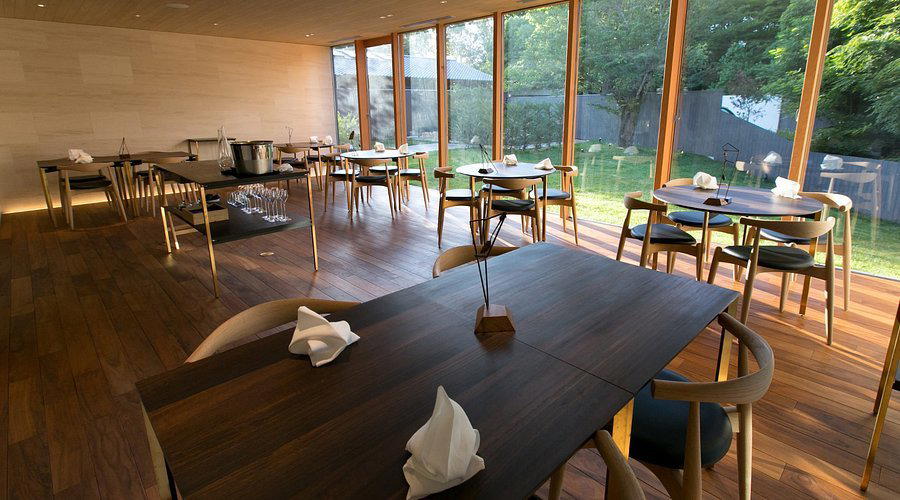
Located in Ikaruga, Nara's Ikoma District, æ æ¨ sits near one of Japan's oldest temple corridors, where the sourcing traditions of the Yamato region shape what reaches the table. The restaurant occupies a tier of quietly serious dining that rewards advance planning over impulse visits. For context on the broader Nara dining scene, see our full Ikoma District restaurants guide.
Pearl is the En Primeur Club membership app — saves, bookings, and concierge access live there. Same editors, same standards.
- Address
- 1 Chome-3-6 Horyujinishi, Ikaruga, Ikoma District, Nara 636-0114, Japan
- Phone
- +81745740438
 Saves & bookings on Pearl
Ikaruga's Dining Context: Where Temple Proximity Shapes the Table
The villages surrounding Horyuji Temple in Ikaruga have long sat apart from Japan's main dining circuits. Nara Prefecture sits between Osaka's density and Kyoto's prestige, which means its serious restaurants tend to attract a considered, intentional visitor rather than the reservation-churning tourist traffic that fills counters in both neighboring cities. That geographic positioning has consequences for how kitchens here source and what they choose to serve. The Yamato region, of which Ikoma District is a part, carries centuries of agricultural identity: Yamato vegetables, a Protected Geographical Indication category, represent one of Japan's older documented horticultural traditions, cultivated in the basin's distinctive climate and mineral-rich soil. Restaurants operating seriously in this corridor tend to treat that sourcing lineage as the floor, not the ceiling, of their ingredient decisions.
æ 木 is located at 1 Chome-3-6 Horyujinishi, Ikaruga, placing it within direct reach of that temple axis. The address alone signals a restaurant that asks visitors to arrive with a specific intention. For travelers calibrating a broader Kansai itinerary, it pairs logically with a stop at akordu in Nara, which approaches the region's produce from a different culinary angle.
The Sourcing Logic of the Yamato Basin
Across Japan's serious dining tier, the conversation around ingredient provenance has shifted considerably over the past decade. What was once the domain of a few kaiseki houses treating local agriculture as a philosophical commitment has become a broader expectation, from Osaka's innovative kitchens like HAJIME to the disciplined sushi counters of Tokyo such as Harutaka. In that context, a restaurant positioned in the Yamato agricultural belt holds a specific kind of geographic advantage: proximity to producers whose output rarely reaches urban wholesale markets at the same quality level it achieves when harvested and delivered locally.
The Yamato vegetable category includes cultivars that have been grown continuously in this region for generations, among them specific daikon, burdock, and chrysanthemum greens varieties that carry flavor profiles shaped by local growing conditions rather than commodity cultivation. Kitchens that can access these ingredients through direct producer relationships, rather than through distribution chains, work with a materially different raw material than their urban counterparts. This is the sourcing reality that gives restaurants in the Ikaruga corridor a distinct identity within Nara's dining scene, and it is the lens through which æ æ¨'s position in the area makes most sense to evaluate.
For comparison, the way ingredient sourcing functions as a competitive differentiator varies significantly across Japan's regions. In Kyoto, Gion Sasaki operates within a kaiseki tradition that has long prioritized seasonal Kyoto vegetables with equivalent specificity. In Fukuoka, Goh draws on Kyushu's seafood abundance as its primary sourcing signature. What distinguishes the Nara basin approach is the terrestrial focus: the agricultural identity here is vegetable and grain-led, and kitchens that work within that framework are making a different kind of seasonal argument than coastal or urban peers.
Planning a Visit: What the Location Requires
Reaching Ikaruga from central Osaka or Kyoto takes roughly 45 to 60 minutes by train and local connection, depending on the starting point, which means æ æ¨ functions leading as a deliberate destination rather than a walk-in supplement to a day's sightseeing. Visitors combining it with a Horyuji Temple visit, which holds UNESCO World Heritage status as one of Japan's oldest surviving wooden structures, can anchor the trip around both cultural and dining intent. The area draws a quieter visitor profile than Nara City's deer park district, which works in favor of a more focused dining experience.
Travelers who have successfully visited smaller, unlisted venues in rural Japan will recognize the pattern: some of the country's most carefully run kitchens operate with deliberately minimal public presence, relying on word of mouth, local knowledge, and specialist intermediaries rather than open reservation platforms. This places æ 木 in a broader category of Japanese dining experiences.
Travelers interested in comparing this tier of regional Japanese dining against other prefectural specialists might also consider Abon in Ashiya, Amaki in Aichi, or Arakawa in Hyogo, each of which operates within a similar logic of regional ingredient specificity and low public profile.
How æ æ¨ Sits Within Japan's Wider Serious Dining Tier
Japan's restaurant culture has a well-documented capacity for sustaining serious kitchens in locations that would be considered commercially marginal elsewhere. The examples are numerous: destination-level restaurants in small Hokkaido towns, counter sushi in rural Kyushu, and prix-fixe kaiseki in mountain onsen districts. What makes the Ikaruga example notable is the specificity of its agricultural context. The Yamato basin is not simply a rural area adjacent to better-known cities; it is a region with a documented horticultural identity that predates most of Japan's modern dining culture.
This positions æ æ¨ alongside a cohort of Japanese restaurants whose competitive case rests not on urban concentration or media visibility but on direct access to ingredients and a calibrated approach to what the local region produces. Venues like affetto akita in Akita, aki nagao in Sapporo, and Ajidocoro in Yubari District operate within the same structural logic, each drawing credibility from regional specificity rather than metropolitan density. Internationally, the parallel might be drawn to destination-format restaurants like Lazy Bear in San Francisco, where the sourcing argument and format discipline carry the dining case rather than location convenience.
For readers tracking Japan's regional dining evolution, the Nara prefecture tier, including Aji Arai in Oita, Akakichi in Imabari, anchoa in Kanagawa, Amegen in Saga, and comparable venues, represents a shift toward a more distributed model of serious eating.
Comparable Venues
Comparable venues nearby, for context on price, style, and recognition.
| Venue | Cuisine | Price | Notes |
|---|---|---|---|
| æ æ¨ | japanese | Not listed | Ikoma District |
| Mori no Restaurant Lucky Garden | Sri Lankan curry & cafe in a forest garden | $$ | Ikoma |
| Kimiya | Special Select Wagyu Yakiniku | $$$$ | Gakken Nara Tomigaoka |
| Ramen Torikaji Ippai | Specialty Chicken Ramen Shop | $ | Ikoma |
| 樺太食堂 | Hokkaido Seafood Donburi | $$ | Noshappu |
| CoCo Ichibanya (CoCo壱番屋) | Japanese Curry House | $$ | 小山町 |
Continue exploring