Tucked into a sixth-floor address in Osaka's Sonezaki Shinchi district, 和旬たい喜 operates within one of Kansai's most concentrated corridors of serious Japanese dining. The venue sits inside a neighbourhood where seasonal kaiseki philosophy and counter-format hospitality have long defined expectations, placing it in a comparable set that rewards patience and local knowledge to find.
Pearl is the En Primeur Club membership app — saves, bookings, and concierge access live there. Same editors, same standards.
- Address
- Japan, 〒530-0002 Osaka, Kita Ward, 曽根崎新地1 Chome−3−30 KOHDAビル 603
- Phone
- +818049848981
- Website
- washun-taiki.com
- Directions
- Get directions
 Saves & bookings on Pearl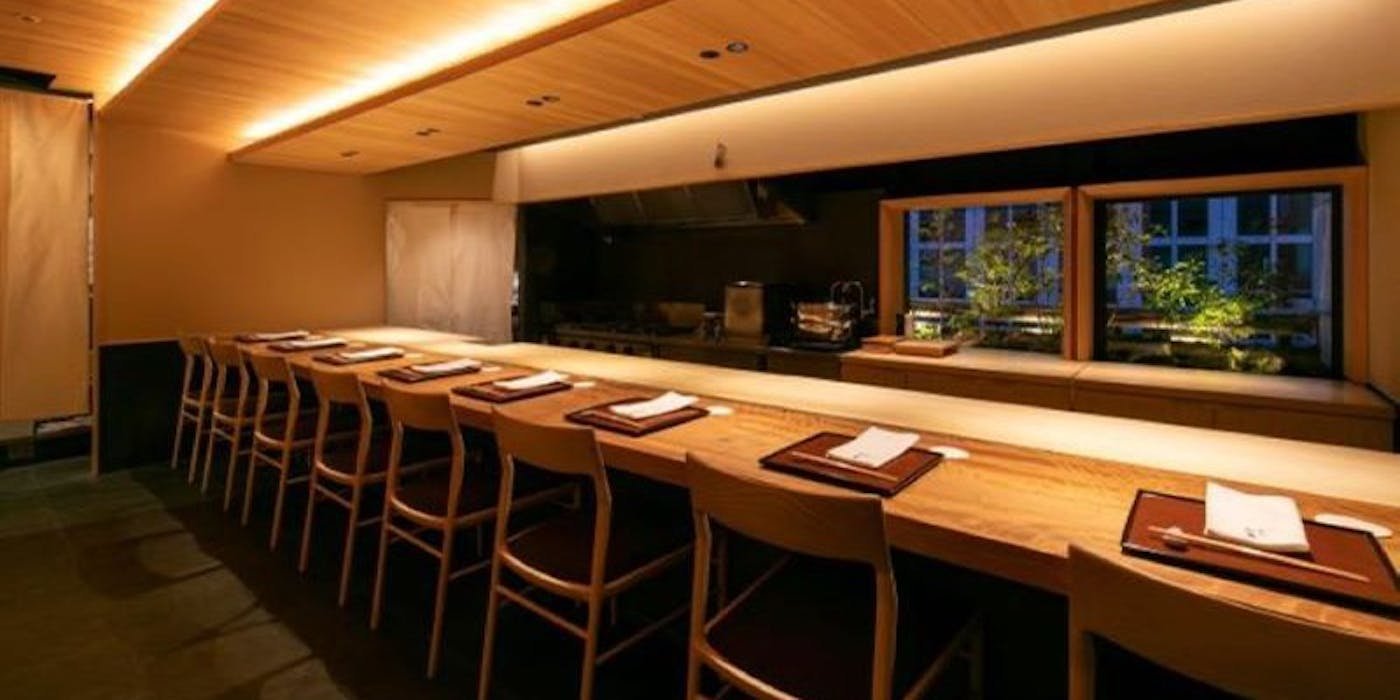
和旬たい喜 is a Modern Japanese Kaiseki restaurant in Osaka's Kita Ward, with a price tier of about US$180 per person. Sonezaki Shinchi and the Grammar of Kansai Counter Dining
Osaka's Kita Ward has a particular relationship with the counter restaurant. In Sonezaki Shinchi, the dense block of streets running north of Umeda Station, the dominant format is not the sprawling izakaya or the hotel banquet room, it is the compact, owner-operated room where the kitchen and the guest occupy the same narrow strip of space. This is the neighbourhood where serious Osaka dining concentrates itself, and where an address like KOHDAビル 603 carries more meaning than the building's exterior suggests.
The sixth-floor position of 和旬たい喜 fits a wider pattern in Japanese urban dining: premium rooms frequently occupy upper floors of mid-century commercial buildings, trading street-level visibility for a quieter atmosphere insulated from foot traffic. Sonezaki Shinchi has sustained this logic for decades. The area forms part of a larger Kansai dining geography that includes Kyoto's kaiseki institutions, among them Gion Sasaki in Kyoto, and reaches west into Nara, where French-Japanese crossover work at venues like akordu in Nara has expanded the region's reference points. 和旬たい喜 is positioned within this broader Kansai gravity, rather than standing apart from it.
The Sonezaki Counter in Context
Japanese counter dining of the kind concentrated in Sonezaki Shinchi has undergone a recognisable shift over the past fifteen years. What was once a format associated primarily with sushi and yakitori has expanded into a wider set of Japanese culinary traditions, washoku, seasonal small-plate cooking, and forms of kaiseki that have moved away from strictly ceremonial settings toward more conversational counter experiences. This evolution reflects broader changes in how Osaka diners engage with high-involvement Japanese cooking: the formality has loosened even as the ingredient standards and seasonal discipline have not.
和旬たい喜, operating under the name that foregrounds seasonal harmony (和旬, roughly: Japanese seasonality), sits within this post-formalisation wave of Osaka counter dining. Its Sonezaki Shinchi address places it alongside a comparable set that includes Ajihei Sonezaki and venues drawing on the neighbourhood's long association with careful, ingredient-led Japanese cooking. The district does not need to advertise itself; the addresses accumulate meaning through repetition and reputation, season after season.
For comparison within Osaka's wider serious dining tier, the city has developed a number of counter and omakase formats across different cuisine categories. Ajikitcho Bunbuan anchors the kaiseki tradition at one end of the spectrum, while HAJIME in Osaka represents the modernist wing of high-investment Japanese dining. 和旬たい喜 occupies a different register: a neighbourhood counter defined by its seasonal orientation and its Kita Ward location rather than by Michelin visibility or international press.
Seasonal Discipline and the Washoku Framework
The term 和旬 in the venue's name points directly to the organising logic of traditional Japanese counter cooking: the seasonal ingredient, handled with restraint, as the central subject. This is the framework that has shaped Kansai dining for generations, inherited from the kaiseki tradition and adapted, over decades, into the smaller counter format that suits contemporary Osaka dining habits. Seasonal produce from the Kinki region, vegetables from the Yamato plain, fish from Osaka Bay and the Seto Inland Sea, mushrooms and mountain vegetables at appropriate intervals, has historically anchored this style of cooking.
The evolution of washoku-style counter dining in Osaka has involved a gradual shift in the relationship between formality and access. Particularly significant change has not been in the ingredients or the techniques, which remain consistent with Japanese culinary tradition, but in the social contract of the experience. Counter formats in Sonezaki Shinchi have moved toward a model where the guest is a participant in the kitchen's rhythm rather than a recipient of a predetermined ceremony. The name and address position it squarely within the tradition that has been evolving in this direction.
For those tracing this trajectory across Japan's counter dining categories, comparison points are instructive. Harutaka in Tokyo shows what sustained seasonal discipline looks like in the capital's sushi counter context. In Fukuoka, Goh in Fukuoka represents a different model of high-investment seasonal Japanese cooking outside the major conurbations. The washoku counter in Osaka sits between these poles, shaped by the city's preference for directness and its proximity to notable produce networks.
Neighbourhood Positioning and the Kita Ward Dining Geography
Kita Ward's dining scene is stratified in ways that visitors from outside Osaka often underestimate. The blocks around Sonezaki Shinchi carry a different character from the louder corridors of Namba or the tourist-facing restaurant streets of Dotonbori. This is a district oriented toward the Osaka professional diner: the person who knows which building, which floor, and which reservation cadence applies to the room they want. The sixth-floor position of 和旬たい喜 in KOHDAビル is legible within this district's grammar.
Other venues in Osaka's broader Kita Ward and Namba orbit include Aka to Shiro, Az, and Calendrier, each occupying distinct positions within the city's dining registers. Further afield, Birdland in Sakai extends the serious dining geography south of central Osaka. 和旬たい喜 is oriented toward the Kita Ward corridor specifically, where seasonal Japanese counter cooking is the dominant mode and where the neighbourhood's density rewards those who approach it methodically.
The washoku counter model that defines venues like 和旬たい喜 stands apart from the globally oriented tasting menu format of restaurants like Le Bernardin in New York City or the Korean-American precision cooking of Atomix in New York City. The Sonezaki Shinchi counter is, by design, a local institution, its logic is Kansai seasonal, its audience is largely domestic, and its relationship to the international dining circuit is indirect at leading.
Know Before You Go
Address: KOHDAビル 603, 曽根崎新地1丁目3-30, Kita Ward, Osaka (sixth floor)
District: Sonezaki Shinchi, Kita Ward, Osaka's northern high-end dining corridor
Access: Osaka Umeda or Higashi-Umeda station; the Sonezaki Shinchi blocks are a short walk north
Booking: Reservations are essential.
Seasonal note: Washoku-style counter cooking in this district tracks ingredient seasons closely, spring and autumn typically produce the widest range of premium seasonal produce in the Kansai region
How It Stacks Up
Comparable venues nearby, for context on price, style, and recognition.
| Venue | Cuisine | Price | Notes |
|---|---|---|---|
| 和旬たい喜This venue — the venue you are viewing | Modern Japanese Kaiseki | $$$$ | Not listed |
| お料理 宮本 | Kaiseki | $$$$ | Kita |
| 緒乃 | Modern Edomae Omakase | $$$$ | Kita |
| 奈良きみや -別邸柘榴(ざくろ)- | Premium Yakiniku - Filet Specialist | $$$$ | Kita |
| 靱本町がく | Michelin-Starred Seasonal Kaiseki | $$$$ | Nishi |
| Numata Sou | Tempura Omakase | $$$$ | Kita |
Continue exploring
More in Osaka
Restaurants in Osaka
Browse all →




Bars in Osaka
Browse all →




Hotels in Osaka
Browse all →




Wineries in Osaka
Browse all →
At a Glance
- Elegant
- Intimate
- Sophisticated
- Special Occasion
- Date Night
- Business Dinner
- Chefs Counter
- Sake Program
- Local Sourcing
- Garden
Current opening hours
- Monday
- 6–11 PM
- Tuesday
- 6–11 PM
- Wednesday
- 6–11 PM
- Thursday
- 6–11 PM
- Friday
- 6–11 PM
- Saturday
- 6–11 PM
- Sunday
- 6–11 PM
Hours can change for holidays and private events. Last verified .
Elegant and inviting with wood-grained interior, small garden view from windows, and serene counter seating focused on the chef's craft.