In Nihonbashi Kakigaracho, one of Tokyo's older mercantile quarters, La Pioche occupies a neighbourhood where French-inflected dining has quietly held ground for decades. The daytime and evening services here read as distinct propositions, making the choice of when to visit as deliberate as what to order. For those tracking Tokyo's mid-to-upper French tier, this address rewards attention.
Pearl is the En Primeur Club membership app — saves, bookings, and concierge access live there. Same editors, same standards.
- Address
- 1 Chome-18-1 Nihonbashikakigaracho, Chuo City, Tokyo 103-0014, Japan
- Phone
- +81336697988
- Directions
- Get directions
 Saves & bookings on Pearl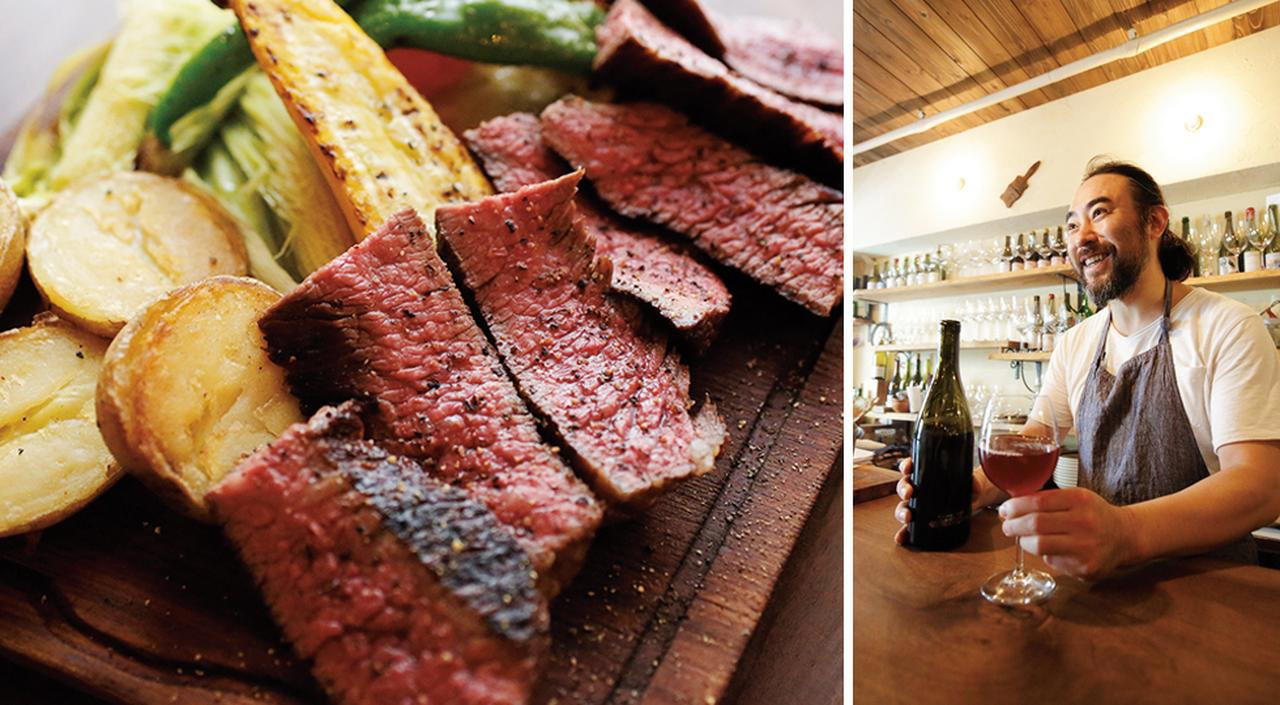
A French Address in an Old Tokyo Quarter
Nihonbashi Kakigaracho sits on the eastern edge of Chuo City, a district whose commercial identity dates to the Edo period, when it functioned as a hub for merchants dealing in shellfish and dry goods. The neighbourhood has since traded fishing-era grit for the quieter cadence of financial-district Tokyo, and it is in this context that La Pioche (ラ ピヨッシュ) has established itself as one of the area's recurring French references. The name itself, French for a pickaxe or mattock, carries a workmanlike register that sits at slight odds with the refinement French cuisine implies, which is, in its own way, a useful signal about the register of the place.
French restaurants in Tokyo have long occupied two distinct tiers. At the leading sit the tasting-menu destinations with Michelin credentials and international reservation queues: L'Effervescence and Sézanne are the clearest examples of that upper bracket, both running multi-course formats priced well above the city average. Below them, and often more interesting to the working week, is a stratum of French bistros and brasseries that have served neighbourhood regulars for years without necessarily chasing star recognition. La Pioche occupies something close to that second tier in this part of east-central Tokyo.
Lunch and Dinner: Two Different Arguments
The lunch-versus-dinner divide is more pronounced at French restaurants in Tokyo than in almost any other city. Japanese dining culture has long treated the midday service as its own proposition, not merely a shorter version of dinner, but a structurally different offer, often better value, frequently the more accessible entry point for venues that operate selective evening formats. Across the French tier, from neighbourhood bistros to Michelin-holding rooms, lunch tends to front-load value while dinner carries the full formal weight.
At La Pioche's Nihonbashi address, this pattern is worth considering before booking. Chuo City's daytime population, office workers, buyers from the financial district, professionals moving between meetings, creates a different room at lunch than the deliberate evening visitors who choose an east-side French address by design. Venues in this neighbourhood that do both services competently tend to run tighter, more economical menus at midday, then open the kitchen toward more composed plating after dark. The practical implication is simple: evening service is the better choice for a fuller meal, while lunch suits a lighter visit.
For broader context on how Tokyo's French scene maps across price and format, Crony represents the innovative edge of the French tier, while L'Effervescence anchors the formal end. La Pioche's Nihonbashi location places it geographically and commercially closer to the neighbourhood-regulars model than to either of those reference points.
Tokyo's French Tier in Wider Japan Context
French technique appears across Japanese cities in ways that reward comparison. In Osaka, HAJIME runs a rigorous tasting format with three Michelin stars. In Kyoto, Gion Sasaki works kaiseki traditions that absorb French influence without subordinating Japanese structure. In Nara, akordu has built a European-inflected offer in a city more typically associated with temple tourism. Fukuoka's Goh demonstrates how a regional city can develop serious culinary credibility independent of Tokyo's gravitational pull.
What this distribution illustrates is that French-adjacent cooking has found durable footholds across Japan at multiple price points and in multiple formats. Tokyo remains the densest concentration, but the conversation about where serious French cooking lives in Japan has spread well beyond the capital. Venues outside Tokyo, from Nanao to Sapporo and Takashima, have developed distinct regional identities that make a Japan-wide dining itinerary more interesting than a Tokyo-only one.
Within Tokyo, the kaiseki tradition represented by RyuGin and the precision sushi of Harutaka set the benchmark for what seasonal Japanese cooking looks like at its most considered. French restaurants in the city operate in productive tension with that tradition: some absorb it, some resist it, and particularly interesting ones find their own equilibrium.
International Comparisons Worth Making
For readers who move between Tokyo and New York, the contrast in how French-influenced fine dining positions itself is instructive. Le Bernardin in New York operates at a scale and institutional weight that few Tokyo French rooms attempt to match. Atomix, also in New York, shows how Korean fine dining has absorbed French structure to create something structurally distinct. In both cases, the comparison illuminates how Tokyo's French tier has developed its own logic: smaller rooms, more seasonal constraint, a quieter relationship with ceremony.
For neighbourhood-level French cooking at more accessible price points across Japan, Bistro Ange in Toyohashi and Birdland in Sakai show how the bistro format has found regional expressions well outside the major city centres. Nishikawa Machi adds further regional texture to this picture.
Planning Your Visit
La Pioche is located at 1 Chome-18-1 Nihonbashi Kakigaracho, Chuo City, Tokyo 103-0014. The nearest access points are Nihonbashi and Suitengumae. Dress: smart casual.
Cuisine Context
Comparable venues nearby, for context on price, style, and recognition.
| Venue | Cuisine | Price | Notes |
|---|---|---|---|
| ラ ピヨッシュThis venue — the venue you are viewing | Natural Wine Bistro with Charcoal Grills | $$$ | Not listed |
| ル・ボークープ | Seasonal French Bistro | $$$ | Shibuya |
| La Boutique de Joël Robuchon Marunouchi burikkusukuea ten | French Bakery-Café | $$$ | Chiyoda |
| 茶禅華 | Classical French Cuisine | $$$ | Minato |
| 松㐂 | Provençal French Bistro | $$$ | Nakano |
| ビストロシンバ | French-Japanese Fusion Bistro | $$$ | Chūō |








At a Glance
- Cozy
- Rustic
- Intimate
- Date Night
- Special Occasion
- Open Kitchen
- Natural Wine
- Sake Program
- Local Sourcing
- Organic
Current opening hours
- Monday
- 5:30–10 PM
- Tuesday
- 5:30–10 PM
- Wednesday
- 5:30–10 PM
- Thursday
- 5:30–10 PM
- Friday
- 5:30–10 PM
- Saturday
- 5–10 PM
- Sunday
- 5–10 PM
Hours can change for holidays and private events. Last verified .
Cozy and rustic atmosphere with a focus on natural ingredients, featuring wood elements and an intimate 18-seat setting.