Our verdict
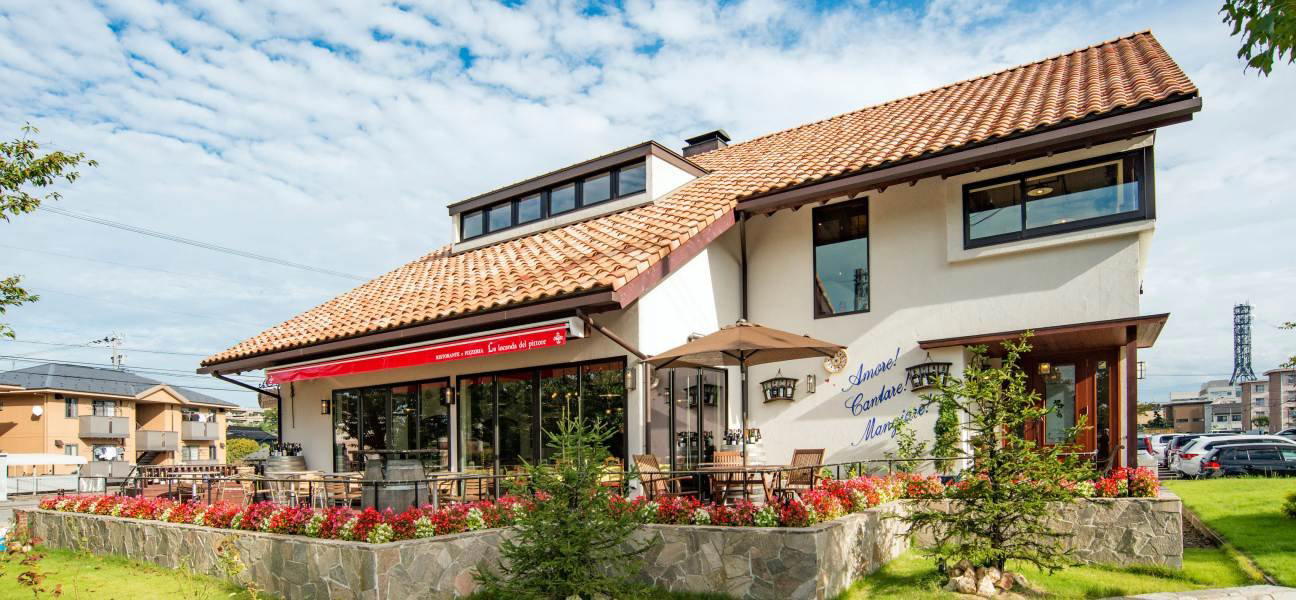
La Locanda del Pittore Kansui-koen sits along Toyama's Kansui Park waterfront, bringing an Italian dining format into one of the city's most considered natural settings. The restaurant draws on Italy's trattoria tradition while operating within Toyama's increasingly serious restaurant scene, where locally sourced seafood and mountain produce give European formats a distinctly regional character.

Pearl is the En Primeur Club membership app — saves, bookings, and concierge access live there. Same editors, same standards.
- Address
- 3-3 Minatoirifunecho, Toyama, 930-0805, Japan
- Phone
- +81764823308
- Hours
- Mon 11:30 AM–2 PM, 5:30–9 PMTue–Wed ClosedThu–Sun 11:30 AM–2 PM, 5:30–9 PM
- Website
- kansui.pittore.jp
- Directions
- Get directions
Where the Water Meets the Table
Toyama's Kansui Park is one of the few urban waterfront spaces in provincial Japan that functions as genuine civic architecture rather than a landscaped afterthought. The canal system running through the park connects to Toyama Bay, and on clear days the Northern Alps form a backdrop that places the whole area in a different register from standard city-park design. It is inside this setting that ラ・ロカンダ・デル・ピットーレ環水公園 (La Locanda del Pittore Kansui-koen) operates — a positioning that immediately signals something about how the restaurant approaches the relationship between environment and meal. In a city where Ebitei Bekkan and Hagiwara anchor the traditional Japanese end of the market, La Locanda del Pittore occupies a different register — European in format, waterfront in setting, and reliant on Toyama's exceptional local produce to give the cuisine its argumentative core.
Italian Form, Toyama Substance
Italian restaurants in regional Japanese cities tend to fall into one of two categories: those that replicate a metropolitan template and those that allow local sourcing to pull the cuisine toward something more specific. The Kansui Park location belongs to the latter tendency. Toyama Prefecture is one of Japan's better-positioned food regions: the bay delivers yellowtail, white shrimp, and firefly squid across different seasons, while the surrounding mountains supply river fish, mountain vegetables, and rice of a kind that serious kitchens across Japan have paid attention to for decades. When an Italian trattoria-format kitchen operates inside that supply chain, the cuisine it produces carries genuine local argument rather than generic European signalling.
The restaurant's name references the Italian tradition of the locanda, originally a roadside inn with a kitchen, a format associated with hospitality that is unhurried rather than theatrical. That tradition sits reasonably well in a park context, where the approach to the meal is shaped partly by the pace of the surrounding environment. Comparable Italian operations in Japan's secondary cities, such as Himawari Shokudo 2 in Toyama itself, suggest that the category at the ¥20,000–¥29,999 price tier has developed real seriousness in the region. La Locanda del Pittore operates within that broader Italian dining movement in provincial Japan, where the gap between the capital's established institutions and regional kitchens has narrowed considerably over the past decade.
The Arc of the Meal
Italian multi-course formats in Japan follow a recognisable structure, antipasto, primo, secondo, dolce, but the specific logic of each transition depends on what the kitchen is trying to say. In a waterfront setting with access to Toyama Bay's seasonal catch, the opening courses tend to carry the clearest local identity: raw preparations, lightly cured fish, or compositions that allow the ingredient to speak before cooking transforms it. This is where Toyama's white shrimp, when in season from spring through summer, functions as an ambassador ingredient, small, translucent, and carrying a sweetness that neither aggressive heat nor heavy sauce serves well.
The progression from sea to land across a meal is a structural choice that reflects how Toyama's produce divides by geography. Bay ingredients carry the earlier courses; mountain-sourced proteins and vegetables tend to anchor the secondo. Pasta courses in this context function as the pivot, a format that is intrinsically Italian in technique but can carry local grain character or foraged additions that give it regional specificity. Italian kitchens in Japan have long been adept at this kind of translation, as venues as different as HAJIME in Osaka and akordu in Nara demonstrate: the formal European structure survives, but the ingredient logic is thoroughly Japanese.
Dessert courses in Italian restaurants at this level in Japan frequently lean on seasonal fruit and dairy combinations rather than the heavier pastry formats of northern Italian tradition. The local rice, Toyama produces several named varieties, occasionally appears in dessert contexts, a usage that sounds more surprising than it is when the result is a rice pudding or gelato base built on grain with genuine character. This kind of course-by-course accumulation is what distinguishes a meal with editorial argument from one that is simply competent.
Toyama's Wider Restaurant Picture
La Locanda del Pittore does not operate in isolation. Toyama's restaurant scene has developed a coherent identity across categories over the past several years, anchored by the prefecture's seafood supply and supported by a growing number of kitchens, including Daimon and Boteyan, that treat local sourcing as a structural commitment rather than a marketing note. Against that backdrop, an Italian kitchen in a prominent park location represents a specific curatorial choice about how European formats can carry Toyama's produce without diluting either.
Visitors cross-referencing Toyama against Japan's other serious dining cities, Kyoto with Gion Sasaki, Tokyo with Harutaka, Fukuoka with Goh, will find a city that punches above its population in food terms, driven largely by ingredient access rather than density of venues. La Locanda del Pittore is one of the Italian-format representatives in that picture; for the fuller range across categories, our full Toyama restaurants guide maps the complete field. Regional comparisons beyond Toyama are also worth drawing: 一本杉川嶋製 in Nanao and 湖鶴荘 in Takashima both operate in the Hokuriku and Biwako-adjacent regions where access to bay or lake seafood similarly defines what European or hybrid kitchens can achieve.
Planning a Visit
The Kansui Park address, 3-3 Minatoirifunecho, Toyama, places the restaurant within reasonable reach of central Toyama Station, with the park accessible on foot or by short taxi. The waterfront setting means the experience shifts meaningfully by season: the park in winter carries the weight of the surrounding snow landscape, while spring brings the firefly squid season and the first mountain vegetables, making April and May a particularly considered window for a meal built around local progression. Visitors coming to Toyama from Kanazawa or Nagoya via the Hokuriku Shinkansen should build in time to walk the park before or after the meal; the setting contributes to the experience in ways that arriving purely for the table does not capture. Reservations at park-adjacent restaurants with this kind of format and location tend to require advance planning; contacting the restaurant directly ahead of any seasonal peak period is advisable.
Frequently asked questions
What part of town is ラ・ロカンダ・デル・ピットーレ環水公園 in?
ラ・ロカンダ・デル・ピットーレ環水公園 is located at 3-3 Minatoirifunecho, Toyama, 930-0805, Japan, Toyama.
Is La Locanda del Pittore suitable for a dinner visit tied to a Toyama station itinerary?
The address at 3-3 Minatoirifunecho places the restaurant within Kansui Park, which sits roughly two kilometres from central Toyama Station — manageable by taxi or a short tram and walk combination. The park itself is a deliberate civic destination with canal views, so arriving with time to walk the waterfront before a meal is a practical option rather than a detour. Toyama's compact city layout means the restaurant works within a broader itinerary that includes the Toyama Glass Art Museum or the historic Masuyama district.
What do people recommend at ラ・ロカンダ・デル・ピットーレ環水公園?
Guests consistently point to the multi-course Italian format as the reason to visit, with the progression from antipasto through to dolce drawing on Toyama's regional produce rather than imported staples. The Kansui Park setting, immediately outside the restaurant, adds a dimension that changes meaningfully across seasons. Given the absence of a published set menu online, asking staff on arrival about the current course composition is the most reliable approach.
How far ahead should I plan for ラ・ロカンダ・デル・ピットーレ環水公園?
Kansui Park restaurants in Toyama attract both local regulars and visitors making a specific trip from Kanazawa or Nagoya, which tightens weekend availability more than weekday slots. A reservation made one to two weeks in advance is a reasonable baseline for weekday dining; weekend bookings, particularly in autumn foliage season when park foot traffic peaks, warrant earlier planning. No online booking system is publicly documented, so direct contact with the restaurant is the standard route.
Where the Accolades Land
Comparable venues nearby, for context on price, style, and recognition.
| Venue | Cuisine | Price | Awards | Notes |
|---|---|---|---|---|
| ラ・ロカンダ・デル・ピットーレ環水公園This venue — the venue you are viewing | 薪窯ピッツェリア | $30–50 | Not listed | Not listed |
| Hagiwara | Toyama Omakase | $50–100 | Not listed | Ote Mall |
| Kuchi Iwa | Soba and sake multi-course Japanese | $50–100 | Tabelog 100 #47 | Higashi-Iwase |
| GEJO | Sushi Omakase | $150–200 | Tabelog 100 #74 | Higashiiwasemachi |
| Piatto Suzuki Cinque | Seasonal Italian using Toyama seafood | $50–100 | Tabelog 100 #34 | Higashi-Iwase |
| Cave Yunoki | One-group-per-day French fine dining in a historic Toyama warehouse | $150–200 | Tabelog 100 #100 | Higashi Iwase |
Continue exploring
More in Toyama
Restaurants in Toyama
Browse all →
Hotels in Toyama
Browse all →
Wineries in Toyama
Browse all →
Details
- Rustic
- Scenic
- Elegant
- Date Night
- Family
- Special Occasion
- Waterfront
- Open Kitchen
- Terrace
- Sake Program
- Sommelier Led
- Local Sourcing
- Waterfront
- A La Carte
- Small Plates
Current opening hours
- Monday
- 11:30 AM–2 PM, 5:30–9 PM
- Tuesday
- Closed
- Wednesday
- Closed
- Thursday
- 11:30 AM–2 PM, 5:30–9 PM
- Friday
- 11:30 AM–2 PM, 5:30–9 PM
- Saturday
- 11:30 AM–2 PM, 5:30–9 PM
- Sunday
- 11:30 AM–2 PM, 5:30–9 PM
Hours can change for holidays and private events. Last verified .
山小屋風のオシャレな内装で環水公園の景色を望む開放的な空間