
1949 The Hidden City belongs to Beijing’s higher-context dining tier, where Beijing cuisine is treated as a living urban tradition rather than a nostalgia exercise. Chef Benny Su’s name and a 2026 Opinionated About Dining Recommended listing give it external credibility, but the stronger reason to pay attention is its position in a city where regional Chinese cooking is being edited for a more contemporary dining room.
Pearl is the En Primeur Club membership app — saves, bookings, and concierge access live there. Same editors, same standards.
- Address
- China, Beijing, Chaoyang, 使馆区 Gongrentiyuchang N Rd, 4号院 邮政编码: 100020
- Phone
- +86 10 6501 8881
- Directions
- Get directions
 Saves & bookings on Pearl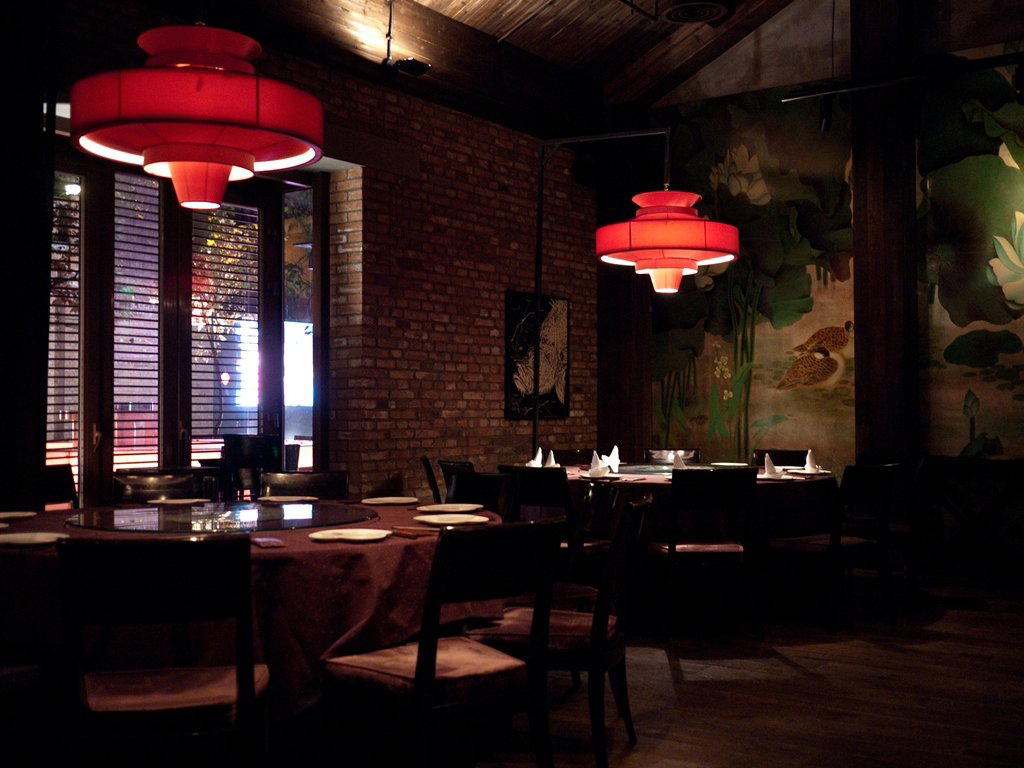
Approaching the Gongti side of Beijing, the city changes register: stadium traffic, embassy-district dining, late-night bars, and polished Chinese restaurants sit close together. Here, 1949 The Hidden City feels less like a museum of old Beijing than part of the capital’s ongoing argument over how its cuisine should look in a modern room. Beijing food carries imperial, courtyard, Muslim, Shandong, Manchu, and street-level influences; today’s interesting restaurants decide which references to preserve, edit, and serve with sharper rhythms.
That context matters because Beijing cuisine is often misunderstood outside China as a narrow roast-duck category. The deeper tradition is broader: wheat-based staples, fermented bean pastes, cold appetizers, braises, seasonal vegetables, banquet dishes, and a strong sense of texture. Serious dining rooms increasingly treat those elements as material for interpretation rather than folklore. 1949 The Hidden City, led by chef Benny Su and listed as Recommended in the 2026 Opinionated About Dining Top Restaurants in Asia, belongs in that contemporary Beijing conversation.
Beijing cuisine, edited for a contemporary capital-city room
The useful way to read this restaurant is through selection, not novelty. Beijing’s culinary identity has always been composite, shaped by court kitchens, northern home cooking, migrant influence, and the appetite of a political capital. A current-generation Beijing restaurant must choose whether it is selling memory, ceremony, regional scholarship, or urban leisure. The Hidden City sits closest to the last two: it signals Beijing cuisine with destination-dining polish while retaining a local frame, rather than drifting into generic luxury Chinese cooking.
Chef Benny Su’s role is credential more than storyline. In this category, chef authorship matters when it clarifies the edit: how much old Beijing flavor remains, how formal the pacing becomes, and whether tradition is treated as fixed canon or working language. The OAD Recommended citation in 2026 is a useful trust signal because OAD’s Asia list tends to reward restaurants with a clear point of view, not only rooms with international visibility. For Beijing, that recognition also shows that the city’s native cuisine can compete for attention without borrowing the grammar of Cantonese seafood houses, Shanghai banquet rooms, or tasting-menu Westernization.
For travelers trying to understand the city through food, this distinction counts. A noodle shop can teach the directness of fermented sauce and wheat; a formal Beijing restaurant can show how those instincts translate into a larger meal. Readers building a wider Beijing itinerary should place it alongside more direct local references such as Fortune Long Beijing Bean Sauce Noodles (East Xinglong Street) (Beijing Cuisine), Fu Man Yuan (Xinyuanli) (Beijing Cuisine), Jing Hua Lou (Beijing Cuisine), Jingji (Beijing Cuisine), and Mansion Cuisine by Jingyan (Beijing Cuisine). Together, those addresses show how broad the Beijing-cuisine label becomes once it leaves the simplified tourist script.
The real comparison is between memory and polish
Beijing dining has a tension Shanghai or Hong Kong do not share in the same way. The capital must feed officials, families, visiting executives, domestic tourists, and international guests, often within the same few districts. Restaurants in this tier therefore have two jobs: enough cultural legibility for outsiders and enough technical seriousness not to flatten the cuisine for them. The stronger rooms avoid costume drama, keeping fermented, roasted, braised, and wheat-driven northern flavors central while tightening setting, pacing, and presentation.
That is where 1949 The Hidden City earns attention. It is not the quick, canteen-style Beijing meal, and should not be judged by that standard. Nor is it a pure international tasting-menu restaurant. It occupies a middle ground that has become important in Beijing: regional Chinese dining with destination-level framing. For a visitor, the value is not only what arrives on the table, but what the format explains about the city’s restaurant hierarchy. Local tradition here is not informal by default; it can be composed, curated, and recognized by international dining lists without losing its Beijing accent.
The Gongti location also shapes the read. This is not the hutong register of low stools, courtyard lanes, and compressed neighborhood eating. It belongs to a more cosmopolitan Beijing, close to nightlife, hotels, corporate dining, and the city’s outward-facing restaurant economy. That does not make it less local. It shows how Beijing cuisine travels across social settings inside its own city, from breakfast staples and noodle counters to rooms built for longer, more deliberate meals.
How to place it in a Beijing itinerary
Use the restaurant as a structured Beijing-cuisine meal, not the only local meal of a trip. The city rewards range: one meal for noodles and sauce, one for courtyard or banquet tradition, one for contemporary Chinese dining, and one for the capital’s bar or hotel scene. The restaurant’s OAD Recommended status gives it a credible place in that plan, but the better editorial reason to include it is category coverage. It helps answer a question many visitors miss: what does Beijing cuisine look like when handled as a serious modern restaurant language?
For broader planning, Our full Beijing restaurants guide is the natural anchor, with Our full Beijing hotels guide, Our full Beijing bars guide, Our full Beijing wineries guide, and Our full Beijing experiences guide filling out the trip around it. Travelers comparing Chinese regional dining beyond the capital can also look at #8 in Chengdu, 100 Century Avenue Cantonese in Shanghai, 167 Shan Hai Li in Fuzhou, 1913 in Hangzhou, 1927 Dong Yuan Si Chu in Xiamen, 1980烧肉粽 in 厦门市, Do It True (Xinyi), Beijing Cuisine in Taipei, and Moment in Beijing, Beijing Cuisine in Taichung. Those cross-city references underline the point: Beijing cuisine is not a single dish or fixed period style, but a repertoire that changes with room, audience, and ambition.
Comparable Venues Nearby
Comparable venues nearby, for context on price, style, and recognition.
| Venue | Cuisine | Price | Notes |
|---|---|---|---|
| 1949 The Hidden CityThis venue — the venue you are viewing | Upscale Peking Duck & Chinese Fine Dining | $$$ | Not listed |
| LU STYLE | Modern Shandong Seafood | $$$ | Chaoyang District |
| Courtyard | Imperial Chinese | $$$ | Donghuamen |
| Huajia Yiyuan | Traditional Beijing Peking Duck | $$$ | Beixinqiao |
| LEI GARDEN | Authentic Cantonese Dim Sum | $$$ | Chaoyang |
| 1949-å ¨é¸å£ | Handmade Noodles | $$$ | Chaoyangmen |
Recognition history
Dated appearances from independent guides and award organizations, with the underlying list record or original source where available.
Opinionated About Dining Top Restaurants in Asia Recommended
Opinionated About Dining
At a Glance
- Elegant
- Trendy
- Lively
- Sophisticated
- Business Dinner
- Group Dining
- Celebration
- Special Occasion
- Date Night
- Design Destination
- Standalone
- Private Dining
- Craft Cocktails
- Extensive Wine List
Current opening hours
- Monday
- 11 AM–10 PM
- Tuesday
- 11 AM–10 PM
- Wednesday
- 11 AM–10 PM
- Thursday
- 11 AM–10 PM
- Friday
- 11 AM–10 PM
- Saturday
- 11 AM–10 PM
- Sunday
- 11 AM–10 PM
Hours can change for holidays and private events. Last verified .
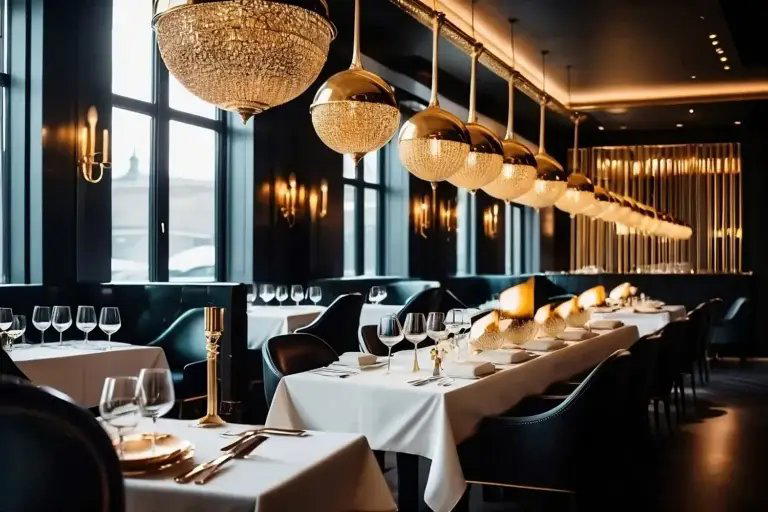
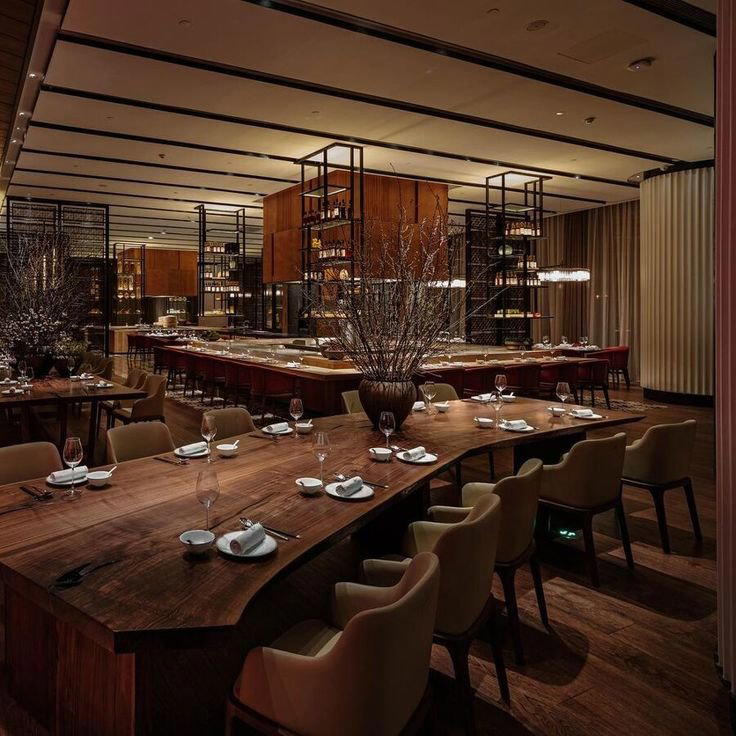
Upscale and sophisticated with a neo‑industrial design, low warm lighting, and a buzzy atmosphere that suits business diners, tourists, and groups seeking a polished but not overly formal experience.