VIVOOD Landscape Hotel & Spa


1 Michelin Key · Mr & Mrs Smith Seal of Approval
On the slopes of the Guadalest Valley, about an hour from Alicante, VIVOOD Landscape Hotel & Spa earns its Michelin Key (2024) through an architectural premise as much as a hospitality one: 35 glass-walled pavilions designed by the same team that runs them, where the Serra de Bèrnia ridgeline is the dominant interior feature. Adults-only, farm-to-table restaurant on site, rates from $554.

Pearl is the En Primeur Club membership app — saves, bookings, and concierge access live there. Same editors, same standards.
- Address
- Carretera Guadalest - Alcoi, 10, 03516 Benimantell, Alicante
- Phone
- +34 966 31 85 85
- Website
- vivood.com
- Directions
- Get directions
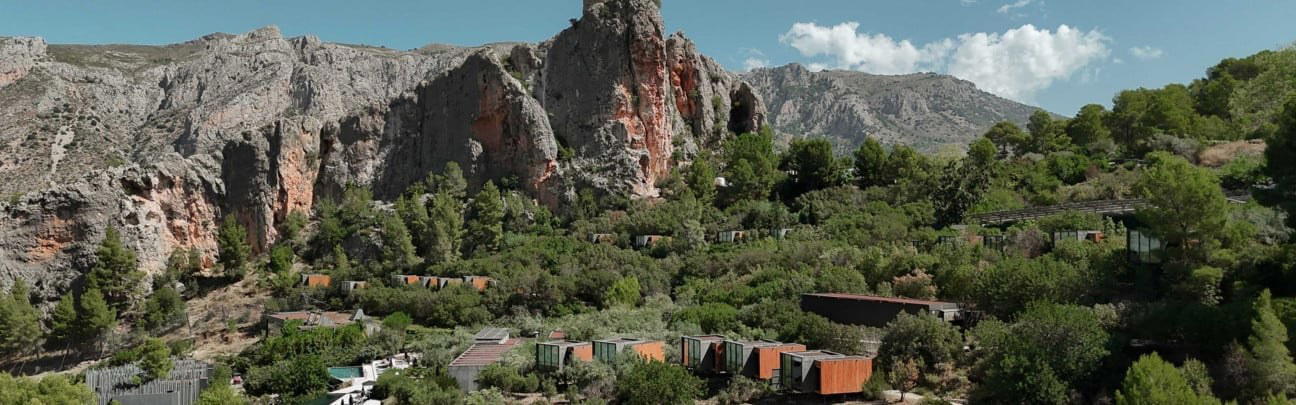
Glass Walls, Limestone Ridge: The Architectural Logic of VIVOOD
The Guadalest Valley is one of the inland Costa Blanca's least-trafficked corners, a limestone corridor that runs northeast from Benimantell toward the reservoir village of Guadalest itself. Most visitors pass through on day trips from Alicante or Benidorm and return to the coast by evening. VIVOOD Landscape Hotel & Spa is designed, structurally and conceptually, to make that exit feel like a mistake.
The property sits on the valley slope at an elevation that frames the ridgeline rather than the road below. The 35 guest pavilions are glass-walled boxes — low, flat-roofed, and precisely oriented so that the sierra becomes the room's dominant visual plane. In Spain's premium accommodation sector, the split between large international footprints and smaller design-led properties has sharpened over the last decade. Properties like Mandarin Oriental Ritz, Madrid and Mandarin Oriental Barcelona occupy one pole: brand authority, city-centre positioning, comprehensive amenity stacks. VIVOOD belongs to the opposite cohort, where the site itself is the primary asset and restraint in key count is a deliberate editorial choice.
What distinguishes VIVOOD within that cohort is a structural fact: the architects and the hoteliers are the same team. That alignment is rarer than it sounds. In most hotel projects, design and operations arrive as separate disciplines that negotiate compromises — usually at the expense of the design. Here, the form was never going to be overridden by function because both came from the same source. The result is a built environment where the glass walls are not a stylistic gesture but a load-bearing element of the hospitality proposition. At 35 rooms and adults-only, the property operates at a scale where that proposition holds without dilution.
Michelin awarded VIVOOD a Key in 2024, part of the guide's relatively new hotel recognition framework, which evaluates the overall stay experience rather than just the restaurant.
The Pavilion Format and What It Demands of the Guest
Glass-walled accommodation in a landscape hotel is a specific hospitality contract. The room does not offer the privacy logic of a walled terrace or a tropical canopy; it offers exposure, in both senses. The valley is the entertainment. At VIVOOD, the pavilion format means mornings are defined by light arriving from the ridge, and evenings by the specific way the Alicante hinterland loses colour after sunset. Guests who arrive expecting a conventional resort amenity sequence, pool-bar-restaurant as primary loop, will find the hierarchy is inverted. The landscape precedes everything else.
This is not a property suited to every travel mode. It is adults-only, deliberately, and the remote valley position means Benimantell's village and the Guadalest reservoir are nearby reference points rather than urban alternatives. For travellers calibrated to that kind of immersion, the structure works precisely because it offers so little insulation from the site. For those seeking the full-service coastal resort experience, properties along the Costa Blanca proper serve that demand more efficiently.
At around $554 per night, VIVOOD prices against design-led rural properties rather than coastal resort competitors. The rate reflects the architectural investment, the Michelin Key credential, and the adults-only focus, not square footage or amenity volume in the conventional sense.
The Restaurant: Slow Food in a Mountain Frame
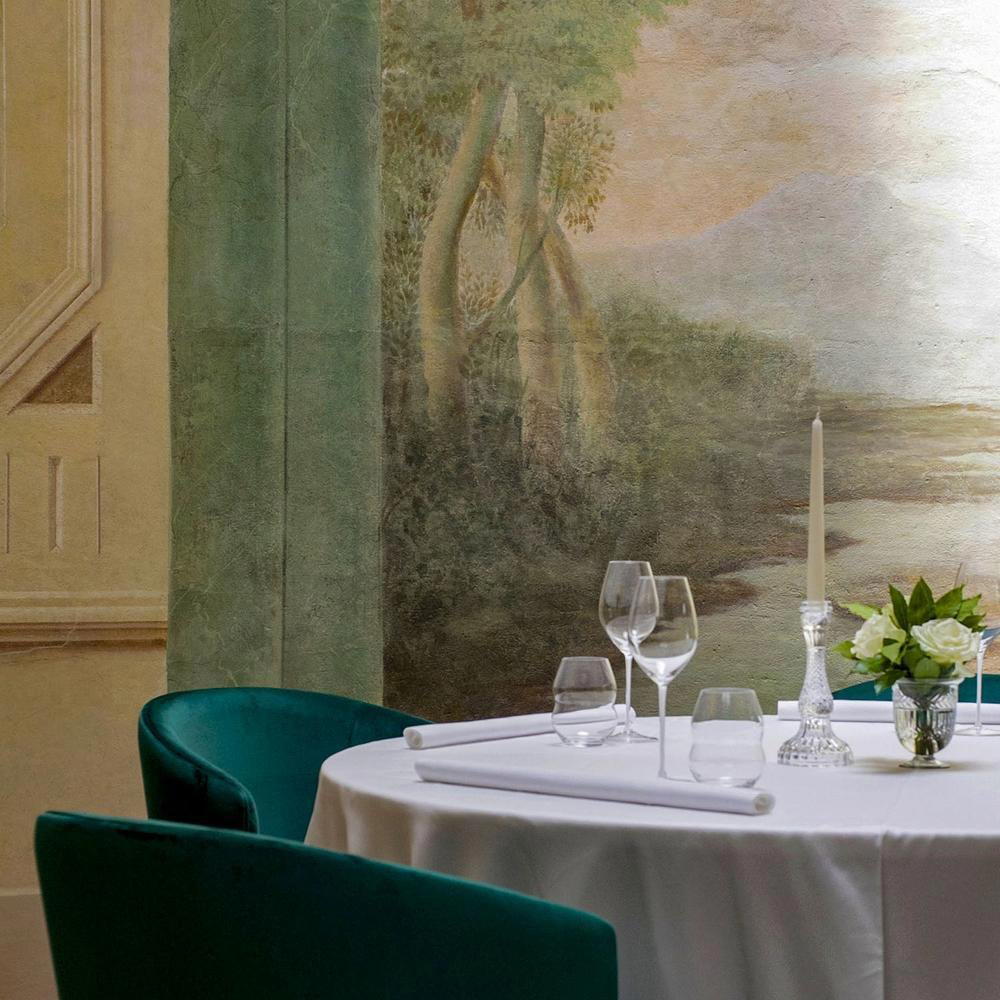
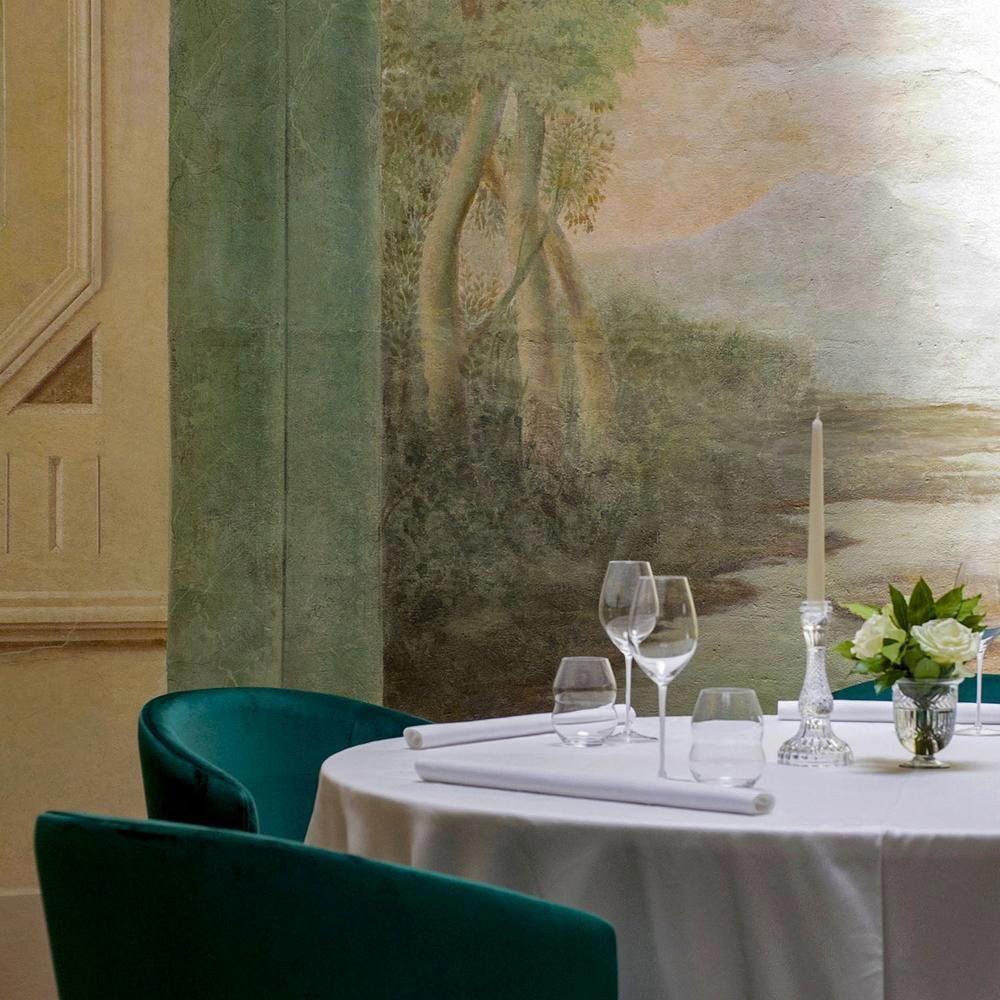
The on-site restaurant operates within the Slow Food framework and the broader farm-to-table sourcing model that now defines serious rural hotel dining across Spain and the wider Mediterranean. This approach has become sufficiently mainstream in premium rural properties that the distinguishing variable is no longer the philosophy itself but the depth of local supply chain integration and menu discipline. At properties like Terra Dominicata in Escaladei and Mas de Torrent Hotel & Spa, kitchen sourcing is tied directly to estate or regional producers at a level that makes the restaurant a genuine argument for staying in rather than driving to a coastal town. VIVOOD's kitchen operates within this same logic, with the Guadalest Valley and the broader Alicante interior providing the agricultural context.
The Alicante region's produce credentials are not incidental. The province sits at the intersection of mountain and coastal microclimate systems, with citrus, almonds, rice, and olive oil forming the agricultural baseline of its cuisine. A restaurant committed to working within that geography has genuine material to draw from, and the Slow Food designation suggests that commitment is structural rather than decorative.
Getting There and Staying Oriented
Benimantell sits roughly an hour from Alicante's airport by road, following the AP-7 motorway before turning inland toward the Guadalest Valley. The drive itself is part of the arrival sequence, the terrain shifts from coastal flatlands to limestone terrain noticeably within the final twenty minutes. A hire car is the practical requirement; the valley has no rail connection and public transport to Benimantell is limited.
The Guadalest reservoir and the fortified village of Guadalest are the most immediate cultural points of reference from the property, both within a short drive. The Costa Blanca coast, Altea, Calpe, and the Benidorm strip, remains accessible for day excursions, though guests who engage with the valley on its own terms tend to find the resort towns disorienting by contrast. Bookings at VIVOOD's rate level ($554 and above) should be secured well in advance for spring and autumn, when the valley light and temperatures are at their most compelling. Summer operation in an all-glass pavilion is a different thermal experience, one worth factoring into timing decisions.
For a broader view of the region's accommodation and dining options, see our full Benimantell restaurants guide. Travellers building a longer Spain itinerary might also consider Atrio Restaurante Hotel in Cáceres, Pepe Vieira Restaurant & Hotel in Poio, or Torre del Marqués Hotel Spa & Winery for comparable rural design-hospitality propositions at different points on the peninsula. Mediterranean island options in a similar register include Hotel Can Cera in Palma, La Residencia, A Belmond Hotel, Mallorca, Hotel Can Ferrereta in Santanyí, Can Alberti 1740 Hotel Boutique in Mahón, and BLESS Hotel Ibiza. For Galician coastal alternatives, Casa Beatnik Hotel in A Coruña and A Quinta da Auga Hotel & Spa in Santiago de Compostela occupy a related niche. Further afield, Can Mascort Eco Hotel in Palafrugell, Canfranc Estación, a Royal Hideaway Hotel, Marbella Club Hotel, and Bahia del Duque in Adeje complete a cross-Spain reference set at comparable or adjacent price tiers. For international context, The Fifth Avenue Hotel in New York City, Aman New York, and Aman Venice represent the design-led small-key format at its most capitalised.
| Venue | Cuisine | Price | Awards |
|---|---|---|---|
| VIVOOD Landscape Hotel & SpaThis venue — the venue you are viewing | Michelin 1 Key | Not listed | 1 Michelin Key · Mr & Mrs Smith Seal of Approval |
| Mandarin Oriental Ritz, Madrid | Michelin 3 Key, World's 50 Best | Not listed | 3 Michelin Keys · World's 50 Best #71 |
| Four Seasons Hotel Madrid | Michelin 2 Key, World's 50 Best | Not listed | 2 Michelin Keys · World's 50 Best #66 |
| La Residencia, A Belmond Hotel, Mallorca | Michelin 2 Key | Not listed | 2 Michelin Keys · La Liste Top Hotels |
| Mandarin Oriental Barcelona | Michelin 2 Key | Not listed | 2 Michelin Keys · La Liste Top Hotels |
| Rosewood Villa Magna | Michelin 2 Key | $300–500 | 2 Michelin Keys · La Liste Top Hotels |
Recognition history
Dated appearances from independent guides and award organizations, with the underlying list record or original source where available.
Michelin 1 Key
Michelin
Mr & Mrs Smith Seal of Approval
Mr & Mrs Smith
Full recognition history (4 entries)
Michelin 1 Key
Michelin
Michelin 1 Key
Michelin
Continue exploring
More in Benimantell
Hotels in Benimantell
Browse all →
Bars in Benimantell
Browse all →
Restaurants in Benimantell
Browse all →
Details
- Romantic
- Quiet
- Modern
- Scenic
- Minimalist
- Intimate
- Honeymoon
- Romantic Getaway
- Wellness Retreat
- Anniversary
- Weekend Escape
- Infinity Pool
- Private Villa
- Destination Spa
- Panoramic View
- Terrace
- Wi Fi
- Pool
- Spa
- Fitness Center
- Room Service
- Concierge
- Restaurant
- Bar
- Massage
- Hot Tub
- Sauna
- Outdoor Pool
- Mountain
- Garden
- Wheelchair Accessible
Serene and tranquil with minimalist design, natural light from large windows framing far-reaching mountain and lake vistas, fostering deep relaxation.