Torre del Marqués Hotel Spa & Winery


An 18th-century fortified tower in Aragón's Matarraña region, Torre del Marqués is an 18-room eco-luxury hotel with a Michelin 3 Keys award (2024), a zero-kilometer restaurant, and a spring-fed spa set among olive groves and vineyards. From around $349 per night, it occupies a position between Barcelona and Valencia that few rural retreats in Spain can match for architectural integrity and culinary focus.
Pearl is the En Primeur Club membership app — saves, bookings, and concierge access live there. Same editors, same standards.
- Address
- Paraje Torre del Marques de, Carretera, a, Km 2,2, 44652 Monroyo, Teruel
- Phone
- +34 978 87 06 00
- Website
- hoteltorredelmarques.com
- Directions
- Get directions
 Saves & bookings on Pearl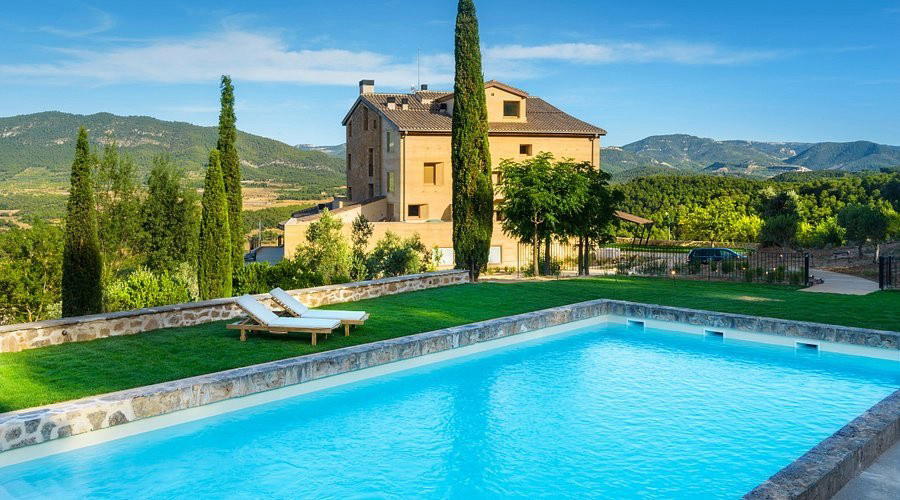
Stone, Silence, and the Aragonese Interior
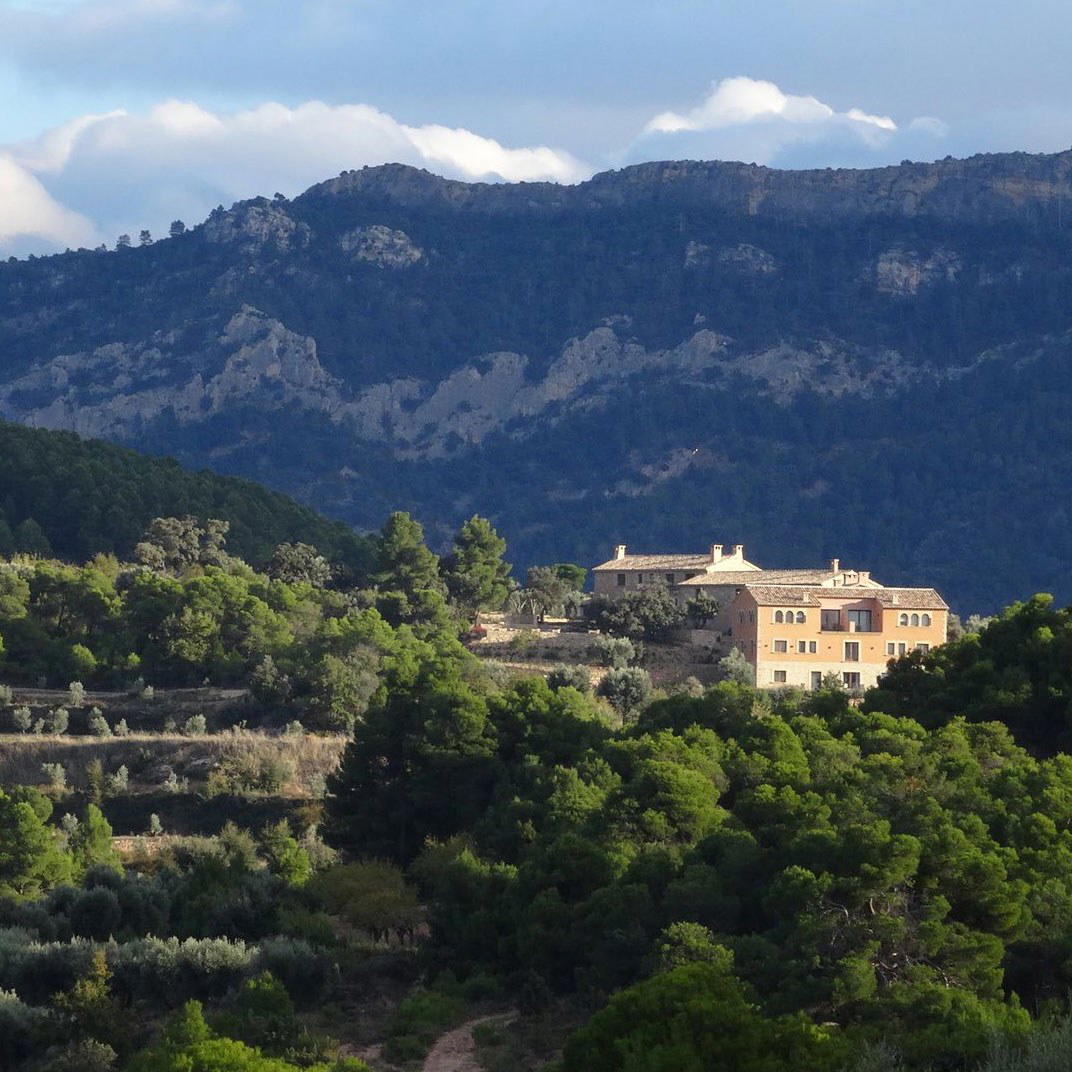
Approaching Torre del Marqués from the road that cuts through the Matarraña valley, the sight that registers first is the tower itself: an 18th-century fortified structure rising above olive groves and terraced vineyards, with the Ports de Beseit range closing the horizon. This corner of southern Aragón sits roughly equidistant between Barcelona and Valencia, yet it draws nothing like the tourist volume of either coastal corridor.
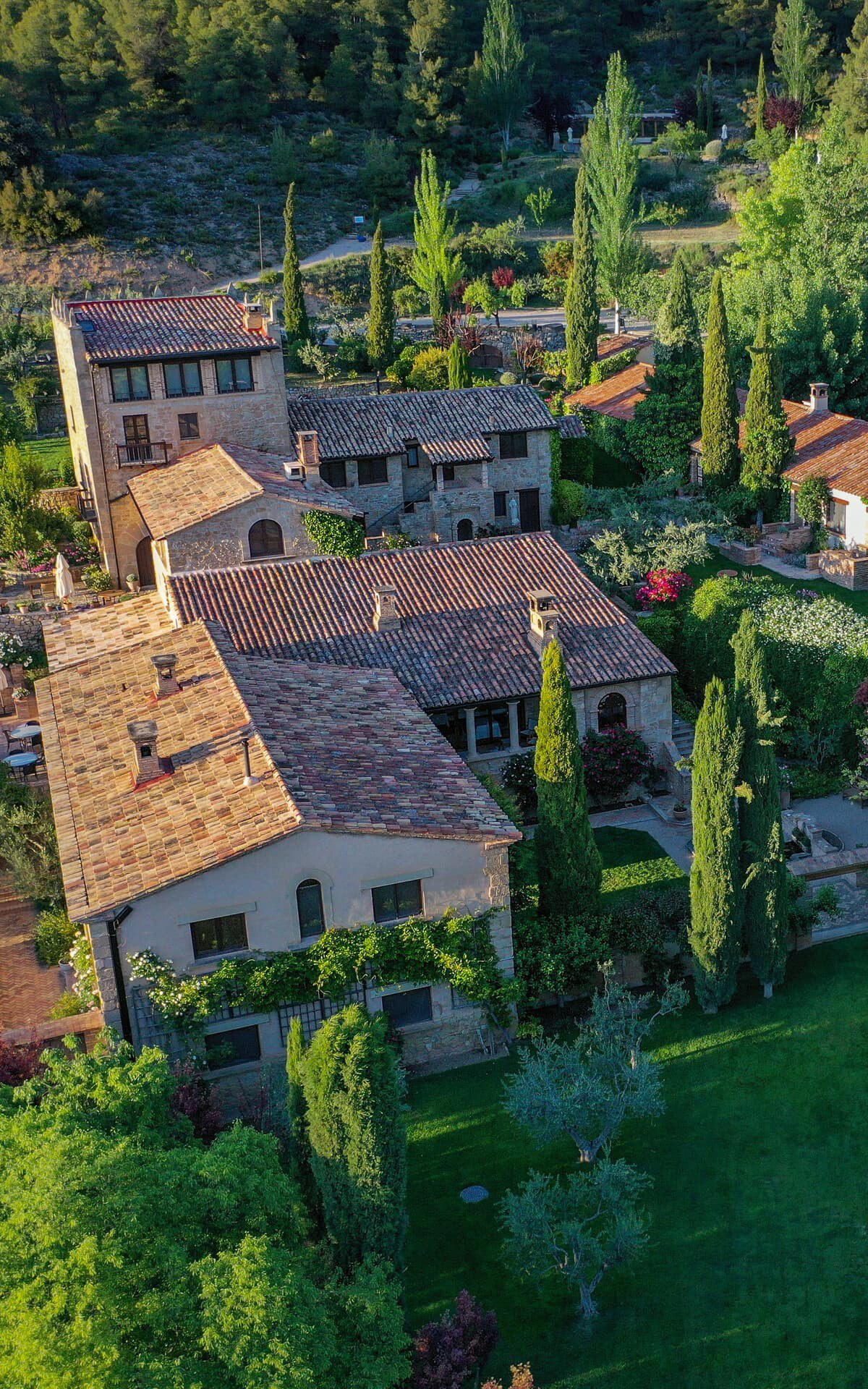
The tower and its surrounding buildings date to the 18th century. After a thorough renovation, the complex now functions as an 18-room boutique hotel, earning Michelin's 3 Keys distinction in 2024, the guide's designation for hotels that meet its standards across experience, comfort, and culinary offer. That credential places Torre del Marqués in a comparable set that includes some of Spain's most serious rural conversions: properties like Abadía Retuerta LeDomaine in Teruel and Terra Dominicata in Escaladei, both of which have built identities around estate agriculture and heritage architecture. Torre del Marqués belongs to that same tradition, with 18 rooms rather than dozens, which keeps the atmosphere closer to a private residence than a hotel.
The Architecture of Restraint
Spain's rural luxury conversion model has split in two directions over the past decade. One approach layers contemporary amenity onto heritage shells with minimal regard for material continuity, the stone stays, but everything else goes glass and chrome. The other direction treats the original fabric as the primary design element and builds contemporary comfort around it rather than over it. Torre del Marqués sits firmly in the second camp.
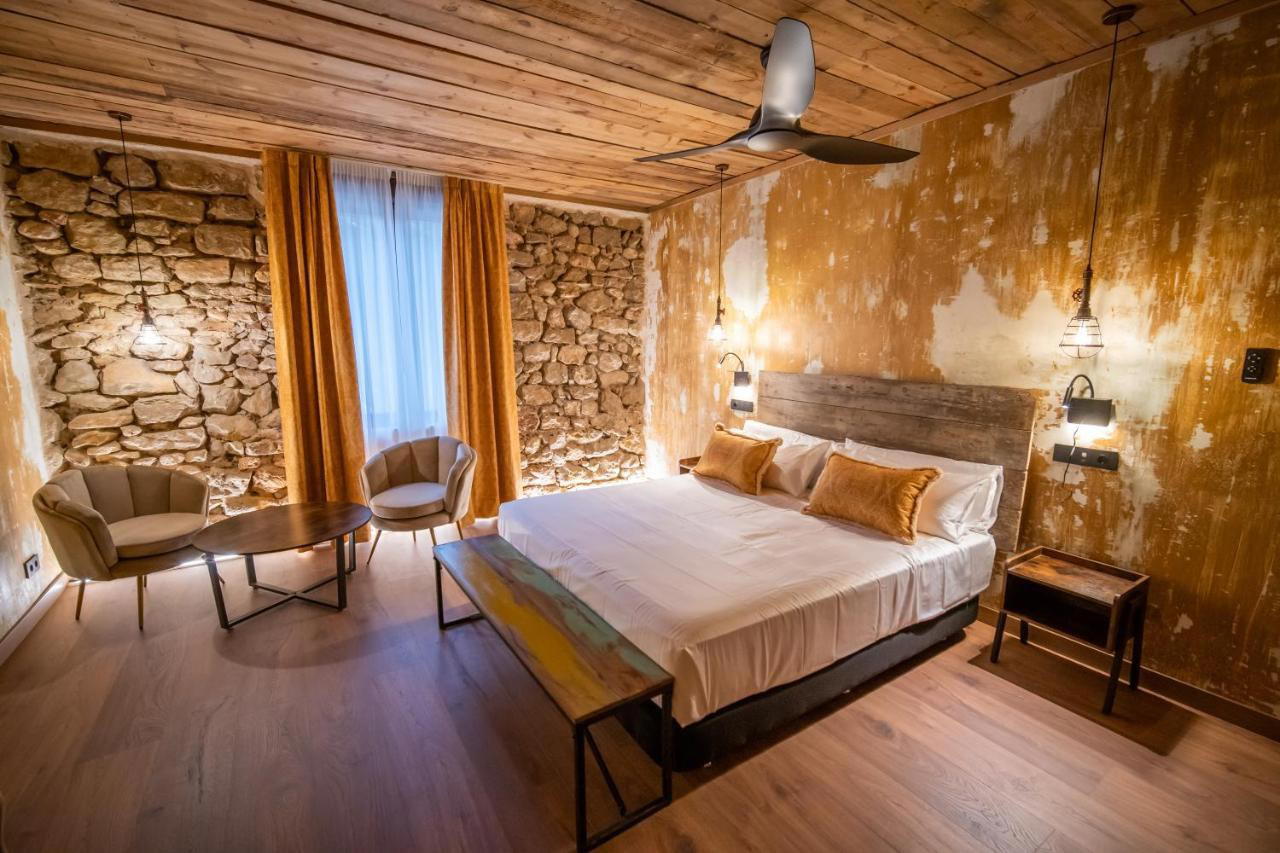
The rooms work through texture rather than decoration: weathered stone walls, sisal rugs, bare timber beams, knotty pine paneling. The palette holds to warm neutrals throughout, which allows the natural variation in the historic stonework to carry the visual weight. Bathrooms are fitted with high-specification contemporary fixtures, but the overall look is minimalist in the way that architecturally confident restorations tend to be, confident enough not to fill every surface. This approach is comparable in philosophy to what Caro Hotel in València has done within Roman walls, or what Atrio Restaurante Hotel in Cáceres achieves by placing a precisely contemporary interior inside an ancient Extremaduran shell. In each case, the architecture is the argument.
At 18 rooms, the scale matters as much as the aesthetic. Properties in this size bracket, whether Mas de Torrent Hotel and Spa in Torrent or Hotel Can Ferrereta in Santanyí, tend to concentrate their investment in shared spaces and personal service rather than spreading resources across hundreds of keys. The common areas at Torre del Marqués open onto views of the olive groves and vineyards that supply the kitchen, which means the landscape outside is not decorative backdrop but functional context.
The Spa and the Spring
Rural spa programmes in Spain have become a standard feature at this price tier, but the distinguishing factor at Torre del Marqués is the spring-fed bath. Natural water sources are relatively rare as a structural component of a spa, and their presence changes the character of the offering in a way that a plunge pool fed from municipal supply does not. The wider spa includes a sauna, a Turkish bath, treatment rooms, and a heated outdoor swimming pool. For those comparing options in the region, Cap Rocat in Cala Blava and Akelarre in San Sebastián both demonstrate how serious wellness infrastructure reinforces the broader positioning of a property. Here, the spring-fed element connects the spa back to the land in a way that aligns with the hotel's stated environmental approach.
Atalaya del Tastavins: Zero-Kilometer as Method, Not Marketing
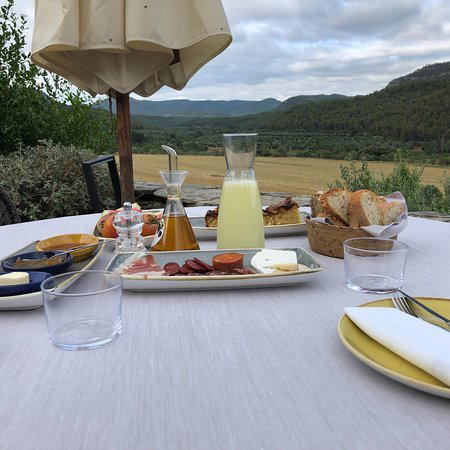
Spain's high-end rural hotel restaurants increasingly position themselves around provenance, but the degree of sourcing discipline varies. The restaurant at Torre del Marqués, Atalaya del Tastavins, operates on a zero-kilometer philosophy that refers to a specific supply chain: farms, olive groves, and vineyards within the immediate surrounding territory. The Matarraña is olive-oil country, with varieties and production traditions distinct from the better-known Catalonian and Andalusian benchmarks, and that specificity gives the kitchen a defined ingredient identity rather than a generic Aragonese regionalism.
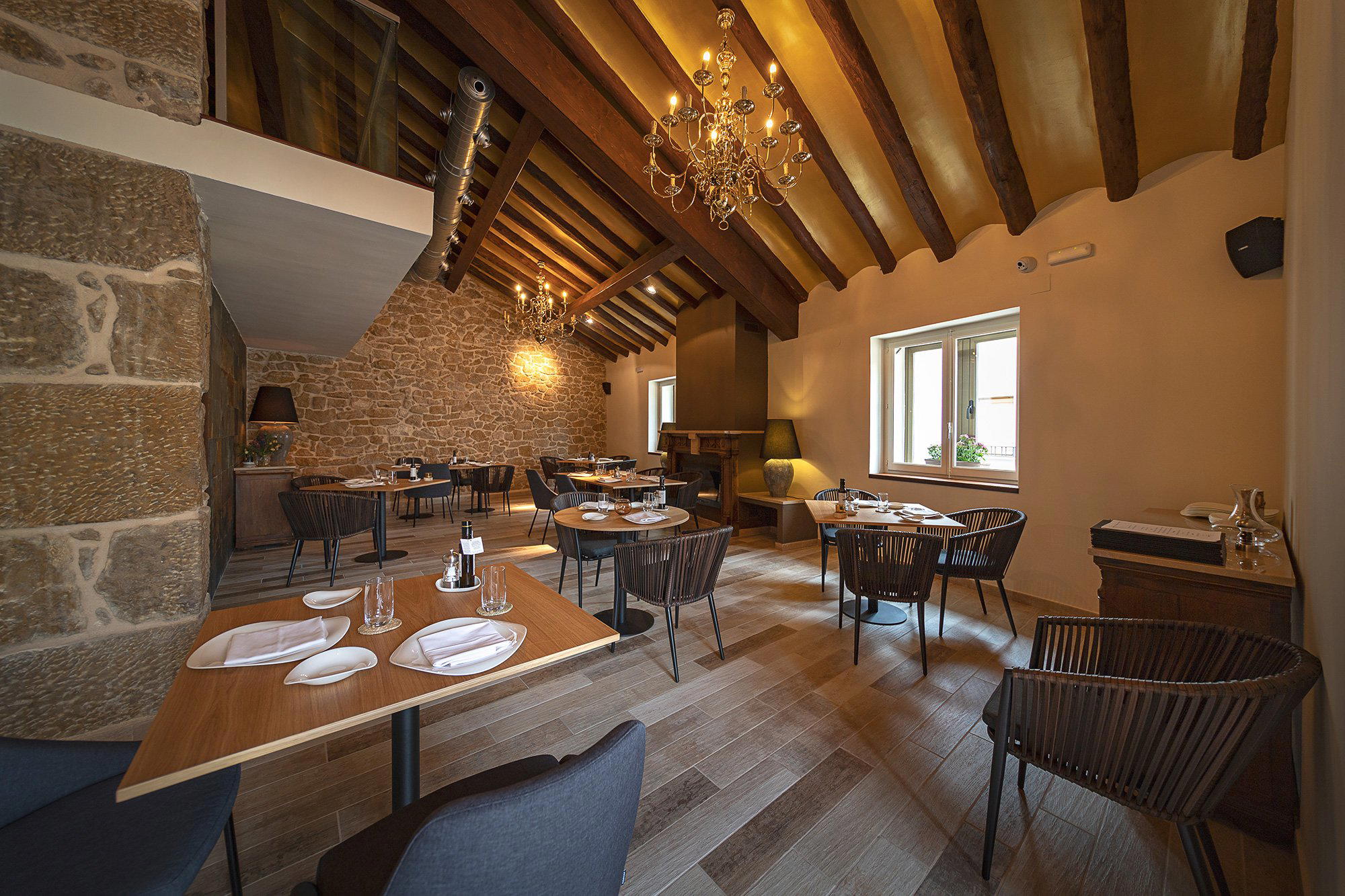
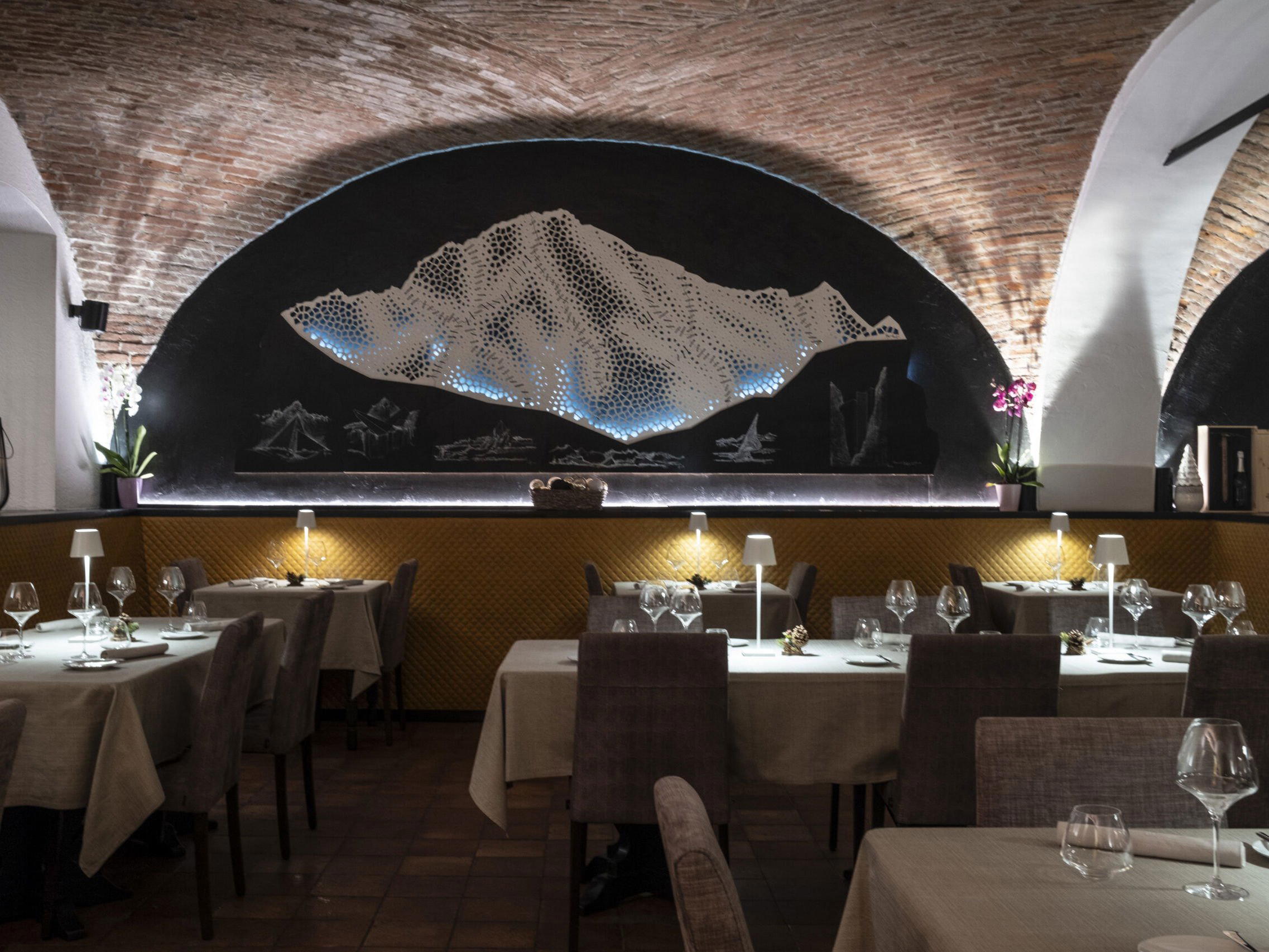
The dining room itself faces full-length glass walls, framing countryside and the distant peaks of the Ports de Beseit. The kitchen's approach is described as an inventive interpretation of local cuisine, which in this context means building contemporary technique on ingredients with genuine geographic origin rather than importing a cosmopolitan menu and adding a local footnote. The Michelin 3 Keys award validates the integration of culinary offer and overall experience rather than the restaurant in isolation, though it signals that the food operation is taken seriously within the overall proposition. For comparison, hotel restaurants earning equivalent Michelin recognition in Spain, such as those associated with Pepe Vieira Restaurant and Hotel in Poio or A Quinta da Auga Hotel and Spa in Santiago de Compostela, share the characteristic of treating kitchen programme and architectural identity as a single coherent argument.
Matarraña in Context
The broader question for any property in this region is access. Matarraña is not served by high-speed rail, and the road journey from Barcelona runs approximately two and a half hours. From Valencia, the approach is broadly similar in duration. This places Torre del Marqués in the category of destination hotel rather than city-adjacent retreat, which is a different commitment from properties like Mandarin Oriental Barcelona or Mandarin Oriental Ritz, Madrid, where the city itself is the primary draw. The relative inaccessibility is part of the offer here: the Matarraña has maintained a character that more trafficked Spanish destinations have lost, and the hotel's position within one of the least visited inland regions of the peninsula is the condition that makes the silence, the agricultural views, and the provenance-driven kitchen coherent rather than contrived.
For those considering comparable Iberian alternatives, La Residencia, A Belmond Hotel, Mallorca and Marbella Club Hotel in Marbella occupy the upper end of Spain's luxury rural and coastal conversion market. Torre del Marqués competes on different terms: a more specific geography, a smaller scale, and a stricter sourcing philosophy. Our full editorial coverage of the region is available in our full Sardoncillo restaurants guide.
Given the 18-room inventory, lead times during spring and autumn, the strongest seasons in the Matarraña, are likely to be significant. Guests arriving by car from Barcelona or Valencia should plan for a rural road approach in the final stretch; the address references Km 2.2 on the Monroyo road, with the tower visible from the approach.
A Quick Peer Check
Comparable venues nearby, for context on price, style, and recognition.
| Venue | Cuisine | Price | Awards | Notes |
|---|---|---|---|---|
| Torre del Marqués Hotel Spa & WineryThis venue — the venue you are viewing | rustic luxury wine estate | $$$$ | Michelin 3 Key | Not listed |
| Terra Dominicata | Converted historic farmhouse with medieval architecture in wine country | $$$$ | Michelin 3 Key | Escaladei |
| Abadía Retuerta LeDomaine | Historic abbey with contemporary luxury furnishings | $$$$ | Michelin 3 Key | Sardón de Duero |
| Atrio Restaurante Hotel | Contemporary design seamlessly blended with historic stone architecture in the walled old town. | $$$$ | Michelin 3 Key | Cáceres Old Town |
| Cap Rocat | Restored historic fortress in a secluded nature reserve | $$$$ | Michelin 2 Key | Cala Blava |
| Akelarre | Modern cliffside luxury boutique | $$$$ | Michelin 2 Key | Igeldo |
Recognition history
Dated appearances from independent guides and award organizations, with the underlying list record or original source where available.
Michelin 3 Keys
Michelin
Small Luxury Hotels of the World Member
Small Luxury Hotels of the World
Michelin 3 Keys
Michelin
Continue exploring
More in Sardoncillo
Hotels in Sardoncillo
Browse all →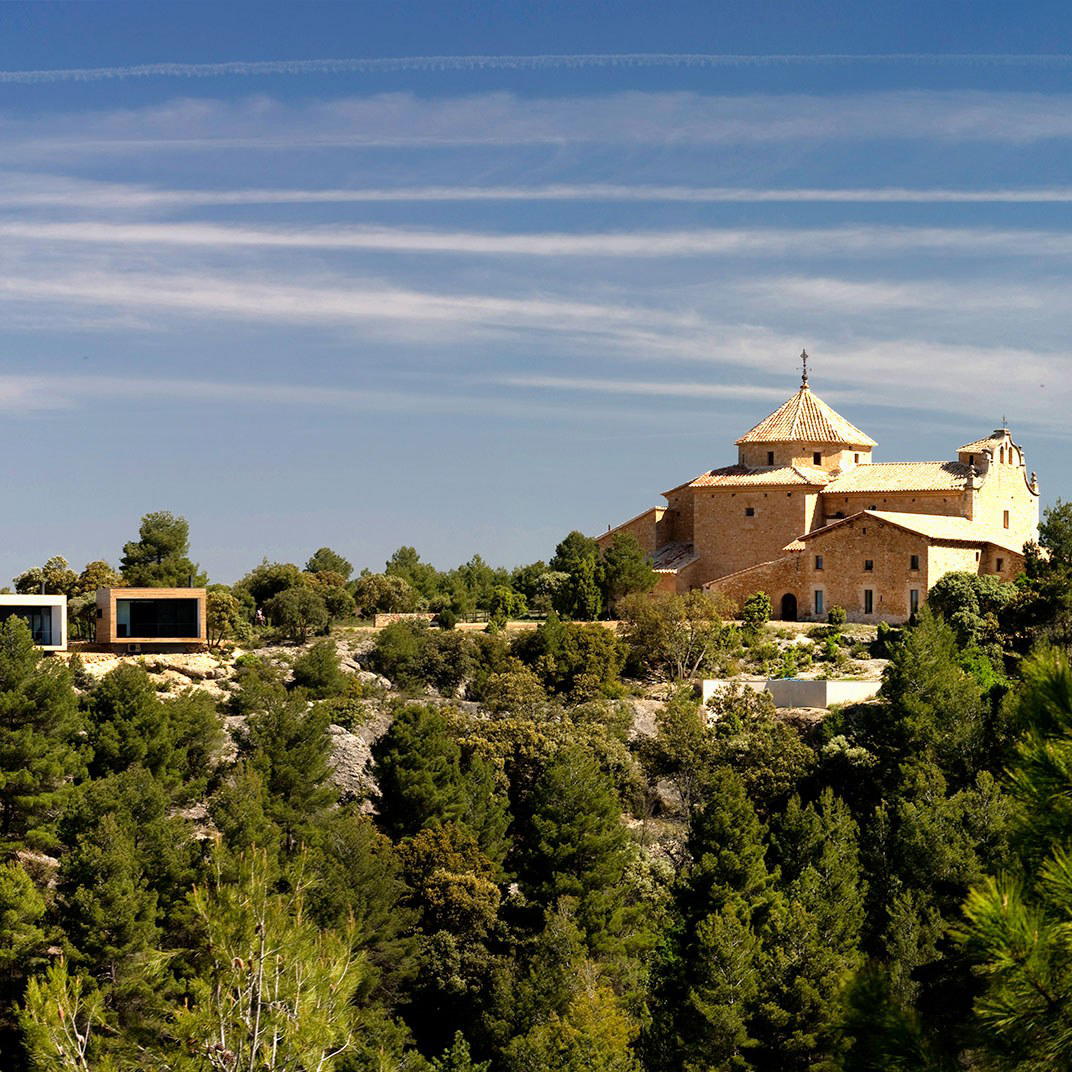
Restaurants in Sardoncillo
Browse all →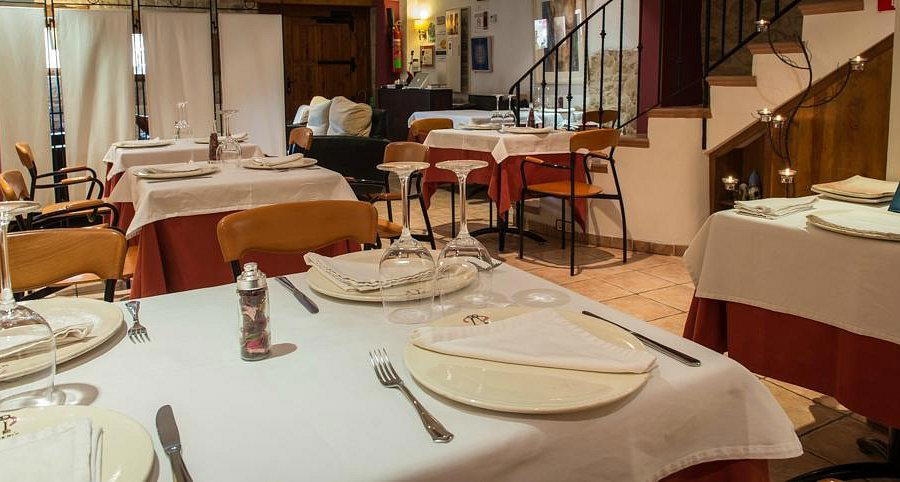
Wineries in Sardoncillo
Browse all →
At a Glance
- Romantic
- Quiet
- Elegant
- Rustic
- Scenic
- Intimate
- Sophisticated
- Romantic Getaway
- Wellness Retreat
- Weekend Escape
- Anniversary
- Historic Building
- Panoramic View
- Terrace
- Spa
- Pool
- Wi Fi
- Restaurant
- Room Service
- Mountain
- Vineyard
- Garden
- Spa
- Pool
- Wi Fi
- Restaurant
- Room Service
Serene and elegant with panoramic mountain and vineyard views, imaginatively decorated common areas, and a peaceful oasis atmosphere praised for its calm and exclusivity.