





Among the Costa del Sol's long-established luxury hotels, Marbella Club occupies a category of its own: a Golden Mile property founded in 1954 by Prince Alfonso von Hohenlohe, awarded Michelin 2 Keys in 2024 and recognised by La Liste's Top Hotels with 96 points in 2026. Whitewashed bungalows, mature pines, and a seafront Thalasso spa define a property where the atmosphere of a private estate has outlasted seven decades of Mediterranean resort development.
Pearl is the En Primeur Club membership app — saves, bookings, and concierge access live there. Same editors, same standards.
- Address
- Av. Bulevar Príncipe Alfonso de Hohenlohe, s/n, 29602 Marbella, Málaga
- Phone
- +34 952 82 22 11
- Website
- marbellaclub.com
- Directions
- Get directions
 Saves & bookings on Pearl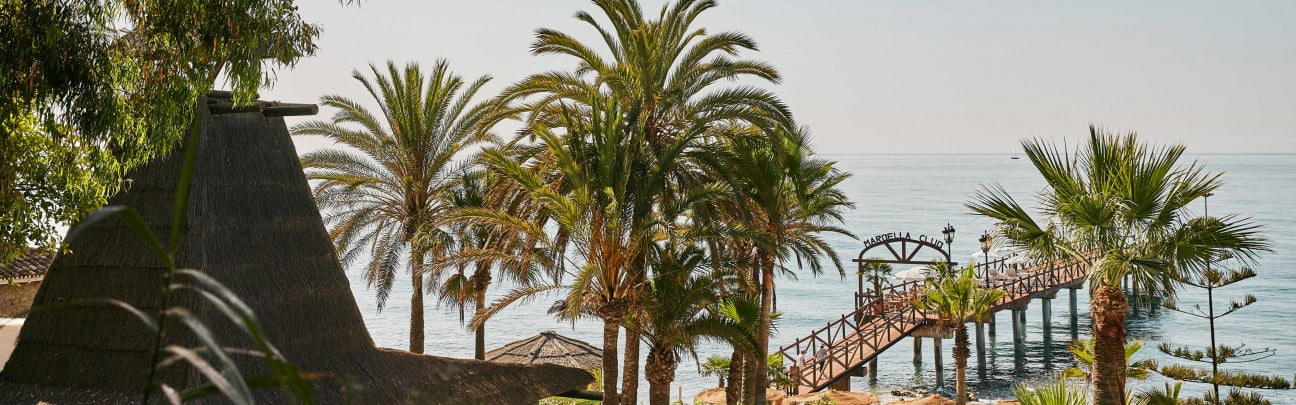
The Golden Mile Address and What It Actually Delivers
Marbella's Golden Mile is a stretch of coastline that has accumulated more mythology than almost any other address on the Mediterranean. The approximately four-kilometre corridor running west from Marbella's old town toward Puerto Banús has been the reference point for Iberian luxury since the 1950s, when a handful of European aristocrats decided the Andalusian coast was the place to spend long summers. The Marbella Club Hotel sits on that strip, and its position is not incidental to what it offers: the resort's gates open onto mature, pine-shaded gardens that filter out the commercial noise of the coast road, while the seaward boundary gives direct access to a private beach club. The old town itself is a five-minute drive. Puerto Banús, the marina that became synonymous with Costa del Sol excess, lies in the opposite direction at roughly the same interval. For guests who want proximity to both without the density of either, the address functions as a genuine asset rather than a marketing claim.
Marbella Airport sits 35 minutes away, which keeps transfers manageable without requiring the longer coastal drive that properties further west demand. Puente Romano, the neighbouring hotel that shares the Golden Mile address, operates its tennis facilities and additional restaurants as resources open to Marbella Club guests, effectively expanding the on-site offer without the capital investment of replication.
Seventy Years of Deliberate Consistency
Mediterranean resort hotels tend to follow one of two trajectories after several decades: aggressive modernisation that erases original character, or a kind of calcification where patina becomes neglect. The Marbella Club has pursued a third path, one that requires more discipline than either alternative. Founded in 1954 by Prince Alfonso von Hohenlohe on what had been a small fishing estate between the sea and the Sierra Blanca foothills, the property opened in a format closer to a private villa than a commercial hotel. The low-slung whitewashed buildings, terracotta tiling, and bungalow arrangement that define its current character are not a nostalgic affectation applied later; they are the original architecture, maintained and extended rather than replaced.
The expansion from those origins to the current 115 rooms and suites plus 15 villas has happened gradually enough that the scale reads as an estate rather than a resort block. Gardens planted in the early decades are now mature, which changes the spatial quality of the property in ways that newer hotels cannot replicate regardless of budget. The sense of enclosure and shade that comes from established pines and tropical plantings is precisely what distinguishes this address from the open, sun-exposed pools of newer Costa del Sol developments. Recognition has followed the property's evolution: Michelin awarded 2 Keys in 2024, La Liste's Leading Hotels ranked it at 96 points in 2026, and membership of Leading Hotels of the World frames it within a specific comparable set of independently operated historic properties. Among the comparable Marbella options, Don Carlos Marbella and Nobu Hotel Marbella occupy different positions on the spectrum between heritage continuity and contemporary repositioning.
Rooms, Villas, and the Logic of Choosing Between Them
The 132-room property distributes its accommodation across the garden grounds in a way that makes room category a more consequential decision than at a standard hotel tower. Standard rooms and suites open onto private balconies or terraces; the architectural language throughout is light, Andalusian in detail, and fitted with contemporary amenities without the aggressive modernity that would conflict with the property's atmosphere. The 15 villas occupy particularly secluded corners of the estate, separated by private gardens and pools, and function effectively as self-contained residences within the resort perimeter. The villa category is where the private-estate character of the original property is most legible.
The property sits in the upper tier of Marbella's hotel market. For families, the resort's 5,000 square metre Kids Club shifts the value calculation: the infrastructure for younger guests is substantial enough that it reduces the logistical overhead that typically comes with luxury travel with children. The Anantara Villa Padierna Palace Benahavís Marbella Resort offers a comparable scale of amenities in a different setting, further inland toward Benahavís; Hotel San Cristóbal operates at a different price point and scale for guests whose priorities don't require the full estate experience.
Dining Across Eight Concepts
Eight restaurants and bars within a single property is a count that requires scrutiny rather than acceptance. On the Costa del Sol, large resort dining operations have historically produced quantity over focus, with menus calibrated to broad palatability rather than culinary specificity. The Marbella Club's dining programme has expanded alongside the property itself, and access to the neighbouring Puente Romano's restaurants extends the effective choice further. The recent addition, Find Ana María, connects the hotel's garden extension to both wellbeing programming and gastronomy, a format that has become increasingly common among European resort hotels seeking to give spa and nature offerings a culinary dimension. Whether the individual concepts within the eight-venue programme achieve the level of focus that single-destination restaurants can maintain is a question the property's Michelin 2 Keys recognition addresses at the property level rather than per-restaurant.
Wellness, Sport, and the Seafront Position
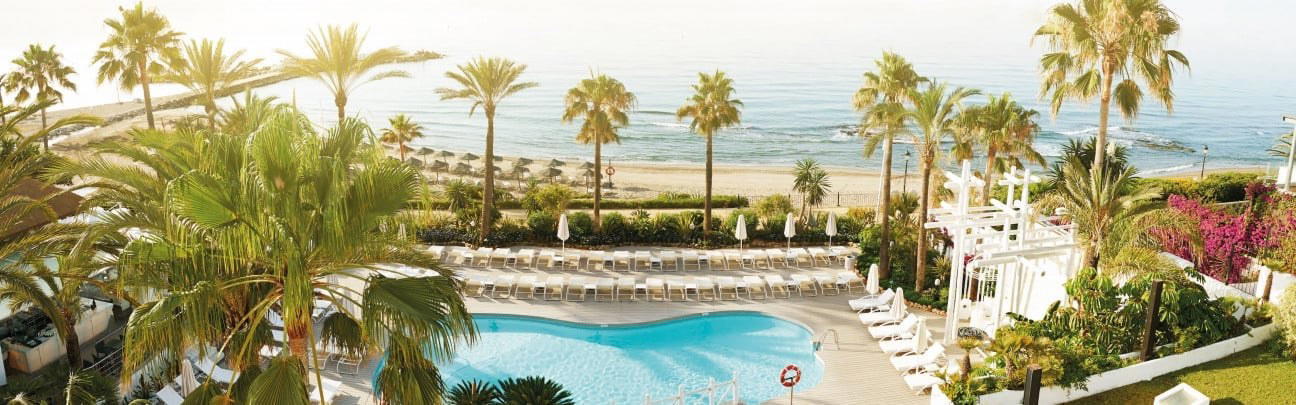
The Thalasso spa occupies a beachfront position that makes the marine-water treatment format coherent rather than cosmetic. Thalassotherapy as a discipline draws on proximity to seawater, and a spa positioned directly at the seafront can deliver that in a way that an inland or upper-floor facility cannot. The Holistic Studio and the newer Find Ana María garden extension place the Marbella Club within the broader European resort trend toward wellness programming that extends beyond treatment rooms into outdoor and nature-based formats.
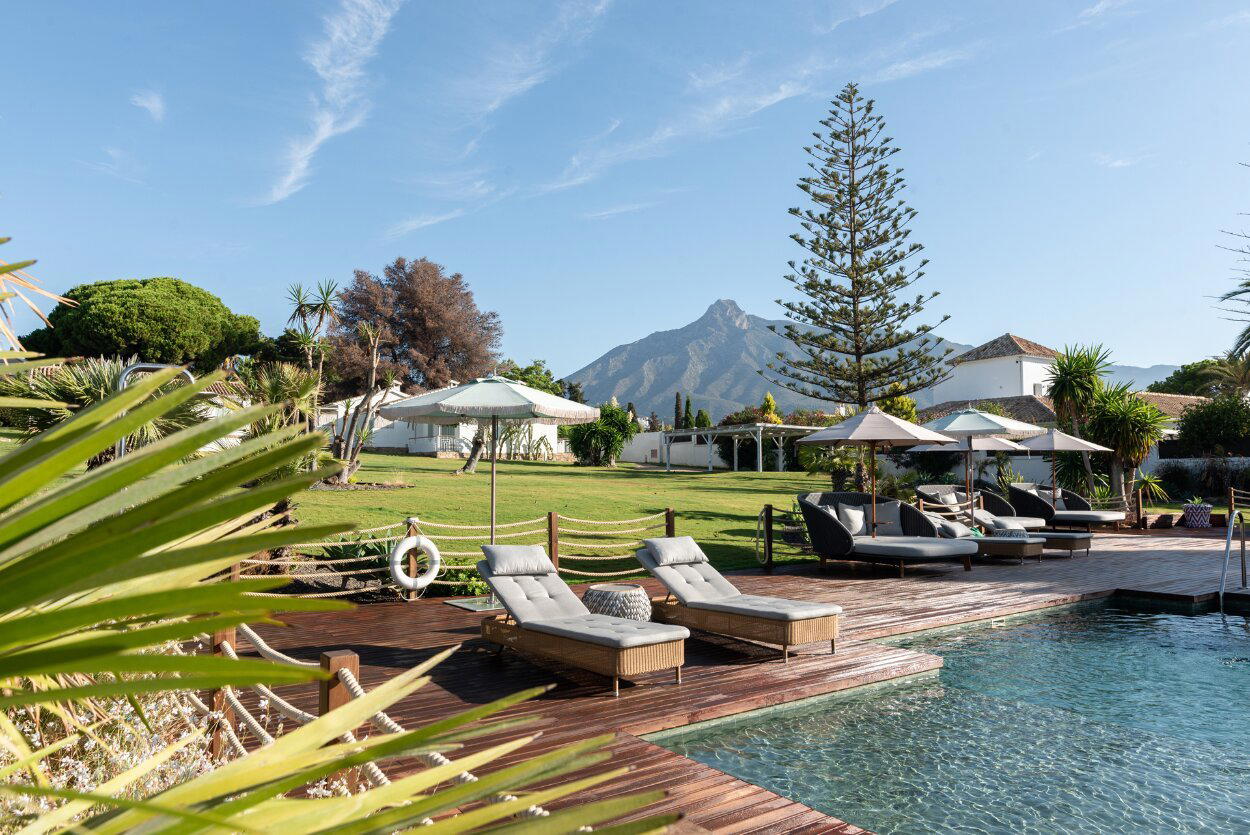
Sport infrastructure at the property is substantial: two heated outdoor pools, a beach club, ten tennis courts, an equestrian centre, and a golf course designed by Dave Thomas with views extending toward Gibraltar and the North African coast. The golf course is a short drive from the main property rather than adjacent, which is a distinction worth noting for guests whose primary reason for travel is golf. Among Spanish resort hotels with serious golf credentials, Abadía Retuerta LeDomaine and Akelarre represent the kind of destination-focused alternatives that attract guests with a specific primary activity in mind, though in different regions and contexts.
Planning a Stay: What to Know Before Booking
The Marbella Club is a Leading Hotels of the World member, which means booking infrastructure exists through that network in addition to direct channels. The property sits on the Bulevar Príncipe Alfonso de Hohenlohe, the formal name for the Golden Mile road, and the address places it between Marbella's old town (five minutes by car) and Puerto Banús (a comparable interval in the opposite direction). Málaga Airport, the primary international gateway for the Costa del Sol, is a 35-minute drive. The scale of the property, with its mix of room types, eight dining venues, spa, sport facilities, and dedicated children's programming, makes it genuinely suited to extended stays rather than overnight stops.
Mandarin Oriental Ritz, Madrid in the capital, Cap Rocat on Mallorca's quieter southern coast, La Residencia, A Belmond Hotel, Mallorca in the Tramuntana mountains, Atrio Restaurante Hotel in Extremadura, Terra Dominicata in the Priorat wine country, Torre del Marqués Hotel Spa & Winery in Teruel, Casa Beatnik Hotel in Galicia, Hotel Can Cera in Palma, Mas de Torrent Hotel & Spa in the Costa Brava hinterland, Pepe Vieira Restaurant & Hotel on the Galician Rías Baixas, Hotel Can Ferrereta in Mallorca's southeast, A Quinta da Auga Hotel & Spa in Santiago de Compostela, and Mandarin Oriental Barcelona. Further afield, Bahia del Duque in Tenerife and Aman Venice represent the broader Mediterranean range, while The Fifth Avenue Hotel and Aman New York cover the transatlantic alternative.
The Essentials
Comparable venues nearby, for context on price, style, and recognition.
| Venue | Price | Notes |
|---|---|---|
| Marbella Club HotelThis venue — the venue you are viewing | $$$$ | Not listed |
| Nobu Hotel Marbella | $$$$ | Golden Mile, Luxury beachfront lifestyle hotel blending Japanese design with Andalusian charm |
| Anantara Villa Padierna Palace Benahavís Marbella Resort | $$$$ | Benahavís, Palatial Andalusian retreat with Romanesque architecture and extensive art collection |
| Boho Club | $$$$ | Golden Mile, bohemian-chic boutique resort with bungalow-style accommodations |
| Finca Cortesin | $$$$ | Casares, Andalusian finca with contemporary Moorish and Castilian influences |
| Kimpton Los Monteros Marbella | $$$$ | Golden Mile, Low-rise luxury design resort blending 1970s Mediterranean lifestyle with contemporary Andalusian heritage. |
Recognition history
Dated appearances from independent guides and award organizations, with the underlying list record or original source where available.
Forbes 4-Star
Forbes
La Liste Top Hotels
La Liste
Mr & Mrs Smith Smith Seal of Approval
Mr & Mrs Smith
Virtuoso Luxury Hotel Partner
Virtuoso
Conde Nast Gold List
Conde Nast
Leading Hotels of World Member
Leading Hotels of World
Michelin 2 Keys
Michelin
Michelin 2 Keys
Michelin
Continue exploring
More in Marbella
Hotels in Marbella
Browse all →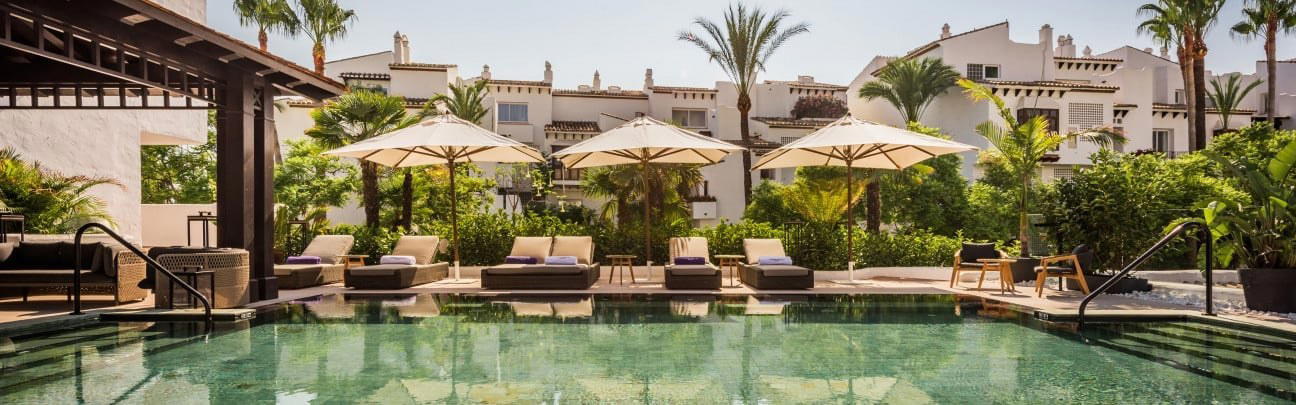
Bars in Marbella
Browse all →



Restaurants in Marbella
Browse all →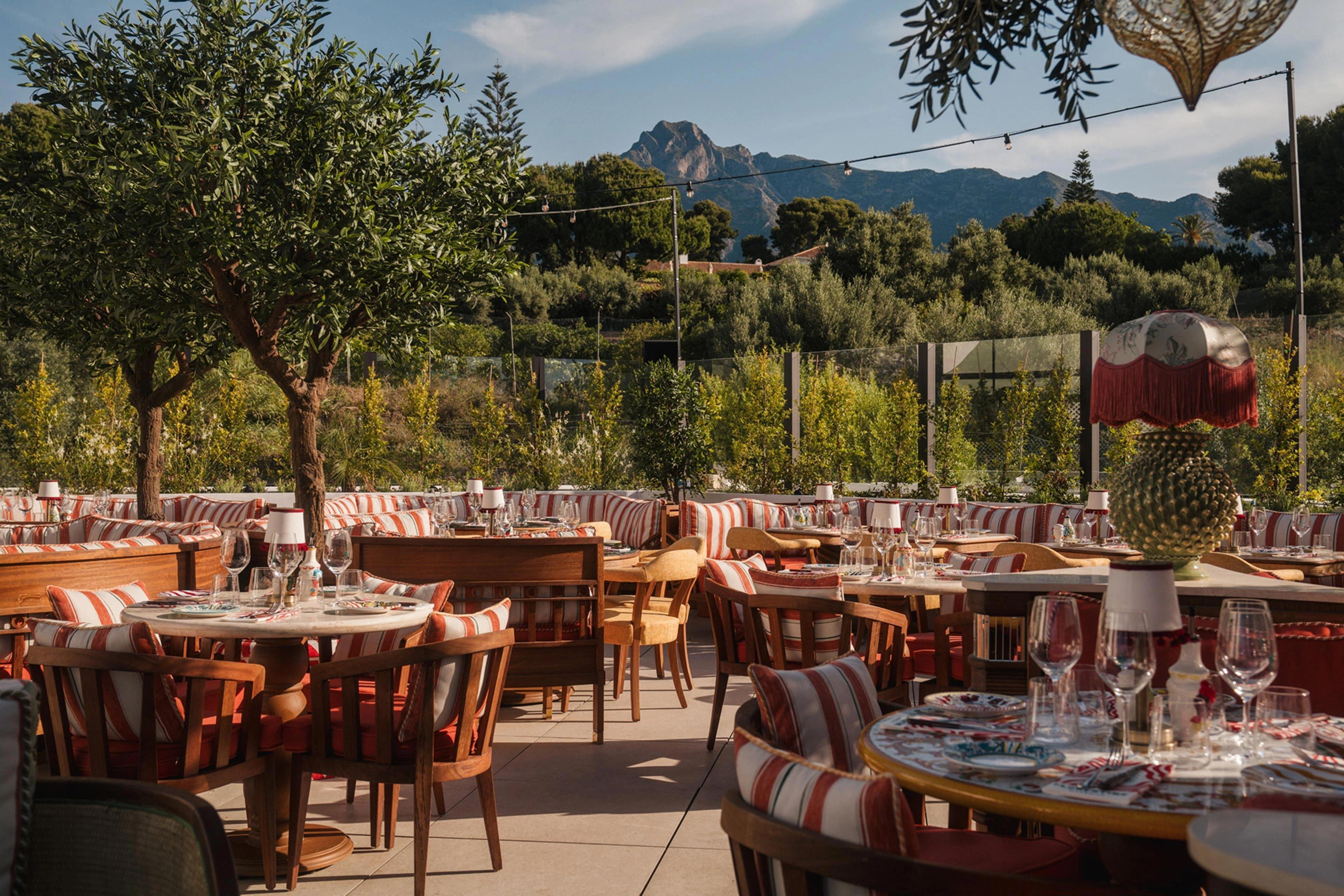

At a Glance
- Elegant
- Sophisticated
- Classic
- Scenic
- Ornate
- Honeymoon
- Romantic Getaway
- Family Vacation
- Wellness Retreat
- Beachfront
- Infinity Pool
- Private Villa
- Destination Spa
- Golf Course
- Panoramic View
- Wi Fi
- Pool
- Spa
- Fitness Center
- Room Service
- Concierge
- Business Center
- Valet Parking
- Kids Club
- Beach Access
- Golf Course
- Waterfront
- Garden
- Wi Fi
- Pool
- Spa
- Fitness Center
- Room Service
- Concierge
- Business Center
- Valet Parking
- Kids Club
- Beach Access
- Golf Course
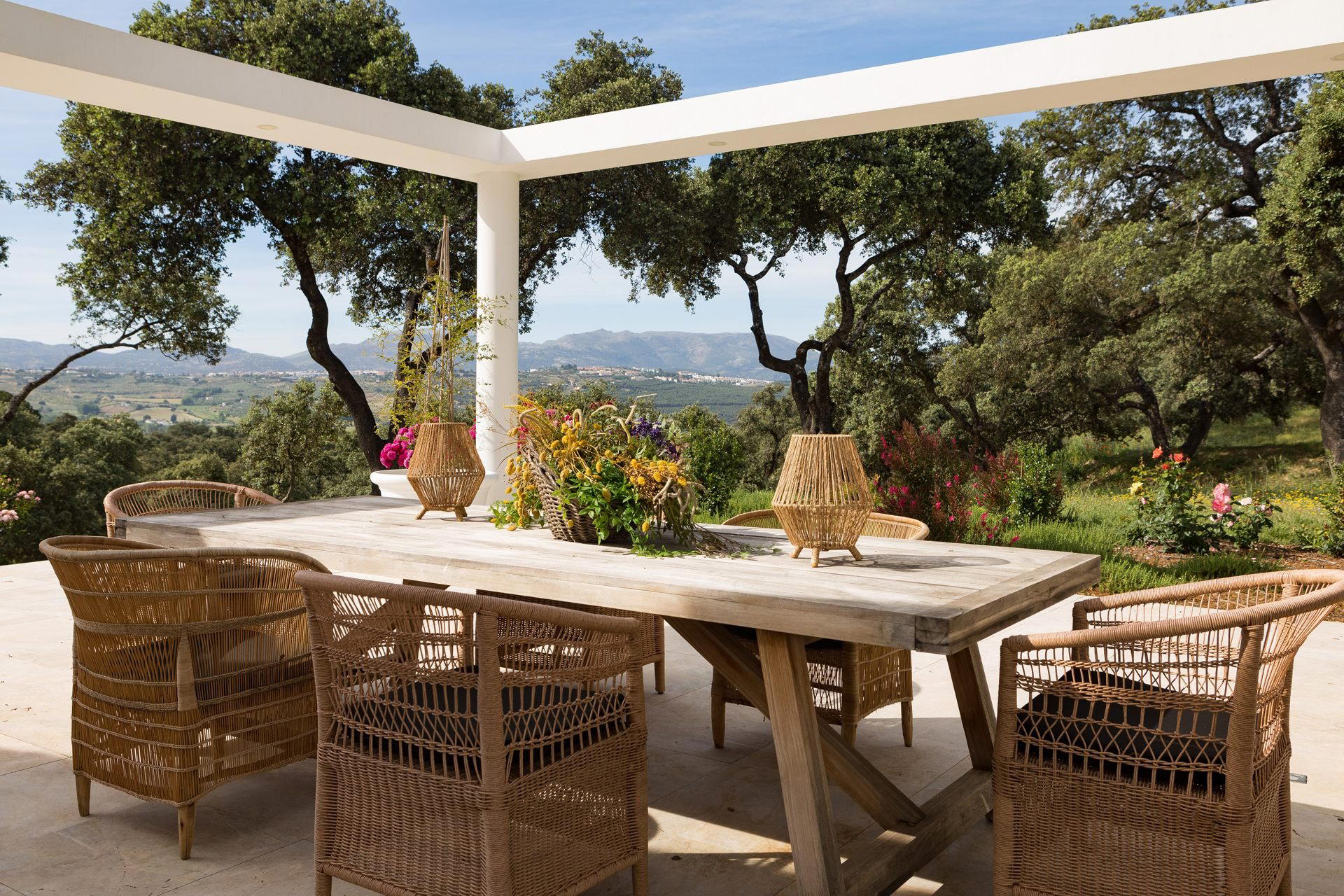
Tranquil and elegant with lush botanical gardens, sea-facing spa, and serene pools; guests praise the relaxing, light-filled atmosphere and warm attentive service.