Can Mascort Eco Hotel


1 Michelin Key · Mr & Mrs Smith Seal of Approval
A 15-room eco-hotel in a restored 17th-century building at the heart of Palafrugell's medieval old town, Can Mascort earned a Michelin 1 Key in 2024 for its commitment to local materials, natural ventilation, and ultra-local breakfast sourcing. The attached eco-apothecary and absence of unnecessary technology make this a deliberate counterpoint to the Costa Brava's beach-resort mainstream.

Pearl is the En Primeur Club membership app, where members save venues, book tables and use the concierge.
A Different Argument for the Costa Brava
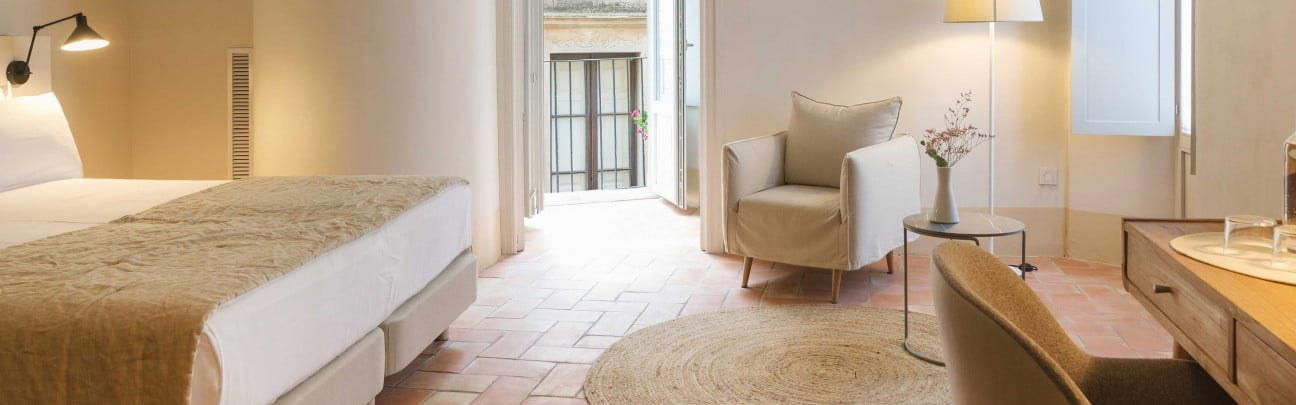
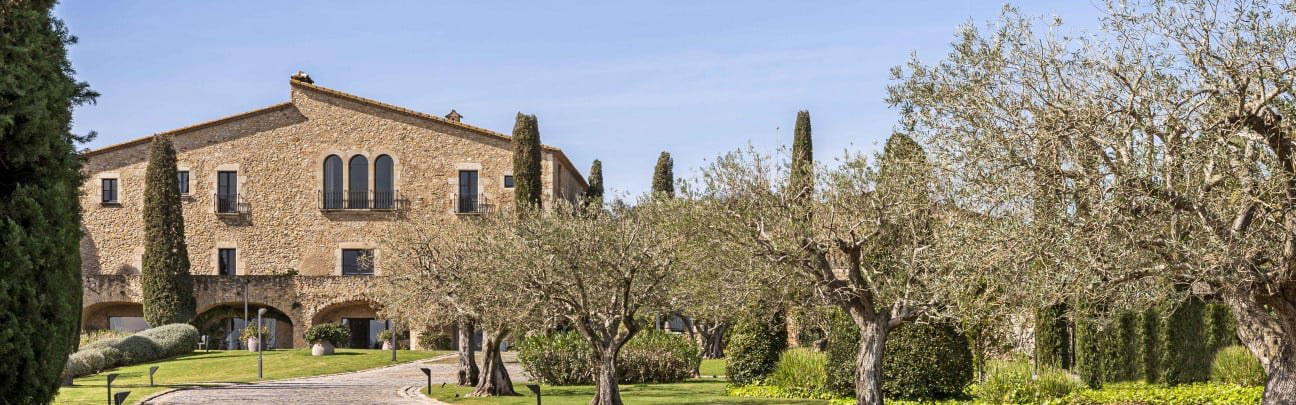
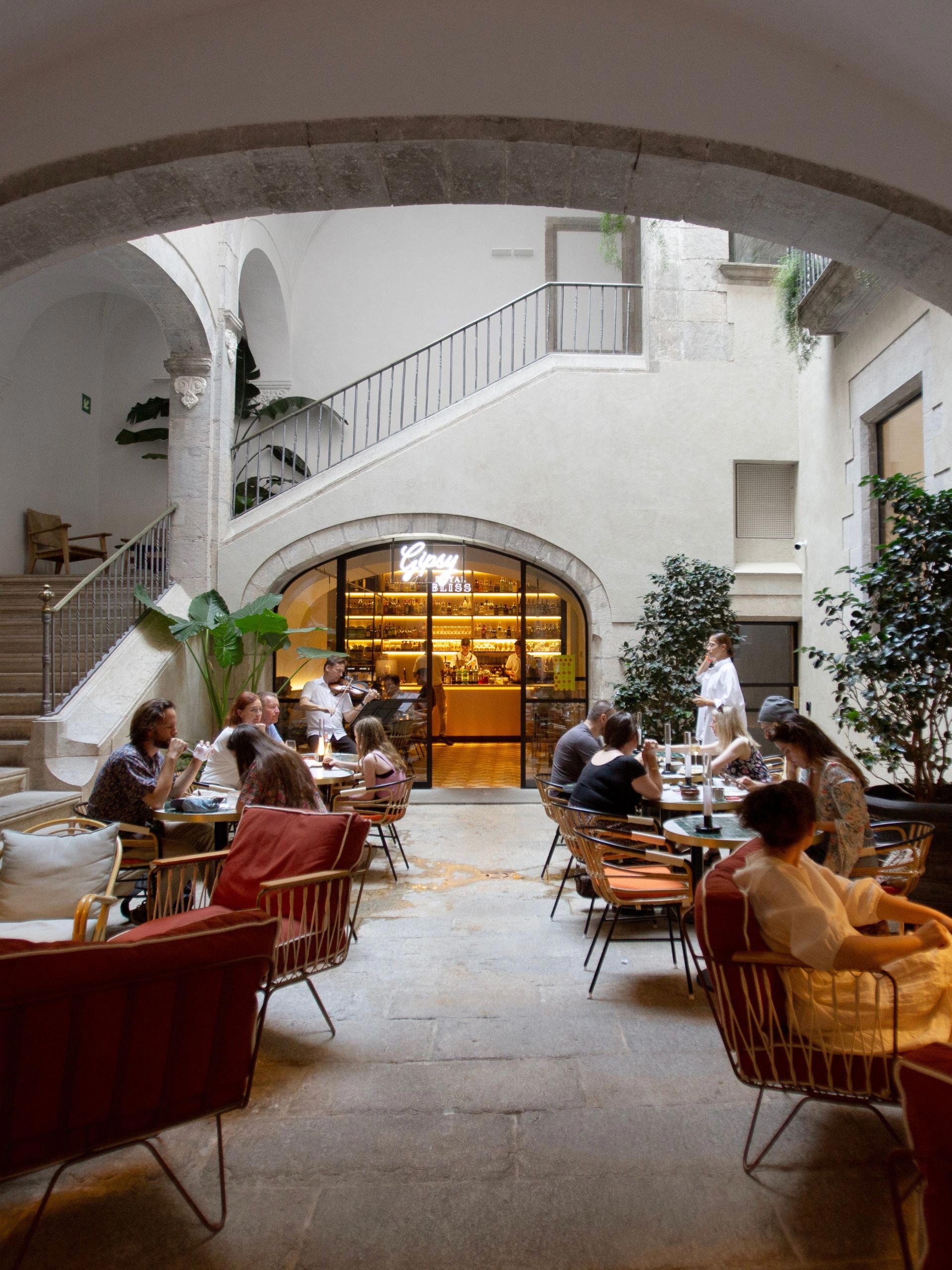
The dominant grammar of Costa Brava accommodation reads predictably: sea-facing terraces, pool decks angled toward the Mediterranean, and a design vocabulary borrowed from the beach. Can Mascort Eco Hotel, awarded a Michelin 1 Key in 2024, makes a different argument entirely. About a mile inland from the coastline, the hotel occupies a restored 17th-century building in the historic centre of Palafrugell, a medieval market town that predates the resort era by several centuries. The stone walls, narrow streets, and central square that define the town's character provide a more grounded context than any sea view, and Can Mascort's position in this fabric is deliberate rather than incidental.
Spain's Michelin Key programme, introduced in 2024 to recognise hotels where the stay itself constitutes the experience, placed Can Mascort in a nationally significant tier. For a 15-room property operating at rates from $136 per night, that recognition carries weight: it signals that the hotel competes on concept and execution rather than scale or amenity count. Properties earning equivalent recognition across Spain, including Mas de Torrent Hotel & Spa in Torrent and Terra Dominicata in Escaladei, tend to share a commitment to place-rooted identity that Can Mascort applies in its own register.
The Sustainability Model as Hospitality Philosophy
The category of eco-hotel spans a wide range, from properties that offer recycling bins and call it done to those that build sustainability into every structural and operational decision. Can Mascort sits in the latter group. The renovation of the 17th-century building used only local, natural materials, preserving the building's thermal mass while avoiding the imported finishes that dominate contemporary hotel refurbishments. Natural ventilation and natural lighting carry the majority of the property's energy load, a meaningful commitment in a climate where air conditioning is the default response to summer heat.
The logic behind this approach draws on a direct premise: that pre-industrial building design already solved many of the problems that modern HVAC systems are now deployed to fix. Thick stone walls regulate temperature across seasons. Cross-ventilation through historically proportioned openings moves air without mechanical assistance. This is not a sentimental argument for discomfort; it is an operational observation that the building's original design remains fit for purpose. The 15 rooms and suites reflect the same reasoning, with natural textures, organic finishes, and a deliberate absence of televisions.
For context on how this positions Can Mascort within broader Spanish hospitality, the contrast with large-format luxury properties is instructive. Mandarin Oriental Ritz, Madrid and Mandarin Oriental Barcelona represent one end of the spectrum: international brand infrastructure, full-service amenities, and multiple food and beverage outlets. Can Mascort operates at the opposite end: small-count rooms, a single food programme, and a sustainability framework that replaces amenity accumulation with deliberate reduction. Neither approach is superior in absolute terms, but they attract different travellers with different priorities, and Can Mascort's Michelin Key confirms that its approach is being taken seriously by institutional evaluators.
The Food Programme: Breakfast as Editorial Statement
The editorial angle most relevant to Can Mascort is not its rooms or its architecture, significant as both are, but the way its food programme connects to its broader operating philosophy. The hotel's breakfast service draws exclusively from ultra-local, health-conscious ingredients, a decision that in most properties would be a marketing footnote but here functions as a coherent extension of the sustainability model. In the Costa Brava's agricultural hinterland, this means produce from the Empordà region, one of Catalonia's most productive agricultural zones and the same territory that supplies Girona's celebrated restaurant scene.
The relationship between this rural hinterland and Catalan gastronomy has deepened considerably over the past decade. Girona, roughly 35 kilometres northwest of Palafrugell, hosts a restaurant culture that punches far above its population size, and the supply chains that support those kitchens run through the Empordà fields and fishing ports that Can Mascort's breakfast programme draws from directly. A hotel that sources its morning meal from the same geography feeding the region's serious restaurants is making a credible claim to culinary place-rootedness, even without a restaurant of its own. For guests interested in exploring the broader food context, our full Palafrugell restaurants guide maps the town's dining options against this regional backdrop.
The Eco-Apothecary: A Retail Logic That Fits
Adjacent to the hotel, the in-house eco-apothecary offers a selection of organic snacks and personal care products. In isolation, this could read as a lifestyle retail add-on. In context, it functions as an extension of the same sourcing philosophy that governs the breakfast programme and the building materials: local, natural, and selected with criteria that match the hotel's operating framework. It also serves a practical function for guests in a town centre location, providing access to quality provisions without a supermarket run.
This retail-adjacent model appears at a handful of European boutique properties as a way of monetising curatorial expertise without expanding the food and beverage operation. Whether Can Mascort develops this further is unknown, but the current format is coherent with the hotel's identity rather than appended to it.
Where Can Mascort Sits in the Broader Picture
Spain's boutique hotel sector has fragmented along several axes: wine-estate integration (as at Abadía Retuerta LeDomaine in Teruel or Torre del Marqués Hotel Spa & Winery in Sardoncillo), gastronomy-led formats (like Atrio Restaurante Hotel in Cáceres or Akelarre in San Sebastián), historic conversion with design ambition (as at Hotel Can Cera in Palma or Can Alberti 1740 Hotel Boutique in Mahón), and the sustainability-led model that Can Mascort represents. These are not competing in the same market so much as offering categorically different stays. The Michelin Key framework, by grouping hotels on experiential quality rather than star count or amenity list, provides a more useful map of these distinctions than traditional classification systems.
At $136 per night for a Michelin-recognised, 15-room property in a historic Catalan town centre, Can Mascort occupies an accessible price point relative to comparable-quality Spanish boutique hotels. Properties of similar institutional recognition in beach-adjacent Mallorca, such as La Residencia, A Belmond Hotel, Mallorca, operate at considerably higher rate structures. The inland location and small scale keep Can Mascort's pricing closer to the Casa Beatnik Hotel end of the spectrum than the grand resort tier.
Planning Your Stay
Palafrugell is accessible by road from Girona airport, roughly 45 minutes south, making it a practical base for exploring the northern Costa Brava without committing to a resort property. The medieval town centre location means on-foot access to local markets, cafés, and the surrounding old-town streets. Can Mascort's 15 rooms across a historic building translate to limited availability in peak summer months, when the Costa Brava draws its highest seasonal traffic. Booking in advance, particularly for July and August, is advisable given the small room count. No direct booking link appears in the current hotel record; searching the hotel name alongside Palafrugell will surface current availability through major accommodation platforms.
Price and Recognition
Comparable venues nearby, for context on price, style, and recognition.
| Venue | Cuisine | Price | Awards | Notes |
|---|---|---|---|---|
| Can Mascort Eco HotelThis venue (the venue you are viewing) | Not listed | $100–200 | 1 Michelin Key · Mr & Mrs Smith Seal of Approval | Not listed |
| El Far Hotel Restaurant | Llafranc, Historic clifftop boutique | $100–200 | Not listed | Not listed |
| Hotel Mas Lazuli | Not listed | $100–200 | 1 Michelin Key | Pau, Restored 11th-century convent with contemporary style |
| Hotel Esperit Roca | Not listed | $200–300 | 2 Michelin Keys | Sant Julia de Ramis, Contemporary boutique hotel in a restored 19th-century fortress on a hilltop. |
| Hotel Royal Hideaway Sancti Petri | Not listed | $100–200 | World Luxury Hotel Awards WLHA Continent Winner | Novo Sancti Petri, Modernist architecture inspired by organic natural forms with adobe aesthetic and lush 35,000 m² tropical gardens |
| Predi Son Jaumell | Not listed | $300–500 | 1 Michelin Key | Capdepera countryside, Lovingly restored historic Mallorcan agricultural estate reimagined as a luxury boutique retreat blending heritage architecture with contemporary comfort. |
Recognition history
Dated appearances from independent guides and award organizations, with the underlying list record or original source where available.
Michelin 1 Key
Michelin
Mr & Mrs Smith Seal of Approval
Mr & Mrs Smith
Full recognition history (4 entries)
Michelin 1 Key
Michelin
Michelin 1 Key
Michelin
Continue exploring
More in Palafrugell
Hotels in Palafrugell
All hotels in Palafrugell →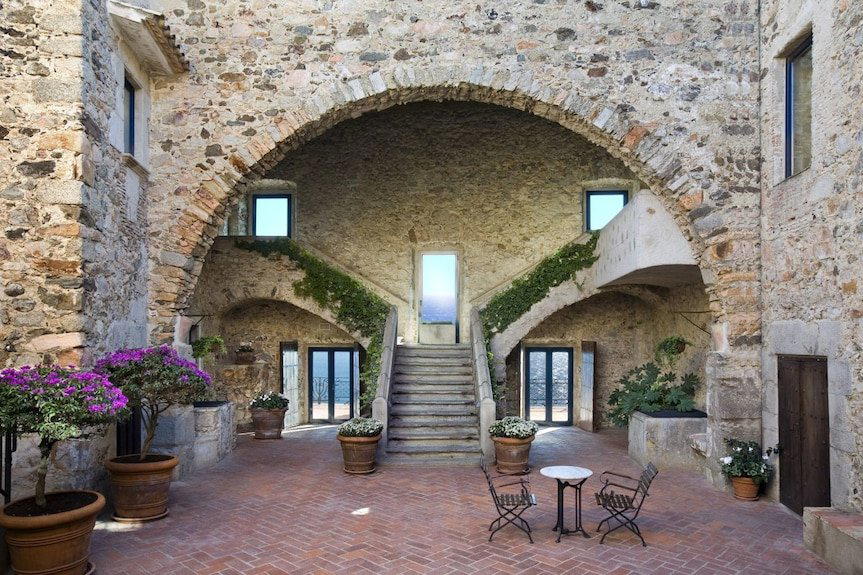
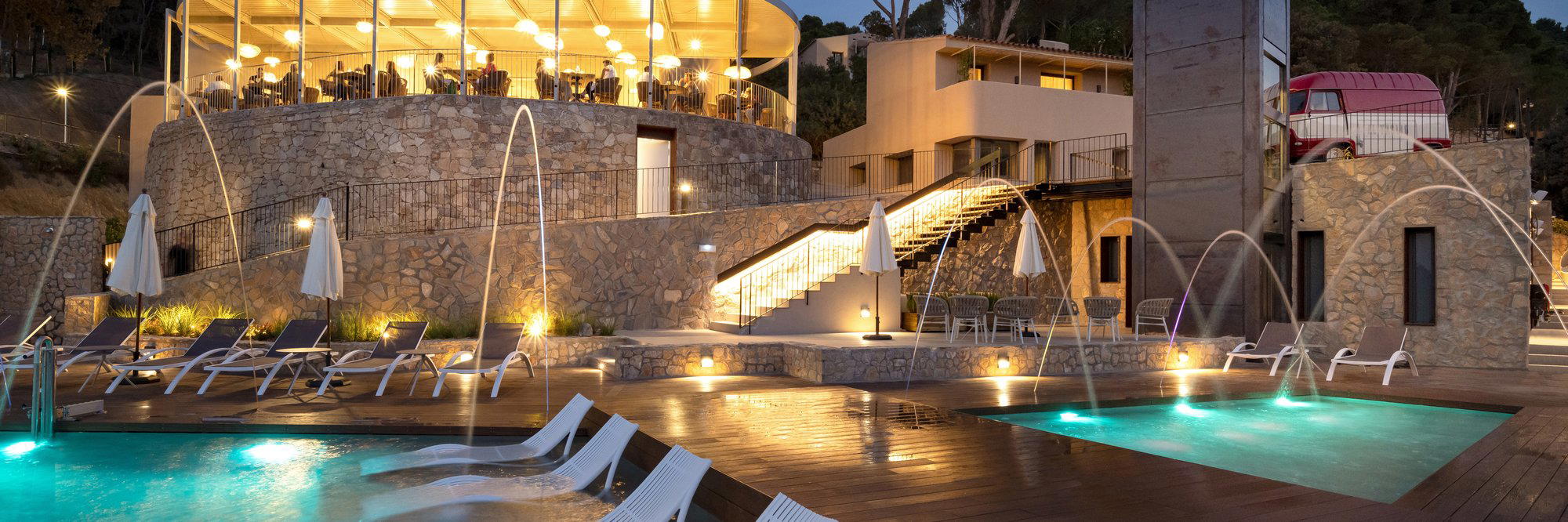
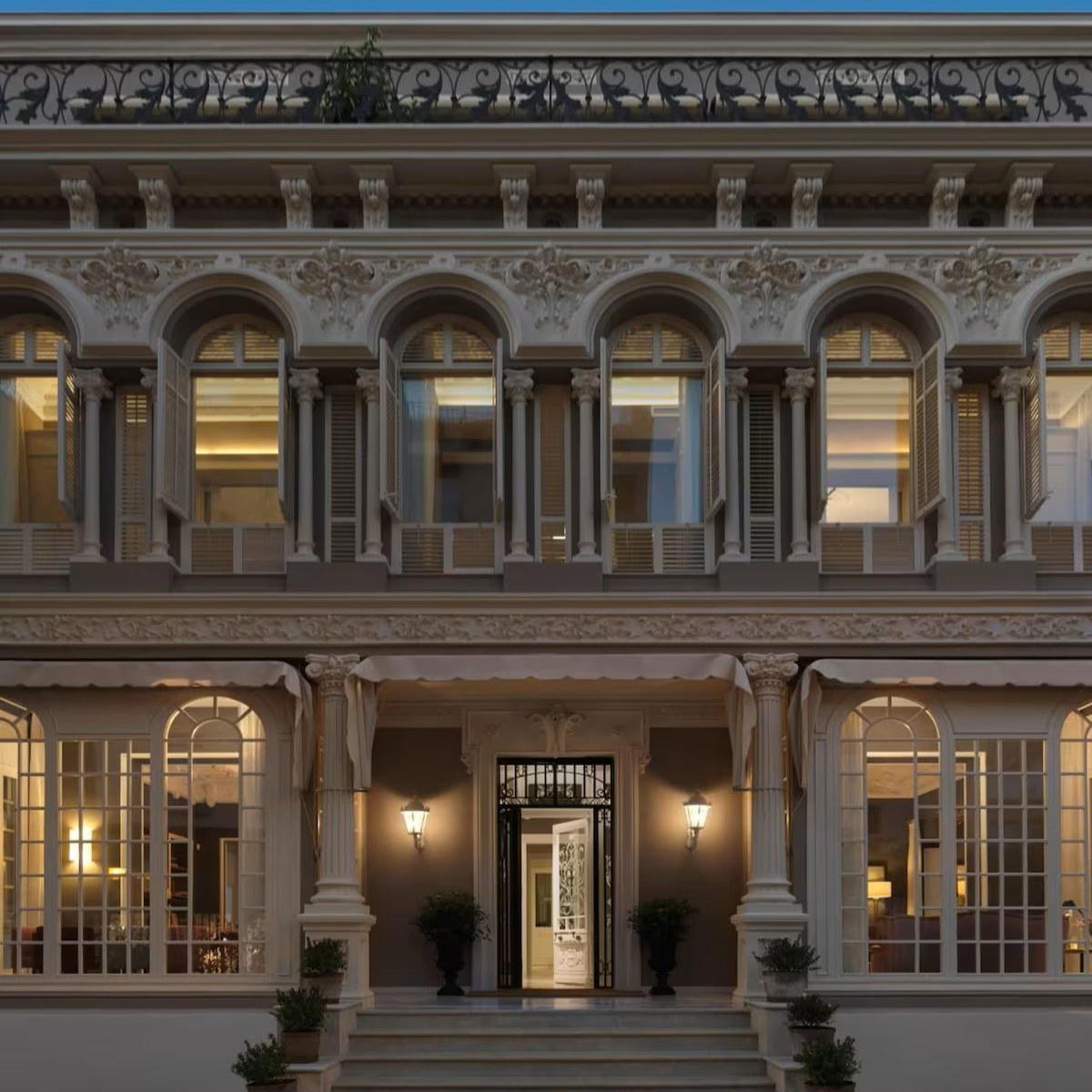
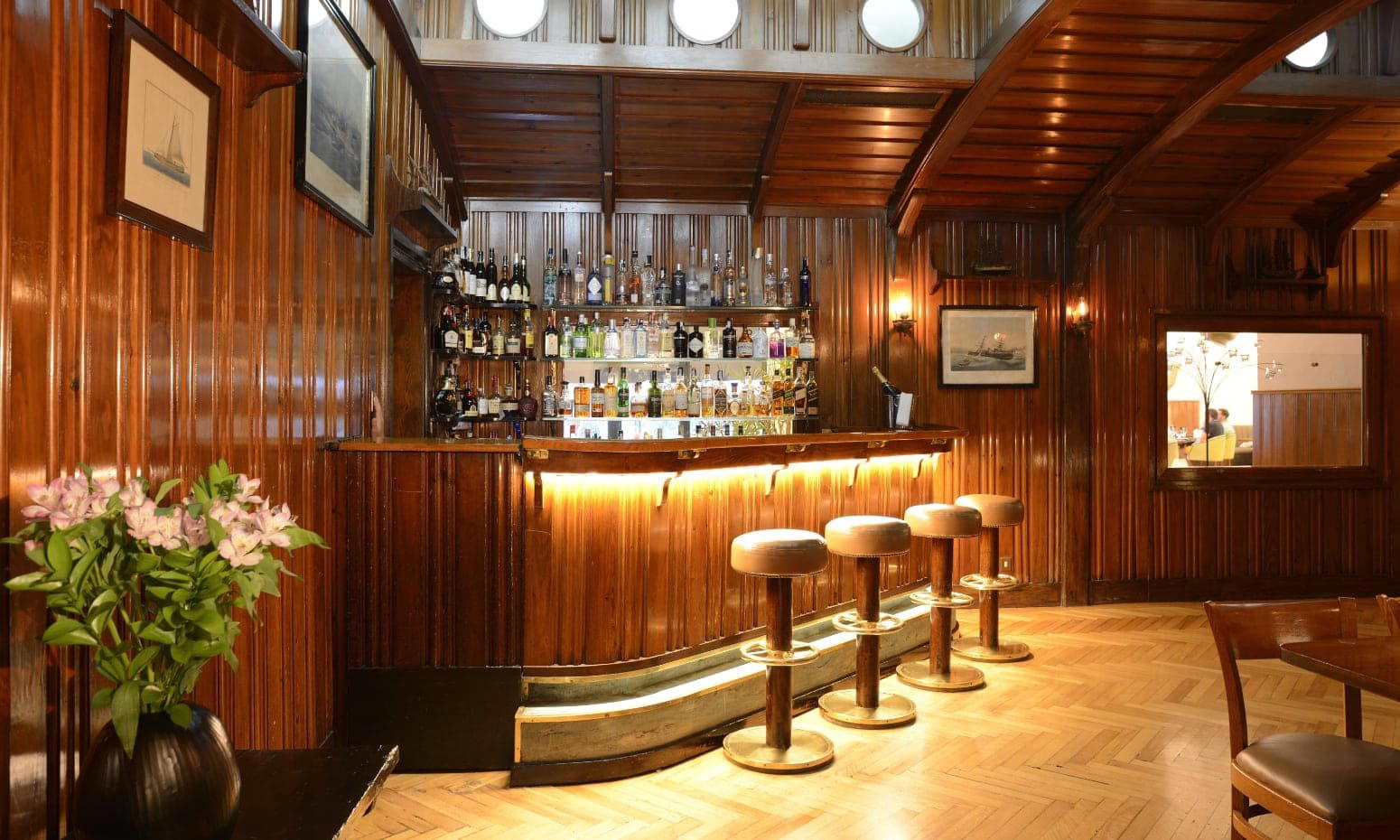
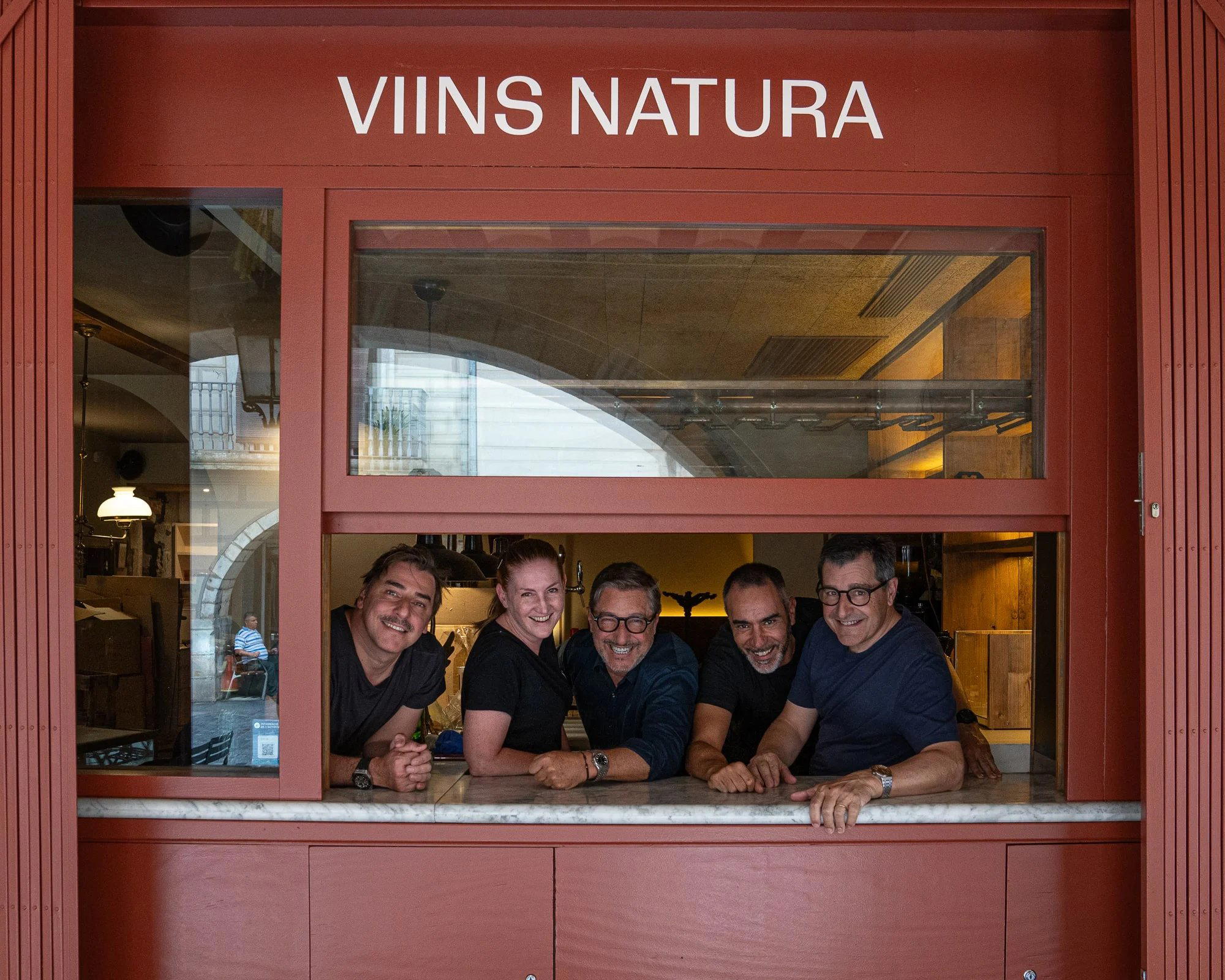

Details
- Romantic
- Quiet
- Cozy
- Rustic
- Scenic
- Romantic Getaway
- Wellness Retreat
- Weekend Escape
- Terrace
- Historic Building
- Wi Fi
- Pool
- Spa
- Massage
- Bicycle Rental
- Street Scene
- Wheelchair Accessible
- Elevator
Calming and relaxing with natural materials, soundproof rooms, and a peaceful atmosphere blending history and modernity.