


A 17th-century village house in southeast Mallorca, Hotel Can Ferrereta translates historical structure into a 32-room rural retreat recognised by La Liste (94pts, 2026) and awarded Michelin 2 Keys (2024). The wine-cellar restaurant, poolside bar, and spa sit within a property that feels authored rather than assembled, positioned well clear of the island's more trafficked resort corridors.
Pearl is the En Primeur Club membership app — saves, bookings, and concierge access live there. Same editors, same standards.
- Address
- Carrer de Can Ferrereta, 12, 07650 Santanyí, Illes Balears
- Phone
- +34 971 90 59 05
- Website
- hotelcanferrereta.com
- Directions
- Get directions
 Saves & bookings on Pearl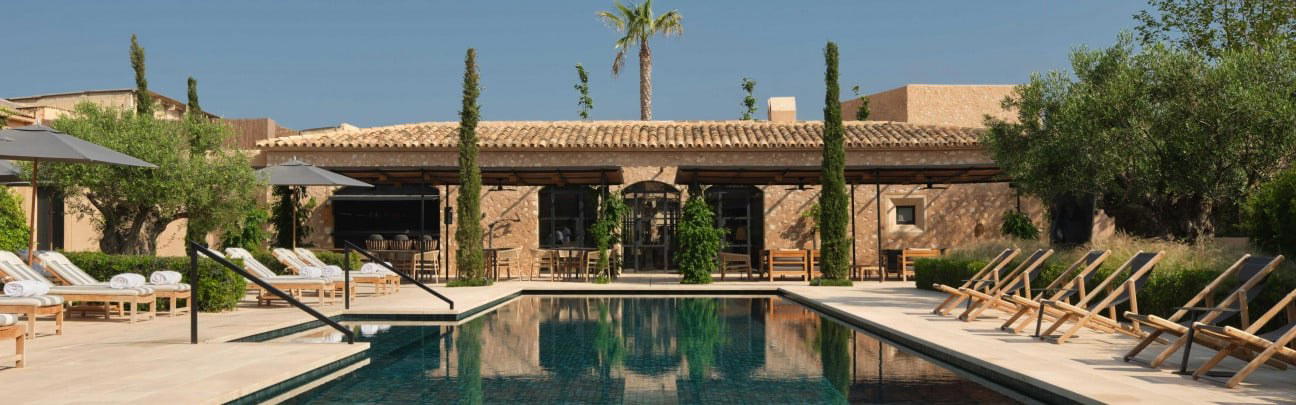
Stone, Time, and the Southeast Corner of Mallorca
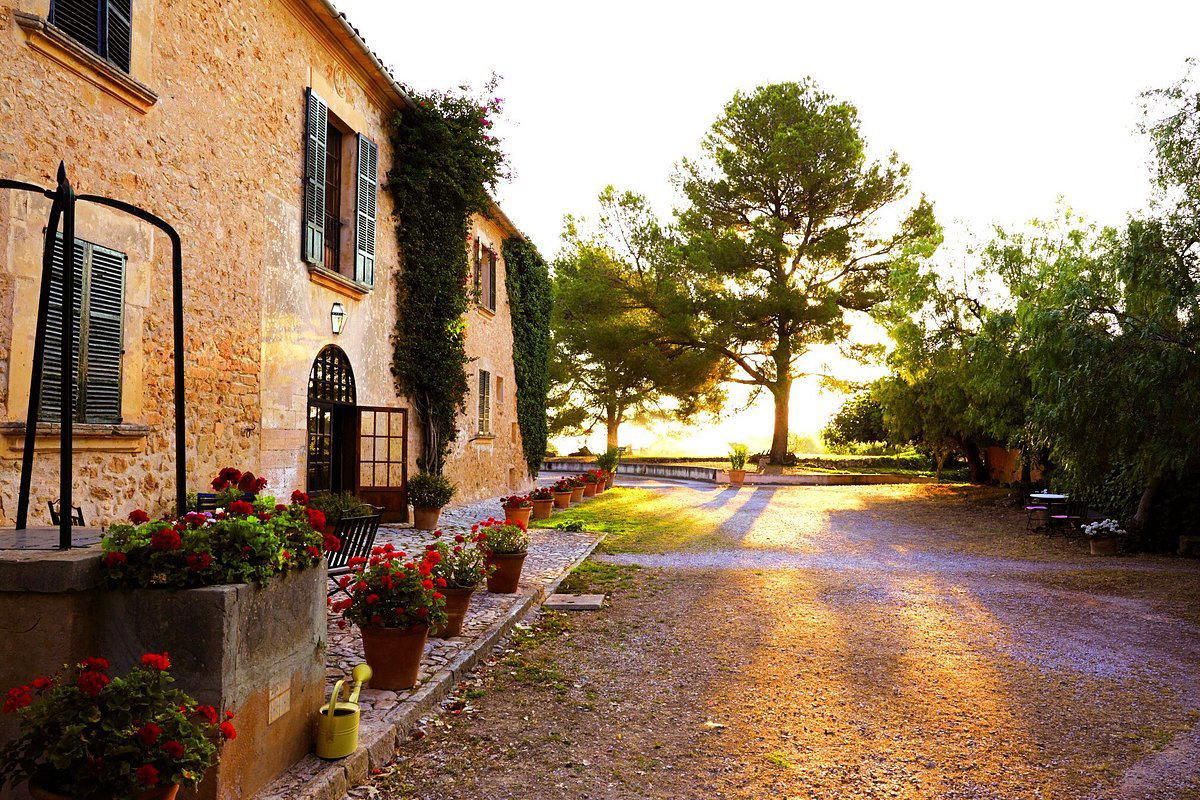
The southeast of Mallorca operates on different terms from the north. Where Deià and the Serra de Tramuntana draw a literary crowd and properties like La Residencia, A Belmond Hotel, Mallorca anchor the island's most written-about landscape, the municipalities around Santanyí remain quieter and less mapped by international travel media. The village itself, roughly 50 kilometres from Palma on the island's southeast coast, is built from a warm ochre sandstone quarried locally — the same material that built Palma's cathedral — and the streets read as a coherent architectural whole rather than a patchwork of eras. Hotel Can Ferrereta sits inside that fabric, behind the address at Carrer de Can Ferrereta, 12.
The base structure dates to the 17th century. What the hoteliers did with it matters more than the age itself: rather than converting the original house and stopping there, they extended the property with new additions designed to complement the historical volume rather than announce themselves against it. The result is a 32-room property where the threshold between old and new is deliberately hard to locate. That kind of architectural restraint is more difficult than it appears and rarer than the number of boutique hotels claiming it.
The Architectural Argument for Continuity
A useful way to read the design at Can Ferrereta is through what it refuses to do. The property does not use the 17th-century shell as a backdrop for a contemporary interior statement, the approach that dominates urban conversions, from Caro Hotel in València to properties in Barcelona's Gothic quarter. Instead, the new construction defers to the existing structure in materials, scale, and rhythm. Some rooms and suites occupy the additions; others sit within the original house. The distinction, in terms of guest experience, is less about historical versus contemporary and more about which volumes and proportions you prefer.
The attention to craftsmanship visible throughout the property extends most forcefully to the bathrooms, a reliable measure of where a property's investment priorities actually sit rather than where its marketing copy says they sit. At Can Ferrereta, the bathrooms are described as state-of-the-art, and in-room amenities carry the same level of finish. For a 32-key rural property, that ratio of spend to room count allows a depth of attention that larger resorts dilute across hundreds of keys.
Spanish rural conversions that thread this needle between historical preservation and contemporary comfort form a distinct category within the country's hotel offer. Abadía Retuerta LeDomaine in Teruel does something comparable with a 12th-century monastery; Terra Dominicata in Escaladei takes a similar line with Priorat wine estate buildings.
The Wine Cellar Restaurant and What It Tells You
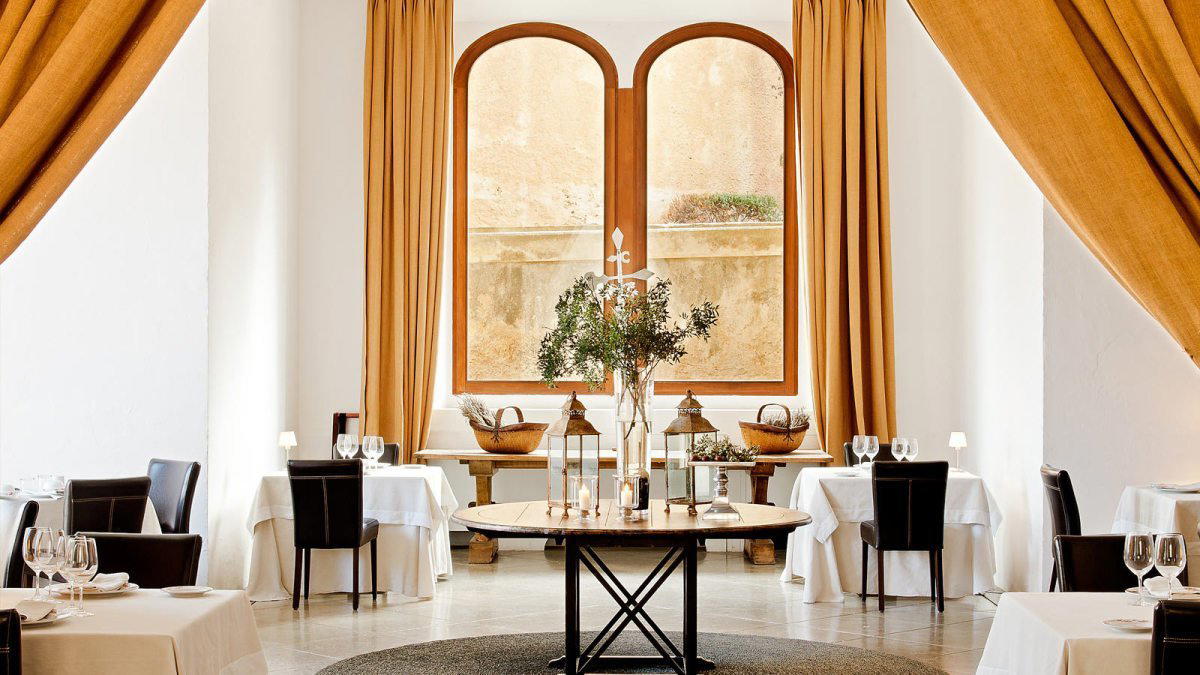
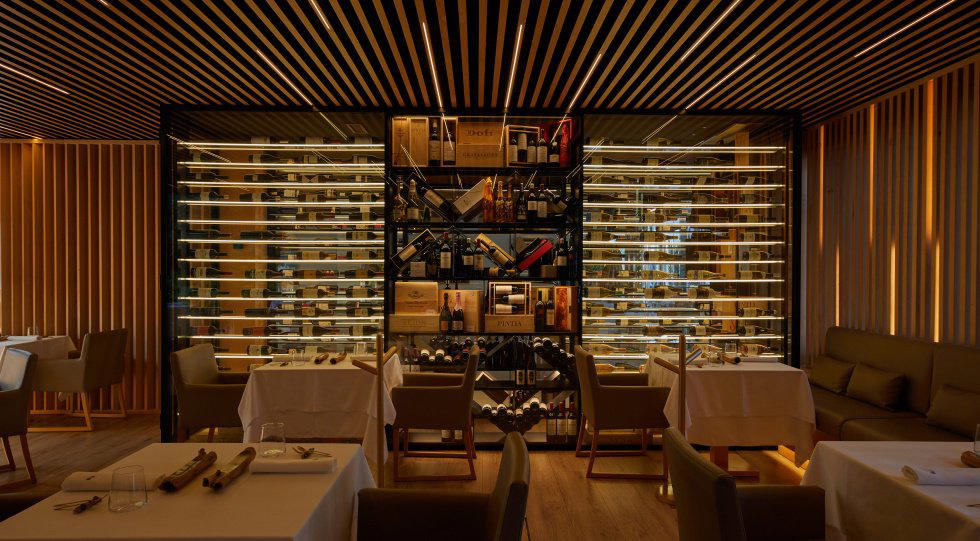
Restaurant placement within a hotel communicates editorial choices about the guest experience. Can Ferrereta's main restaurant occupies the house's original wine cellar, a space with specific thermal and atmospheric properties that no architect can replicate in a purpose-built room. Stone walls, low vaulting, and the particular acoustic quality of underground spaces create a dining environment that is self-evidently different from a terrace or a converted reception hall.
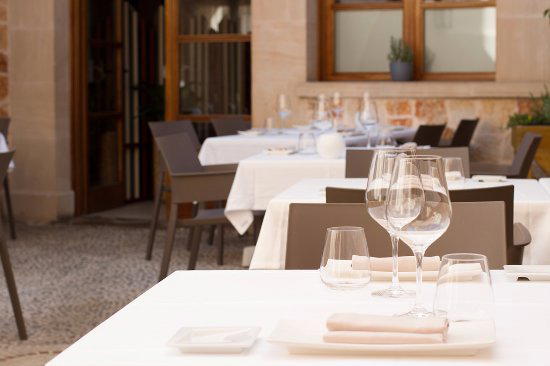
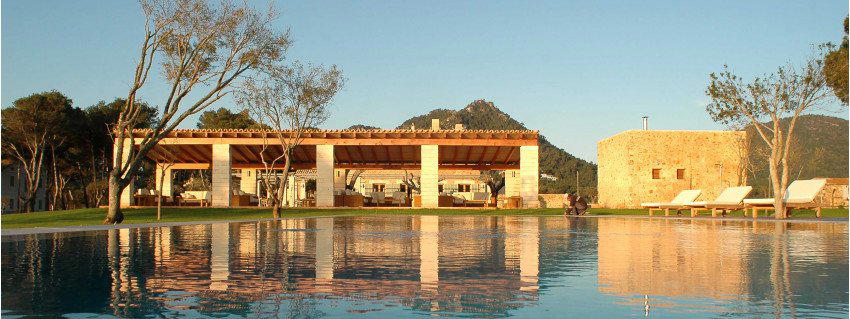
The property also runs a more casual restaurant and bar by the poolside, which gives guests two distinct registers for eating and drinking. The formal wine-cellar setting and the looser pool-adjacent offer serve different times of day and different moods without either undermining the other. That dual-format approach is common in properties of this size that want to hold guests on-site through the full day.
For the broader context of dining in the area, our full Santanyí restaurants guide maps what the village and its surroundings offer beyond the hotel's own kitchen.
Positioning and Recognition
Can Ferrereta has accumulated recognition that places it clearly within Spain's premium rural tier. La Liste awarded the hotel 94 points in its 2026 Leading Hotels ranking, and the property holds Michelin 2 Keys (2024), the guide's hotel distinction, separate from restaurant stars, that evaluates accommodation quality, service, and overall experience. Membership in Small Luxury Hotels of the World (2025) adds a third signal; SLH membership functions as a quality filter and distribution network for independent properties that meet a defined standard rather than a brand formula.
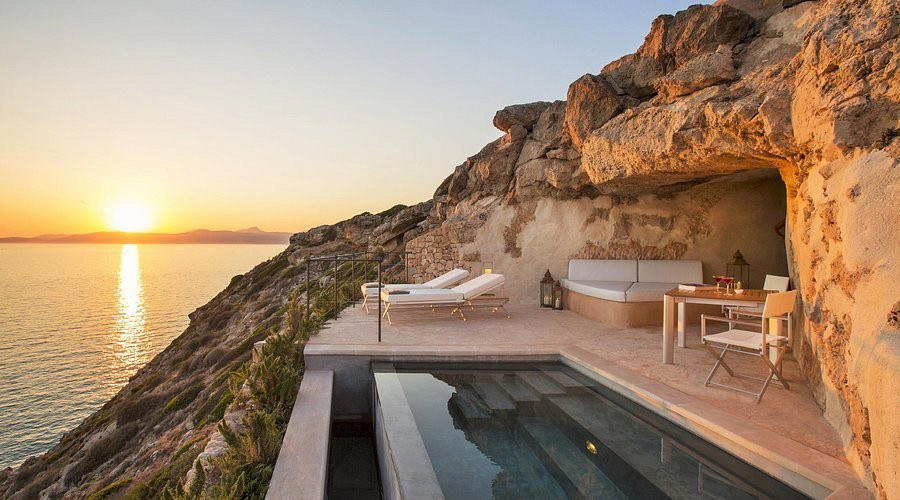
For comparison within the Balearic Islands, Cap Rocat in Cala Blava operates in the same premium independent tier, also working with converted historical military architecture near Palma. Hotel Can Cera in Palma represents the urban version of the same approach, a historic Palma mansion converted to a boutique property. Can Ferrereta's sister hotel, Sant Francesc Hotel Singular, sits in Palma's city centre and shares the same ownership instincts: begin with a significant historical structure, add with care, finish with precision.
At €456 per night (the published rate), Can Ferrereta prices within the upper band of Mallorca's independent rural hotel market. That tier sits below the island's largest international-brand footprints but above the converted finca category that dominates the mid-market countryside offer. The 32-room count keeps the property well inside boutique territory, where the service-to-guest ratio differs materially from larger operations.
The Santanyí Advantage
The village of Santanyí offers what many of Mallorca's more frequented areas have been unable to preserve: a functioning Mallorcan town where the weekly market (held Saturdays) operates for residents as much as visitors, and where the density of tourism infrastructure remains lower than in areas like Port de Pollença or the southwest bay resorts. The sandstone architecture gives the village a visual coherence that rewards walking at a pace slow enough to notice it.
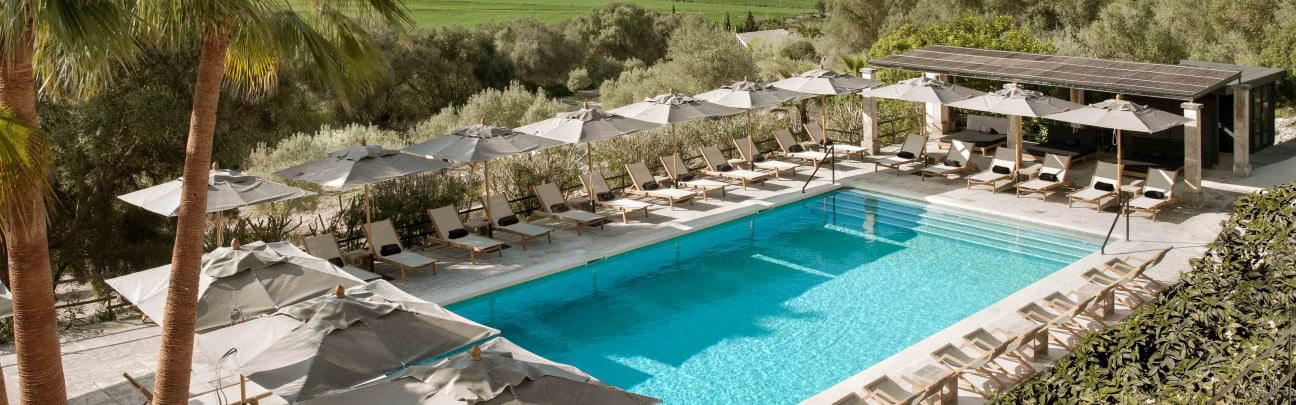
For guests who want to use the property as a base, the southeast coast's coves (calas) are within short driving distance, Cala Llombards and Cala Santanyí are among the closest. The hotel itself provides enough reason to stay put: the spa and fitness centre, described as surprisingly well-equipped for a property this size, and the outdoor pool handle most of what guests might otherwise leave to find. The drive to Palma runs under an hour, which puts the airport and the city's cultural infrastructure within reach without the property feeling like an extension of urban tourism.
Other rural Spanish properties in the premium tier that make comparable use of regional isolation include Mas de Torrent Hotel and Spa in Torrent (Catalonia) and Atrio Restaurante Hotel in Cáceres (Extremadura), each of which uses geographical remove as part of its value proposition rather than as a limitation to overcome.
Planning Your Stay
The property operates 32 rooms and suites, a combination that spans both the original 17th-century house and the architecturally sympathetic newer additions. Rates begin at approximately $456 per night. Given the hotel's La Liste 94-point standing and Michelin 2 Keys recognition, advance planning is advisable, particularly for peak Mallorcan summer weeks (July and August) when the island's overall accommodation occupancy tightens across all tiers. The village location means a rental car is the most practical approach for guests who want to explore beyond the property. Santanyí is well-signposted from the Palma–Santanyí road (Ma-5300) and the drive from Palma airport runs roughly 50 kilometres southeast.
Guests drawn to the Balearic island circuit more broadly will find relevant comparisons at BLESS Hotel Ibiza and Can Alberti 1740 Hotel Boutique in Mahón, Menorca, though neither targets the same rural-conversion format as Can Ferrereta.
How Hotel Can Ferrereta Santanyí compares with similar nearby venues.
| Venue | Awards |
|---|---|
| Hotel Can Ferrereta | Michelin 2 Keys |
Recognition history
Dated appearances from independent guides and award organizations, with the underlying list record or original source where available.
La Liste Top Hotels
La Liste
Michelin 2 Keys
Michelin
Mr & Mrs Smith Smith Seal of Approval
Mr & Mrs Smith
Michelin 2 Keys
Michelin
Small Luxury Hotels of the World Member
Small Luxury Hotels of the World
Michelin 2 Keys
Michelin
Continue exploring
More in Santanyí
Hotels in Santanyí
Browse all →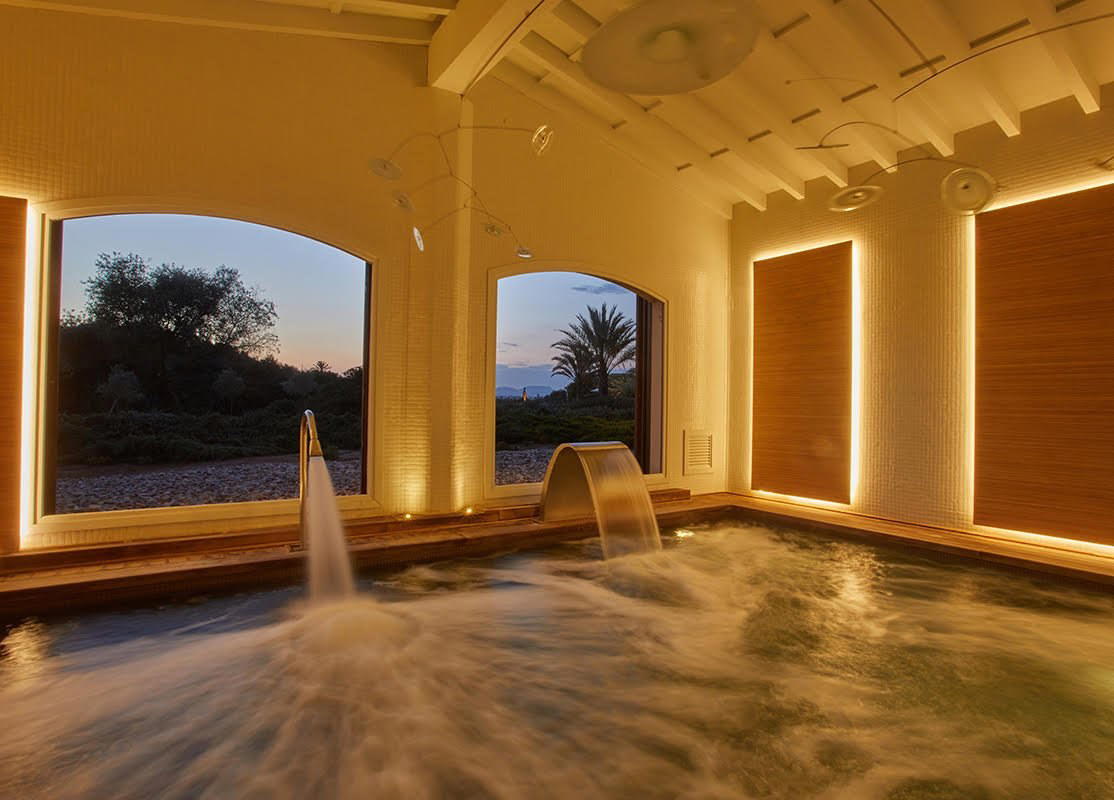
Bars in Santanyí
Browse all →
Restaurants in Santanyí
Browse all →

At a Glance
- Romantic
- Quiet
- Sophisticated
- Elegant
- Intimate
- Romantic Getaway
- Wellness Retreat
- Anniversary
- Date Night
- Historic Building
- Garden
- Terrace
- Destination Spa
- Private Dining
- Wi Fi
- Pool
- Spa
- Fitness Center
- Room Service
- Concierge
- Valet Parking
- Restaurant
- Bar
- Sauna
- Bicycle Rental
- Airport Transfer
- Garden
- Wi Fi
- Pool
- Spa
- Fitness Center
- Room Service
- Concierge
- Valet Parking
- Restaurant
- Bar
- Sauna
- Bicycle Rental
- Airport Transfer
Sophisticated and tranquil with warm golden light, natural stone materials, and impeccably designed spaces that blend historical charm with modern elegance throughout.
Know Before You Go
- Getting there
- Carrer de Can Ferrereta, 12, 07650 Santanyí, Illes Balears