

2 Michelin Keys · Mr & Mrs Smith Seal of Approval
Pepe Vieira Restaurant & Hotel places Galicia’s coastal countryside at the centre of the experience: freestanding cube-like rooms, forested approaches, and a restaurant format that moves through garden, cellar, kitchen, and table. The appeal is strongest for travelers who want architecture, landscape, and Michelin-recognised dining to operate as one tightly edited overnight stay rather than separate pleasures.

Pearl is the En Primeur Club membership app, where members save venues, book tables and use the concierge.
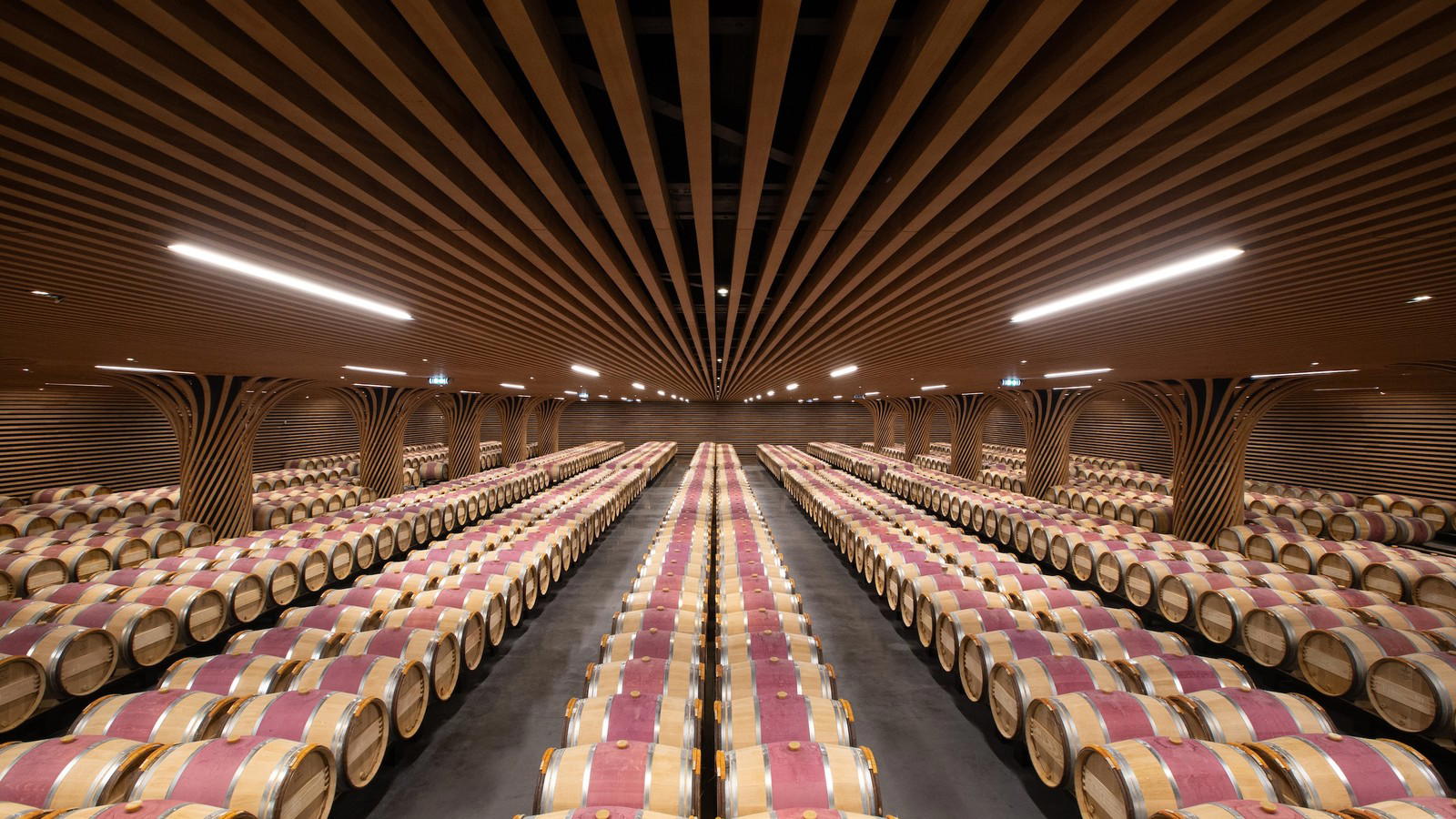
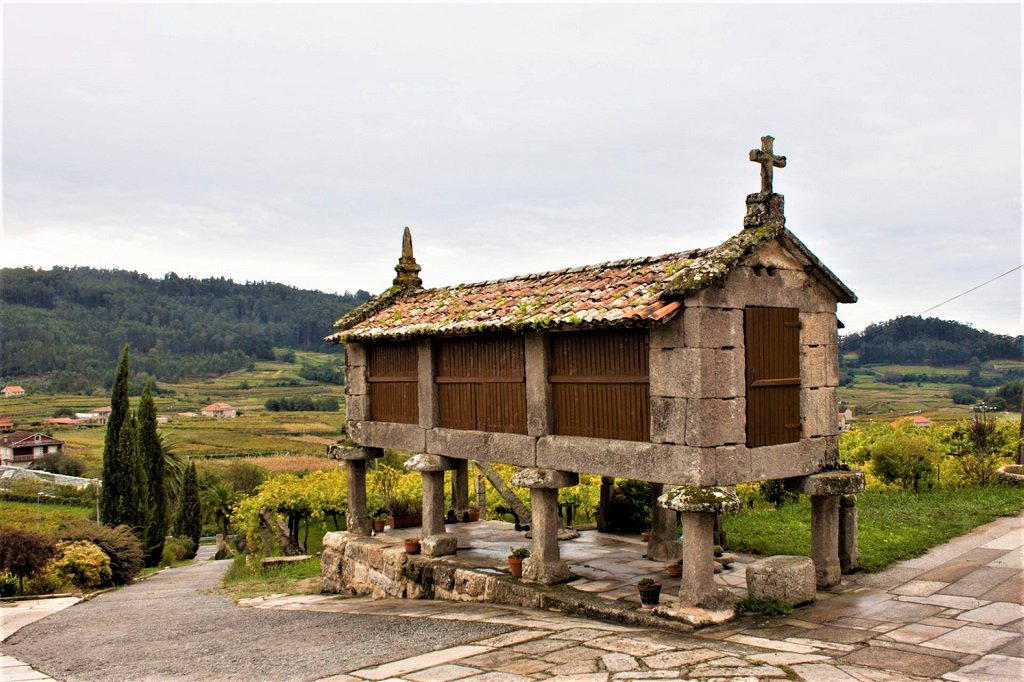
The approach to Galicia’s coastal countryside slows the tempo before dinner: a red-forest road, a sense of distance, and a property arranged so the land feels larger than the buildings. In Poio, where the setting carries a strong folkloric charge, the restaurant-with-rooms format has a sharper role: not simply a bed after a long meal, but a controlled sequence of road, trees, hotel, garden, wine cellar, kitchen, and table.
That spatial choreography is the point. Galicia gives the place its atmosphere, but the experience is not just about placing regional products on a plate. Ambitious addresses now use design, pacing, and site as part of the meal. Pepe Vieira Restaurant & Hotel sits in that category, with an unusually romantic sense of recognition around its own phrase, “the farthest cuisine in the world,” where landscape is argument, not backdrop.
Galicia treated as a moving architectural sequence
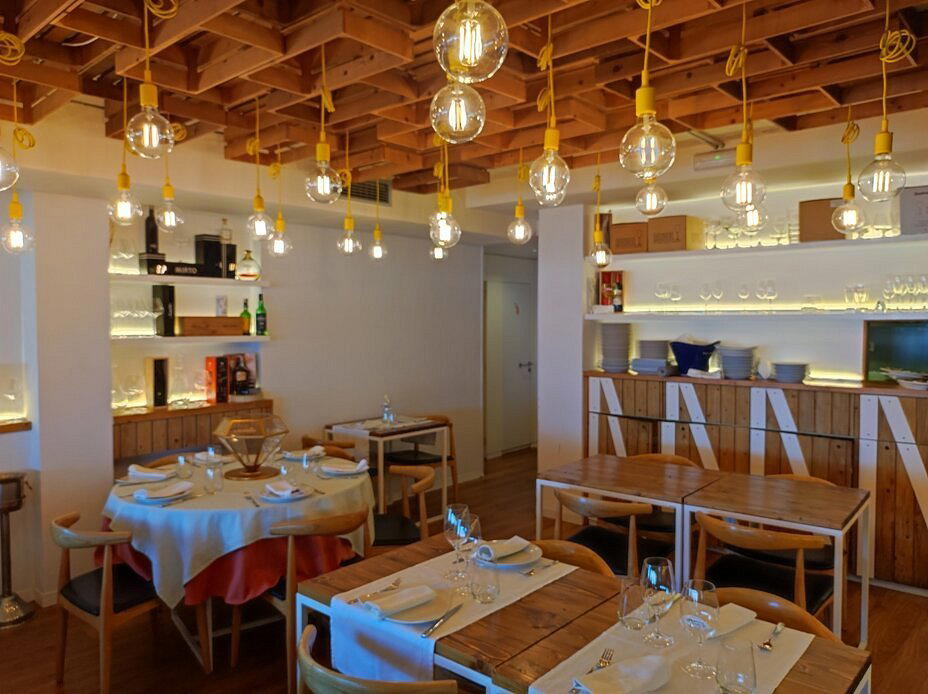
Dinner travels through several parts of the property, from garden to wine cellar to kitchen to table, moving beyond the sealed dining-room model common to luxury tasting menus. In much of Spain’s restaurant-hotel scene, the room protects guests from weather, distance, and the outside world. Here, exposure is the idea: food becomes a chain of place-specific relationships, not a parade of finished plates.
The tagline, “the farthest cuisine in the world,” is romantic, but its useful meaning is geographic and cultural. Galicia is Spain’s Atlantic edge, shaped by migration, folklore, fishing economies, and rural self-sufficiency as much as luxury travel. A meal here must do more than polish a sense of place; it must show how distance, weather, memory, and terrain affect the region’s eating. Movement through the site gives structure to ideas that would feel abstract on a printed menu.
Design supports that argument by refusing clutter. The experience keeps the outside present rather than framed as an afterthought. This is different luxury from more conventional heritage models elsewhere in Galicia, and from urban Vigo hotels such as Gran Hotel Nagari Boutique & Spa or Attica21 Vigo, where city access and service infrastructure matter more. In Poio, value comes from concentration: meal, room, and terrain are tied so tightly that separating them weakens the experience.
Rooms and the discipline of understatement
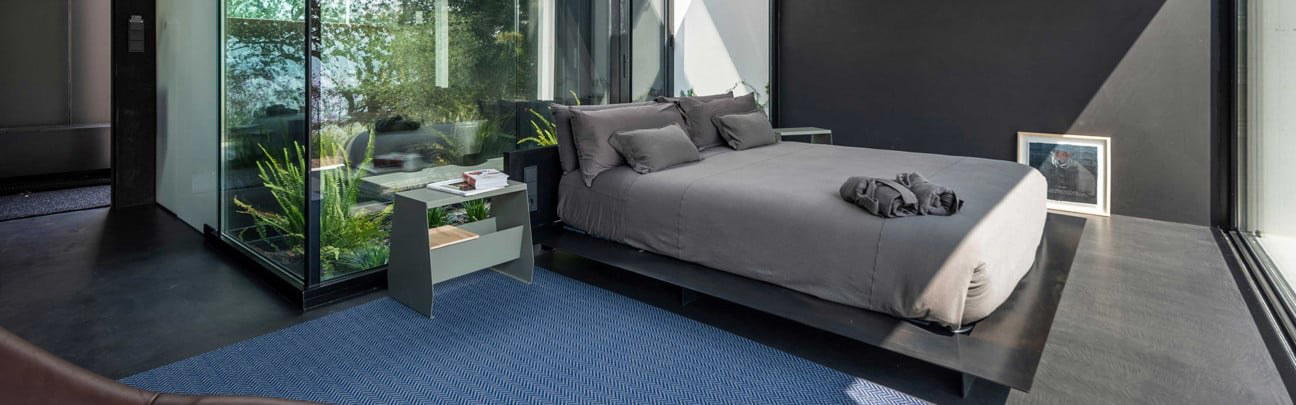
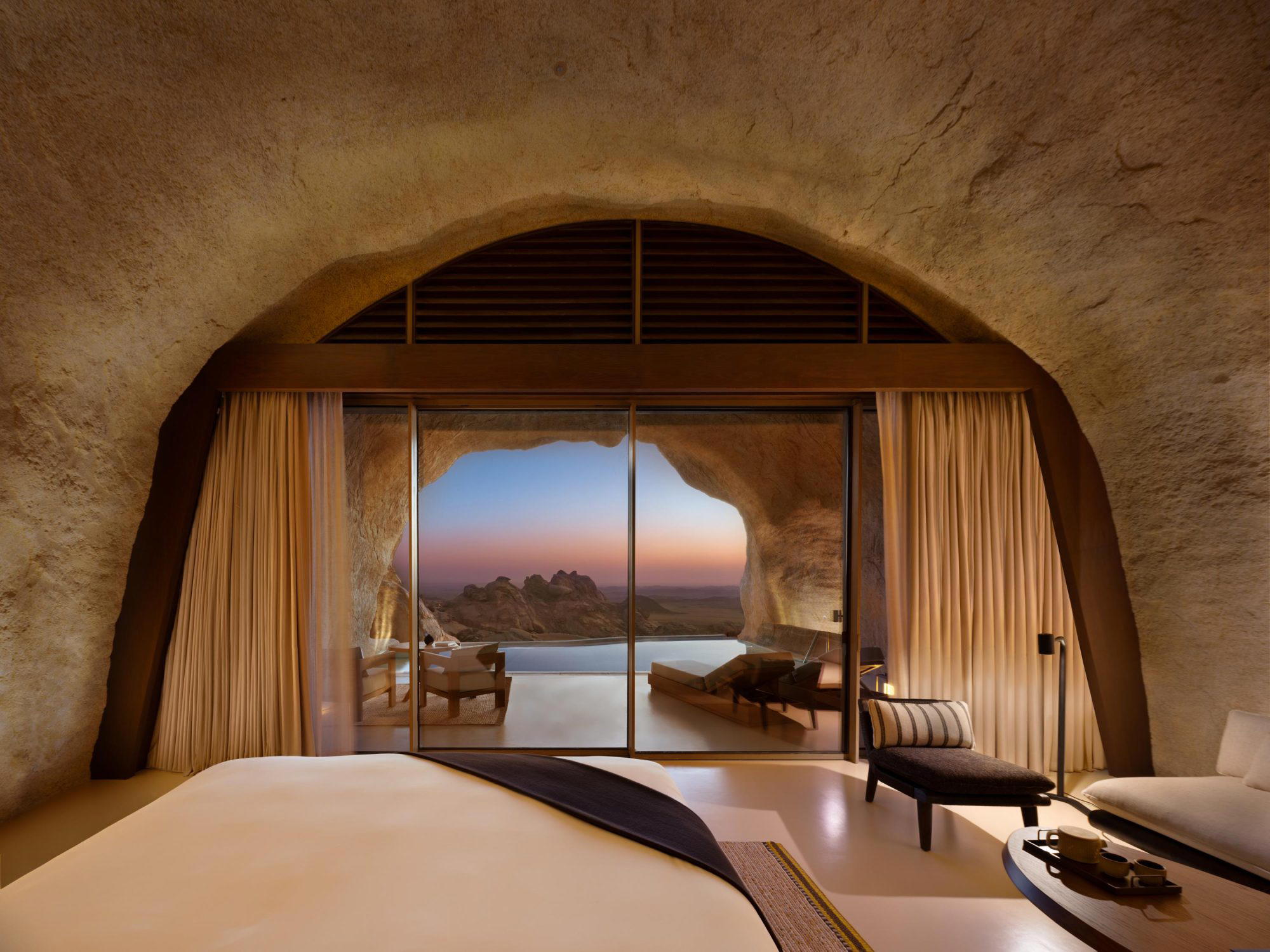
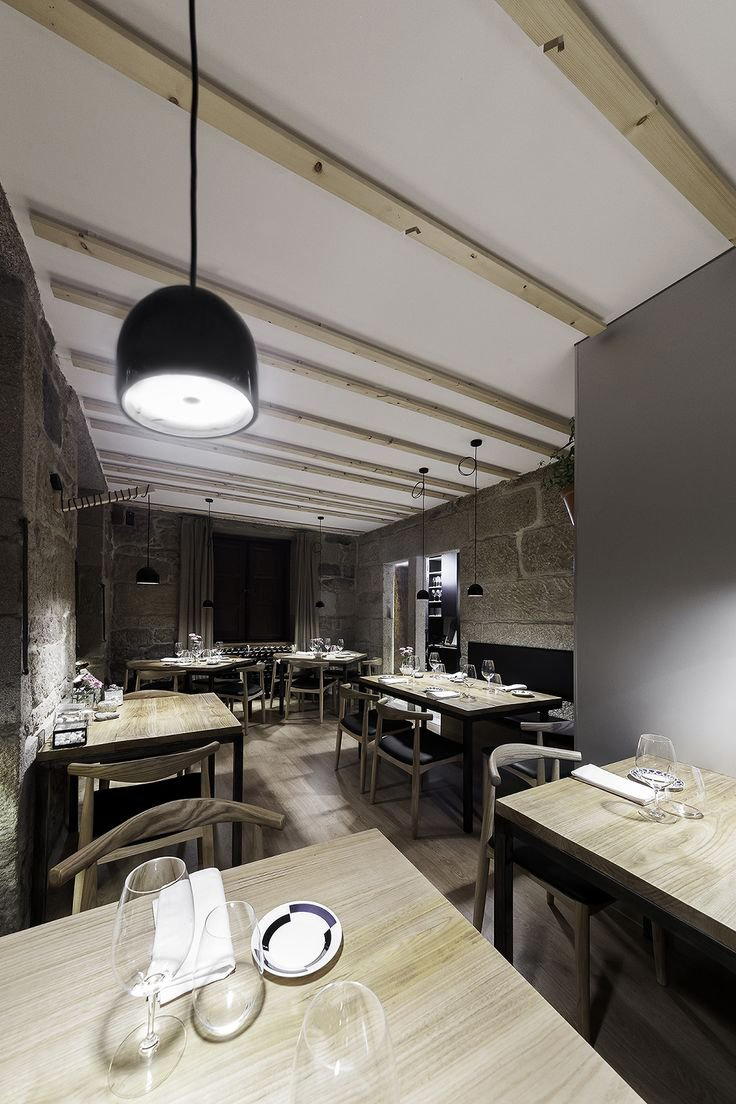
The hotel is closer to a culinary retreat than a conventional resort. Its rooms keep the emphasis on privacy, quiet, and the surrounding countryside rather than on showy resort grammar. The setting does much of the work: instead of leaning on heavy ornament, the experience lets forest, road, and coastal countryside carry the visual charge.
That restraint is not neutral. Spain’s high-end hotel languages range from historic conversions and city restaurant-hotels to coastal destination resorts and rural stays built around a singular meal. The Galician model here is smaller, quieter, and more dependent on the immediate setting than many broader-service hotels. Architecture does not compete with the meal; it extends the same editorial line of reduction, sequence, and contact with place.
Minimalism can be lazy when used as a substitute for hospitality. Here, the restaurant-first identity gives stripped-back design a purpose. The rooms make privacy and landscape the luxury signals, while the dining experience carries the social and culinary weight. Travelers comparing Galicia with other Spanish coastlines will find many different rural or coastal retreats, but Poio’s distinction is how fully the overnight experience is built around the restaurant’s narrative machinery.
Where it fits in a Spain-wide dining hotel circuit
Restaurant-led hotels in Spain now split into urban tasting-menu hotels for city breaks, destination coastal properties where the restaurant is one amenity, wine-estate hotels framed by cellar access, and rural addresses where the meal dictates rhythm. Pepe Vieira belongs to the last group, though the Galician site gives it a less urban, more elemental register than many city or resort comparisons.
The available recognition frames the ambition: not a casual countryside inn with a strong kitchen, but a high-commitment food stay where architecture, storytelling, and menu format form one proposition. Pepe Vieira’s role matters less as biography than authorship: the restaurant has a defined voice, but the stronger story is how that voice is housed in an environment that slows guests and redirects attention to Galicia’s Atlantic interior.
Poio helps because it lacks the instant shorthand of larger Spanish dining capitals, making the journey chosen rather than accidental. Readers planning the area should use Our full Poio restaurants guide and Our full Poio hotels guide to understand the compact local luxury field, then widen the map with Our full Poio bars guide, Our full Poio wineries guide, and Our full Poio experiences guide. The comparison set, including Parador de Pontevedra, Villa Boutique 1880, and Hotel Minho, frames a broader regional choice: heritage town stay, boutique base, cross-border countryside, or restaurant-first retreat.
The strongest recommendation is for travelers who want the hotel to sharpen the meal, not merely support it. If the priority is a large spa, nightlife access, or a conventional resort program, Spain has clearer fits in its larger cities and broader leisure destinations. If architecture, landscape, and dinner should operate as one composition, Poio is persuasive. For a softer Galician counterpoint, other dining rooms and hotels in the region may sit closer to the classic hotel-spa tradition, while rural Spain elsewhere can tilt toward mountain retreat rather than Atlantic food narrative. Further afield, the contrast with small-scale lodging in different landscapes underlines the point: intimate hotels are interesting only when setting and purpose are legible. Here, they are unusually aligned.
Fast Comparison
Comparable venues by cuisine and price in the same metro.
| Venue | Cuisine | Price | Awards | Notes |
|---|---|---|---|---|
| Pepe Vieira Restaurant & HotelThis venue (the venue you are viewing) | Contemporary luxury design integrated with nature; minimalist architectural approach emphasizing connection to landscape and local environment. | $300–500 | 2 Michelin Keys · Mr & Mrs Smith Seal of Approval | Not listed |
| Atrio Restaurante Hotel | Contemporary design seamlessly blended with historic stone architecture in the walled old town. | $300–500 | 3 Michelin Keys · Star Wine List | Cáceres Old Town |
| Four Seasons Hotel Madrid | Historic luxury hotel blending Belle Époque architecture with contemporary sophistication | Not listed | 2 Michelin Keys · World's 50 Best #66 | Sol |
| Abadía Retuerta LeDomaine | Historic abbey with contemporary luxury furnishings | $300–500 | 3 Michelin Keys · La Liste Top Hotels | Sardón de Duero |
| Mandarin Oriental Ritz, Madrid | Historic luxury palace with modern restoration | Not listed | 3 Michelin Keys · World's 50 Best #71 | Jeronimos |
| Torre del Marqués Hotel Spa & Winery | rustic luxury wine estate | $300–500 | 3 Michelin Keys · Small Luxury Hotels of the World Member | Monroyo |
Recognition history
Dated appearances from independent guides and award organizations, with the underlying list record or original source where available.
Michelin 2 Keys
Michelin
Mr & Mrs Smith Seal of Approval
Mr & Mrs Smith
Full recognition history (4 entries)
Michelin 2 Keys
Michelin
Michelin 2 Keys
Michelin
Continue exploring
More in Poio
Hotels in Poio
All hotels in Poio →
Restaurants in Poio
All restaurants in Poio →

Details
- Romantic
- Quiet
- Sophisticated
- Scenic
- Modern
- Elegant
- Romantic Getaway
- Honeymoon
- Anniversary
- Weekend Escape
- Panoramic View
- Garden
- Terrace
- Design Destination
- Waterfront
- Wi Fi
- Pool
- Restaurant
- Bar
- Garden
- Air Conditioning
- Parking
- Waterfront
- Garden
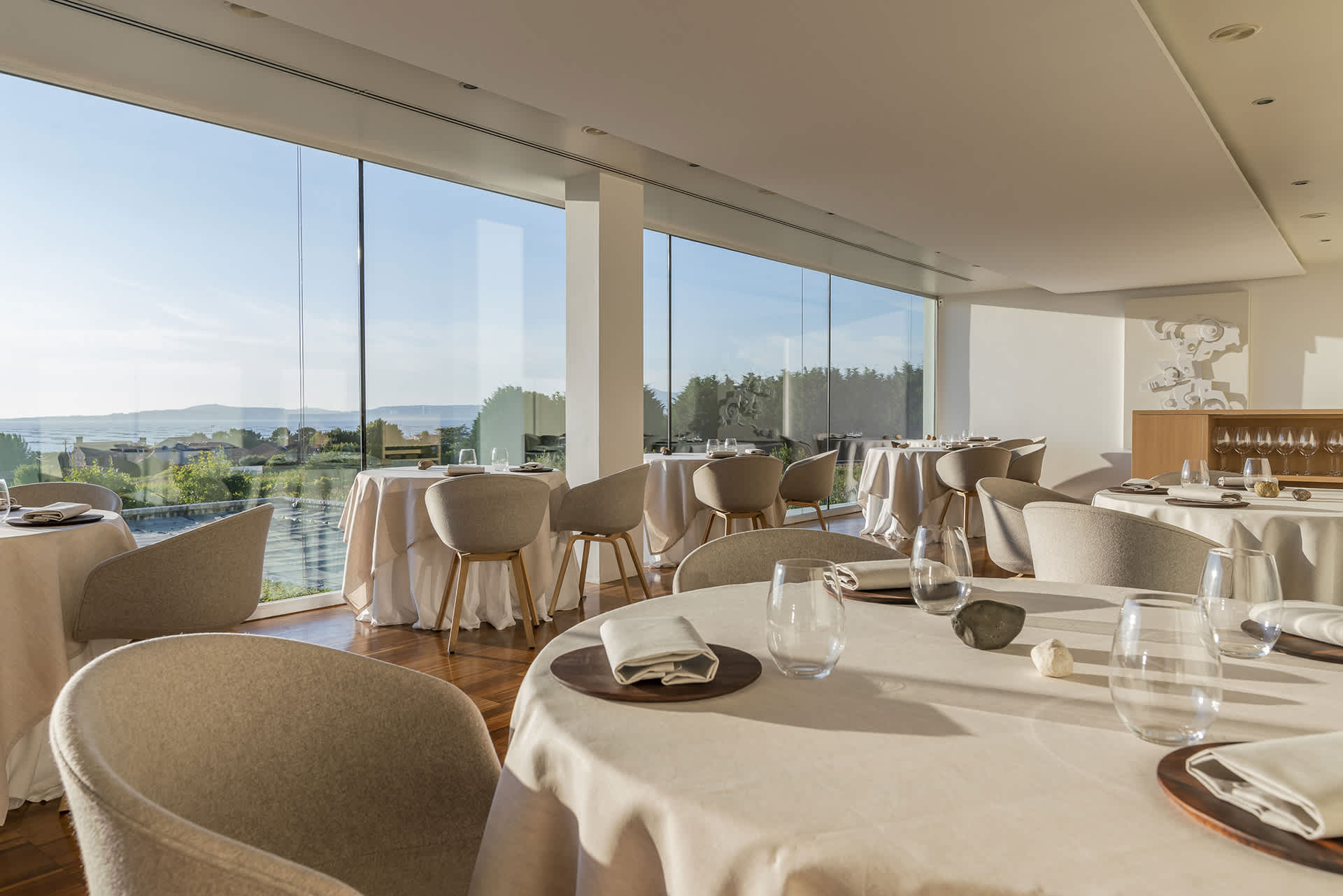
Contemporary luxury with natural light flooding through expansive windows; serene, peaceful atmosphere enhanced by gardens and woodland surroundings; sophisticated yet understated elegance.