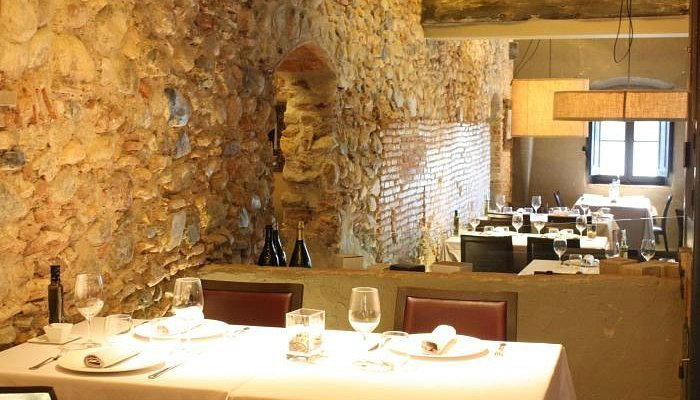
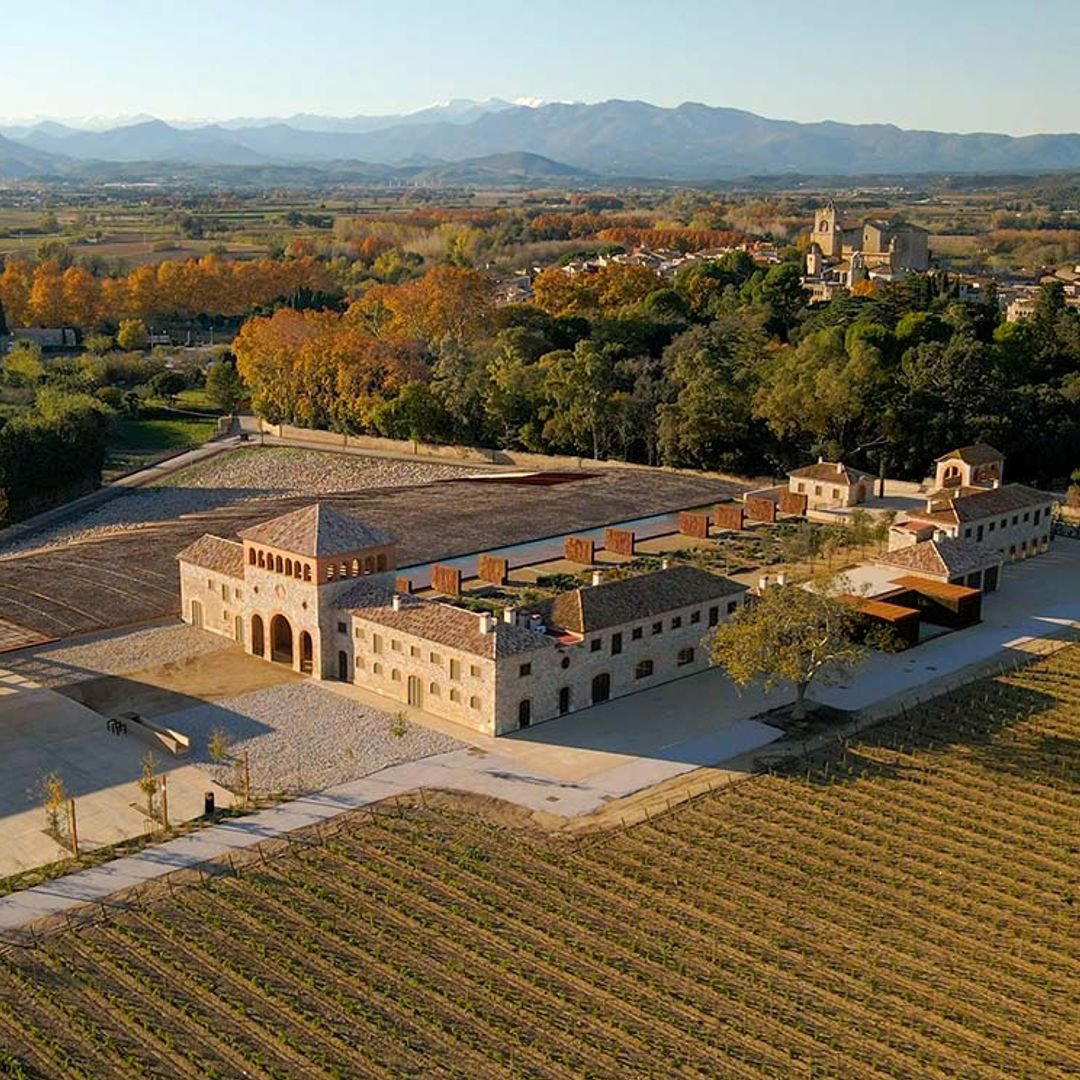
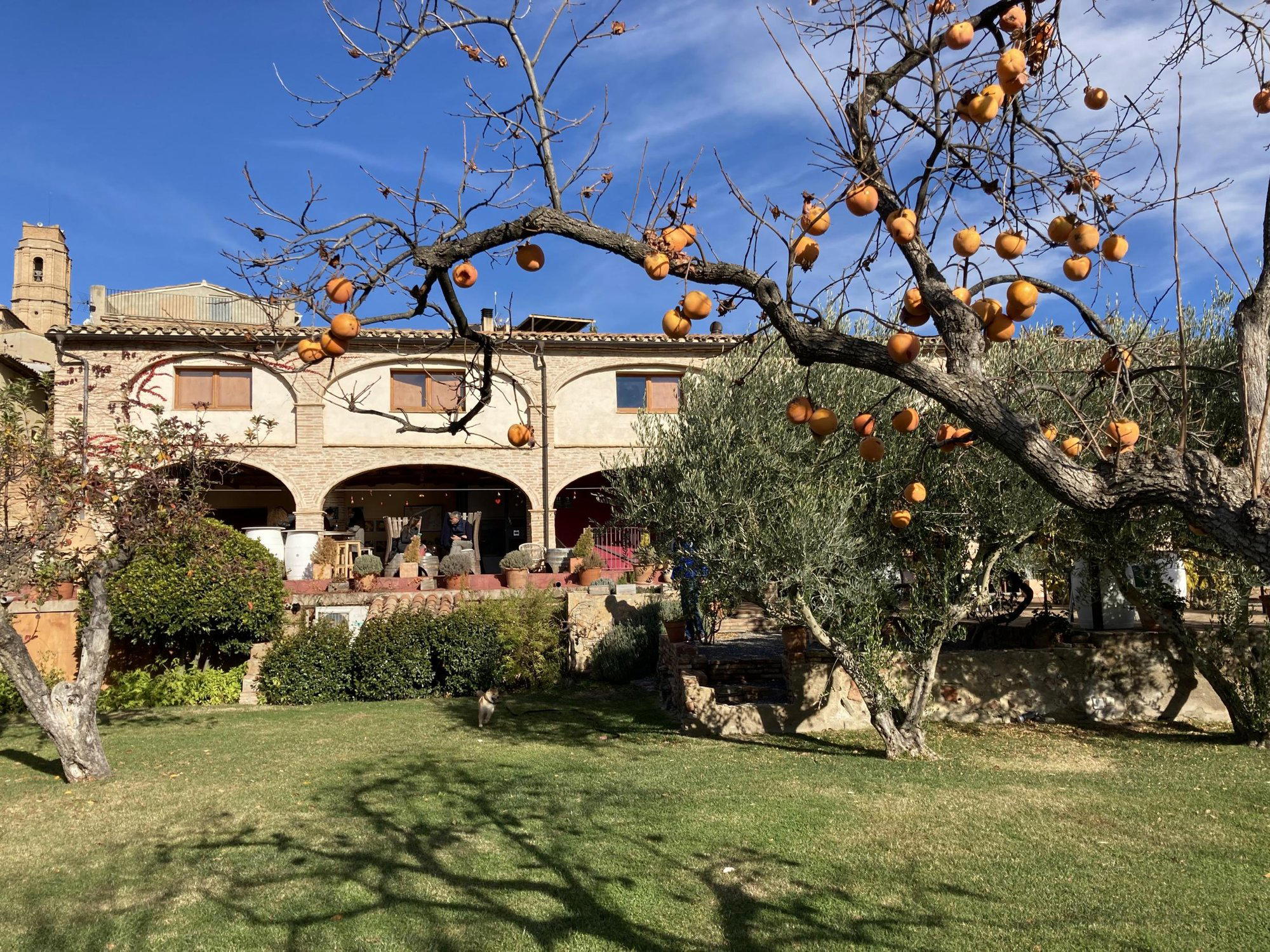
This is a pattern found in Spain’s stronger hotel conversions. Properties like Abadía Retuerta LeDomaine in Teruel and Atrio Restaurante Hotel in Cáceres have demonstrated that medieval ecclesiastical architecture, handled with precision, can carry a contemporary luxury programme without losing its specificity. The alternative, heavy-handed modernisation that strips out historical character, produces something that could be anywhere. What makes the Montsant setting legible as a destination rather than merely a backdrop is exactly the degree to which the original fabric survives in conversation with the new.
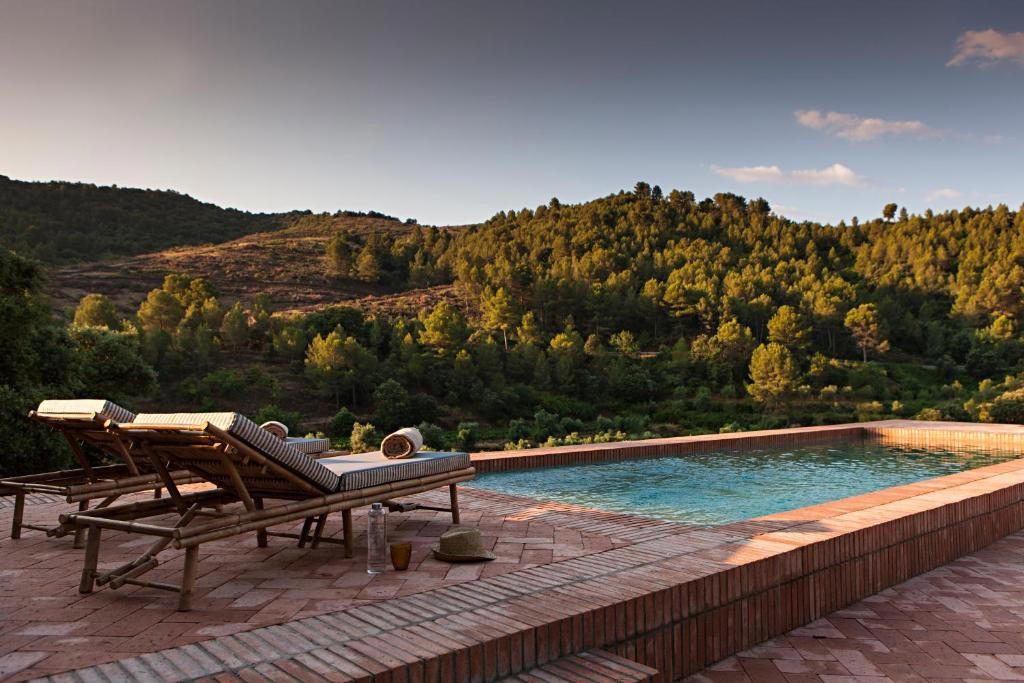
The outdoor pool is the clearest example of new programme sitting against old stone. Set to take full advantage of the surrounding park scenery, it functions less as a hotel amenity and more as a framing device: the mountains are what you are meant to look at, and the architecture steps back accordingly. The same logic applies throughout. The building does not attempt to compete with what is outside it.
Rooms and Configuration
The 26 rooms break into standard categories and suites. Standard rooms are already generously sized, fitted with rain showers and espresso machines. Suites add freestanding tubs. At a rate of approximately $236, the property positions itself in a tier that acknowledges its distance from urban amenities by providing more space and more considered finish than a city hotel at a comparable price would typically offer. The Michelin Keys recognition, awarded in 2024 at the three-key level, provides an external calibration point: this is a property that has been assessed against European criteria for accommodation quality, setting, and service standard, not only against local competition.
For comparison, Spain’s broader premium accommodation market includes properties like Mandarin Oriental Ritz, Madrid and Mandarin Oriental Barcelona at the urban luxury end, and design-led rural conversions across Catalonia and Castile at the opposite pole. Terra Dominicata occupies a specific niche within that distribution: a working estate with a distinct agricultural identity, far enough from any city to require commitment from the traveller, and rewarding that commitment with physical surroundings that urban properties cannot replicate. The Mas de Torrent Hotel and Spa in Torrent represents a comparable Catalan approach to rural luxury, while Torre del Marqués Hotel Spa and Winery in Sardoncillo shares the wine-estate format in a different regional context.
The Winery as Context, Not Amenity
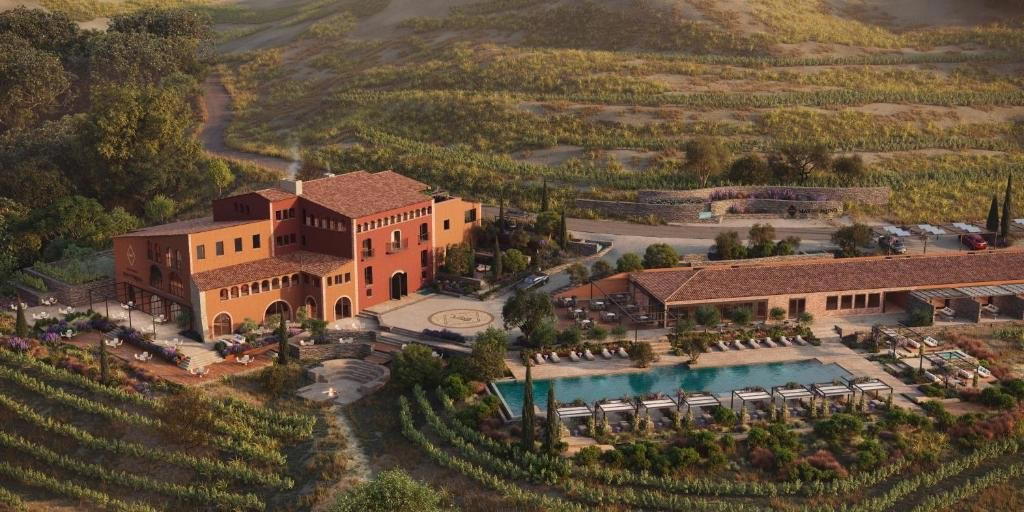
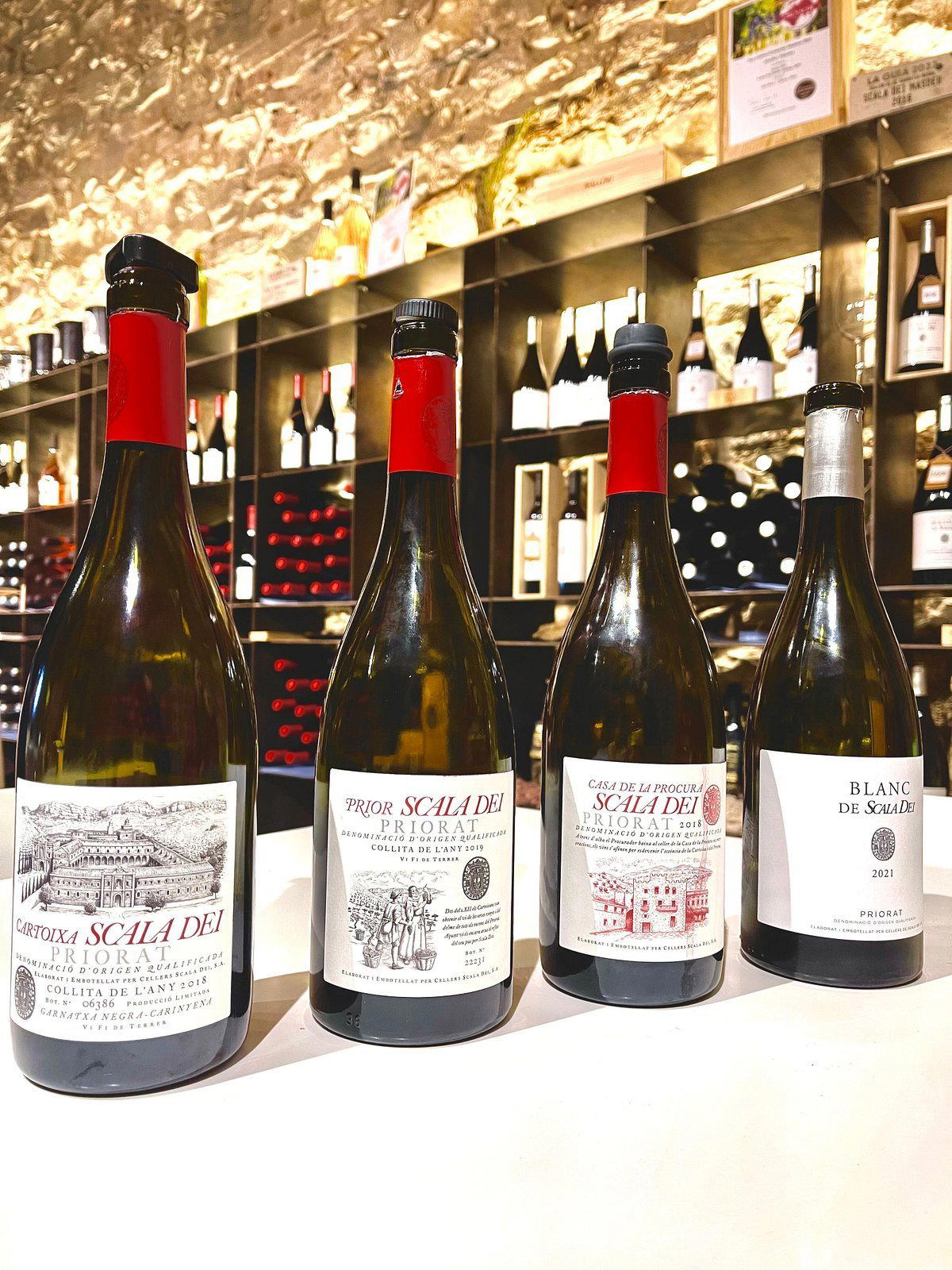
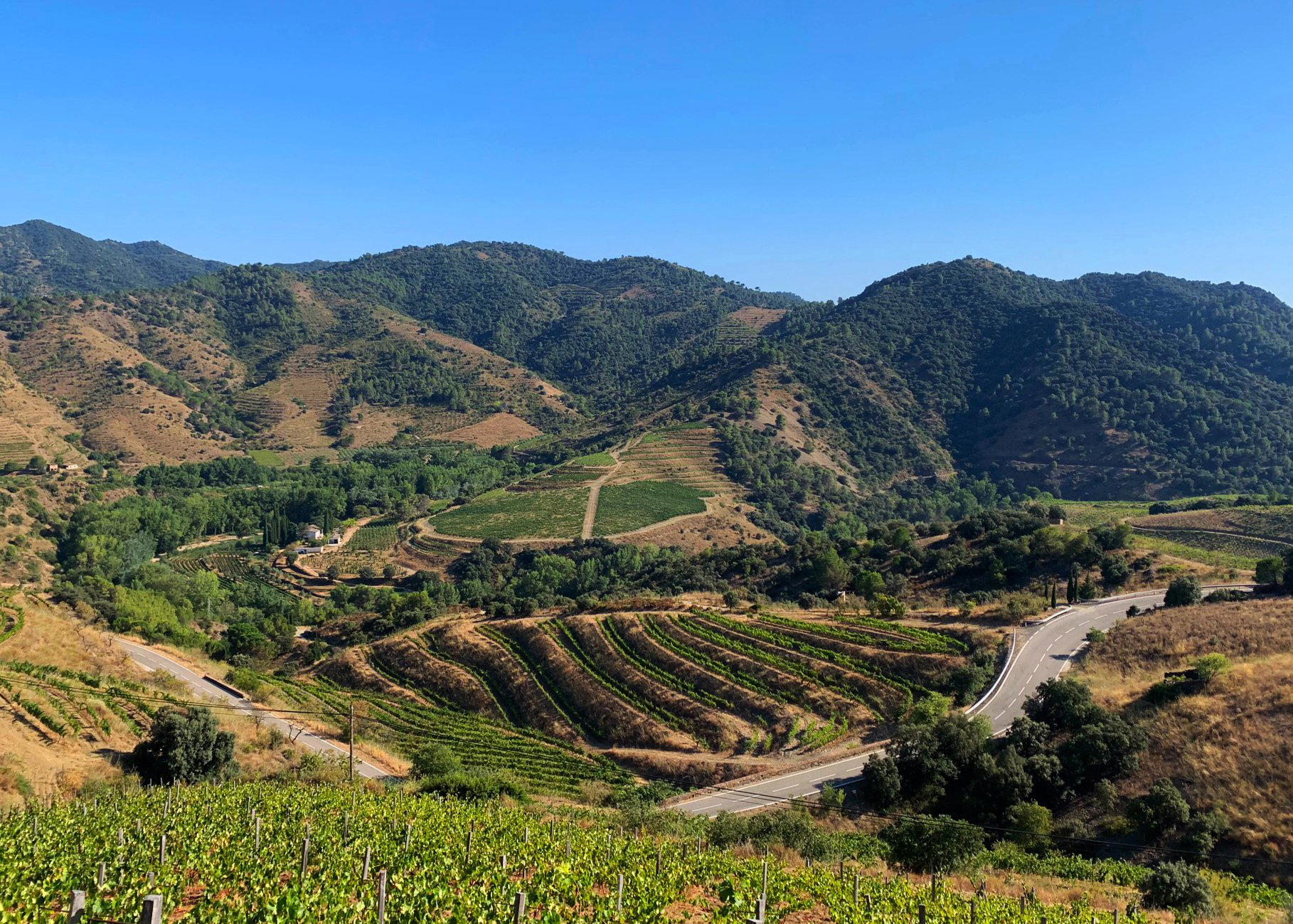
Most hotel wineries are marketing adjacencies: a tasting room attached to a property that happens to hold some land. Terra Dominicata’s relationship to viticulture runs deeper than that. The monks who built the monastery were growing grapes on this land in the twelfth century. The Montsant designation, which covers the area surrounding the Priorat appellation, produces wines from Garnacha and Cariñena on schist and limestone soils that have been worked continuously for centuries. The estate’s wine is described as being in plentiful supply throughout the property, which is the practical expression of something more structurally interesting: the hotel exists within a wine culture that precedes it by eight hundred years.
Guests staying at estate wineries in Spain tend to encounter this layering in different degrees. At properties like Abadía Retuerta LeDomaine, the winery operation is extensive and carries its own recognition. At Terra Dominicata, the scale is smaller and the estate character more intimate, which makes the experience more agricultural than institutional. The Montsant wines that come from this land carry the geographical specificity of the appellation: they are not generic Spanish red wines dressed for a hotel menu.
Restaurant and Daily Programme
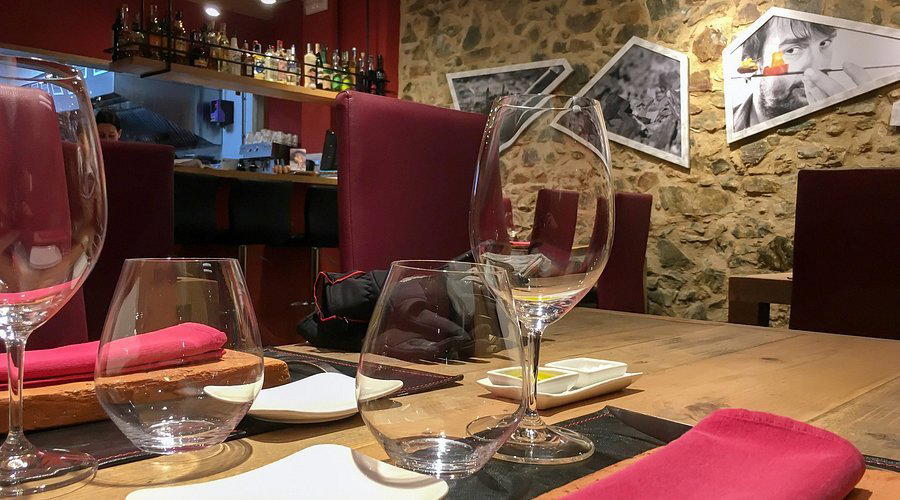
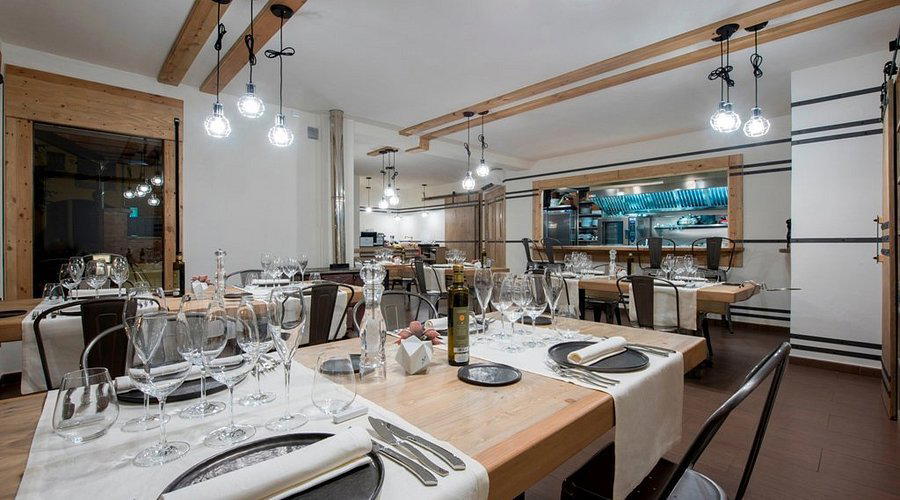
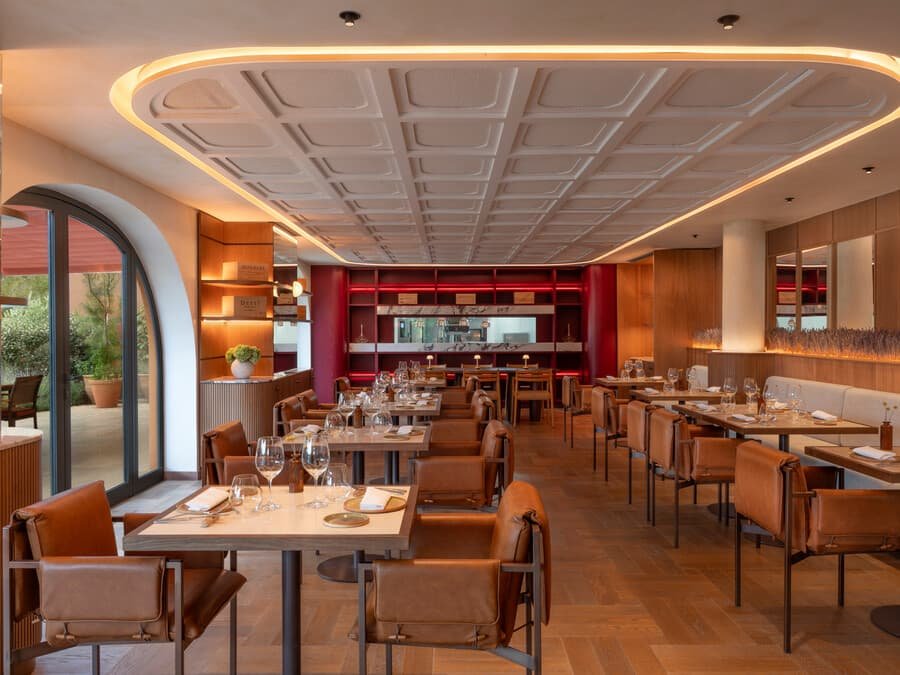
The on-site restaurant operates across breakfast, lunch, and dinner, serving what the property describes as inventive fare. Without specific menu details available for verification, the broader context is useful: the Montsant and Priorat area has developed a food culture that draws on Catalan techniques applied to the produce of an agricultural interior. That means olive oil pressed from estate-grown olives, vegetables from the surrounding foothills, and a wine list anchored by the appellation’s own production. Restaurants embedded in working estates in this region tend to cook in conversation with their surroundings rather than importing an independent culinary identity from outside. Whether the kitchen at Terra Dominicata adheres fully to that tendency is a question the three Michelin Keys designation does not directly answer, since those are awarded for the accommodation programme rather than the restaurant alone.
For travellers whose primary motivation is restaurant-driven, the wider Catalan network provides additional context. Properties like Pepe Vieira Restaurant and Hotel in Poio and Akelarre in San Sebastián pair Michelin-recognised restaurants directly with hotel accommodation; Terra Dominicata’s offer is structured differently, with the estate identity and natural park setting carrying comparable weight to the dining programme. See our full Escaladei restaurants guide for a broader map of dining options in the area.
Getting There and Planning
Terra Dominicata sits at T-702, Km 13, in Escaladei, Tarragona province. The address places it approximately two hours from Barcelona by road, which in practical terms means a hire car is close to obligatory: public transport to the Montsant foothills is limited, and the surrounding park is most usefully explored by vehicle. Tarragona city, with its Roman amphitheatre and direct rail connection to Barcelona, provides the nearest urban alternative base, though it sits at a different elevation and register from the mountain property. The Priorat wine region is directly adjacent, making the estate a logical anchor point for travellers covering both appellations.
Travellers comparing rural Spanish properties at a similar price and format point might also consider Cap Rocat in Cala Blava for a fortification conversion in a coastal Mallorcan setting, or La Residencia, A Belmond Hotel, Mallorca for a larger-scale Mallorcan estate experience. For Iberian wine-country stays specifically, the Castile-and-León comparison with Abadía Retuerta LeDomaine is the most structurally relevant: both are working wineries in designated appellations, both have converted historic buildings, and both carry Michelin recognition, though at different scales. Terra Dominicata’s 26 rooms keep it in the intimate tier where the monastic atmosphere of the original building remains perceptible rather than diluted across a large inventory.
Additional Spain options from the EP Club network worth considering for context: Hotel Can Cera in Palma, Caro Hotel in València, Can Mascort Eco Hotel in Palafrugell, Hotel Can Ferrereta in Santanyí, BLESS Hotel Ibiza, Bahia del Duque in Adeje, Can Alberti 1740 Hotel Boutique in Mahón, Canfranc Estación, a Royal Hideaway Hotel, Marbella Club Hotel, Casa Beatnik Hotel in A Coruña, and A Quinta da Auga Hotel and Spa in Santiago de Compostela.