


Part of Swire Hotels' House Collective alongside its counterparts in Beijing, Hong Kong, and Chengdu, The Middle House occupies a distinct position among Jing'an's design-led properties. Piero Lissoni's near-monochrome interiors, a La Liste score of 94.5 points (2026), and a creative-industry following place it in a different bracket from the area's large international chains. Rates start from $349 per night across 111 rooms and 102 residences.
 Discover on Pearl
Pearl is the En Primeur Club membership app — saves, bookings, and concierge access live there. Same editors, same standards.
Where Jing'an's Creative Economy Checks In
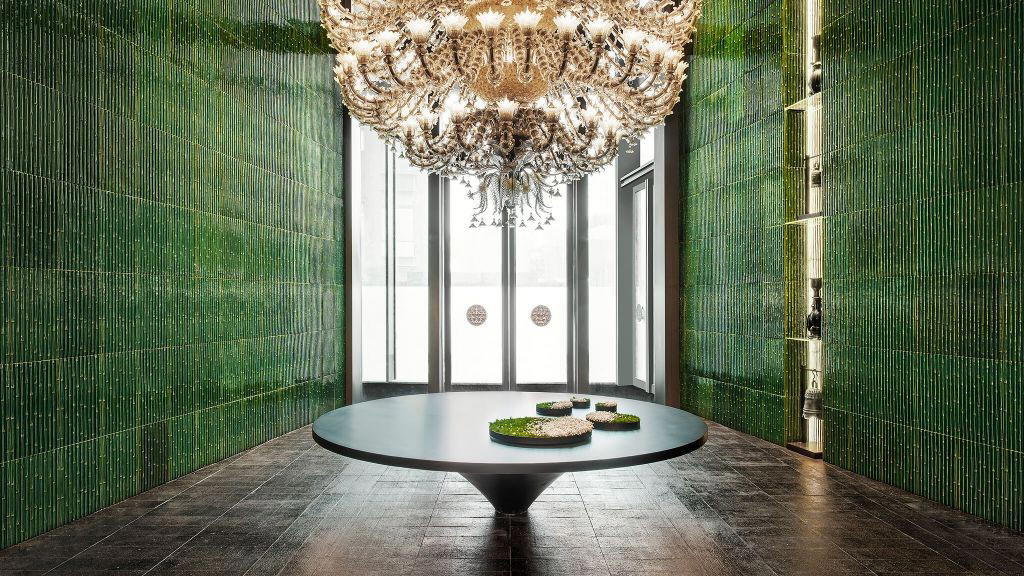
The lobby arrives before you're ready for it. A jade-green volume rises several storeys above the entrance, anchored by an ornate chandelier that occupies the kind of vertical space most Shanghai hotels reserve for structural columns. The effect is theatrical without being loud — a quality that threads through everything Piero Lissoni has done here. The Milanese architect, whose furniture appears across many of Europe's better-regarded design hotels, applied his near-monochrome modernist vocabulary to a building that wraps around a central bamboo garden in a crescent curve. That curve, according to Lissoni, drew its geometry from the arc of traditionally tiled Chinese rooftops — the kind of contextual gesture that distinguishes thoughtful design from imported aesthetics.
Shanghai's design-led hotel segment has grown considerably since 2010, but it remains smaller and more internally differentiated than the city's large international luxury tier. Properties like Capella Shanghai, Jian Ye Li and Bvlgari Hotel Shanghai compete on heritage architecture and brand prestige. The Middle House, which opened in 2017 and scored 94.5 points on the La Liste Leading Hotels ranking for 2026, operates on different terms: its identity is built around a creative-industry clientele , fashion, art, design , and an aesthetic register that treats restraint as a value proposition rather than a compromise.
The House Collective Framework
For guests already familiar with Swire Hotels' House Collective, The Middle House requires little additional explanation beyond its address. The Andaz Xintiandi, Shanghai and several other Jing'an competitors pitch to a broadly similar creative demographic, but the House Collective operates with a consistency of service philosophy that distinguishes it from single-property boutique offerings. The Opposite House in Beijing, the Upper House in Hong Kong, and the Temple House in Chengdu each share the same operational DNA: limited keys relative to large international luxury brands, intuitive rather than scripted service, and design by architects with identifiable points of view. The Middle House is the fourth member of that group, and it carries the same calibration of warmth-to-formality ratio that has made the collective's other addresses the default for repeat travellers who have exhausted patience for large-hotel standardisation.
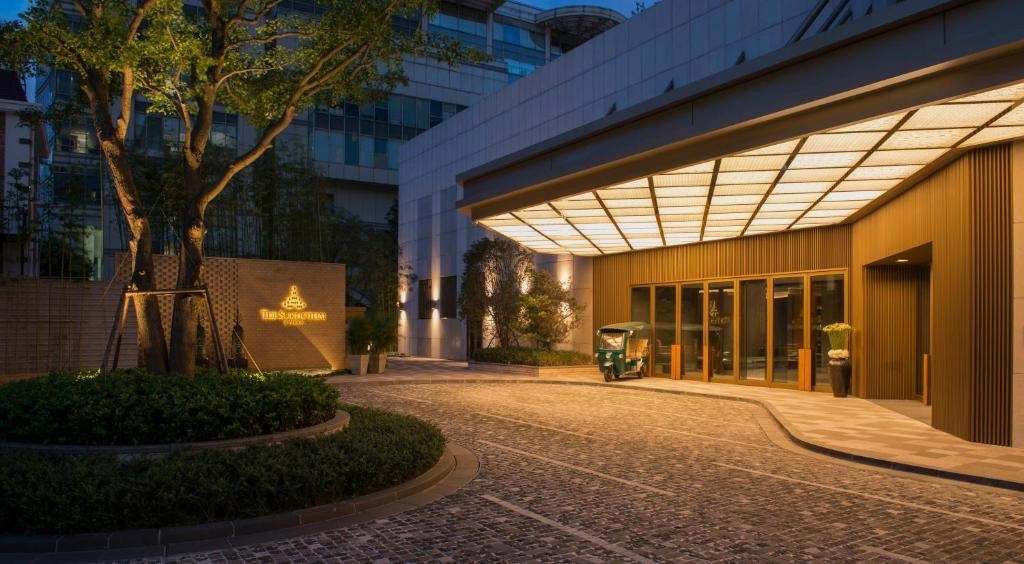
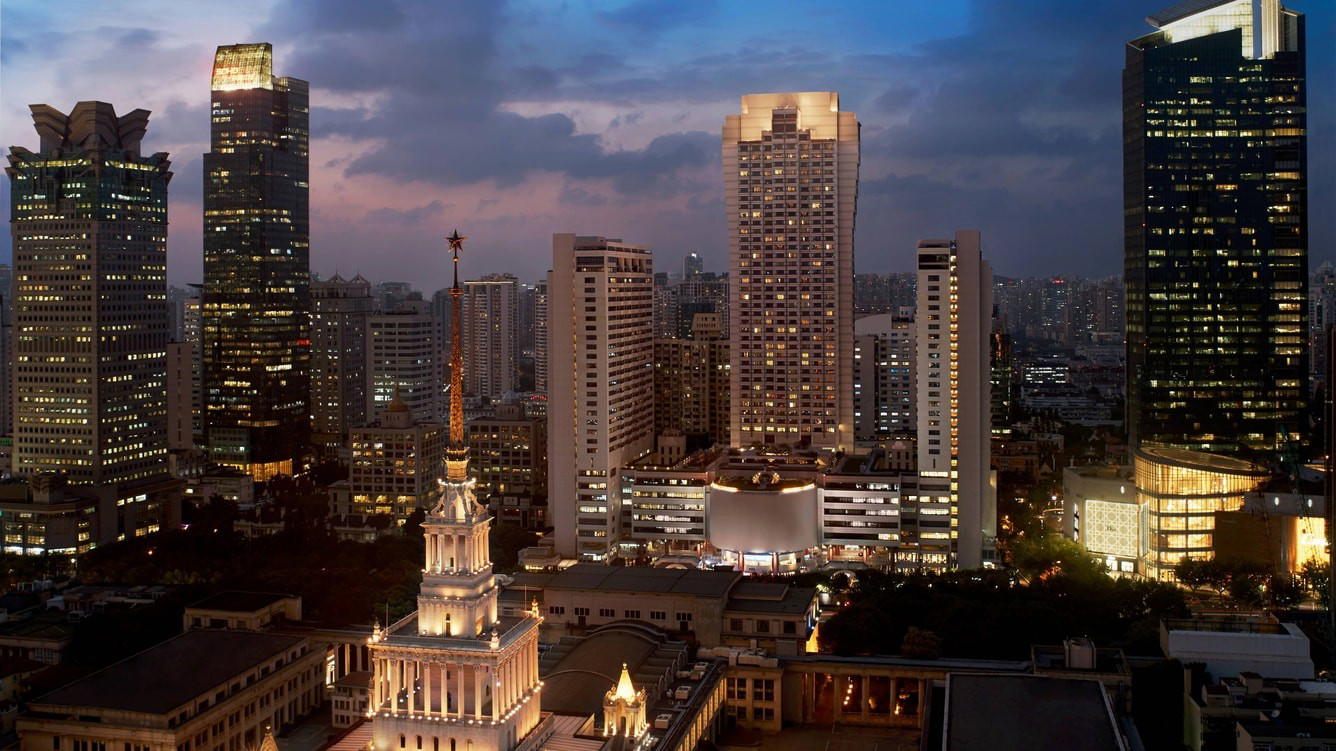
The property sits within the Taikoo Hui mixed-use complex on Shi Men Yi Road in Jing'an, placing it on the edge of the Nanjing West Road commercial hub. That positioning suits its primary audience: approximately 70 percent of guests are in Shanghai for business, and the proximity to office towers within the same complex makes it a practical choice for white-collar travellers who also expect design quality from their accommodation. For those comparing options across the city, Alila Shanghai, Amanyangyun, and Artyzen NEW BUND 31 Shanghai each offer distinct neighbourhood contexts and design approaches. Our full Shanghai restaurants and hotels guide maps the broader city across districts.
Rooms Built for Extended Stays
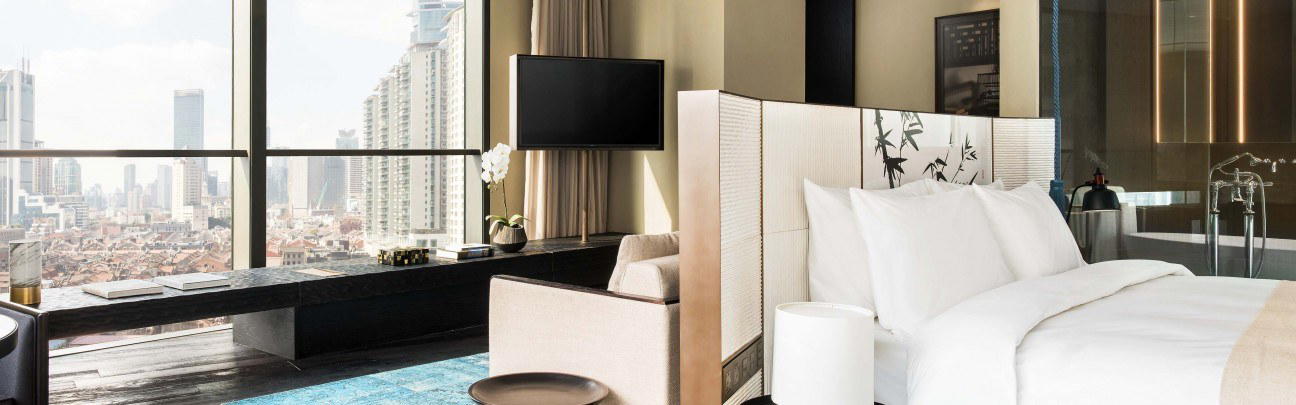
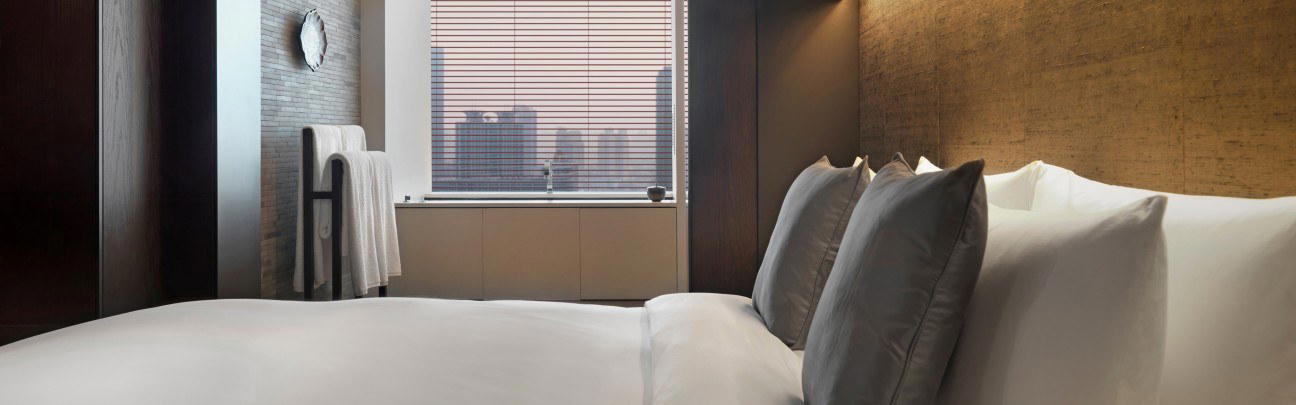
The property divides into two standalone buildings: the House side, with 111 rooms, and the Residence side, with 102 units. The distinction matters practically. Rooms on the House side range from roughly 50 to 100 square metres, with fourth-floor units offering outdoor balconies , a genuine differentiator in a city where outdoor hotel space is rare at this price point. Corner rooms on the House side carry windows on three sides, with views across the low-rise neighbourhood that borders the Taikoo Hui complex, a perspective that makes the scale of Jing'an's mixed-use development legible in a way that higher-floor city views often don't.
Residences, measuring between 592 and 1,184 square feet, are configured for families and extended-stay guests. Each unit includes a kitchen and laundry facilities while retaining full hotel services: housekeeping, breakfast, and access to the indoor swimming pool. That combination positions the Residence side against serviced apartment product at a higher service level, rather than against standard hotel rooms. Across both buildings, rooms are equipped with espresso machines, Bamford bath products, high-end sound systems, and down bedding. A bedside rope pull that powers off all lights at once , in place of the multi-button panel that frustrates guests in most hotel rooms , is the kind of low-technology, high-intelligence detail that reflects considered design rather than specification-sheet luxury.
Art consultant Alison Pickett commissioned sculptures specifically for the rooms, then had those sculptures photographed and the images hung behind the originals , a self-referential gesture that gives the rooms a layer of visual interest beyond standard hotel art acquisition. The effect is quiet rather than intrusive, which is consistent with the overall approach.
Responsible Luxury in Practice
The Middle House's sustainability programme sits within a broader shift in how premium Asian properties address environmental accountability. The hotel has replaced single-use plastic water bottles in its fitness centre with paper containers , a measure that reduces plastic waste without repositioning the guest experience. Its cleaning operations are managed in partnership with EcoLab, a supplier whose systems are designed to reduce chemical load in commercial hospitality environments. Neither initiative is framed as a marketing differentiator by the property, which is significant: in a segment where sustainability credentials are increasingly weaponised for promotional purposes, operational integration without headline-seeking suggests institutional commitment rather than positioning exercise.
The spa adds a further dimension to this thread. Mi Xun Spa is only the second hotel facility globally to work with LVMH's Cha Ling skincare brand , the first being the Peninsula Paris. The Cha Ling range draws on pu'er tea sourced from an ancient forest in Yunnan's southern province, with anti-oxidant formulations positioned as a counterweight to both urban pollution and travel fatigue. The sourcing relationship with a specific, traceable ingredient from a documented agricultural region places the spa programme within a wider interest in provenance-based luxury that has been gathering momentum across Asia's premium hospitality sector. Properties taking similar approaches to ingredient traceability can be found across China; Amanfayun in Hangzhou and Amandayan in Lijiang each root their wellness programming in regional botanical traditions, though through different operational frameworks.
Timing and Booking Intelligence
Hotel's creative-industry following creates predictable pressure points around Shanghai Fashion Week, Design Shanghai, and the West Bund Art and Design fair. During these windows, the property regularly reaches full occupancy, and rates reflect demand. Travellers with flexibility should avoid these periods unless their purpose is to attend the events themselves, in which case The Middle House's proximity to the relevant social infrastructure becomes an advantage rather than a coincidence. The hotel's Google rating of 4.7 across 817 reviews, combined with its La Liste recognition, places it in the upper tier of Jing'an's hotel market by documented guest response.
For fitness-oriented guests, The Middle House has partnered with Space Cycle, a spinning studio in the adjacent Taikoo Hui mall, to make five workout videos available on in-room screens. Yoga mats and hand weights are provided in rooms, which reduces the dependence on gym access for guests with structured training habits. It is a practical gesture that acknowledges how business travellers actually use hotel fitness amenities, as opposed to how hotels typically present them.
Room rates start from $349 per night. For comparison across the Shanghai luxury tier, Bellagio Shanghai and Cachet Boutique Shanghai offer different price-to-design calibrations worth considering depending on the nature of the visit. Travellers planning other China itineraries can reference Mandarin Oriental Qianmen in Beijing, Xiamen Yunding Resort in Xiamen, or 1 Hotel Haitang Bay, Sanya for properties addressing comparable design and sustainability criteria in different regional contexts. International comparisons within the Lissoni-adjacent design-hotel tier point toward properties like Aman Venice or The Fifth Avenue Hotel in New York City as reference points for how the restraint-led aesthetic translates across markets.
A Tight Comparison
A compact peer set to orient you in the local landscape.
At a Glance
- Modern
- Sophisticated
- Elegant
- Intimate
- Business Trip
- Wellness Retreat
- Romantic Getaway
- Celebration
- Rooftop Pool
- Destination Spa
- Panoramic View
- Design Destination
- Terrace
- Wifi
- Pool
- Spa
- Fitness Center
- Room Service
- Concierge
- Restaurant
- Bar
- Sauna
- Steam Room
- Yoga Classes
- Valet Parking
- Skyline
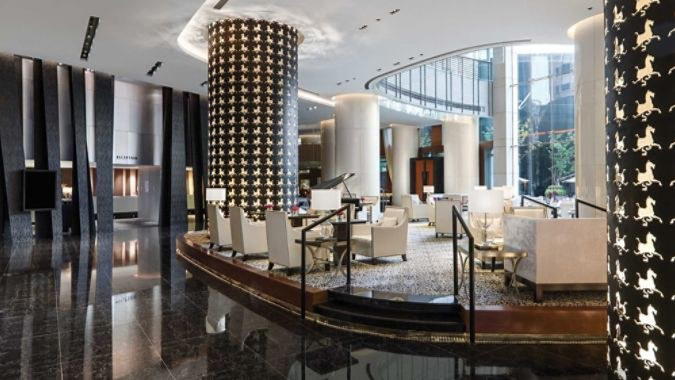
Glamorous and serene with darkly neutral hues contrasted by forest-green bamboo accents, jewel-toned details, and a sumptuous lobby featuring a levitating black table and beaded chandelier; underground spa areas blend concrete tones with bamboo details and strategic lighting for zen-like escapism.