
Forbes 4-Star
On the northern bank of the Suzhou River, Bellagio Shanghai occupies a corner of Hongkou that still carries the architectural memory of 1920s Shanghai. Designed by WATG as an art deco homage in black, gold, and marble, the hotel houses Italian and Chinese dining alongside an Ayurveda-focused spa, with south-facing terraces framing views across Suzhou Creek toward the Bund and Lujiazui.

Pearl is the En Primeur Club membership app, where members save venues, book tables and use the concierge.
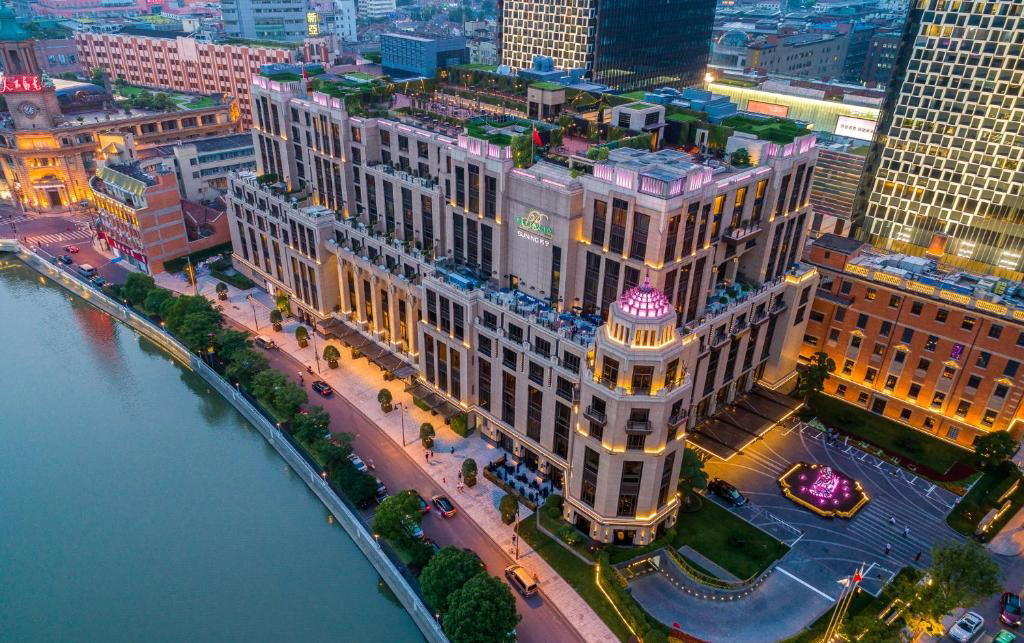
Where the Suzhou River Holds Its Ground
The approach to No. 188 Bei Suzhou Road sets expectations early. Hongkou, the district on the northern bank of Suzhou Creek, is one of the few Shanghai neighborhoods where the street grain and building scale haven't been comprehensively erased by the city's development cycles. The Bund and Lujiazui sit close enough to read from a south-facing window, the skyline of Lujiazui's towers on one horizon, the Bund's colonial-era facades on another, yet the immediate street feels insulated from both. That duality, proximity to the city's financial and touristic center without being consumed by it, is what positions Bellagio Shanghai in a distinct tier among Shanghai's luxury hotels.
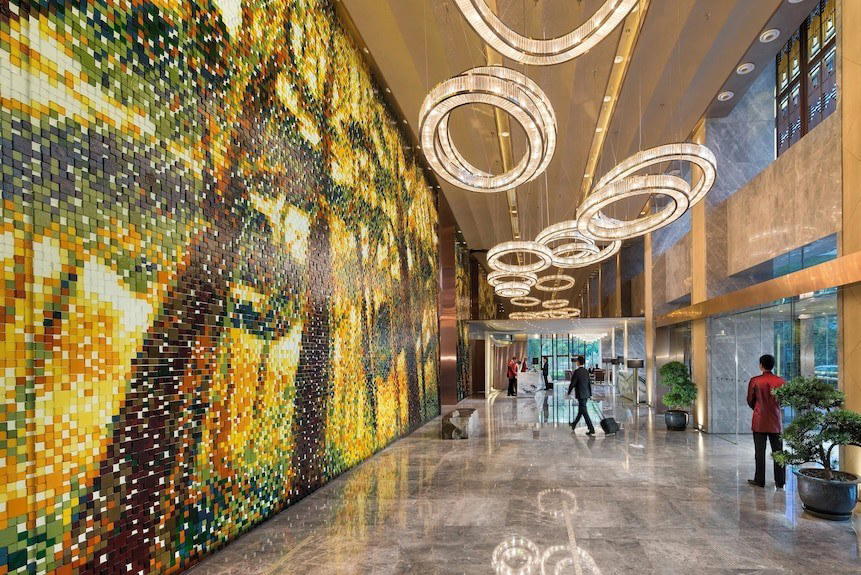
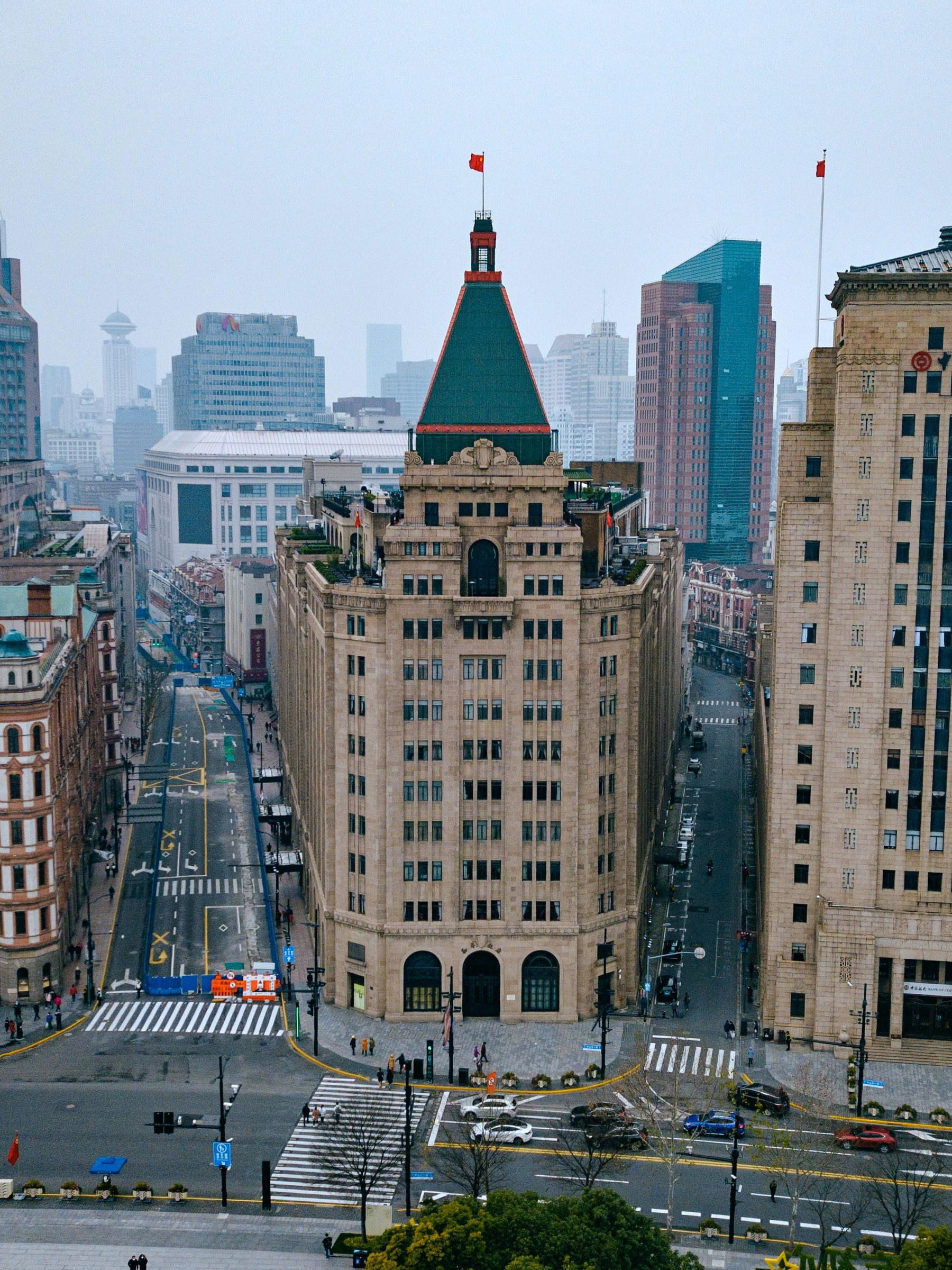
At the entrance, a silver lion statue marks the threshold. The lobby is designed by international architecture firm WATG as a deliberate statement in Shanghai art deco: black, gold, and marble layered with a formality that reads as grand rather than showy. Shanghai's art deco canon is specific, it developed during the 1920s and 1930s as a hybrid of Western modernism and Chinese feng shui principles, and WATG's interpretation keeps faith with that dual lineage. The result has more in common with the Fairmont Peace Hotel's civic gravitas than with newer properties chasing a different aesthetic register.
The Dining Structure: Two Restaurants, Two Traditions
Luxury hotels in Shanghai typically anchor their food and beverage program around one flagship. Bellagio Shanghai runs two distinct concepts, and the division is more than cosmetic, each operates from a different culinary tradition and a different physical setting.
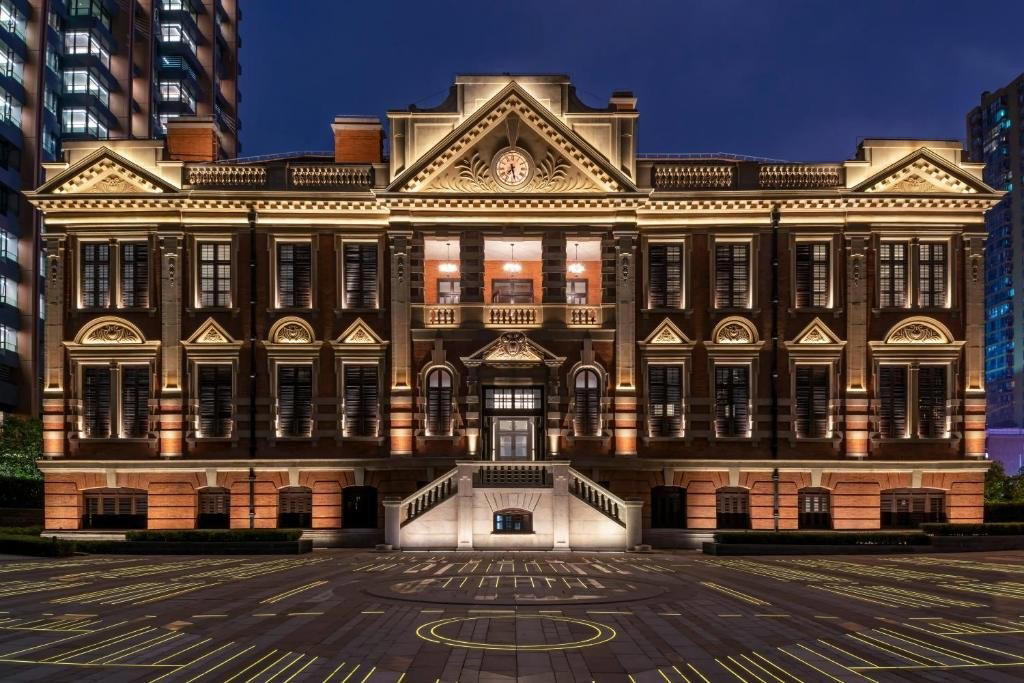
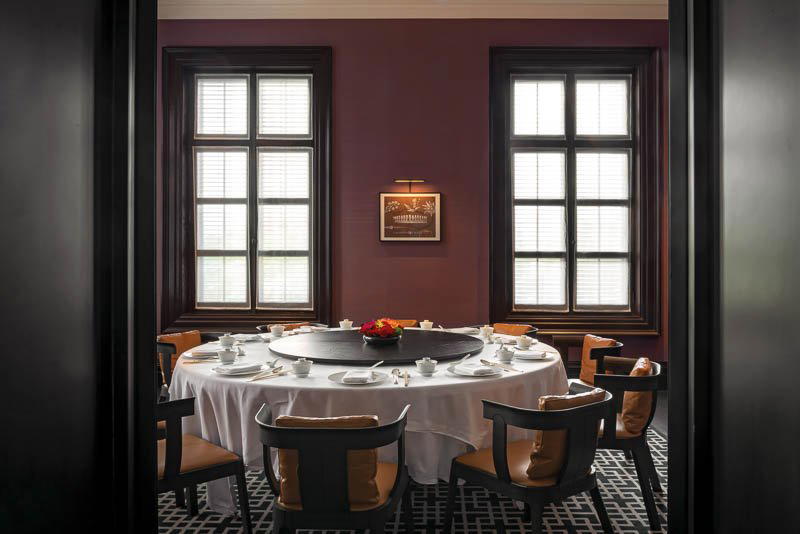
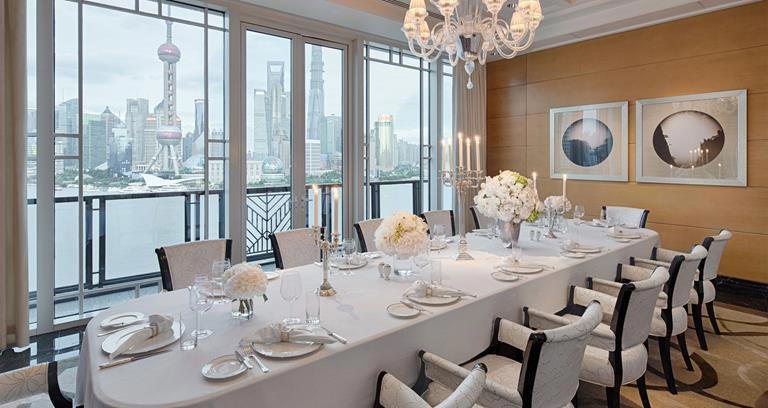
Mansion on One occupies a retained 1920s building from the site's former life as Shanghai General Hospital. That context matters. Private dining rooms arranged around a historic structure position the restaurant for a specific kind of gathering: the kind where the setting does some of the social work before a dish arrives. In Chinese dining custom, the private room is not merely a convenience; it is the primary unit of hospitality. A business host who books a private room signals both means and consideration. Mansion on One is structured to accommodate that ritual, making it a credible choice for exactly the intimate family or professional gathering where the table's configuration is as important as what's on it. On sunny afternoons, the rooftop café extends the property's F&B; offer into alfresco territory, operating as a separate register from the formal restaurant below.
The second concept, LAGO Italian restaurant, imports the program of chef Julian Serrano's Las Vegas operations directly to Shanghai. Serrano is a Spanish-born chef whose Italian cooking earned recognition at Picasso at the Bellagio Las Vegas, and LAGO operates with the same small-plates architecture that works in that context: pastas, risottos, antipasti, and pizzas as foundations, reworked through his own compositional logic. A two-page menu keeps selection manageable, which in a city with no shortage of sprawling multi-cuisine hotel restaurant menus is itself an editorial stance. For Shanghai's community of international residents and business travelers accustomed to the Las Vegas Bellagio's version, LAGO functions as a reference point. For guests arriving without that context, it sits within the broader category of hotel Italian restaurants that lean on European chef credentials to differentiate from Shanghai's dense local and imported dining scene. Hotels such as Bvlgari Hotel Shanghai and Capella Shanghai, Jian Ye Li play in the same premium F&B; space, each with a distinct culinary anchor.
Rooms Built Around the View
The physical design of the guest rooms is oriented around an unusual feature for a Chinese luxury hotel: terraces. Many rooms and suites carry private outdoor space, and south-facing rooms in particular frame Suzhou Creek and the textured street life of Hongkou below. The terrace-and-view combination is what the property does that most Shanghai luxury competitors at this tier do not. Hotels such as Andaz Xintiandi or Alila Shanghai offer strong design programs, but private terraces at scale are rare.
24 suites each measure upwards of 1,000 square feet. Suite inclusions follow what has become a standard package in the upper tier of Shanghai hospitality: butler service, daily breakfast, one-way airport transportation, and laundry allowances. In-room technology covers a 55-inch LED television and Bose stereo. Bathrooms use black and white marble with art deco bronze detailing and Biology skincare products from Australia. The Presidential Suite extends to 4,306 square feet and includes a private home theater, making it the property's clear anchor for extended stays or corporate-entertainment requirements.
One practical note that the hotel itself flags: English language capability among staff is limited. For guests without Mandarin, particularly those traveling on business where communication precision matters, that is worth factoring into a booking decision. The Amanyangyun, positioned at a different price point and designed around a heritage campus outside the city center, draws an international guest profile that its staffing reflects. Bellagio Shanghai is a different proposition, more embedded in its Hongkou neighborhood, with the trade-offs that come with that positioning.
The Spa as a Contrarian Choice
Hotel spas in China most often frame their programming around Traditional Chinese Medicine or pan-Asian wellness language. Bellagio Shanghai's Spa takes a contrarian position: Ayurvedic philosophy from India, with treatments organized around the three doshas, Vata, Pitta, and Kapha, and the five elements of soil, water, fire, air, and space. It is not a common framework in the Shanghai market, where TCM has obvious cultural authority. Whether that distinction translates to a better spa experience depends on what the guest brings to the booking. For travelers who find TCM diagnostics too familiar from other hotels across the region, the Ayurvedic orientation represents a genuine alternative rather than a house-brand variation on the same model. Properties such as Amanfayun in Hangzhou lean deep into local spiritual and wellness traditions; Bellagio Shanghai's spa is the inverse of that commitment.
Positioning Within Shanghai's Luxury Hotel Market
Shanghai's premium hotel market has stratified over the past decade into several sub-segments: the heritage-building conversions, the large-footprint international brand properties, the boutique design hotels in the French Concession and Xintiandi corridors, and a smaller cohort of brand-extension properties where a globally known name attaches to a new-build. Bellagio Shanghai belongs to the last category, but it avoids the trap that brand extensions often fall into, the sense that the local property exists primarily to extend brand recognition rather than to make a coherent local argument. The Hongkou location, the retained 1920s hospital building, and the art deco design program give it a spatial identity that would be legible without the Bellagio name attached. That coherence is what separates it from competitors that trade primarily on badge value. For comparison, Artyzen NEW BUND 31 Shanghai operates a similar riverside positioning in the New Bund corridor, while Cachet Boutique Shanghai occupies the design-led boutique end of the market at a different scale and price tier. Internationally, the Bellagio brand's approach to hotel extensions is worth comparing to how luxury operators such as Aman New York or Aman Venice translate a global identity into a locally specific property: the Aman examples are instructive because they make a strong local argument first, and Bellagio Shanghai is at its most convincing when it does the same.
Booking is direct for travelers familiar with international luxury hotel categories. The hotel's address on Bei Suzhou Road in Hongkou places it within reasonable reach of both the Bund and the city's main commercial districts, while the quieter immediate surroundings make it a workable base for travelers prioritizing rest over proximity to nightlife corridors. Those expecting the Las Vegas Bellagio's casino programming will not find it here; the Shanghai property is correctly positioned as a refined, design-led hotel that borrows the Bellagio name and some of its F&B; DNA without replicating its entertainment model. For a broader orientation to the city's dining and hotel options, our full Shanghai guide maps the wider market across neighborhoods and price tiers.
Reputation Context
Comparable venues nearby, for context on price, style, and recognition.
| Venue | Cuisine | Price | Awards | Notes |
|---|---|---|---|---|
| Bellagio ShanghaiThis venue (the venue you are viewing) | Art Deco luxury on the Bund | Not listed | Forbes 4-Star | Not listed |
| Andaz Xintiandi, Shanghai | Contemporary luxury boutique in restored Shikumen district | $100–200 | Michelin Selected · Forbes Recommended | Lao Ximen |
| JW Marriott Marquis Hotel Shanghai Pudong | Luxury urban landmark hotel with dramatic central atrium and extensive meeting facilities | Not listed | Star Wine List · Forbes Recommended | Lao Bai Du |
| Pudong Shangri-La | Dual-wing luxury property with classic River Wing and contemporary Grand Tower | Not listed | La Liste Top Hotels | Lan Ni Du |
| Waldorf Astoria Shanghai Qiantan | Modern urban riverside retreat inspired by cruise ship elegance and Art Deco motifs of sail and peacock. | Not listed | Conde Nast Hot List Hotels | Qiantan |
| Alila Shanghai | Contemporary urban resort with wabi-sabi-inspired design celebrating Chinese craftsmanship and Shanghai's blend of modernity and tradition. | $200–300 | Michelin Selected · Star Wine List | Huangpu |
Recognition history
Dated appearances from independent guides and award organizations, with the underlying list record or original source where available.
Forbes 4-Star
Forbes
Full recognition history (2 entries)
Forbes 4-Star
Forbes
Continue exploring
More in Shanghai
Hotels in Shanghai
All hotels in Shanghai →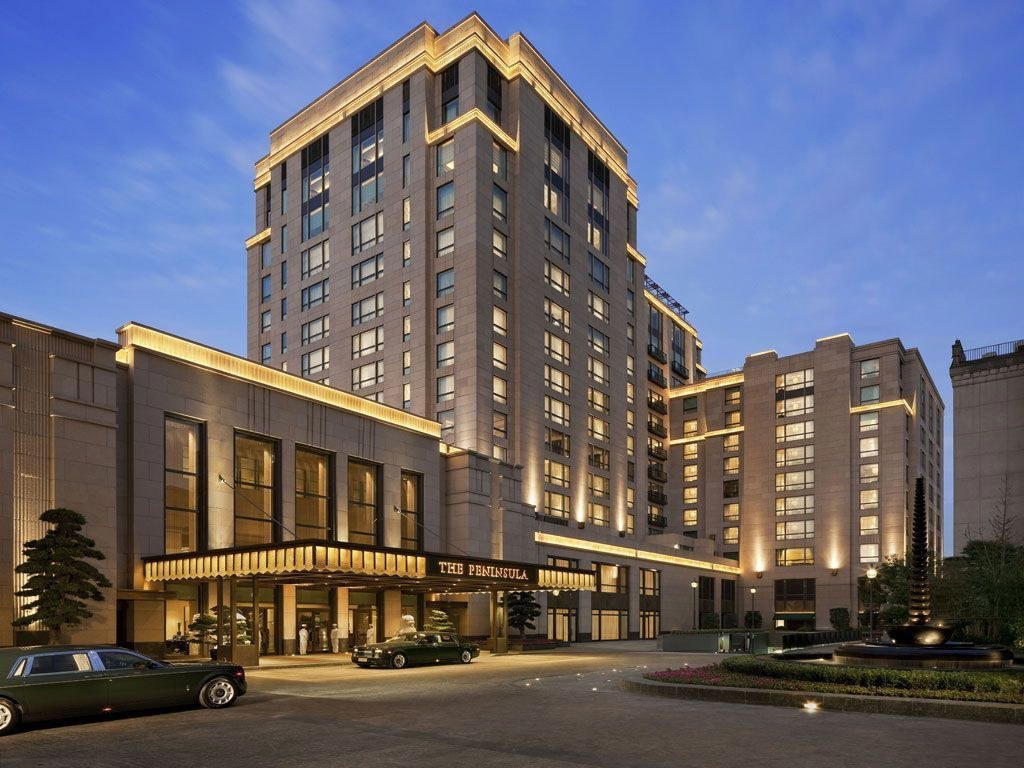
Bars in Shanghai
All bars in Shanghai →
Details
- Elegant
- Sophisticated
- Ornate
- Well Known
- Romantic Getaway
- Business Trip
- Anniversary
- Rooftop Pool
- Panoramic View
- Waterfront
- Wi Fi
- Pool
- Spa
- Fitness Center
- Room Service
- Concierge
- Business Center
- Valet Parking
- Skyline
- Wheelchair Accessible
- Elevator
- Accessible Parking
Elegant and calming with soundproofed rooms, Art Deco architecture, and a harmonious spa atmosphere enhanced by river and city skyline views.