
Michelin Selected
A converted warehouse on the Ziegelsee, Speicher am Ziegelsee brings industrial heritage architecture into dialogue with Schwerin's palace-city setting. Michelin Selected in the 2025 hotel guide, it occupies a tier of design-conscious regional properties that trade on provenance and place rather than international brand infrastructure. For travellers approaching Mecklenburg-Vorpommern from the west, it is a considered base.

Pearl is the En Primeur Club membership app — saves, bookings, and concierge access live there. Same editors, same standards.
- Address
- Speicherstraße 11, 19055 Schwerin, Germany
- Phone
- +49 385 50030
- Website
- speicher-hotel.com
- Directions
- Get directions
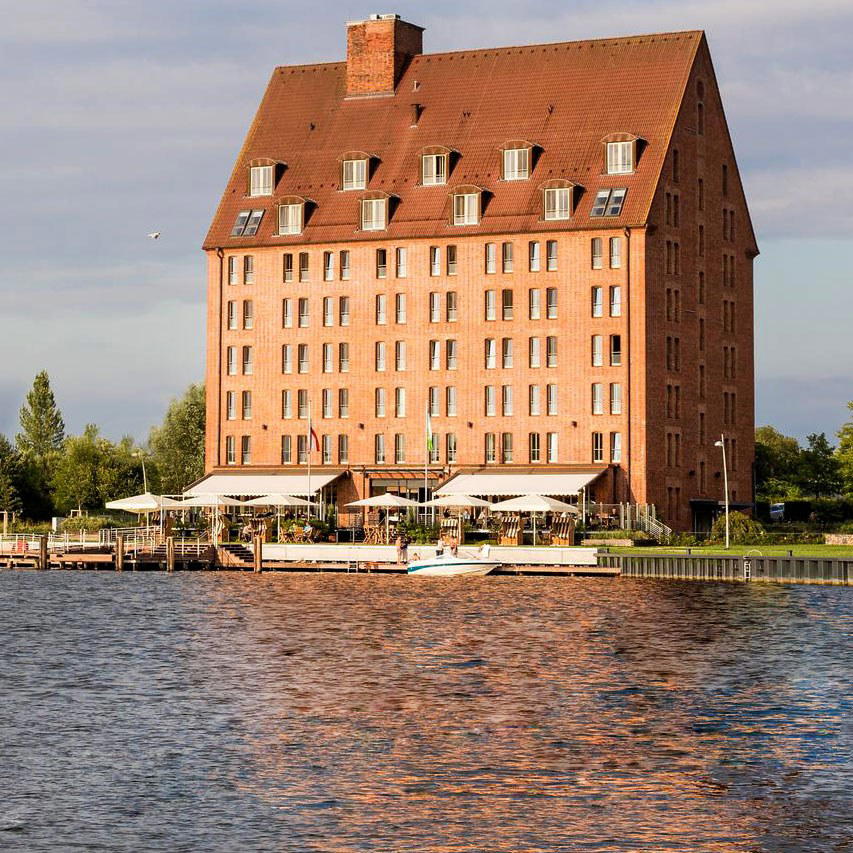
Warehouse Architecture on a Palace City's Shore
Schwerin is an unusual German city to arrive in: a state capital of modest scale that punches above its weight on architectural theatrics, anchored by a neo-Gothic palace set on an island in the middle of a chain of lakes. The accommodation scene here has historically lagged behind that visual ambition, with most travellers to Mecklenburg-Vorpommern gravitating toward the Baltic coast or the larger hotel markets of Hamburg or Berlin. Speicher am Ziegelsee occupies an interesting position in this context, drawing on a building type — the Speicher, or warehouse — that once defined the working waterfronts of North German trading towns before those structures were converted, one by one, into loft apartments, galleries, and eventually hotels.
The address on Speicherstraße places the hotel directly on the Ziegelsee, one of the smaller lakes in Schwerin's interconnected water system. Approaching from the old town, the shift from Baroque civic architecture to brick warehouse fabric is immediate and deliberate. Where waterfront conversion projects in larger German cities tend toward dramatic curtain-glass interventions, the regional register here is quieter: load-bearing brick, generous ceiling heights carried over from the building's industrial life, and a relationship to the waterline that is horizontal rather than vertical. This is not a tower property competing for skyline presence. It sits low and long against the lake.
Michelin Selection and What It Signals in This Market
Inclusion in the Michelin Selected Hotels 2025 guide places Speicher am Ziegelsee within a curated tier of German properties that the guide endorses without the star-rating infrastructure applied to its top-tier entries. In a city the size of Schwerin, this kind of endorsement carries more weight than it might in Munich or Frankfurt, where the Michelin hotel list is densely populated.
The comparison cohort at the upper end of the German hotel market, Fairmont Hotel Vier Jahreszeiten in Hamburg, Breidenbacher Hof in Düsseldorf, or Excelsior Hotel Ernst in Cologne, operates at a different price tier and with different brand infrastructure. Speicher am Ziegelsee is not positioned against those properties. It belongs to a growing segment of character-led regional hotels where the building's history and its relationship to a specific landscape are the primary arguments for staying, and where the Michelin Selected designation functions as quality assurance for travellers who might otherwise skip a smaller city entirely.
The Design Logic of Industrial Conversion
Industrial conversion hospitality in Germany has developed a recognizable grammar over the past two decades. Exposed brick, retained structural beams, double-height volumes in public areas, and oversized window openings cut into what were originally cargo doors or ventilation apertures: these are the recurring elements, and they appear here in the warehouse-to-hotel translation at Speicherstraße 11. The format works particularly well in lakeside settings because the industrial building type was inherently oriented toward water access. Loading docks, ramps, and mooring infrastructure mean that the building already faced the water before any hospitality program was layered onto it.
What distinguishes successful industrial conversions from less resolved ones is usually the handling of domestic scale inside cavernous volumes. The challenge is thermal and acoustic as much as visual: high ceilings and brick walls absorb sound poorly and hold heat inefficiently, and the properties that solve this problem with material specificity, wool textiles, heavy curtaining, timber floors that absorb footstep noise, tend to read as genuinely comfortable rather than merely photogenic. The venue data available does not confirm how Speicher am Ziegelsee resolves these challenges in specific room categories, but the building type sets the design problem clearly.
For travellers who have stayed at properties like Telegraphenamt in Berlin, another Michelin-endorsed German adaptive reuse project, or at Villa Contessa in Bad Saarow, which draws on Brandenburg lakeside heritage in a different register, the Speicher model will read as a coherent tradition rather than an isolated experiment.
Schwerin as a Travel Context
Schwerin receives a fraction of the tourist traffic that flows toward Rostock or Stralsund on the Baltic coast, and that relative quiet is, for some travellers, the primary argument for routing through it. The Staatliches Museum Schwerin holds one of the more significant Dutch and Flemish Old Master collections in northern Germany, housed in a building adjacent to the palace island. The palace itself, rebuilt in its current form in the mid-nineteenth century, draws the obvious comparison to Neuschwanstein in terms of romantic-era ambition, though it functions as the state parliament of Mecklenburg-Vorpommern rather than as a museum property.
The lakes are navigable by small boat, and the city is compact enough to move between its main sites on foot. For travellers assembling a northern Germany itinerary that extends beyond Hamburg, Schwerin sits approximately an hour by rail from Hamburg's main station, making it a plausible overnight stop rather than a day-trip destination. Our full Schwerin restaurants guide covers the dining options in more detail, but the city's food scene is modest and regionally oriented, with fish and game from the surrounding Mecklenburg countryside appearing with more frequency than in the larger urban markets to the west.
Waterfront Properties and the German Lake Hotel Tradition
The German lake hotel tradition runs from the Bavarian Alps northward through the glacially formed lake districts of Brandenburg and Mecklenburg. At the southern end of that spectrum, properties like Althoff Seehotel Überfahrt in Rottach-Egern and Gut Steinbach in Reit im Winkl operate at higher price points with Michelin-starred dining and spa infrastructure that positions them against Alpine resort competition across Switzerland and Austria. Northern lake properties, including those in Mecklenburg, occupy a quieter market segment where the landscape argument is subtler, flat light, reed banks, water that reflects a wide sky rather than mountain peaks, and the hotel programs tend to be correspondingly less performative.
Weissenhaus Private Nature Luxury Resort, further north on the Baltic coast of Schleswig-Holstein, represents one approach to this northern German water-edge positioning: a self-contained estate with luxury infrastructure scaled up considerably from what a converted urban warehouse can offer. Söl'ring Hof on Sylt and BUDERSAND Hotel in Hörnum push toward the island end of North Sea coastal hospitality. Speicher am Ziegelsee sits in a different register from all of these: an urban, lakeside, architecturally specific property in a capital city that most international travellers have not yet added to a German itinerary.
That positioning, rather than any specific program element, is the substantive case for considering it. When Michelin selects a hotel in a city of this size, it is effectively arguing that the property clears a quality threshold sufficient to anchor a visit that the city itself might not otherwise generate. Whether that argument holds depends on how much weight a traveller places on the architecture and the lake setting relative to the amenity depth they would find at a larger property in a more travelled German city.
Planning a Stay
Speicher am Ziegelsee is located at Speicherstr. 11 in Schwerin. Schwerin Hauptbahnhof connects directly to Hamburg in under ninety minutes on regional express services, and the hotel's waterfront position on the Ziegelsee is reachable from the station on foot or by a short taxi transfer. Given the regional character of the Schwerin market and the property's Michelin Selected status, booking through the hotel's direct channel is the standard approach for securing preferred dates, particularly during summer weekends when the lake district draws domestic German leisure traffic. For context on other Michelin-endorsed European properties at the luxury end of the spectrum, Badrutt's Palace Hotel in St. Moritz and Hôtel de Paris Monte-Carlo represent what Michelin recognition looks like at the international prestige tier, a useful frame for understanding where Speicher am Ziegelsee sits on the broader continuum.
Fast Comparison
Comparable venues nearby, for context on price, style, and recognition.
| Venue | Cuisine | Price | Awards | Notes |
|---|---|---|---|---|
| Speicher am ZiegelseeThis venue — the venue you are viewing | Historic granary transformed into sustainable luxury hotel | $100–200 | Michelin Selected | Not listed |
| Strandhotel Ostseeblick | Contemporary classic beachfront hotel | $100–200 | Michelin Selected | Heringsdorf |
| Brunfels Hotel | Urban grand hotel in a historic Old Town setting, blending modern comfort with regional character. | $100–200 | Not listed | Altstadt / Schillerplatz |
| me and all hotel düsseldorf | Japanese-inspired boutique urban hotel | $1–100 | Michelin Selected | Little Tokyo |
| Nouri | Lifestyle and wellness hotel blending regional character with international influences. | Not listed | Michelin Selected | Bad Krozingen |
| Thomahof | Exclusive elegant country style wellness hotel | $300–500 | Michelin Selected | Hinterzarten |
Recognition history
Dated appearances from independent guides and award organizations, with the underlying list record or original source where available.
Michelin Selected
Michelin
Continue exploring
More in Schwerin
Hotels in Schwerin
Browse all →
Details
- Quiet
- Scenic
- Elegant
- Cozy
- Romantic Getaway
- Weekend Escape
- Waterfront
- Historic Building
- Panoramic View
- Wi Fi
- Fitness Center
- Spa
- Sauna
- Massage
- Restaurant
- Bicycle Rental
- Waterfront
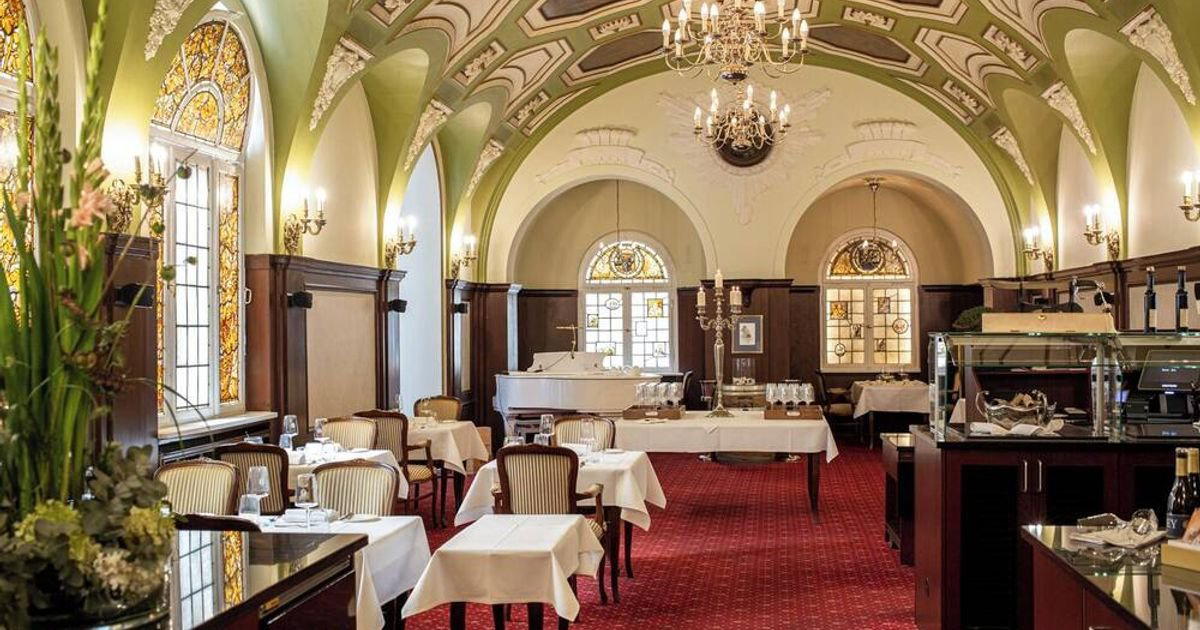
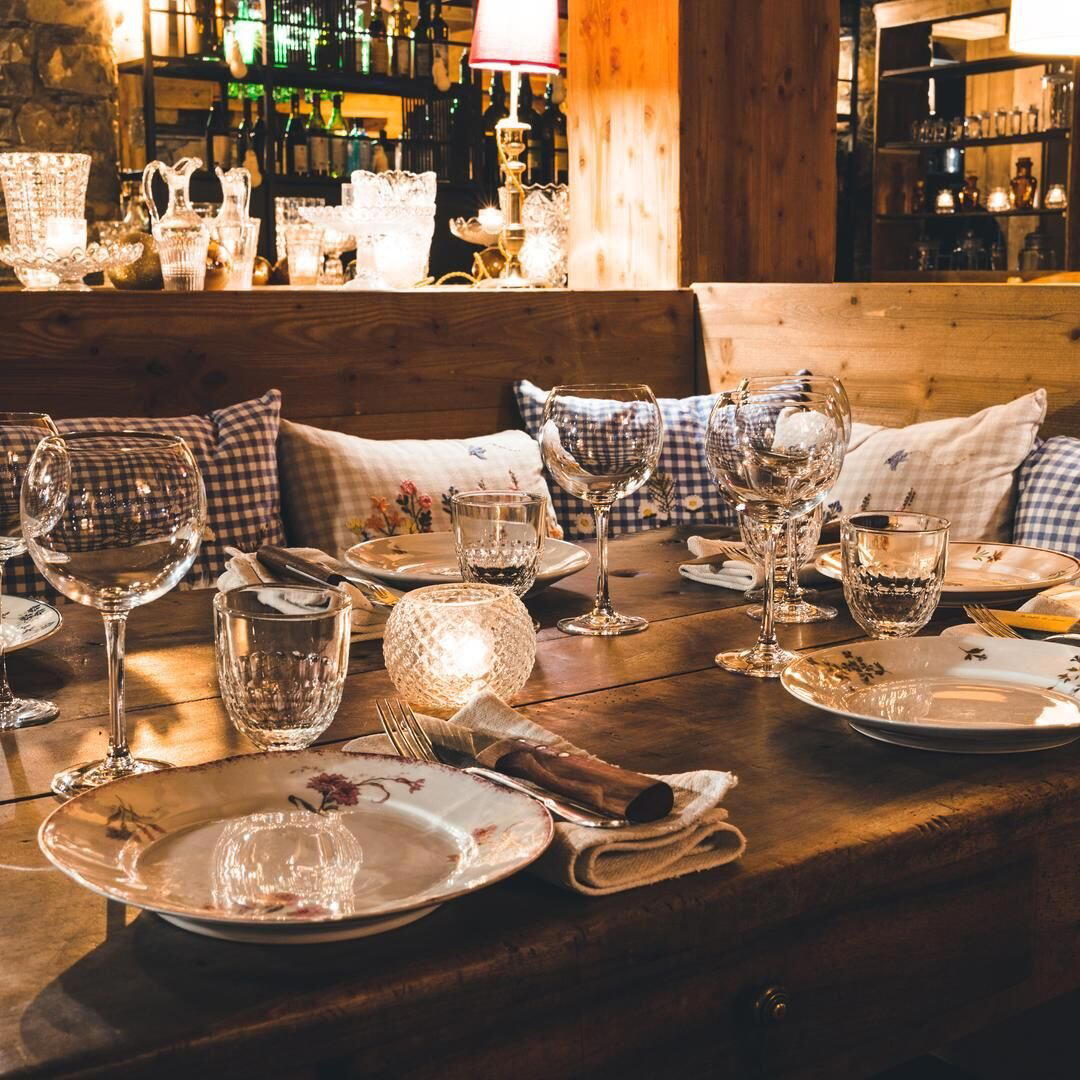
Tranquil lakeside atmosphere with cozy lobby fireplace, terrace sunsets, and relaxing rooms featuring simple industrial style.