

Michelin Selected · Design Hotels Member
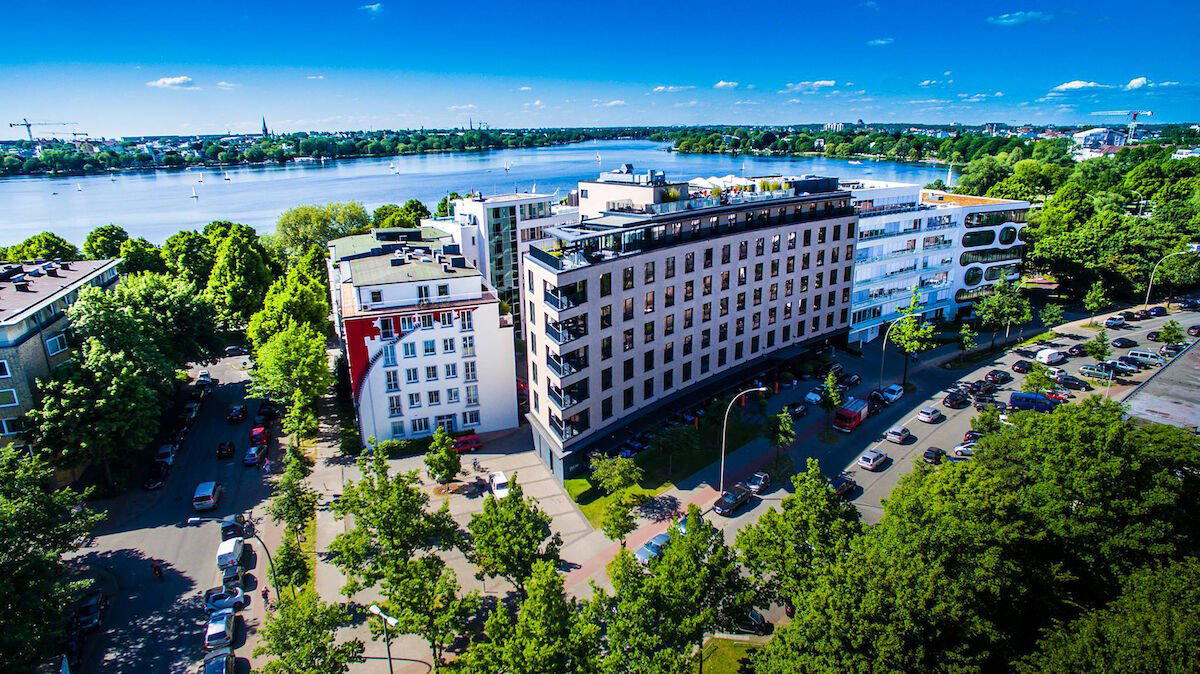
Positioned above Hamburg's St. Georg neighbourhood with refined Alster views, The George occupies a particular niche in the city's hotel scene: close enough to the action to feel connected, removed enough to offer a different perspective on it. The property sits in a district that rewards those who look beyond the harbour for their base in Hamburg.

Pearl is the En Primeur Club membership app — saves, bookings, and concierge access live there. Same editors, same standards.
- Address
- Barcastraße, 3, Hamburg 22087, Germany
- Phone
- 49 (0) 40 2800300
- Website
- marriott.com
- Directions
- Get directions
Above St. Georg, Inside the City
Hamburg's hotel geography divides along familiar lines. The grand addresses — Fairmont Hotel Vier Jahreszeiten and The Fontenay — anchor themselves to the Alster's west bank and the Rotherbaum quarter, where institutional prestige and lakefront position reinforce each other. Further out, Hotel Louis C. Jacob commands its own riverside register on the Elbchaussee. The George takes a different position: Barcastraße 3 in St. Georg, a neighbourhood whose character is harder to summarise than Rotherbaum's inherited elegance or HafenCity's engineered waterfront drama. St. Georg is lived-in, commercially mixed, and densely social, and the hotel's relationship to the Alster, high views over water from within a working urban district, captures something that properties further west, behind their quieter residential streets, do not.
Approach from the Alster promenade and the geometry of the situation becomes clear. The lake's eastern shore here is less curated than the paths flanking the Außenalster's western arc, where joggers move in polite circuits past consulate fences and private gardens. On this side, the city presses closer to the water. The George sits in that compressed middle distance, Alster light reaching the upper floors while the street-level energy of one of Hamburg's most culturally varied quarters carries on below.
The St. Georg Context
Understanding St. Georg is useful before choosing The George as a base. The neighbourhood extends along Hamburg's inner east, running roughly from the Hauptbahnhof south toward Lohsepark and north along the Alster's right bank. It has long operated as one of the city's more openly plural districts, bars, mid-range restaurants, a notable concentration of independent retail, and a nightlife register that runs late without the industrial-scale intensity of the Reeperbahn. The Lange Reihe, St. Georg's main commercial artery, is worth knowing: coffee in the morning, lunch options at multiple price points through the afternoon, bars that fill from early evening.
For guests whose Hamburg programme extends beyond the harbour and HafenCity, St. Georg positions The George well. The Elbphilharmonie and the warehouse district are reachable by U-Bahn or a direct waterbus connection from the Alster. The Hauptbahnhof, Hamburg's central rail hub, is within walking distance, which matters for those arriving from Berlin, Frankfurt, or points across Germany. Properties closer to the harbour, including Apotheke an der Elbphilharmonie, trade on immediate proximity to the concert hall; The George trades on neighbourhood texture and the Alster outlook instead.
Alster Light and the Question of Outlook
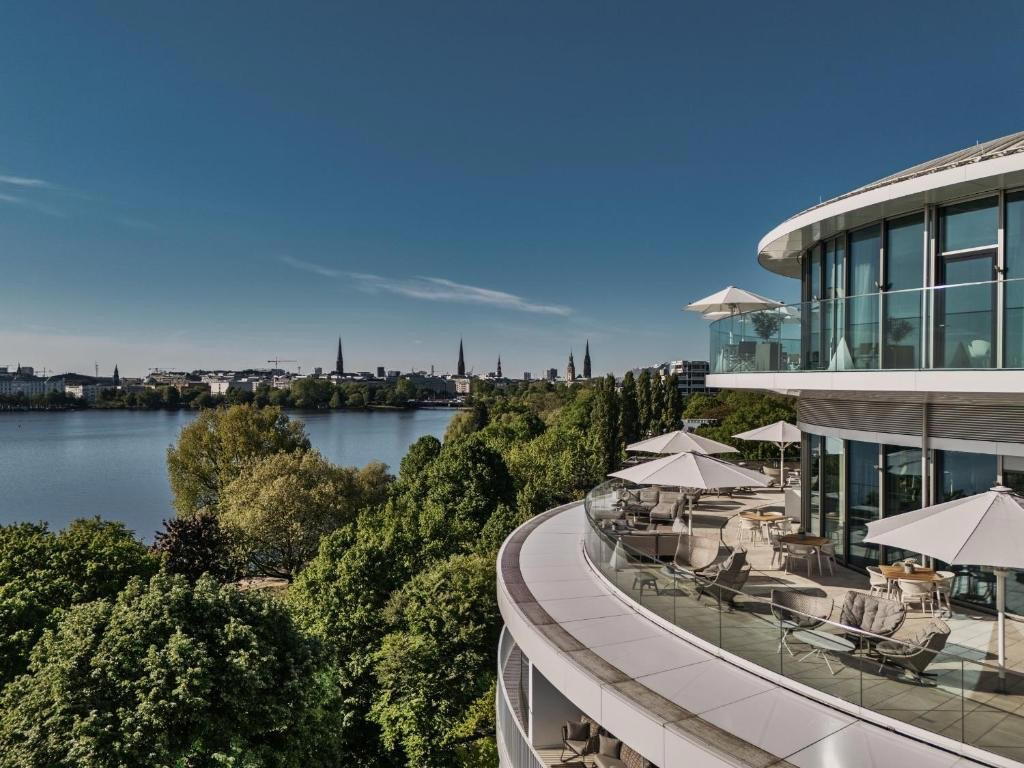
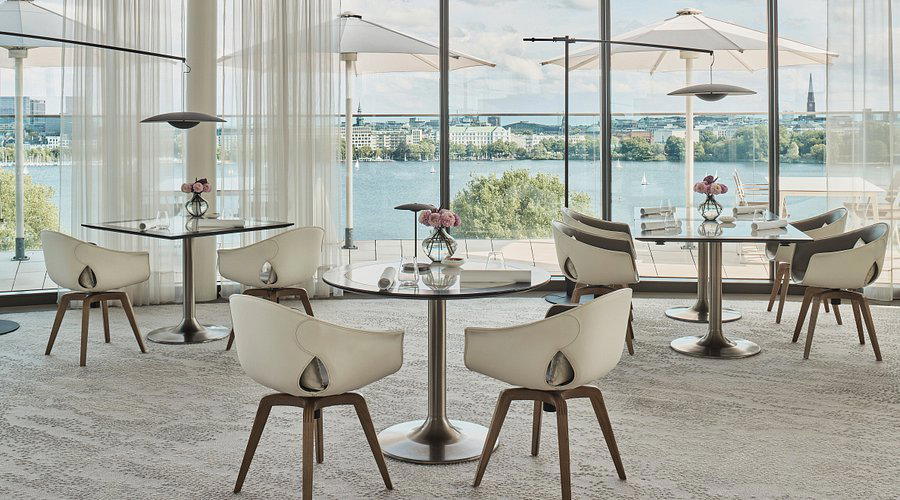
In Hamburg's hotel conversation, the Alster view carries weight. The twin lakes, Binnenalster and Außenalster, function as the city's civic centrepiece in a way that the Elbe, for all its industrial scale, does not quite replicate. The Binnenalster is small, framed by the Jungfernstieg's commerce; the Außenalster is the broader canvas, where the city opens up and the sky becomes part of the composition. The George's position on the eastern Außenalster shore means morning light arrives across the water, the kind of flat northern European lake-light that rewards rooms with an unobstructed bearing.
This matters because sensory experience in Hamburg's better hotels is often mediated through water. At The Fontenay, the Außenalster position is central to the property's identity. At Hotel Louis C. Jacob, the Elbe takes that role. The George's Alster relationship is more oblique, high rather than immediate, but no less real as an atmospheric fact of staying there.
Hamburg's Design-Led Mid-Tier
The German city hotel market has been reshaping its middle register for the better part of a decade. The old binary between grand-hotel formality and budget functionality has given way to a broader range of design-conscious properties that position themselves on character rather than ceremony. In Hamburg specifically, this shift is visible in properties like east Hamburg, the converted power station in St. Pauli, and Gastwerk Hotel Hamburg, which occupies a former gasworks in Bahrenfeld. Both demonstrate how Hamburg has absorbed industrial heritage into its hospitality offer. The George operates in a related but distinct register: not a conversion project, but a property whose St. Georg address does some of the atmospheric work that repurposed architecture does elsewhere.
Guests for whom the conversion aesthetic is less relevant, who want city engagement and Alster access rather than a heritage narrative, find the proposition coherent. For those seeking the engineered design statement, Garner Hamburg East or east Hamburg sit in a different part of the same conversation. Conrad Hamburg, in the Alsterarkaden, brings a different register again, international chain infrastructure at a central address. The George's case rests on something more specific: neighbourhood embedding and water proximity combined in a single eastern-shore location.
Planning a Stay
St. Georg's walkability is genuine. The Hauptbahnhof's proximity makes The George practical for multi-city German itineraries that might also include properties such as Hotel de Rome in Berlin or Excelsior Hotel Ernst in Cologne. For those building a longer German tour, the country's hotel range extends considerably: Schloss Elmau Luxury Spa Retreat & Cultural Hideaway in Elmau, Hotel Bareiss in Baiersbronn, and Althoff Seehotel Überfahrt in Rottach-Egern represent the country's alpine and Black Forest registers, while Breidenbacher Hof Düsseldorf and Bülow Palais in Dresden anchor the Rhineland and Saxon traditions respectively. Closer to Hamburg, BUDERSAND Hotel in Hörnum on Sylt offers a North Sea counterpoint. Further afield, Das Kranzbach Hotel & Wellness Retreat in Kranzbach, Der Öschberghof in Donaueschingen, Esplanade Saarbrücken, Gut Steinbach Hotel Chalets Spa in Reit im Winkl, and Hotel Ketschauer Hof in Deidesheim extend the range into wine country and southern Bavaria.
For Hamburg itself, the full picture of the city's dining and hotel options is worth mapping before arrival. Our full Hamburg restaurants guide covers the city's dining range in detail. Those extending the trip internationally might also consider The Fifth Avenue Hotel in New York City, Aman New York, or Aman Venice as points of reference for how different cities handle the relationship between location specificity and hotel character.
Booking and Cost Snapshot
Comparable venues nearby, for context on price, style, and recognition.
| Venue | Price | Awards | Notes |
|---|---|---|---|
| The GeorgeThis venue — the venue you are viewing | $100–200 | Michelin Selected · Design Hotels Member | Not listed |
| Romantik Hotel das Smolka | Not listed | Not listed | Anscharhoehe, Classic boutique hotel with British flair in an upscale residential area |
| 25hours Hotel Hafencity | $100–200 | Michelin Selected | HafenCity, Boutique design hotel inspired by Hamburg's maritime heritage |
| Gastwerk Hotel Hamburg | $100–200 | Michelin Selected · Design Hotels Member | Neumuehlen, Industrial design hotel in a converted 19th-century power station |
| The Nikolai Hamburg | Not listed | Michelin Selected | Hamburg-Altstadt, Historic Kontorhaus blending heritage and modernity |
| Le Méridien Hamburg | $200–300 | Michelin Selected | St. Georg, Upscale modern design hotel on the lakefront |
Recognition history
Dated appearances from independent guides and award organizations, with the underlying list record or original source where available.
Michelin Selected
Michelin
Design Hotels Member
Design Hotels
Continue exploring
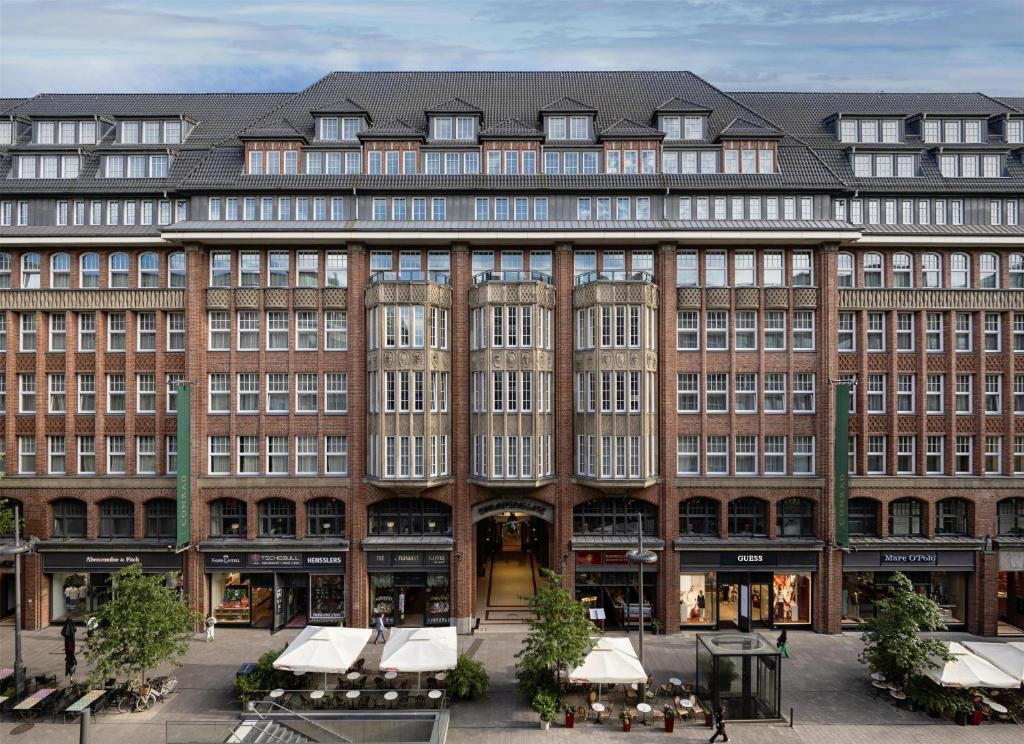
More in Hamburg
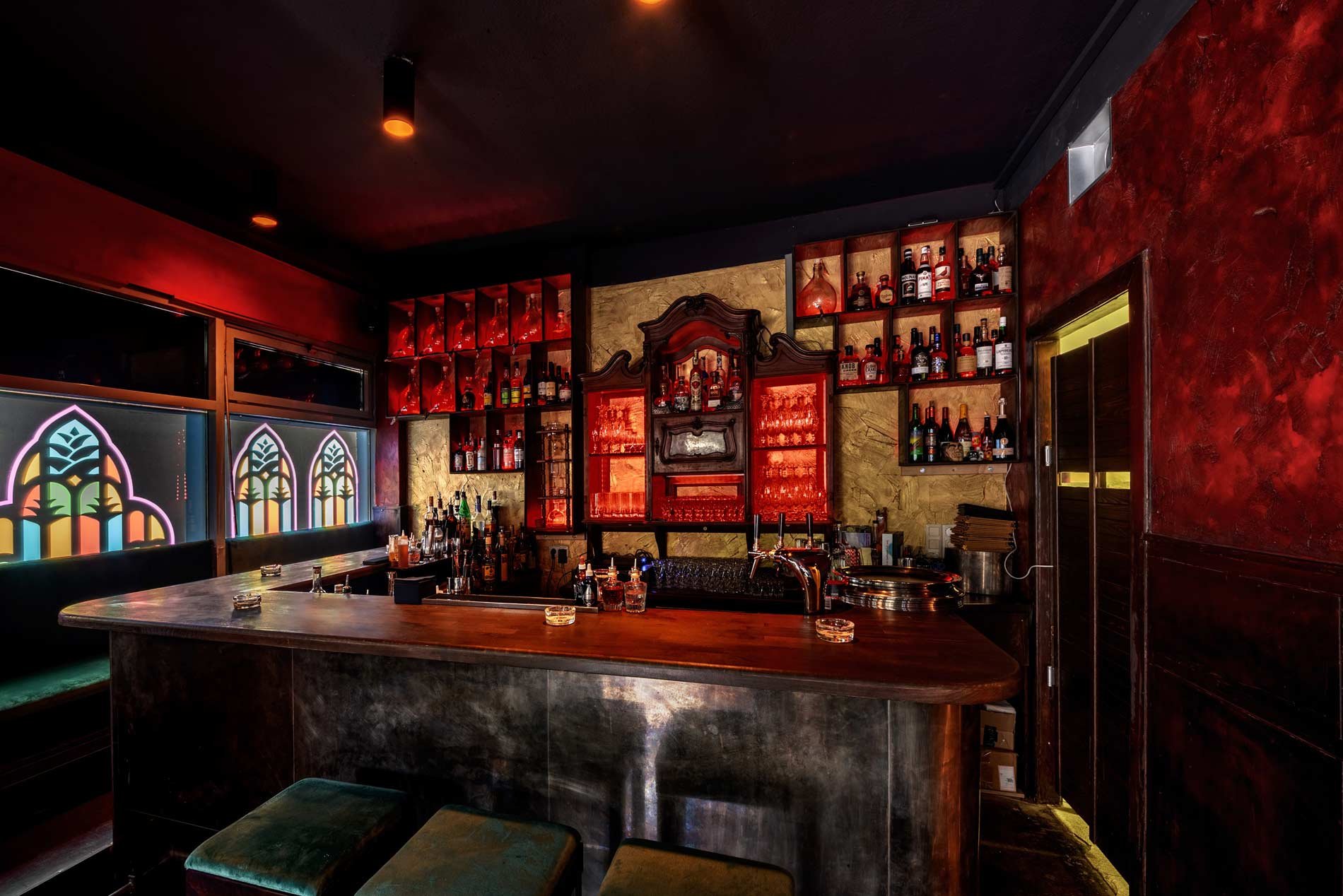
Hotels in Hamburg
Browse all →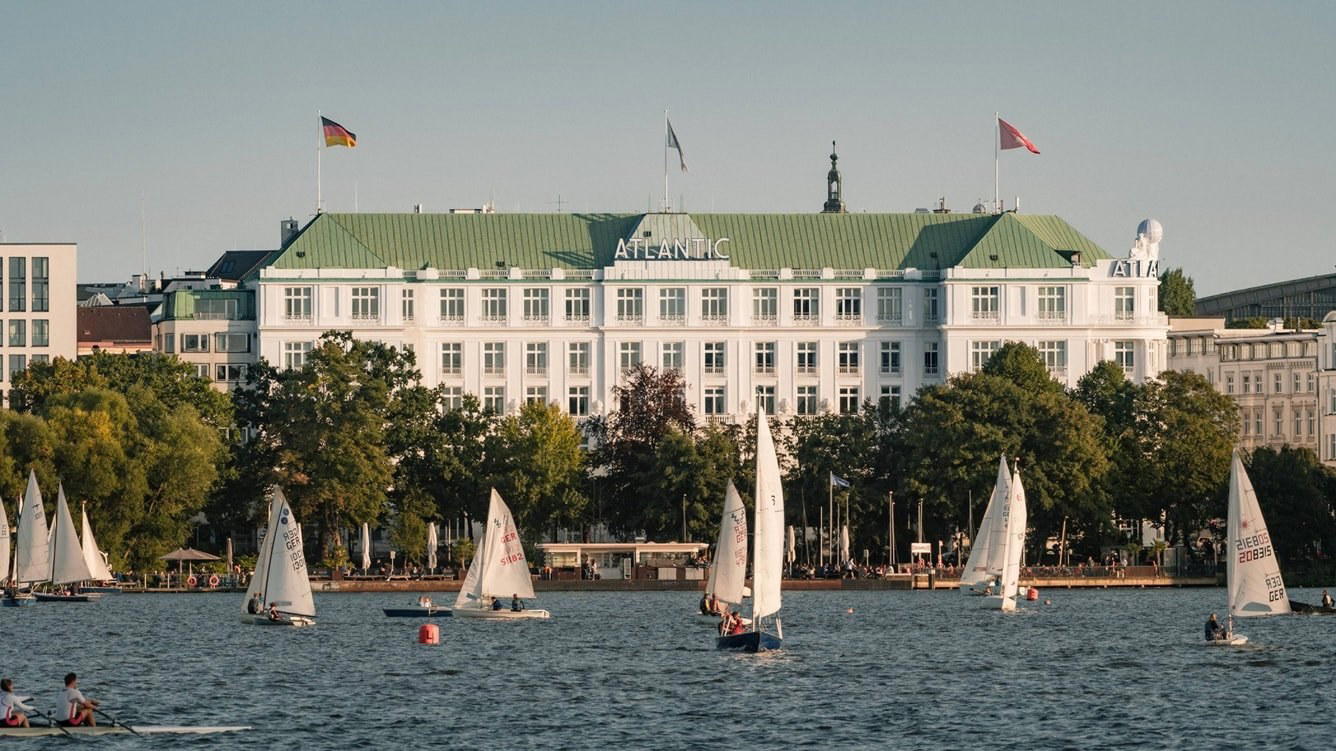
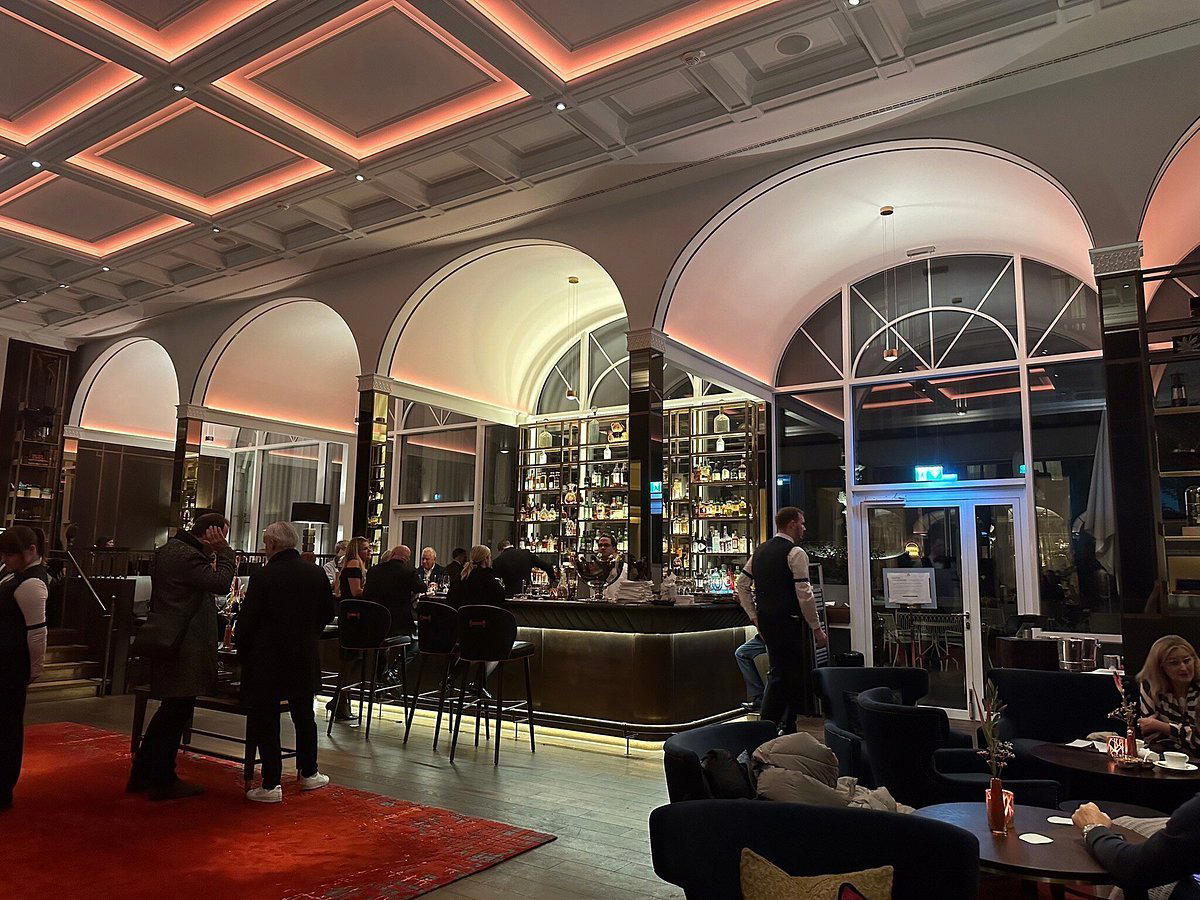
Bars in Hamburg
Browse all →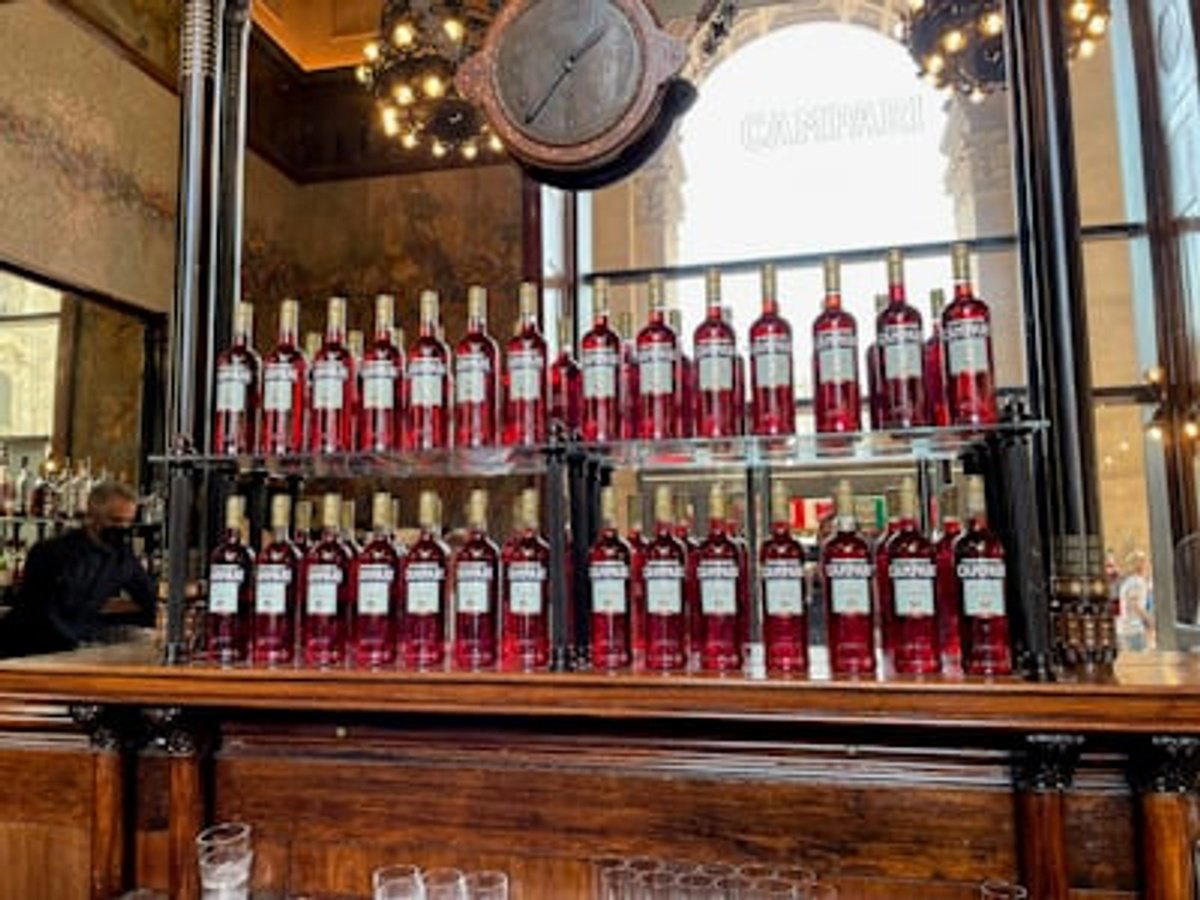
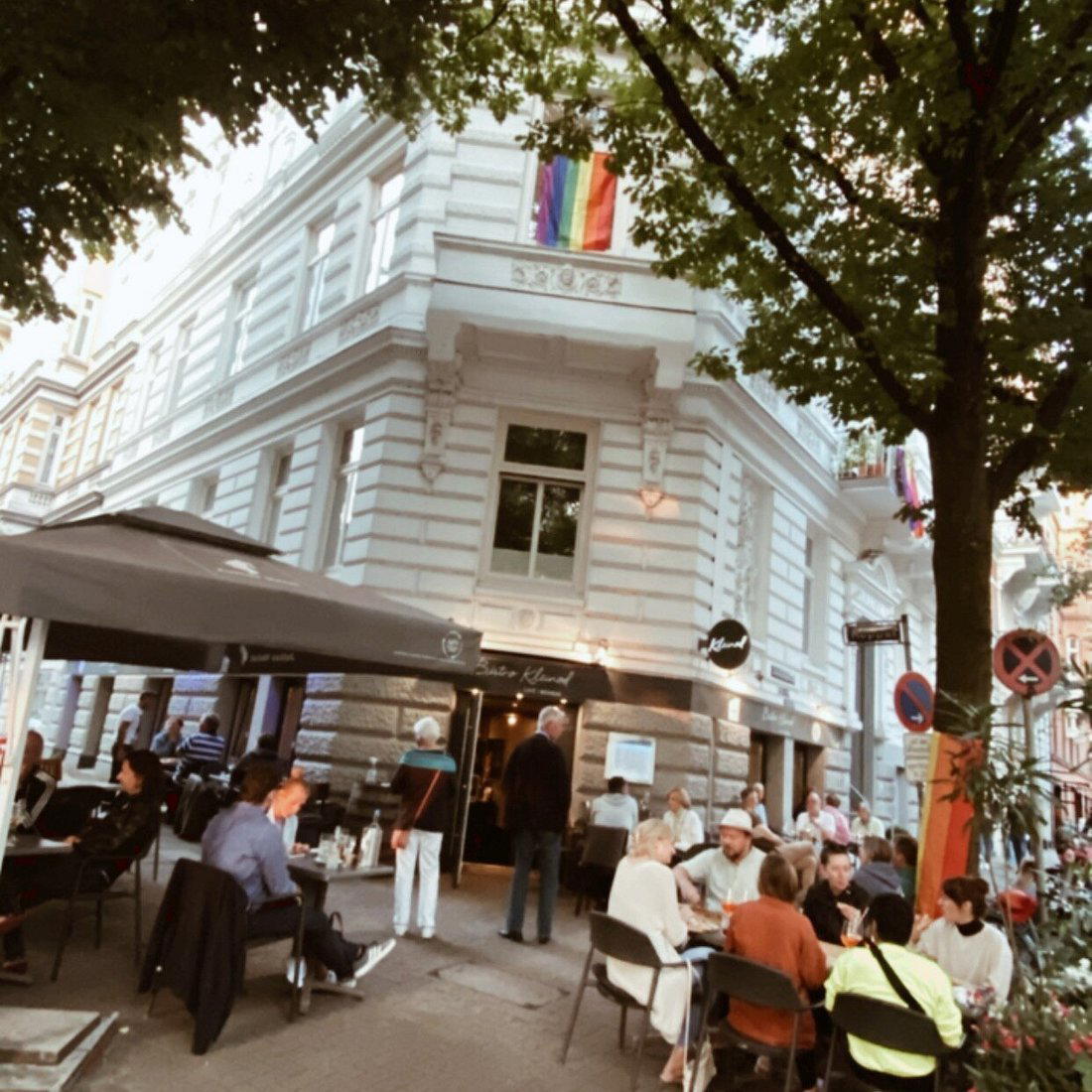

Restaurants in Hamburg
Browse all →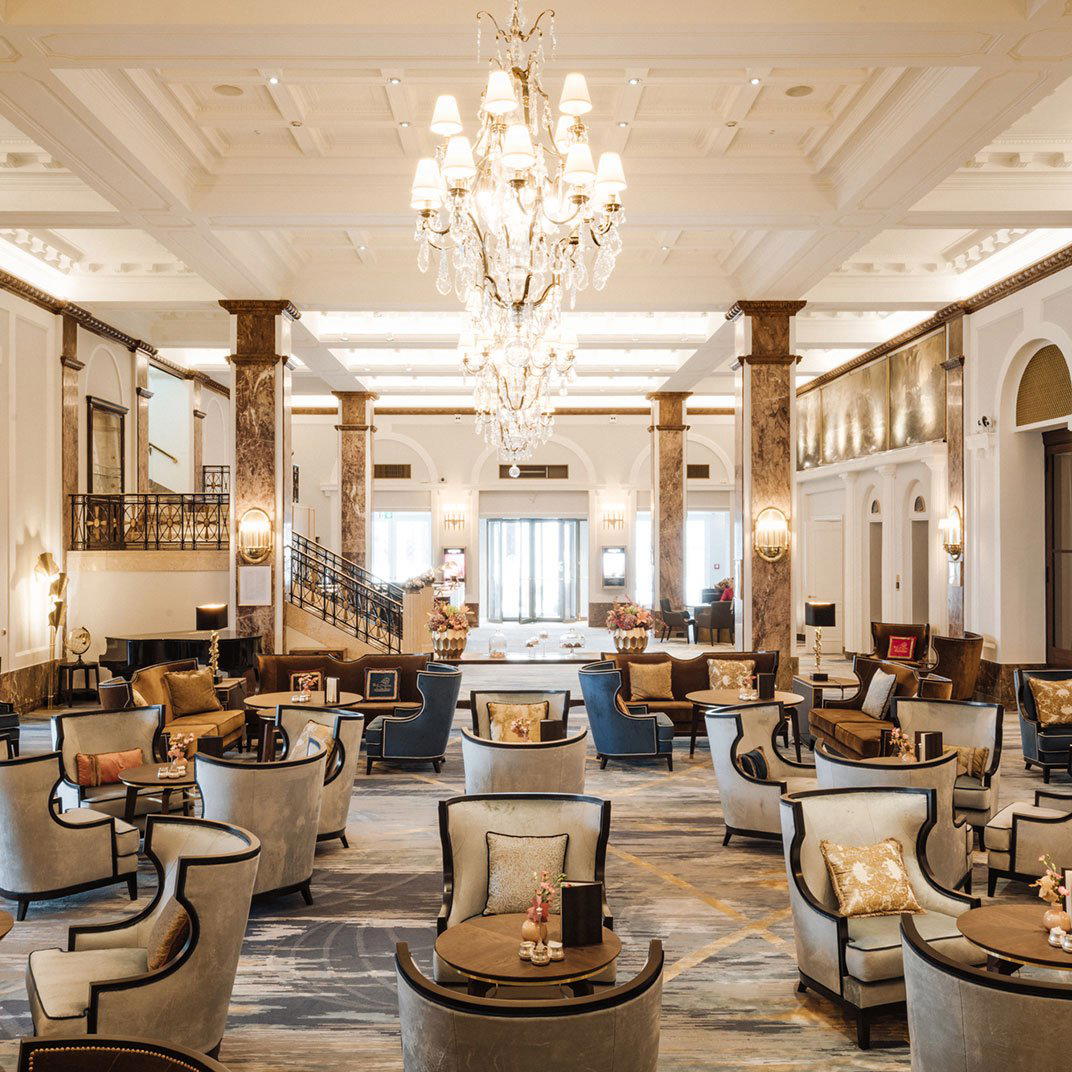
Wineries in Hamburg
Browse all →
Details
- Elegant
- Modern
- Sophisticated
- Cozy
- Romantic Getaway
- Business Trip
- Weekend Escape
- Rooftop Pool
- Historic Building
- Panoramic View
- Terrace
- Wi Fi
- Spa
- Sauna
- Room Service
- Concierge
- Business Center
- Fitness Center
- Restaurant
- Bar
- Garden
- Bicycle Rental
- Waterfront
- Garden
- Skyline
- Wheelchair Accessible
- Elevator
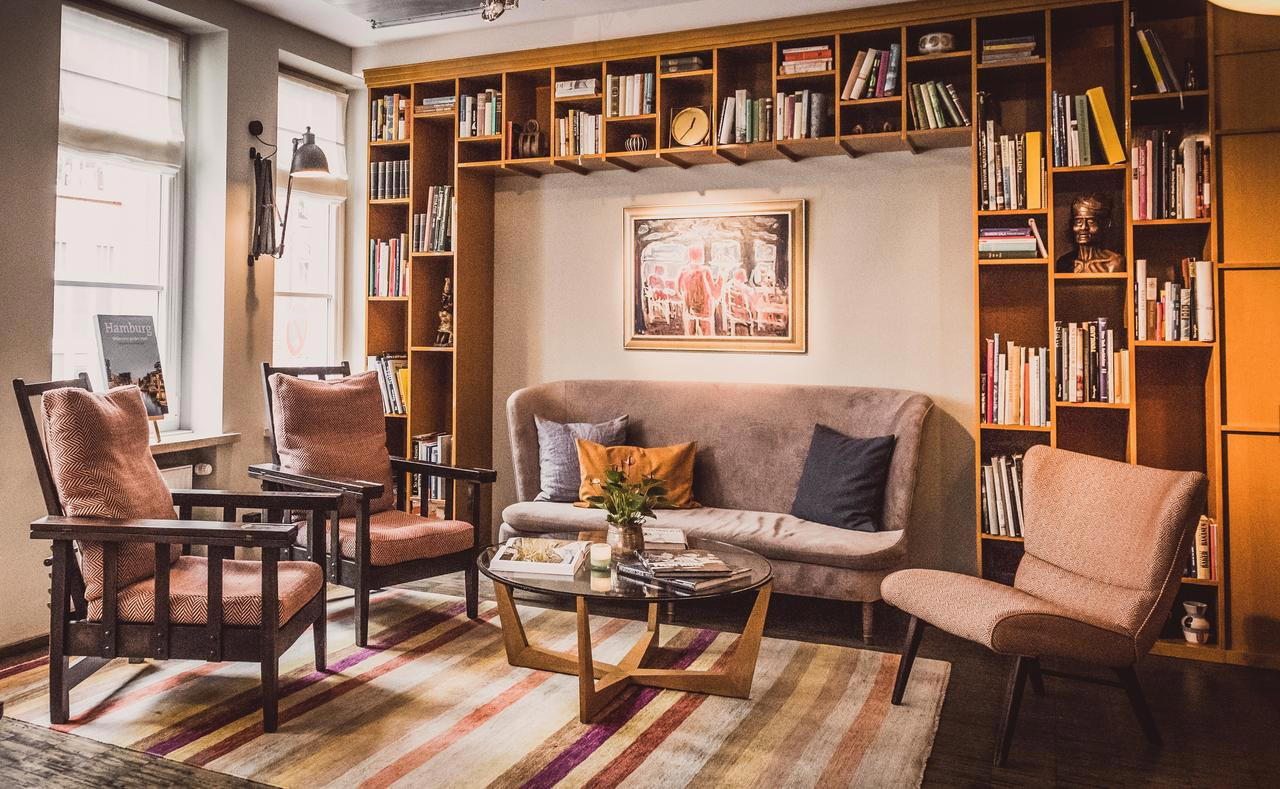
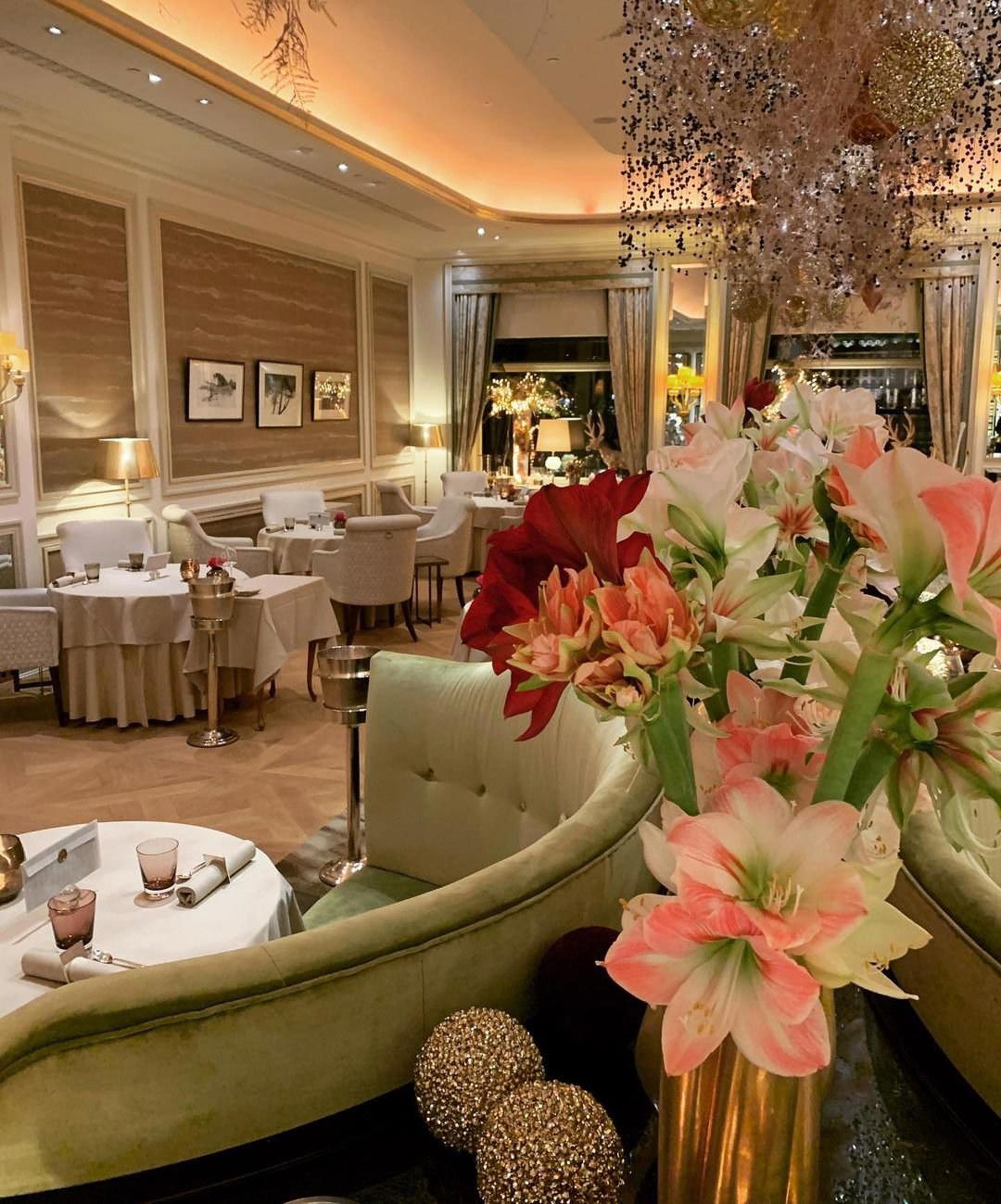
Light-filled spaces with warm tones, old-school elegance, refined lighting, and a calm, sophisticated atmosphere enhanced by soundproofed rooms and garden/rooftop terrace.