Friedrich Franz


1 Michelin Star
Our verdict
Friedrich Franz operates from a historic spa building in Bad Doberan, carrying a Michelin star in consecutive years and a 2025 OAD Classical Europe ranking that places it firmly within Germany's serious fine dining tier. Chef Ronny Siewert's modern cuisine format draws destination diners to the Baltic coast. At €€€€ pricing, it competes on credentials rather than convenience.

Pearl is the En Primeur Club membership app — saves, bookings, and concierge access live there. Same editors, same standards.
- Address
- Kurhaus, Prof.-Dr.-Vogel-Straße 16, 18209 Bad Doberan, Germany
- Phone
- +49 38203 7406210
- Hours
- Daily Closed
- Website
- grandhotel-heiligendamm.de
- Directions
- Get directions
- Booking
- Book on OpenTable
Fine Dining at the Margins of the Baltic
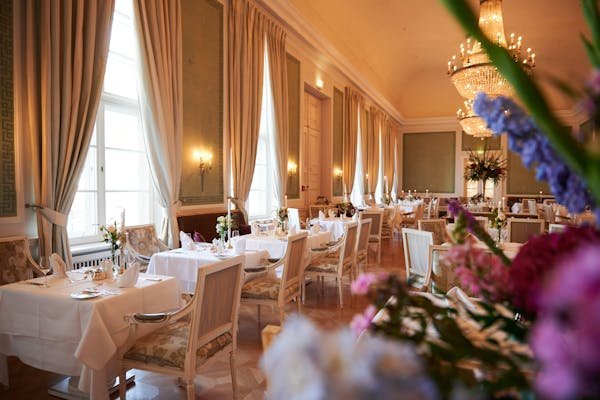
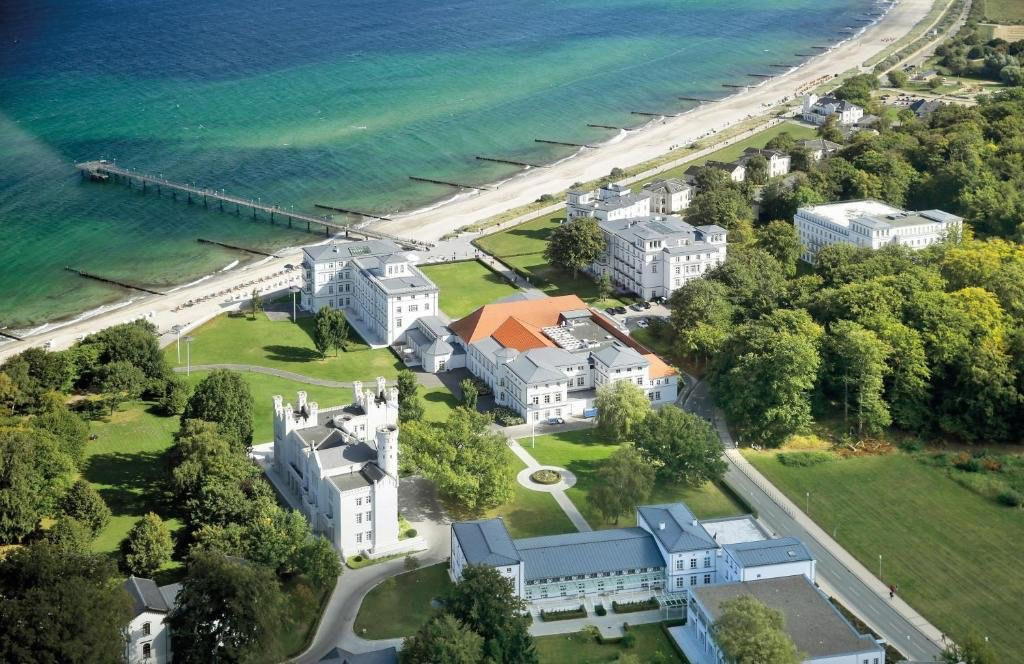
Bad Doberan is not a city that announces itself. A small spa town in Mecklenburg-Vorpommern, it sits roughly 15 kilometres west of Rostock, closer to the Baltic Sea than to any of Germany's major dining capitals. The town's character is shaped by its Kurhaus architecture and the slow rhythms of a historic health resort, which makes the presence of a consistently Michelin-starred restaurant inside the Kurhaus building at Prof.-Dr.-Vogel-Straße 16 worth pausing over. The physical environment sets a particular tone before you have ordered anything: vaulted proportions, the formality of a 19th-century assembly space repurposed for contemporary hospitality. There is a tension between the setting's historical weight and the precision of a modern tasting menu format that, for the right diner, reads as a feature rather than a friction.
Germany's fine dining circuit tends to cluster in its cities and in the wine-country corridors of Baden and the Moselle. Outlier destinations — where serious kitchens operate at a remove from the metropolitan peer group — carry a different kind of gravity. The commitment required to reach them functions as a sorting mechanism, drawing a room of guests who are specifically there for the food rather than for proximity to other entertainment. Friedrich Franz operates in that category, alongside peers like Waldhotel Sonnora in Dreis and Schanz in Piesport, both of which require deliberate travel to reach and reward that effort with kitchen work that would hold its own in any major European city.
The Chef and the Tradition Behind the Plate
Chef Ronny Siewert has held the Michelin star at Friedrich Franz across at least two consecutive cycles, with recognition recorded in both 2024 and 2025. That continuity matters in the context of Germany's fine dining scene, where the gap between an initial star and sustained recognition separates kitchens running on ambition from those operating with genuine consistency. The cuisine classification is modern, which in the German context typically signals a kitchen working between classical French technique and contemporary Nordic or regional influence rather than committing to a single national canon.
Germany's one-star tier covers considerable ground, from technically rigorous classical rooms to more experimental formats. The OAD Classical Europe ranking for 2025, placing Friedrich Franz at number 446, positions it within a peer group where the evaluating community emphasises precision, tradition, and execution over novelty for its own sake. That framing aligns with what the Michelin distinction, held across multiple years, implies about the kitchen: it is consistent, technically grounded, and operating to a standard that rewards repeat visits rather than one-time curiosity. For comparison, Vendôme in Bergisch Gladbach and ES:SENZ in Grassau occupy comparable positions in the OAD classical lists while serving very different regional contexts, evidence that classical recognition in Germany is geographically distributed rather than concentrated in one corridor.
The trajectory from training through to sustained recognition at this level is rarely linear. Germany's leading kitchens, Aqua in Wolfsburg, JAN in Munich, Schwarzwaldstube in Baiersbronn, have established the benchmark for what extended Michelin recognition looks like at the top of the country's table. Siewert's work in Bad Doberan operates a tier below that ceiling in terms of star count, but the multi-year consistency and OAD classical acknowledgment suggest a kitchen that has found its register and holds it.
What the Modern Cuisine Format Signals
The broad label of modern cuisine, as applied to a restaurant operating at €€€€ pricing in a German spa town, carries specific implications. It suggests a tasting menu format, seasonal sourcing that responds to the Baltic and Northern German larder, and a kitchen that works with French technique as a base rather than a destination. The northern German coast offers a distinct ingredient palette: cold-water fish and shellfish, game from inland forests, root vegetables and brassicas from the coastal plain. Kitchens in this region that engage seriously with that geography produce food with a character that differs from the richer, more cream-and-butter-forward traditions of southern Germany or the urban modernism of Berlin kitchens like CODA Dessert Dining.
At the €€€€ tier, the expectation is a multi-course format where the kitchen controls the sequence. The pace, the number of courses, and the wine pairing structure are all elements of a considered meal rather than an à la carte transaction. That format rewards guests who approach the table with time and attention rather than those looking for a quick confirmation of a reputation.
Placing Friedrich Franz in Germany's Fine Dining Geography
The question any serious diner asks about a destination restaurant is whether the journey aligns with the experience. Bad Doberan's location on the Baltic coast gives it a seasonal character: summer draws visitors to the nearby beach resort of Heiligendamm and the broader Mecklenburg coast, while the shoulder seasons offer a quieter setting that suits the concentration a serious dinner requires. The Kurhaus address places the restaurant within the town's historic spa infrastructure, meaning the surrounding environment carries its own cultural weight.
Germany's €€€€ fine dining circuit increasingly includes rooms that are harder to reach but no less rigorous for the distance. Restaurant Haerlin in Hamburg and Victor's Fine Dining by Christian Bau in Perl demonstrate that the northern and western edges of the country can sustain serious kitchens. Friedrich Franz extends that logic to the Baltic coast, in a town that most international fine dining travelers would not have on their itinerary without a specific reason to go.
For those planning a longer stay, the region around Bad Doberan has enough to justify two or three nights. The town itself, the Heiligendamm coast, and Rostock are within easy range. See our full Bad Doberan hotels guide, bars guide, wineries guide, and experiences guide for broader planning. The full picture of the town's dining options is in our Bad Doberan restaurants guide.
Planning Your Visit
Friedrich Franz sits inside the Kurhaus at Prof.-Dr.-Vogel-Straße 16, Bad Doberan. The €€€€ pricing bracket places it at the higher end of the German fine dining scale, in line with the investment expected at comparable one-star rooms. Reservations at this level of kitchen, particularly in a small town with limited alternative high-end options, are worth securing well in advance of any planned trip. Website and direct phone contact details were not available at time of writing; checking current booking channels through the Kurhaus or established reservation platforms is the practical path. The Michelin star held in both 2024 and 2025 remains the primary trust signal for a first visit.
For reference, the broader European modern cuisine tier that Friedrich Franz occupies includes internationally recognised rooms like Frantzén in Stockholm and export formats like FZN by Björn Frantzén in Dubai, though these operate at a different scale and star count. The comparison is useful for calibrating expectations about format and seriousness rather than for direct equivalence. Bagatelle in Trier offers a further regional reference point within Germany's fine dining circuit for those building a multi-destination itinerary around serious kitchens.
Frequently asked questions
Is Friedrich Franz okay with children?
Friedrich Franz operates at €€€€ pricing inside a formal Kurhaus in a small spa town, structured around a serious multi-course format under Chef Ronny Siewert. That environment is not designed with children in mind. Families with younger diners will find the pace and formality a poor fit.
What should I expect atmosphere-wise at Friedrich Franz?
The setting is a historic Kurhaus at Prof.-Dr.-Vogel-Straße 16, which gives the room a formal, measured character that contrasts sharply with anything else in Bad Doberan. A Michelin-starred kitchen at this price tier reinforces that register — expect an unhurried, composed service environment rather than anything animated or casual.
What distinctions does Friedrich Franz have?
Friedrich Franz has received recognition including: Opinionated About Dining Classical in Europe Ranked #446 (2025); Michelin 1 Star (2025); Michelin 1 Star (2024).
What should I eat at Friedrich Franz?
At €€€€ pricing under a consecutively Michelin-starred kitchen, Friedrich Franz almost certainly runs a tasting menu format rather than open à la carte selection. Chef Ronny Siewert's modern cuisine approach signals a kitchen-directed sequence. The OAD Classical Europe ranking for 2025 suggests the cooking leans on disciplined technique over trend-driven novelty.
In Context: Similar Options
| Venue | Cuisine | Price | Awards |
|---|---|---|---|
| Friedrich FranzThis venue — the venue you are viewing | Modern Fine Dining | $150–200 | 1 Michelin Star |
| Schwarzwaldstube | French, Classic French | Not listed | Michelin 3 Star |
| Aqua | Contemporary German, Italian/Japanese, Creative | Not listed | Michelin 3 Star |
| CODA Dessert Dining | Creative | Not listed | Michelin 2 Star |
| Tantris | Modern French, French Contemporary | Not listed | Michelin 2 Star |
| Vendôme | Modern European, Creative | Not listed | Michelin 2 Star |
Recognition history
Dated appearances from independent guides and award organizations, with the underlying list record or original source where available.
Michelin 1 Star
Michelin
Opinionated About Dining Classical in Europe Ranked #446
Opinionated About Dining
Full recognition history (4 entries)
Michelin 1 Star
Michelin
Michelin 1 Star
Michelin
Continue exploring
More in Bad Doberan
Restaurants in Bad Doberan
Browse all →
Bars in Bad Doberan
Browse all →
Friedrich Franz
The wine
- Wine program
- Exceptional wine program
- Extensive wine list
Details
- Elegant
- Sophisticated
- Intimate
- Date Night
- Special Occasion
- Celebration
- Hotel Restaurant
- Historic Building
- Waterfront
- Extensive Wine List
- Local Sourcing
- Waterfront
- A La Carte
- Vegetarian Friendly
Current opening hours
- Monday
- Closed
- Tuesday
- Closed
- Wednesday
- Closed
- Thursday
- Closed
- Friday
- Closed
- Saturday
- Closed
- Sunday
- Closed
Hours can change for holidays and private events. Last verified .
Wonderfully luxurious and elegant atmosphere with ornate decor and serene sea views from window tables.