Our verdict
Gröninger Privatbrauerei occupies a converted historic space on Willy-Brandt-Straße in Hamburg's HafenCity-adjacent city centre, where the German brewery-restaurant tradition plays out in full. The format belongs to a category of urban Privatbrauerei venues that have survived, and occasionally thrived, by anchoring themselves to place, process, and the rhythms of a drinking city.

Pearl is the En Primeur Club membership app — saves, bookings, and concierge access live there. Same editors, same standards.
- Address
- Willy-Brandt-Straße 47, 20457 Hamburg, Germany
- Phone
- +4940570105100
- Hours
- Mon ClosedTue–Sat 4 PM–12 AMSun Closed
- Website
- groeninger-hamburg.de
- Directions
- Get directions
- Booking
- Book on the venue's website
The menu
What to order
- Pork knuckle
- Suckling pig
- Gröninger Brauschmaus
Copper, Steam, and the Hamburg Brewing Tradition
Hamburg has always been a port city that drinks seriously. Long before the craft beer wave reshaped brewing culture across Europe, the city maintained a network of Privatbrauereien, privately operated brewhouses that combined production and hospitality under one roof. That tradition has contracted considerably, but the format survives in a handful of addresses, and Gröninger Privatbrauerei on Willy-Brandt-Straße sits among the most recognisable of them. The brewery occupies a historic building in the city's commercial core, close to the Speicherstadt warehouse district and the waterfront infrastructure that once made Hamburg the trading capital of northern Europe.
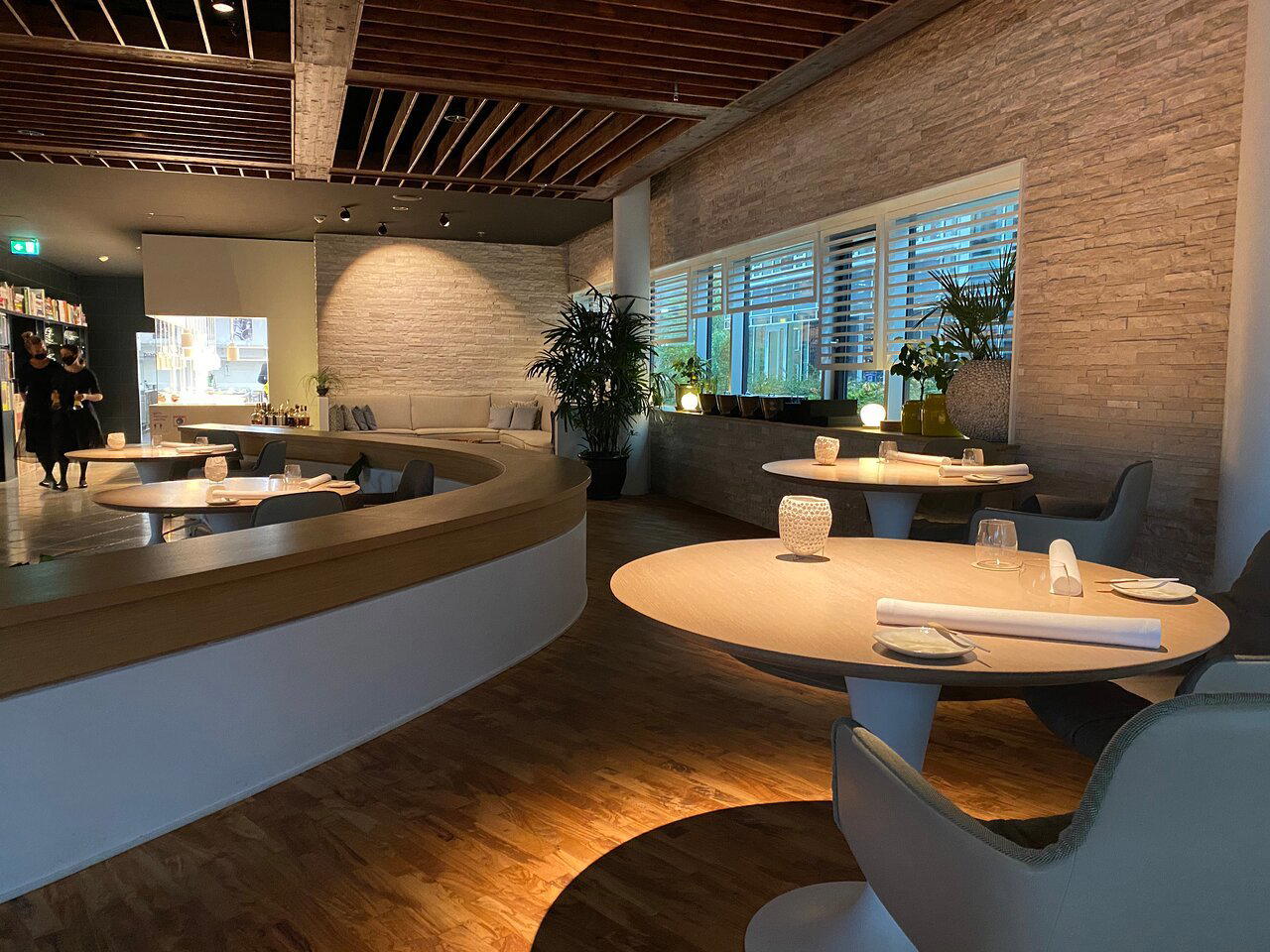
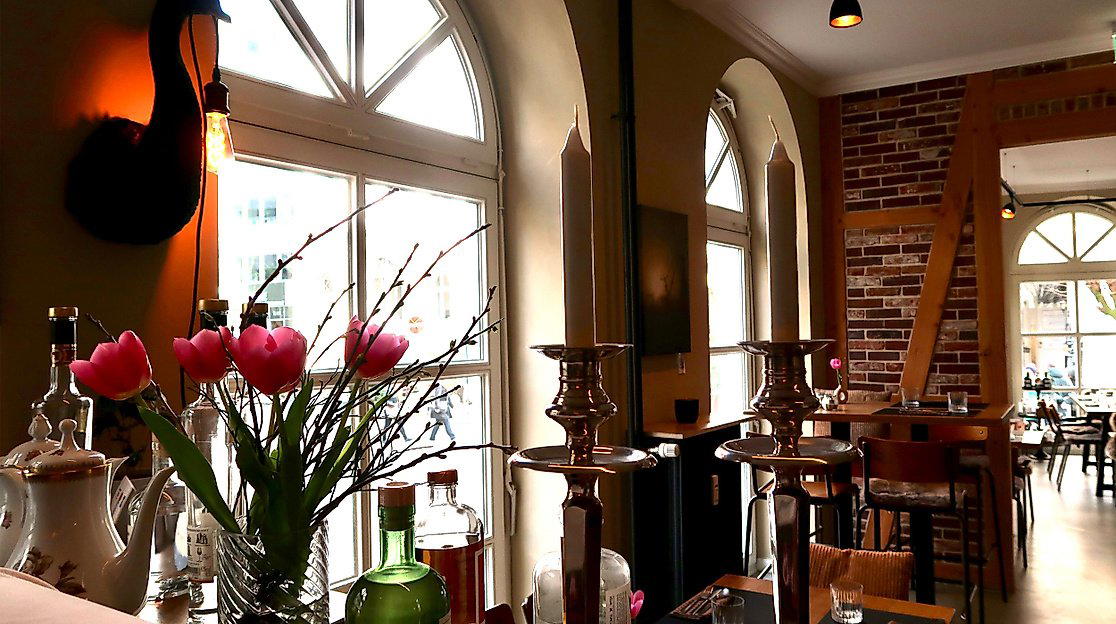
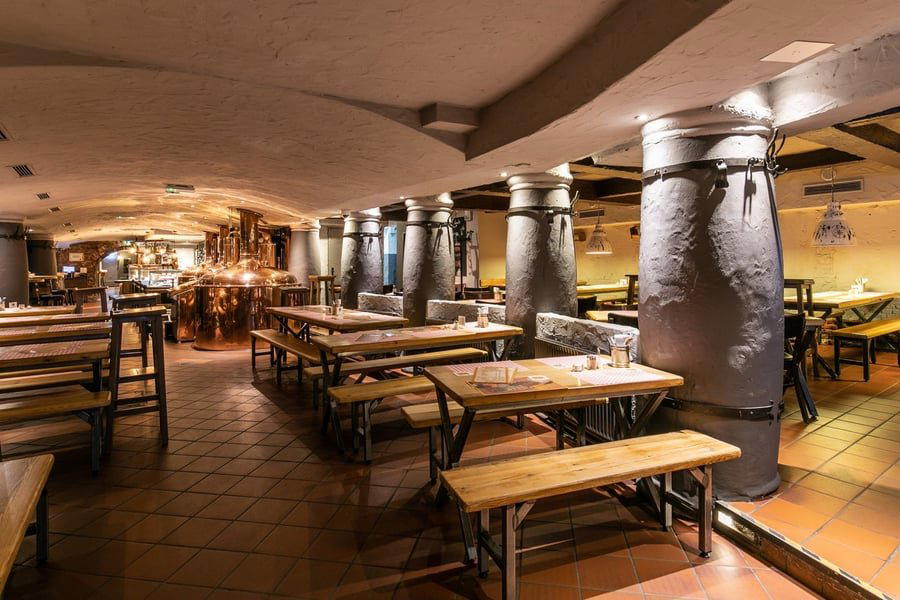
The physical environment is the first thing to register. Brewery-restaurants of this type are defined by their equipment as much as their menus: visible fermentation vessels, the low-level hum of temperature-controlled tanks, and a smell that sits somewhere between warm grain and yeast. The Privatbrauerei format places production inside the dining space rather than hidden behind it, which shapes everything from the ambient sound to the temperature of the room on a cold evening. These are not quiet spaces, and they are not designed to be.
Where Gröninger Sits in Hamburg's Drinking Scene
Hamburg's hospitality scene has, in the past decade, split firmly between international fine dining at the upper tier and neighbourhood-anchored locals at the other end. The Privatbrauerei format occupies a distinct middle ground: it is not positioned against venues like The Table Kevin Fehling or Restaurant Haerlin, both of which operate at the Michelin three-star level and draw an international clientele. Nor does it compete directly with the modern European programmes at bianc or the lakeside setting of Lakeside.
Instead, the Privatbrauerei addresses a different reader decision: where to eat and drink in Hamburg when the occasion calls for something rooted in local practice rather than international ambition. That is a legitimate category, and in a city of Hamburg's size and self-confidence, it carries real cultural weight. The Privatbrauerei model is, in fact, one of the older forms of Hamburg hospitality, predating the fine dining tier by several generations.
For comparison within Germany's broader brewery-restaurant tradition, venues like Schwarzwaldstube in Baiersbronn and JAN in Munich illustrate how German hospitality has diversified at the upper end, but the Privatbrauerei format deliberately sits outside that conversation. Its reference points are historical and local rather than competitive and international.
The Sensory Logic of a Privatbrauerei
The atmospheric argument for a brewery-restaurant is direct: the production process creates an environment that no amount of interior design can replicate. The copper vessels, the conditioning tanks, the slight warmth that rises from active fermentation, the particular acoustic quality of a room with stone or brick walls, all of these are byproducts of the brewing process that become defining features of the dining experience.
German brewing culture has a long tradition of treating the brewery as a social space rather than a purely industrial one. The Biergarten, the Brauhauskeller, the Gaststätte attached to a regional producer: these formats have always positioned the act of drinking as communal and contextual rather than private and refined. The Privatbrauerei in an urban setting carries this logic into a city environment, where the brewery becomes a fixed point in a neighbourhood's social geography.
Willy-Brandt-Straße places Gröninger in a part of Hamburg that has changed substantially over the past two decades. The HafenCity development to the east has brought significant new architecture and a different kind of foot traffic to this stretch of the city. The brewery's presence on this address reads differently now than it might have a generation ago, when the surrounding blocks were dominated by commercial shipping infrastructure rather than design hotels and cultural institutions. That shift in context has not diminished the venue's relevance; if anything, it has made the Privatbrauerei format more distinctive by contrast.
What the Food and Drink Format Represents
Privatbrauerei menus across Germany follow a recognisable grammar: the food is designed to support drinking rather than compete with it. Substantial, often pork-forward dishes, preparations that make sense alongside lager or wheat beer, portions calibrated for a long evening rather than a quick service. This is not the kitchen logic of 100/200 Kitchen or CODA Dessert Dining in Berlin, where the menu is the primary argument. Here, the menu is secondary to the setting and the brewing programme.
That positioning is not a criticism. German cuisine at this register has its own rigour: the quality of the Schweinshaxe or the Sauerbraten in a well-run Privatbrauerei reflects real craft, even if it operates at a different register than the tasting menus at Aqua in Wolfsburg or Vendôme in Bergisch Gladbach. The relevant question is whether the kitchen is holding its end of a format where the beer is always the headline.
Planning a Visit
Gröninger Privatbrauerei is located at Willy-Brandt-Straße 47, 20457 Hamburg, a central address accessible from the main S-Bahn and U-Bahn network. The venue sits within walking distance of Hamburg's Rathaus and the Alster lake, which makes it a practical stop during a broader day in the city centre. For visitors exploring Hamburg's restaurant range, the full picture is covered in our Hamburg restaurants guide. Those looking at the higher end of the city's dining tier should also consider the creative European programmes at venues like ES:SENZ in Grassau and Schanz in Piesport as benchmarks for what German fine dining currently delivers, though these operate in an entirely different register and price bracket. International comparisons at the highest level, such as Le Bernardin in New York City or Atomix in New York City, illustrate how far the premium dining tier has moved from the Privatbrauerei's reference points.
For the Privatbrauerei visit itself, the practical advice is simple: arrive with time to spare, expect noise and company, and approach the menu as a supporting document to the brewing programme. Booking practices for venues of this type in Hamburg vary; larger groups will almost always need a reservation, while solo travellers and pairs often find space without one, particularly outside peak evening hours on weekends.
Frequently asked questions
Where is Gröninger Privatbrauerei in Hamburg?
Gröninger Privatbrauerei is located at Willy-Brandt-Straße 47, 20457 Hamburg, Germany, Hamburg.
How does Gröninger Privatbrauerei differ from Hamburg's standard pub or taproom scene?
A Privatbrauerei is a licensed private brewery producing its own beer on the premises, which separates it legally and operationally from bars or taprooms that simply stock external labels. At Gröninger's Willy-Brandt-Straße site in central Hamburg, the brewing equipment is part of the venue itself, meaning the beer in the glass moves directly from production to serve without a distribution chain in between — a distinction that matters both for freshness and for the atmosphere it creates inside the space.
What do regulars order at Gröninger Privatbrauerei?
In a Privatbrauerei format, the house-brewed beer is always the anchor order — the food menu is built around it rather than the other way around. At a Hamburg brewery of this type, expect regulars to gravitate toward the kitchen's substantial, beer-compatible plates: roasted meats, cured items, and bread-forward dishes that hold up against malt-forward lagers or ales brewed on-site.
Is Gröninger Privatbrauerei reservation-only?
Brewery-restaurants in Hamburg's central districts typically accept walk-ins during off-peak hours but fill quickly on Thursday through Saturday evenings. Given Gröninger's address at Willy-Brandt-Straße 47 — well within the city's commercial core — booking ahead for dinner or weekend visits is the practical approach. Contact details are best confirmed directly via the venue.
What's the defining dish or idea at Gröninger Privatbrauerei?
The defining idea at any Privatbrauerei is that the beer is the product and the food exists to support it — not compete with it. Gröninger operates within that tradition: the brewery's copper kettle production shapes what arrives on the plate, with the kitchen following the logic of what pairs well with house-made German beer rather than pursuing independent culinary ambition.
Can Gröninger Privatbrauerei handle vegetarian requests?
Traditional German brewery kitchens skew heavily toward meat and charcuterie, so vegetarian options tend to be limited rather than a focus. Bread, cheese, and potato-based dishes are standard fixtures on Privatbrauerei menus across Germany and likely appear here, but those with strict dietary requirements should confirm current menu availability directly with the venue before visiting.
Is a meal at Gröninger Privatbrauerei worth the investment?
For a sitting centred on house-brewed beer and kitchen food designed to match it, the Privatbrauerei format in Hamburg consistently delivers clear value — the production overhead of an in-house brewery is reflected in the quality of the pour rather than inflated food prices. Gröninger's central address on Willy-Brandt-Straße means you are also paying for accessibility, not a remote destination surcharge.
Accolades, Compared
Comparable venues nearby, for context on price, style, and recognition.
| Venue | Cuisine | Price | Notes |
|---|---|---|---|
| Gröninger PrivatbrauereiThis venue — the venue you are viewing | Traditional German Brauhaus | $10–20 | Not listed |
| Kleine Rast an der Elbe | German Currywurst Imbiss | $10–20 | Klein Flottbek |
| Fleetschlösschen | North German Fish Specialties | $20–30 | HafenCity |
| Was Wir Wirklich Lieben Deli | Healthy German Deli | $10–20 | Anscharhoehe |
| Hopper Brau GmbH & Co. KG | German Craft Brewery | $20–30 | Neumuehlen |
| Quellental | Modern German Farmhouse Cuisine | $30–50 | Klein Flottbek |