Shoraiso

1 Michelin Key
Shoraiso is a five-room ryokan in the Nagano valley where the architecture and bath sequence define the stay. Arabesque archways, dark timber joinery, and tatami rooms frame a progression of indoor, outdoor, communal, and private baths that has anchored Yamanouchi's onsen culture for centuries. The attached garden lounge extends the ritual between soaks.

Pearl is the En Primeur Club membership app — saves, bookings, and concierge access live there. Same editors, same standards.
- Address
- 〒381-0401 Nagano, Shimotakai District, Yamanochi, Hirao, 3071−1 下高井郡山ノ内町平穏3071-1
- Phone
- +81 269-33-2114
- Website
- shoraiso.com
- Directions
- Get directions
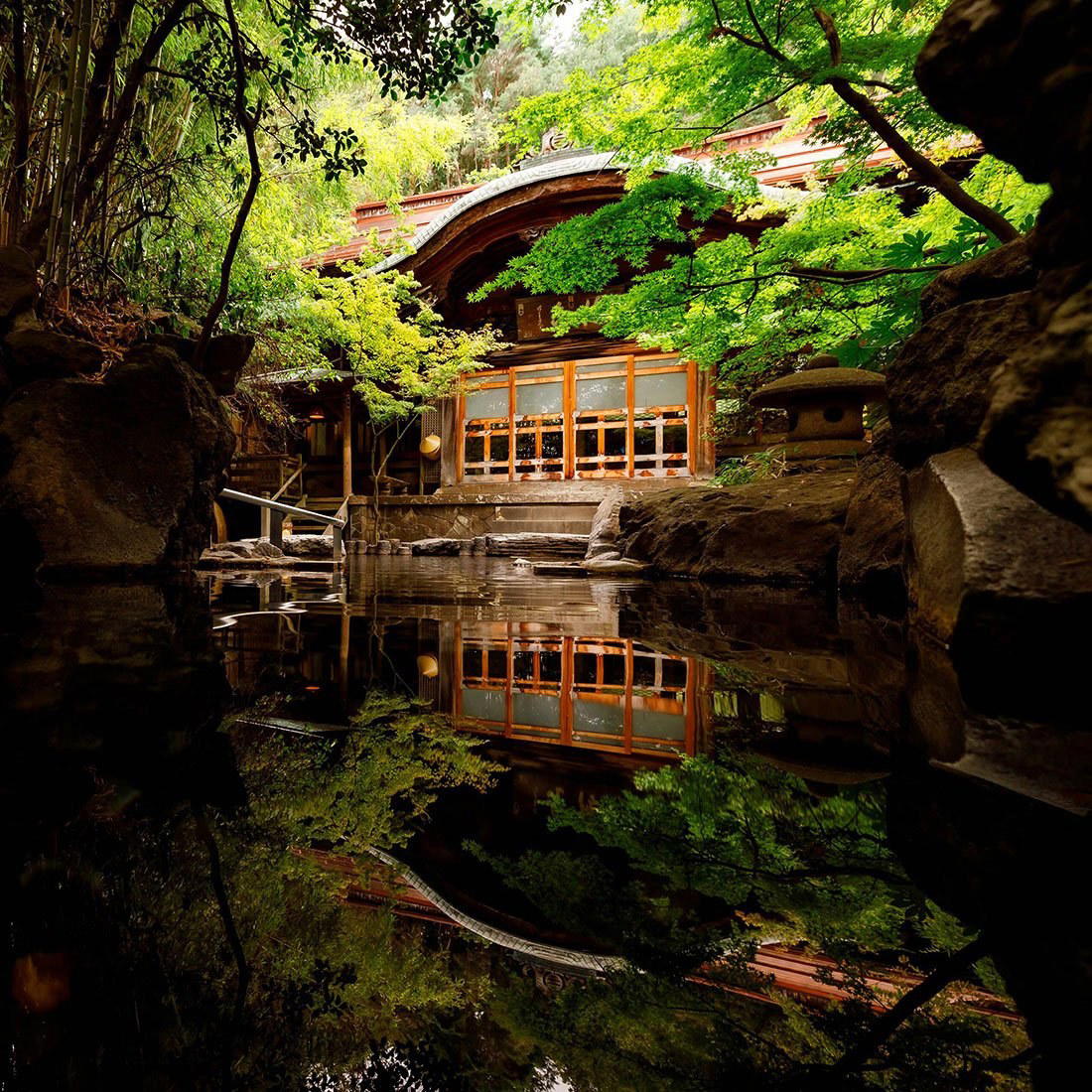
Where the Design Speaks Before Anything Else
In the Shimotakai District of Nagano prefecture, the onsen ryokan is not a hospitality format so much as a civic institution. Yamanouchi's thermal springs have drawn travellers since the Edo period, and the architecture of the region's leading properties has evolved to frame that bathing ritual as deliberately as a theatre frames a stage. Shoraiso sits within that tradition and pushes it through a design vocabulary that rewards close attention. The name itself — roughly translated as "wind through the trees in the mountains" — functions as an architectural brief: the property is meant to feel like a held breath, a pause in the surrounding valley.
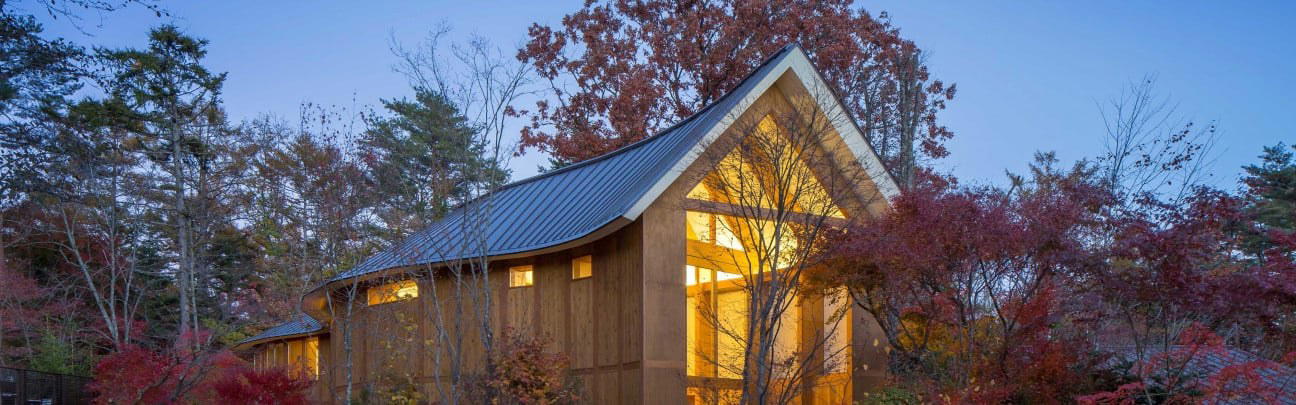
Five rooms is a number worth pausing on. At that scale, a ryokan cannot rely on volume to carry the experience; every spatial decision becomes load-bearing. The Japanese-style rooms deploy tatami flooring, translucent shoji screens, and low-slung furnishings in the manner of the tradition, but the arabesque archways introduced into the interiors signal a considered departure from strict minimalism. The dark wood joinery visible throughout adds mass and warmth to spaces that might otherwise read as austere. These are design choices that place Shoraiso in a small cohort of ryokan that treat their interiors as arguments rather than conventions.
The Bath Sequence as Architectural Programme
Japan's premium onsen properties increasingly split between high-capacity resort formats with spa menus and programming schedules, and smaller, quieter properties where the bath itself remains the entire point. Shoraiso occupies the latter position. The bath offering here spans indoor and outdoor configurations alongside both communal and private options, a range that allows guests to move through different spatial registers across the course of a stay. Morning light through a rotemburo (outdoor bath) reads entirely differently from an evening soak in an enclosed indoor space, and properties that offer both are providing a genuinely varied architectural sequence, not just a amenity checklist.
This approach aligns Shoraiso with ryokan like Gora Kadan in Hakone and Asaba in Izu, where the thermal bath programme anchors the stay and the room count stays deliberately low. It also sits in contrast to larger resort-style properties, where onsen access becomes one amenity among many rather than the organising principle of the guest experience. For guests calibrating where Shoraiso fits in Japan's broader ryokan spectrum, it belongs to the intimate, bath-centred tier, properties where the ratio of guests to water is very much in the guest's favour.
The Lounge, the Garden, and the Logic of Interval
Traditional Japanese bathing culture has always understood that the interval between soaks matters as much as the soak itself. The body needs time to cool, to rest, to rehydrate. Shoraiso's lounge bar and attached garden function as that interval space, a place to sit with tea or something stronger between bath sessions without the momentum of the stay collapsing into inactivity. In well-designed ryokan, these transitional spaces are given as much architectural thought as the baths themselves. A garden that connects interior and exterior, that allows light and air to move through the property, earns its place in the sequence.
This attention to in-between spaces is a marker of ryokan that take the full arc of a guest's day seriously. Properties like Zaborin in Kutchan and Bettei Senjuan in Minakami operate with similar logic, where common areas exist in deliberate relationship to the bath programme rather than as standalone amenities. For those comparing ryokan options across Japan's alpine and hot-spring regions, this architectural coherence between spaces, room, bath, garden, lounge, is a more reliable quality signal than room size or star classification. See our full Yamanouchi guide for broader context on the region's onsen scene.
Where Shoraiso Sits in the Ryokan Tier
Japan's premium ryokan market has stratified considerably. At one end, internationally recognised properties like Amanemu in Mie and Araya Totoan in Kaga operate with Aman-scale positioning and pricing to match. At the other end, regionally significant properties with tighter room counts and more focused programmes serve a guest who wants depth over breadth. Shoraiso's five rooms place it in that second group. The scale is not a limitation; it is a structural commitment to a particular kind of stay.
Properties at this scale also tend to attract guests with prior ryokan experience, visitors who have already moved through the formats offered by larger properties like Fufu Kawaguchiko or Fufu Nikko and are seeking something with a more contained, architecturally specific character. For that guest, Shoraiso's design details, the arabesque arches, the dark timber, the progression of bath types, carry weight that a first-time ryokan visitor might not fully register. Other comparable intimate onsen formats across Japan include Nishimuraya Honkan in Kinosaki-cho, Beniya Kofuyuden in Awara, and Bettei Otozure in Nagato, each operating within a similar logic of small scale and architectural seriousness.
Planning Your Stay
Yamanouchi sits in Nagano prefecture, accessible from Nagano City via the Nagano Dentetsu line to Yudanaka Station, a journey of roughly 40 minutes from Nagano, which itself connects to Tokyo via Hokuriku Shinkansen in around 90 minutes. The region's onsen season runs year-round, though winter draws the heaviest demand: snow monkeys bathing in the open-air pools at nearby Jigokudani Yaen-koen pull significant visitor numbers from December through March, and proximity to that spectacle adds a secondary draw to any Yamanouchi stay. Booking ahead is advisable for winter travel, particularly for a five-room property where availability closes quickly.
Pricing and reservation details for Shoraiso are not listed in publicly available databases at time of writing; direct inquiry through the property's local contact is the advised route. Given the room count and the region's appeal to travellers moving through Japan's alpine corridor, this is not a property where last-minute availability should be assumed.
A Quick Peer Check
Comparable venues nearby, for context on price, style, and recognition.
| Venue | Cuisine | Price | Awards | Notes |
|---|---|---|---|---|
| ShoraisoThis venue — the venue you are viewing | Traditional Japanese ryokan with modern reconstruction | Not listed | 1 Michelin Key | Not listed |
| Bettei Senjuan | Modern luxury ryokan with traditional Japanese elements and contemporary design. | $200–300 | 1 Michelin Key · Relais Chateaux Award | Minakami-machi |
| Fuji Speedway Hotel | Motorsport-themed luxury resort | Not listed | 1 Michelin Key | Oyama |
| Wanosato | traditional Gassho-zukuri ryokan | $500–750 | 1 Michelin Key | Takayama-shi |
| Banyan Tree Higashiyama Kyoto | Contemporary Japanese luxury ryokan with natural hot springs | Not listed | 1 Michelin Key · Mr & Mrs Smith Seal of Approval | Higashiyama |
| TRUNK (HOTEL) YOYOGI PARK | Boutique urban recharge hotel blending Japanese craftsmanship with Scandinavian design. | $300–500 | 1 Michelin Key · Tatler Listed in Best Hotels Asia-Pacific | Shibuya |
Recognition history
Dated appearances from independent guides and award organizations, with the underlying list record or original source where available.
Michelin 1 Key
Michelin
Full recognition history (2 entries)
Michelin 1 Key
Michelin
Continue exploring
More in Yamanouchi
Hotels in Yamanouchi
Browse all →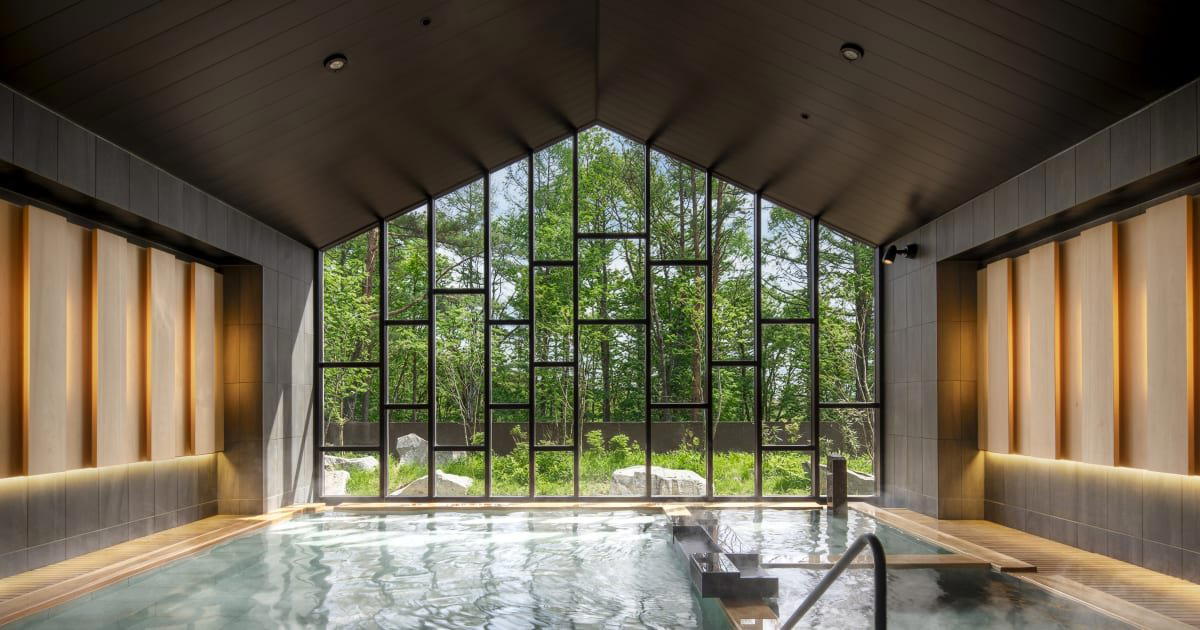
Restaurants in Yamanouchi
Browse all →
Wineries in Yamanouchi
Browse all →
Details
- Quiet
- Elegant
- Scenic
- Intimate
- Sophisticated
- Honeymoon
- Romantic Getaway
- Wellness Retreat
- Anniversary
- Weekend Escape
- Private Villa
- Panoramic View
- Garden
- Terrace
- Wi Fi
- Spa
- Room Service
- Concierge
- Garden
- Garden
- Mountain
Serene and refined atmosphere with clean-lined decor, warm lighting from traditional elements, log wood scents, and peaceful private gardens.