
Es Saadi Palace sits on Avenue Quadissia in the Hivernage quarter of Marrakech, earning 93.5 points in the La Liste Top Hotels 2026 ranking. The property represents the established palace-hotel tradition that gives Marrakech its upper tier of accommodation, where garden scale, Moroccan craftsmanship, and a full resort footprint coexist within city limits.
Pearl is the En Primeur Club membership app — saves, bookings, and concierge access live there. Same editors, same standards.
- Address
- Avenue Quadissia, Marrakech 40000
- Phone
- +212 5 24 33 74 00
- Website
- essaadi.com
- Directions
- Get directions
 Saves & bookings on Pearl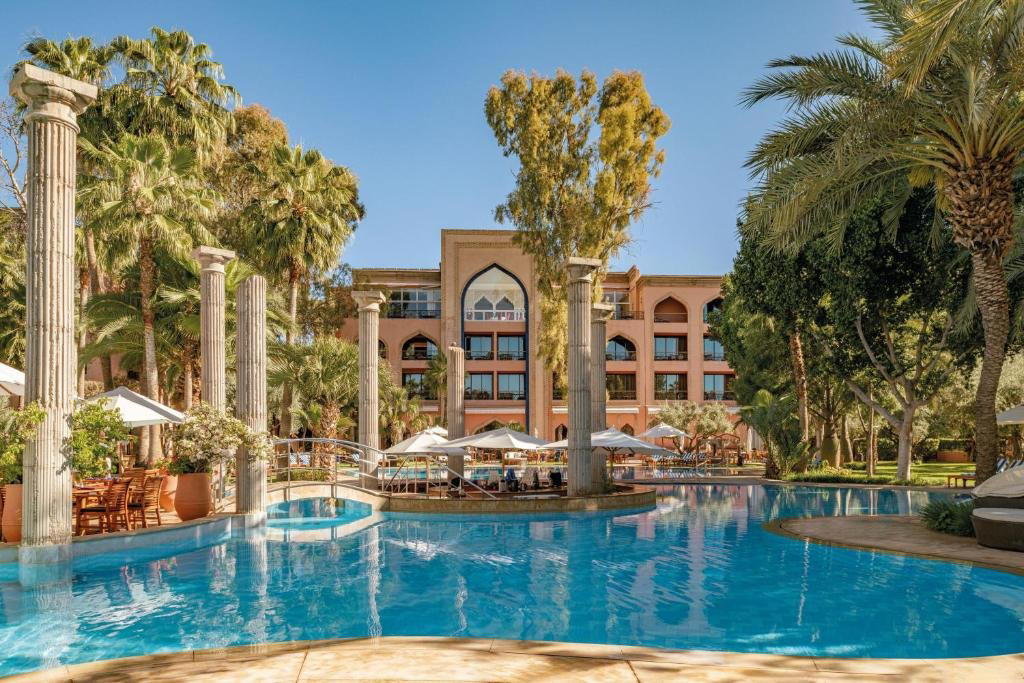
Palace Scale in the Hivernage Quarter
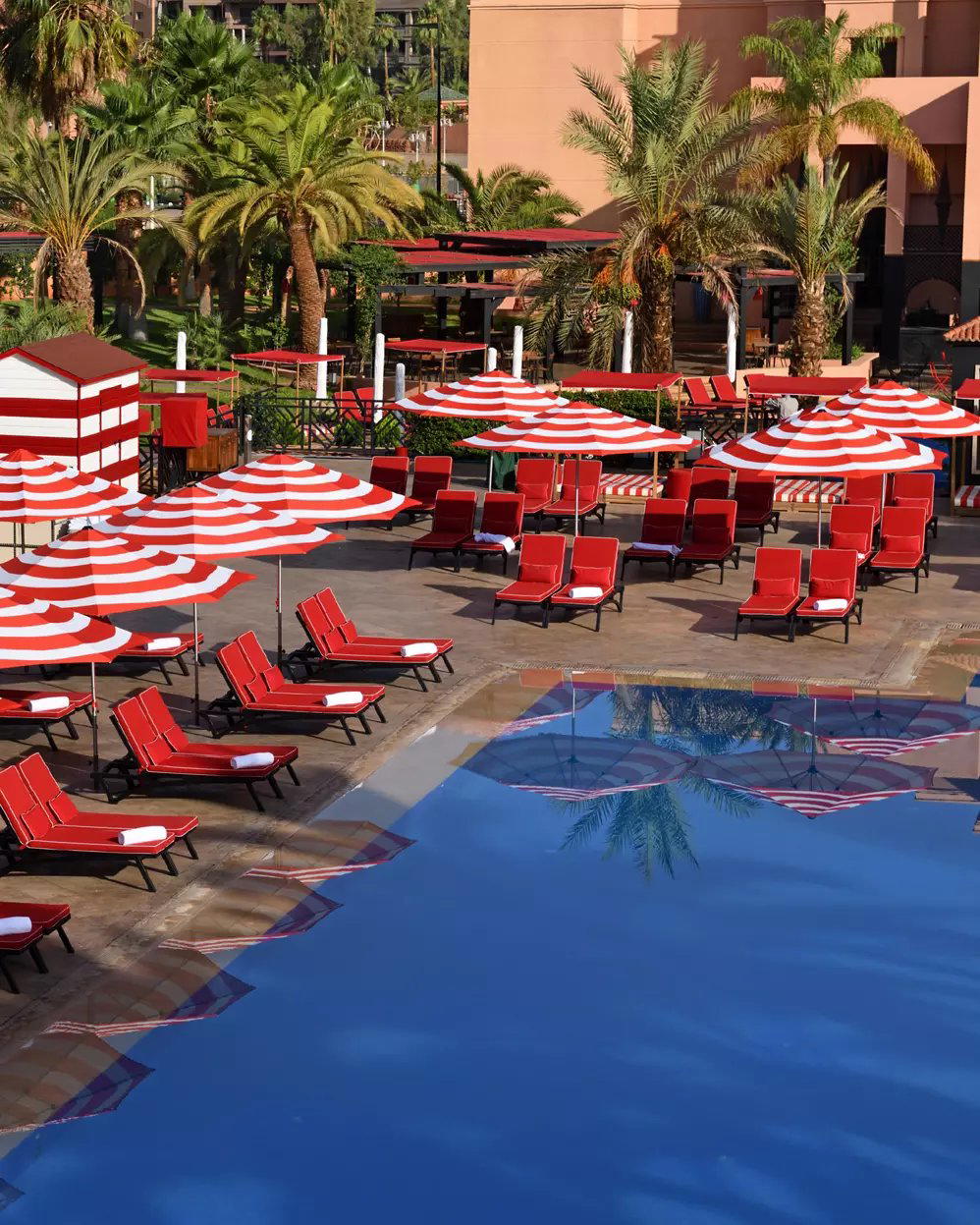
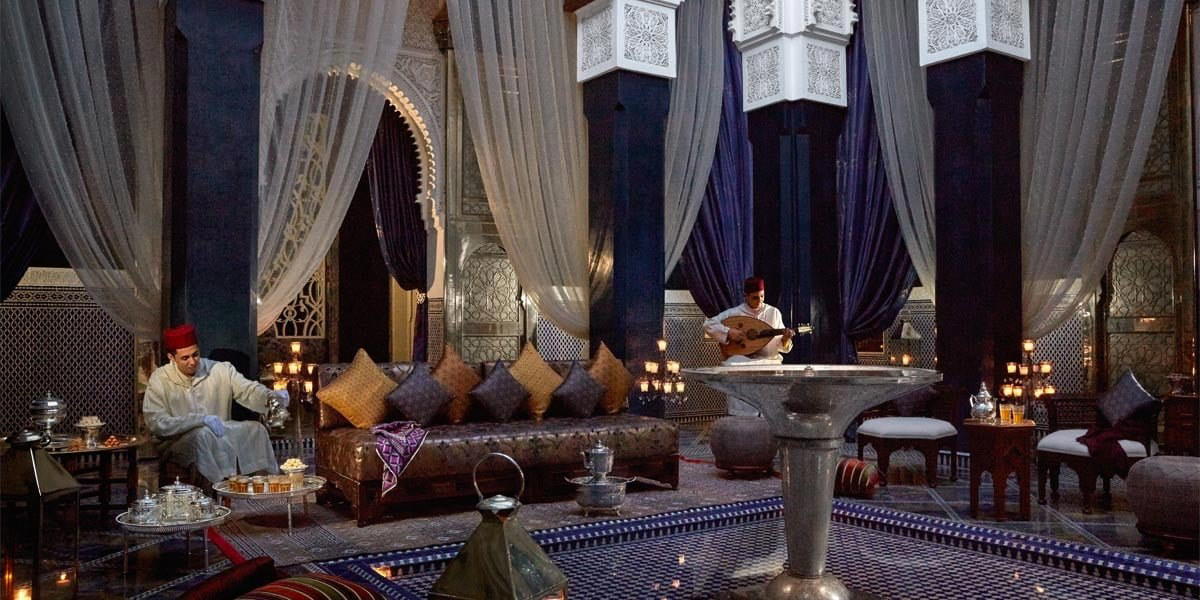
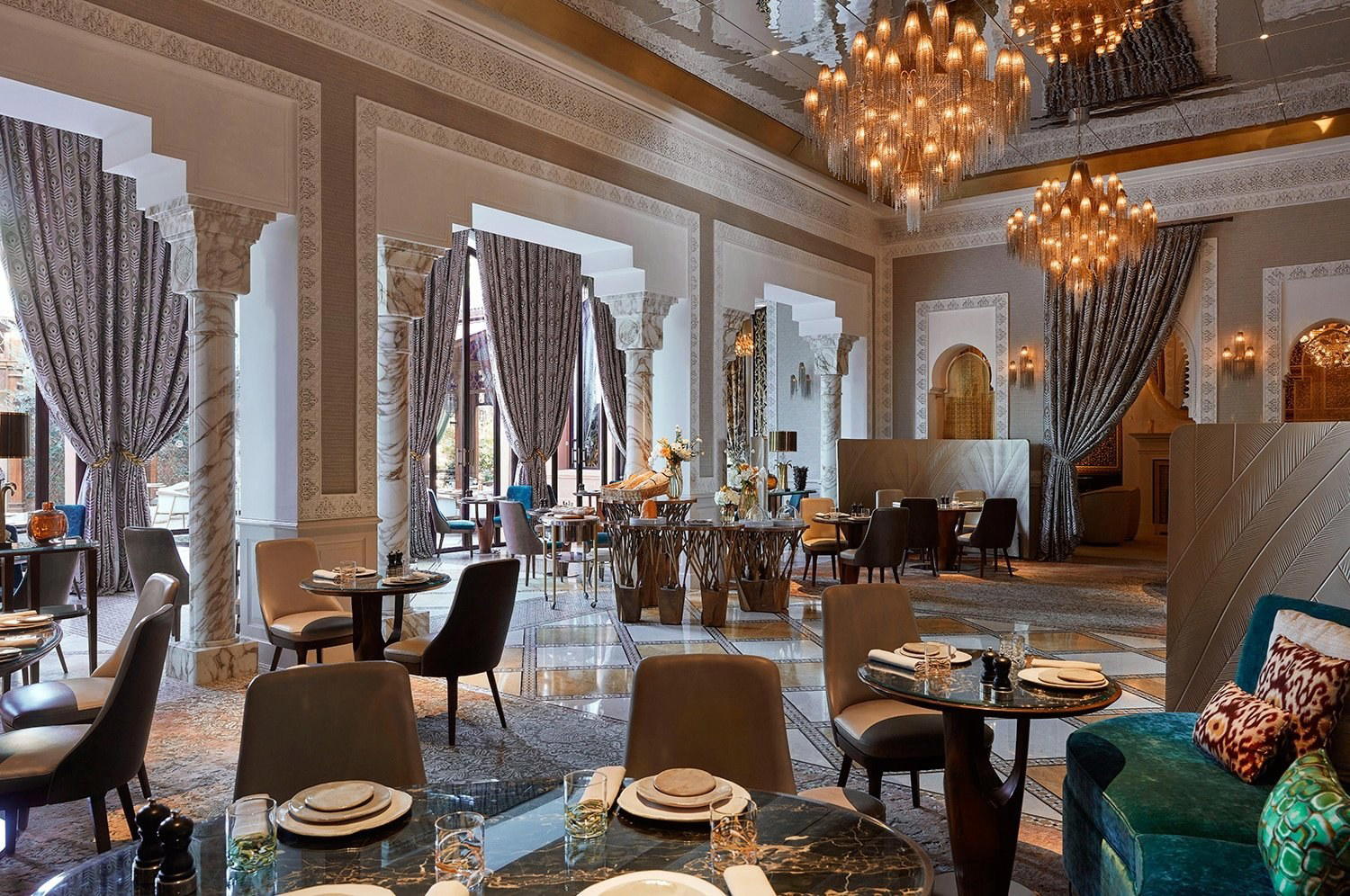
Avenue Quadissia, in Marrakech's Hivernage district, is where the city keeps its most serious hotel real estate: broad streets, mature gardens, and properties with enough land to feel genuinely removed from the medina's noise without requiring a drive to reach it. Es Saadi Palace occupies this address with the kind of footprint that defines the Moroccan palace-hotel category — a format that combines the visual grammar of traditional Moroccan architecture with resort amenities at a scale that riads, by definition, cannot match. Where properties like AnaYela or Dar Housnia operate in the intimate riad tradition, Es Saadi sits in the opposite bracket: expansive grounds, multiple pools, and a footprint that positions it alongside La Mamounia in Marrakesh as one of the city's full-scale palace properties.
That scale matters for a particular kind of traveller. Marrakech's premium accommodation market has long split between the medina's riad tradition — compressed courtyard properties where intimacy is the product, and the Hivernage and Guéliz palace tier, where gardens, pools, and multiple dining venues justify a different category of stay.
The Source of Moroccan Cooking
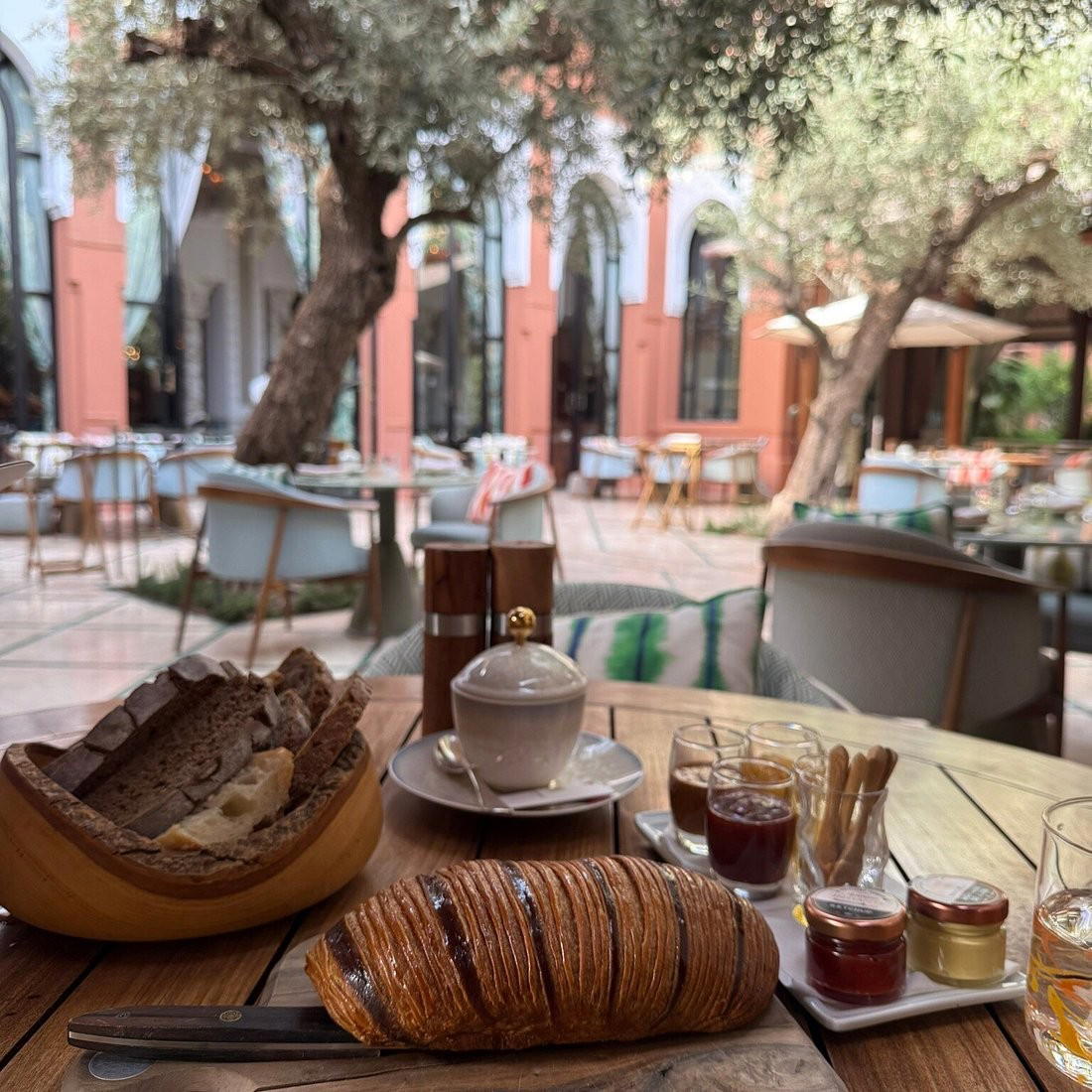
One of the clearest ways to read the quality of a Moroccan hotel kitchen is to ask how directly it connects to the agricultural supply chains that have defined the country's cooking for centuries. Morocco's food culture is deeply rooted in proximity: the argan groves of the Souss-Massa, the olive orchards of the Haouz plain surrounding Marrakech, the saffron fields of Taliouine, the preserved lemons and fermented butters that develop slowly in domestic kitchens before appearing on a table. Properties that treat these ingredients as atmospheric props, a tagine served to meet expectation, are easy to spot. Those that source deliberately, and build menus around what the Moroccan agricultural calendar actually produces, sit in a different tier.
The Hivernage palace properties in Marrakech have historically operated extensive gardens and maintained supplier relationships that smaller medina riads cannot replicate at scale. At the level of a property scoring in the low-to-mid nineties on La Liste's hotel ranking, a scale that weighs dining experience alongside accommodation, the expectation is that kitchen sourcing is intentional rather than incidental. Moroccan cuisine's reliance on slow-cooked, ingredient-forward preparation means that the quality of the base product matters as much as technique: a mechoui lamb or a chicken-preserved lemon tagine is not rescued by skill alone if the underlying ingredients are generic.
For travellers arriving from properties such as BELDI COUNTRY CLUB, which has built its dining identity around an on-site organic farm, the comparison is instructive. BELDI's farm-to-table positioning is explicit and visible; a larger palace property like Es Saadi operates its kitchen at a different scale, serving higher volumes across multiple outlets, which places different pressures on sourcing.
A Marrakech Palace in Context
Marrakech's hotel market has diversified substantially over the past fifteen years. The riad-renovation wave of the early 2000s produced hundreds of boutique medina properties at varying quality levels, from genuinely designed small hotels like Dar Les Cigognes and Dar Rhizlane to lower-grade conversions. The palace tier never participated in that wave, it predates it, and properties like Es Saadi have maintained a different competitive identity, one based on grounds, amenities breadth, and the ability to function as a self-contained destination.
That self-containment is both the category's strength and its limitation. A stay at Jnane Tamsna or Hotel La Maison Arabe places you in dialogue with the medina; the cooking school and hammam culture of those properties requires engagement with the city's rhythms. A palace property in Hivernage operates differently: the gardens, pools, casino, and multiple dining venues mean that a guest can spend three days without leaving the property. For some travellers, that is precisely the point. For others, it represents a disconnection from the city that a shorter, more medina-integrated stay would avoid.
Es Saadi's La Liste score of 93.5 points in 2026 contextualises it against international hotel benchmarks, not just within Marrakech. La Liste's methodology weighs guest experience, dining quality, and service alongside accommodation, which means a score at this level implies consistency across multiple departments rather than excellence in one area with deficiencies elsewhere. Within Morocco, comparable palace-category recognition places Es Saadi in the company of properties like Hotel Sahrai, an SLH Hotel in Fes and the Fes Marriott Jnan Palace in Fès, though those properties operate in a very different city context and at different scales.
Travellers building a broader Moroccan itinerary might pair a Marrakech palace stay with properties elsewhere in the country: the coastal positioning of Banyan Tree Tamouda Bay in Fnideq, the desert-edge experience at Dar Ahlam in Ouarzazate, or the Atlantic character of Dar Maya in Essaouira. Within Marrakech itself, those who want the palace scale without the Hivernage address should look at BELDI Country Club's more rural position on the Fez road, while those seeking smaller-scale alternatives should consult our full Marrakech restaurants guide for medina-specific options.
Planning a Stay
Es Saadi Palace sits at Avenue Quadissia, Marrakech 40000, in the Hivernage quarter, close enough to walk to the Koutoubia Mosque and Jemaa el-Fna square, though most guests use the hotel's transfer options for medina excursions. The property's grounds and multiple pools make it a considered choice for longer stays; the Hivernage location also puts guests within reach of Marrakech's better restaurant and bar strip without the navigation demands of the medina. For context on alternative experiences around the city, properties like INARA CAMP offer a very different register if desert-adjacent glamping is on the itinerary. Internationally, those who use La Liste scores as a comparative benchmark can map Es Saadi's 93.5 points against properties like Aman New York in New York City or Aman Venice in Venice, which occupy similar or adjacent tiers on the global scale. Booking should be made directly through the property or through a specialist travel advisor; high season in Marrakech runs from October through April, and the palace-tier properties fill quickly during festival periods and long weekends.
How Es Saadi Palace Marrakech compares with similar nearby venues.
| Venue | Awards |
|---|---|
| Es Saadi palace | La Liste Top Hotels (2026): 93.5pts |
Recognition history
Dated appearances from independent guides and award organizations, with the underlying list record or original source where available.
La Liste Top Hotels
La Liste
Continue exploring
More in Marrakech
Hotels in Marrakech
Browse all →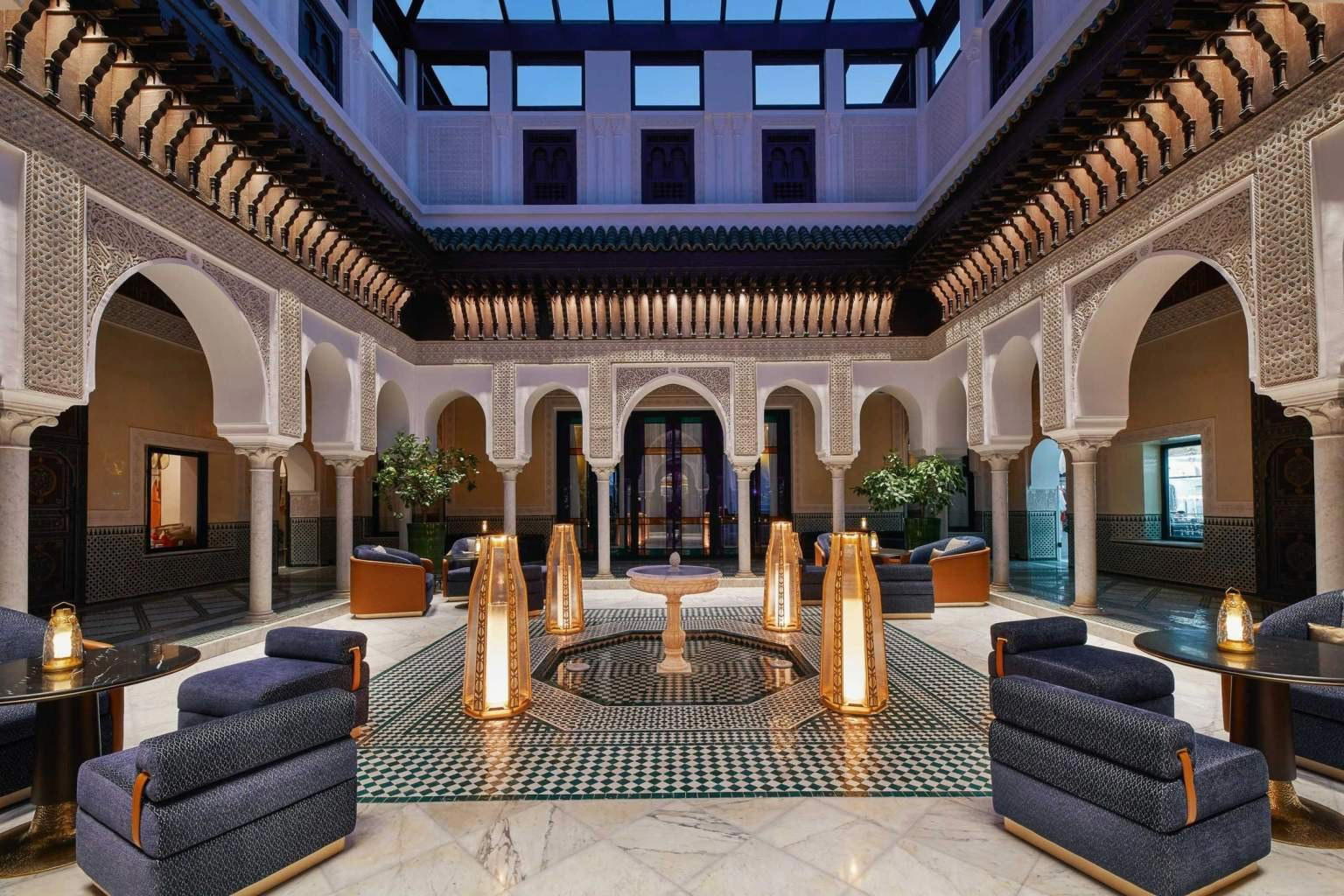
Bars in Marrakech
Browse all →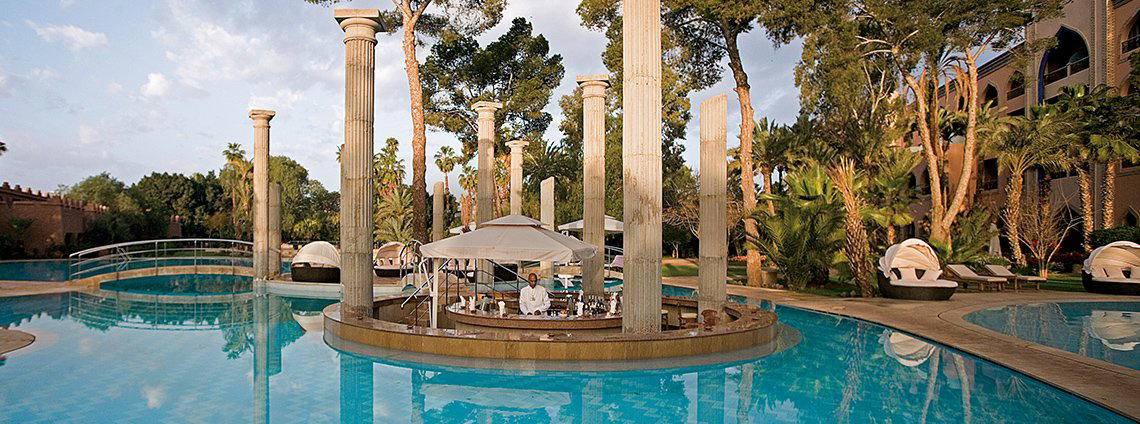

Restaurants in Marrakech
Browse all →
Wineries in Marrakech
Browse all →
At a Glance
- Elegant
- Ornate
- Romantic
- Sophisticated
- Honeymoon
- Romantic Getaway
- Wellness Retreat
- Anniversary
- Celebration
- Private Villa
- Butler Service
- Destination Spa
- Garden
- Terrace
- Panoramic View
- Historic Building
- Wi Fi
- Pool
- Spa
- Fitness Center
- Room Service
- Concierge
- Restaurant
- Bar
- Kids Club
- Tennis Court
- Valet Parking
- Mountain
- Garden
- Wi Fi
- Pool
- Spa
- Fitness Center
- Room Service
- Concierge
- Restaurant
- Bar
- Kids Club
- Tennis Court
- Valet Parking
Elegant and sophisticated with retro-chic charm, featuring lush gardens, ornate Moroccan craftsmanship, and a serene yet lively atmosphere enhanced by multiple pools and spa facilities.
Know Before You Go
- Getting there
- Avenue Quadissia, Marrakech 40000