
Riad Dar Al Dall occupies a five-suite house in Kaat Benahid, one of Marrakech's oldest medina quarters, under the This Time Tomorrow brand. The property orients around digital detox, artisanal craft, and couscous prepared in an open kitchen. It positions itself firmly in the small-scale, intention-led tier of Marrakech riad stays.
Pearl is the En Primeur Club membership app — saves, bookings, and concierge access live there. Same editors, same standards.
- Address
- 97 Kaat Benahid, Marrakesh 40000
- Phone
- +212 8 09 89 01 73
- Website
- thistimetomorrow.io
- Directions
- Get directions
 Saves & bookings on Pearl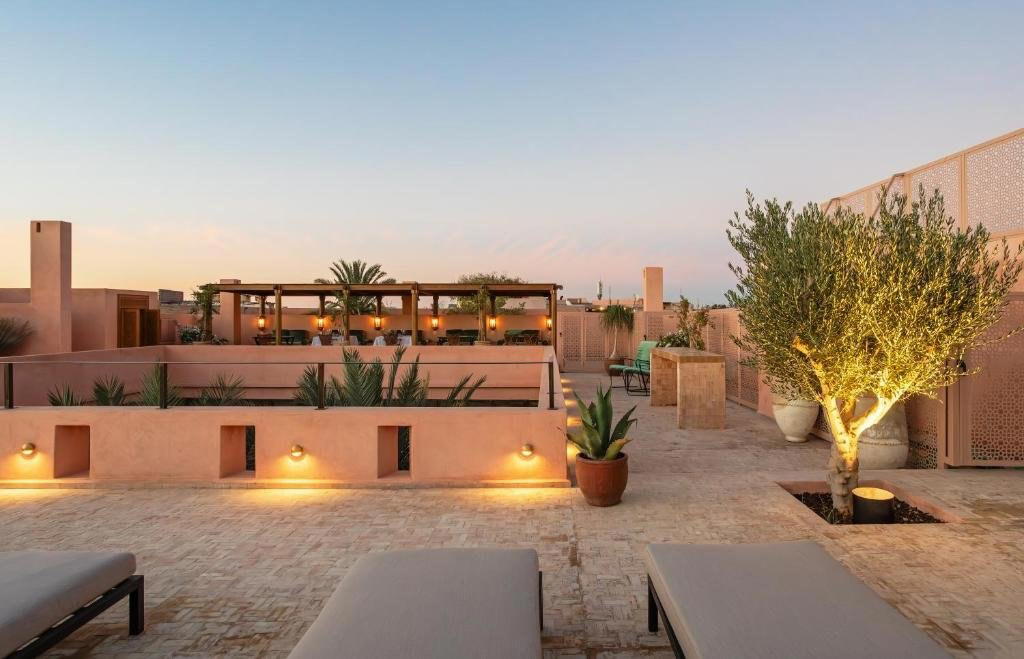
The Architecture of Stillness: Kaat Benahid and the Medina's Quieter Quarter
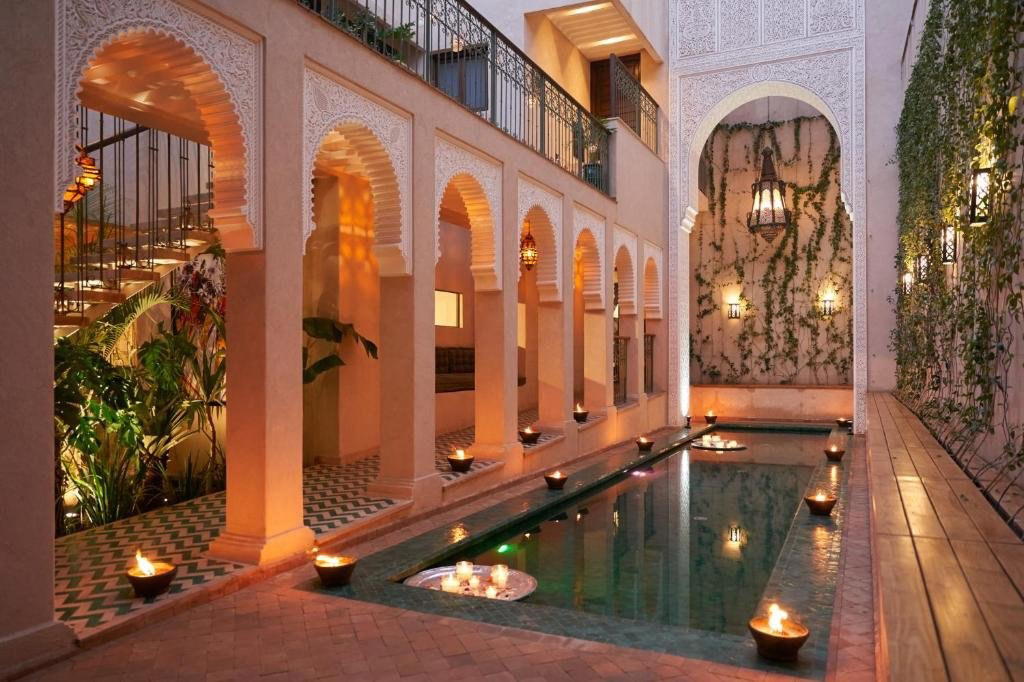
Kaat Benahid does not announce itself. Unlike the main arteries feeding Jemaa el-Fna, this quarter of the northern medina is organised around narrowing derbs and walled facades that reveal nothing from the outside. That deliberate concealment is not accidental — it is the structural logic of traditional Moroccan domestic architecture, where all life turns inward toward the courtyard. Riad Dar Al Dall, or House of Shadows, at 97 Kaat Benahid, is a property built entirely inside that logic. The five suites, the hammam, the rooftop, and the open kitchen all exist in relation to a central courtyard that governs light, air, and pace. The neighbourhood itself, one of the oldest quarters in the medina, provides the kind of residential texture that larger resort developments in Marrakech — the Royal Mansour, the Four Seasons Resort Marrakech, the Fairmont Royal Palm Marrakech, cannot reproduce at any price point.
How the Kitchen Frames the Stay
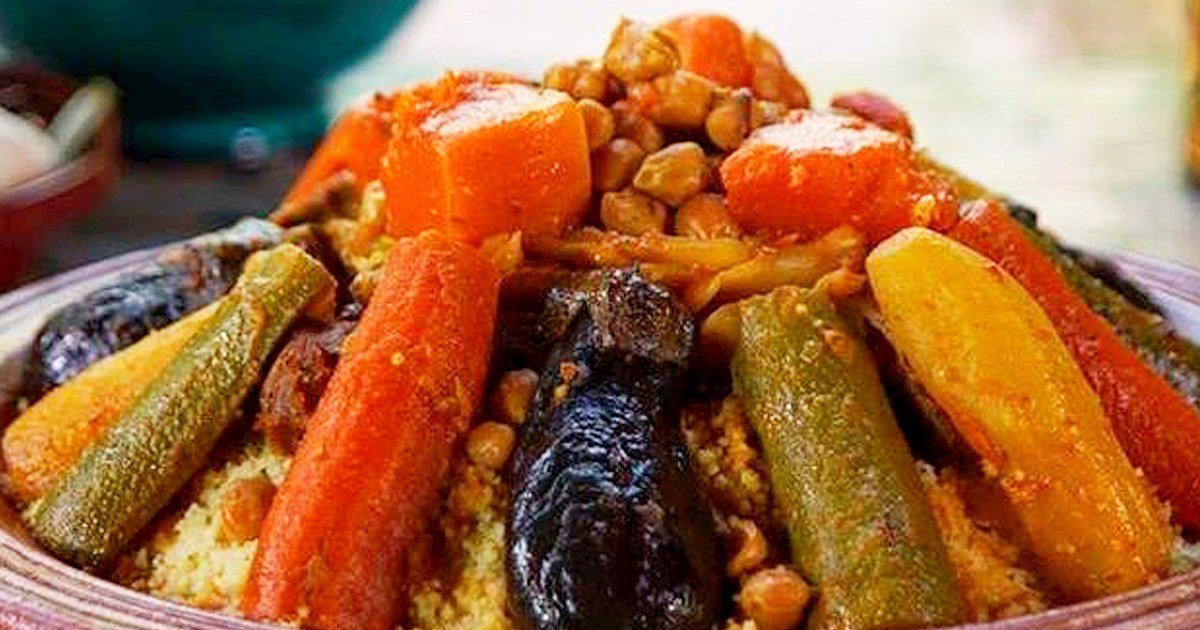
The editorial angle assigned to a venue like Dar Al Dall is, counterintuitively, the kitchen. Not because the property presents itself as a dining destination, but because in small Moroccan riads, the kitchen is an argument. It declares what the house believes. In this case, the open kitchen with couscous made the proper way is a position statement about process over convenience, about the Friday tradition of hand-rolled semolina and long-simmered broth, about food as an expression of inherited method rather than a service delivery mechanism.
In the broader Marrakech riad category, kitchen transparency of this kind distinguishes a narrow set of properties. Most guesthouses at this scale outsource meals or serve a fixed breakfast. An open kitchen where the couscous process is visible to guests is, functionally, a curated workshop of its own, one that communicates the property's alignment with the This Time Tomorrow brand ethos of intentional living. The kitchen does not serve a menu in the conventional sense; it teaches a relationship with Moroccan domestic food culture. That is a different proposition from what the large palace hotels offer, and it is a different proposition from what many of Marrakech's boutique competitors, El Fenn, IZZA Marrakech, or Ksar Char-Bagh, position as their core offering.
Five Suites, One Tier: Where Dar Al Dall Sits in Marrakech
Marrakech's accommodation market has bifurcated sharply over the past decade. On one side sit the capital-intensive palace conversions and international-brand resorts; on the other, a smaller cohort of design-led, low-key riads operating on a deliberately intimate scale. Dar Al Dall, at five suites, sits firmly in the second tier. It is the class of property where host-to-guest ratio, material honesty, and programme depth carry more weight than square footage or pool acreage.
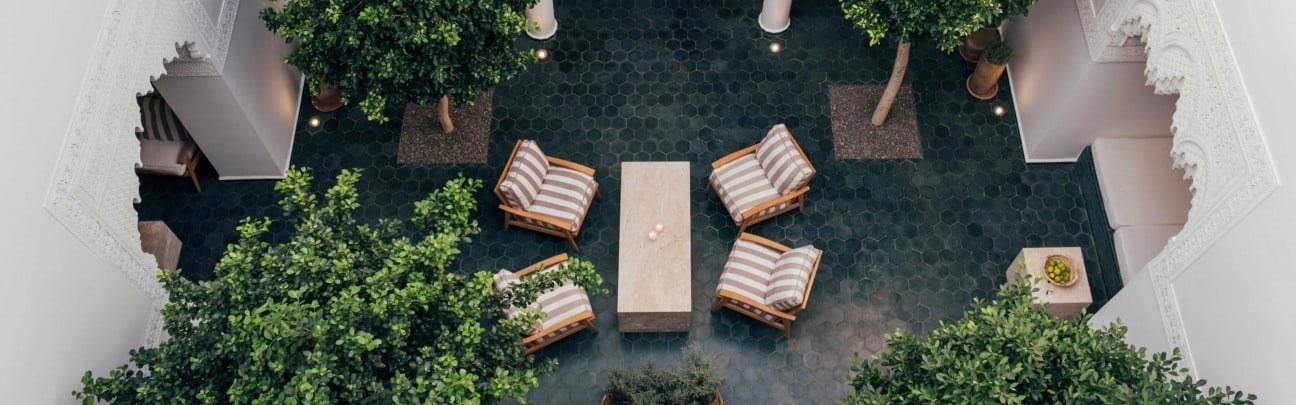
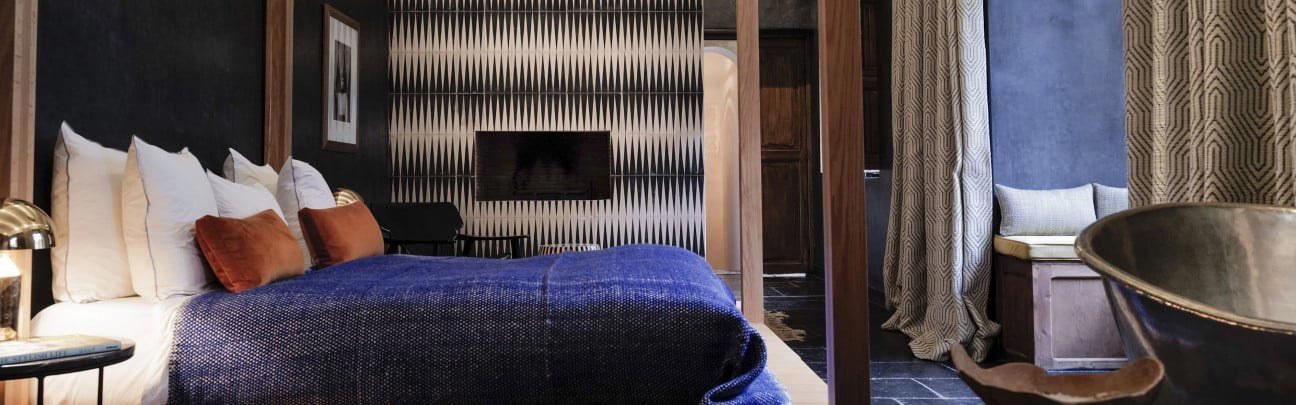
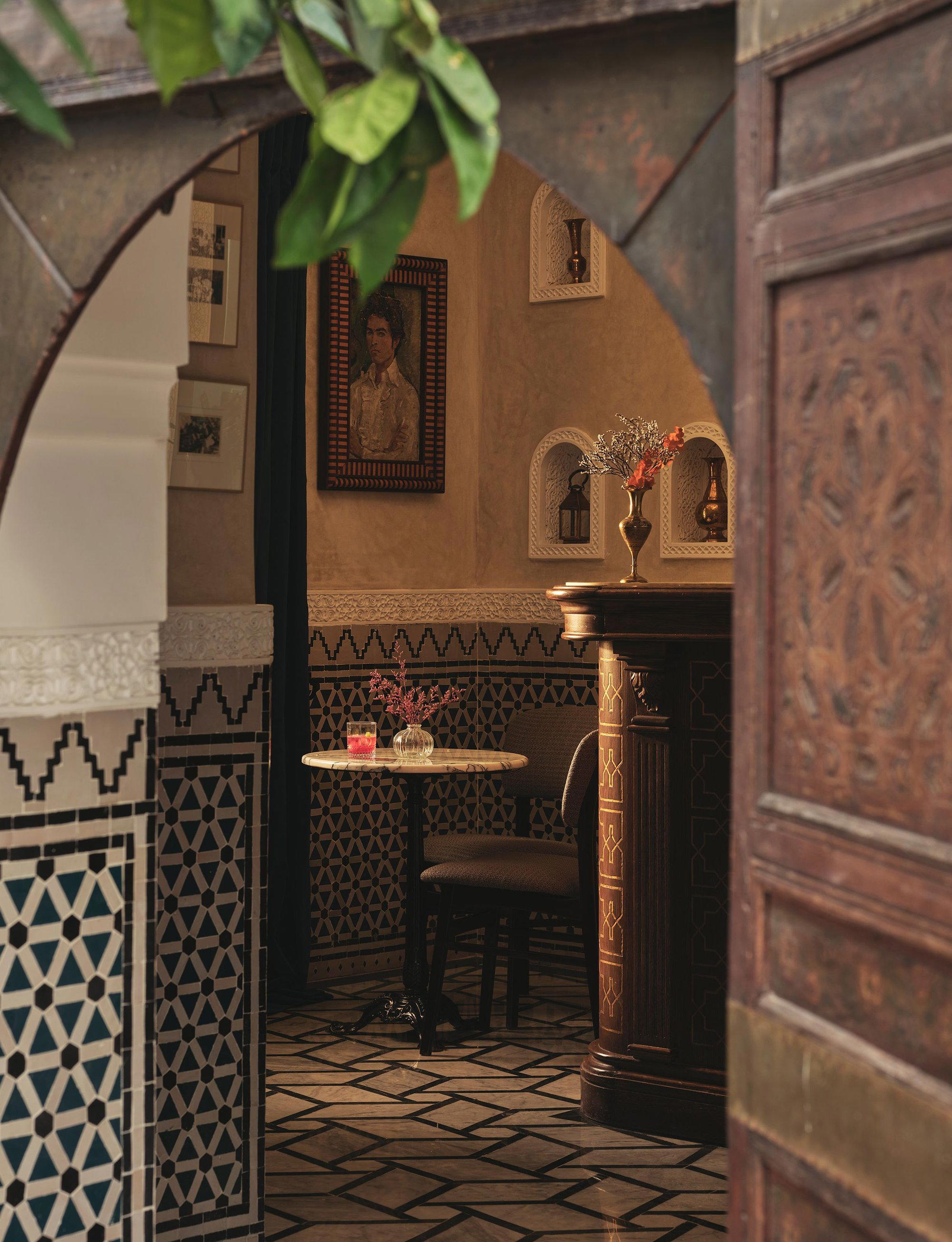
The physical detailing, hand-chiseled tilework, carved plaster, archways that cast soft geometric light across the courtyard floor, is not decorative ambition for its own sake. It reflects a particular strand of Moroccan craft revival that treats zellij and stucco not as backdrop but as the primary text of a room. Several Morocco properties in this design-forward category operate similarly: Jnane Tamsna in the Palmeraie, Dar al Hossoun in Taroudant, and Dar Maya in Essaouira each operate at the intersection of craftsmanship and intentional programming. Dar Al Dall's affiliation with the This Time Tomorrow brand adds a layer of editorial curation, workshops, digital detox structure, and a framing that positions the stay as a practice rather than a holiday.
The Hammam as Reset Mechanism
The hammam's presence at Dar Al Dall is worth pausing on, because in Moroccan culture the hammam is not a spa amenity tacked onto a hospitality product. It is a weekly civic ritual with roots in both Islamic purification practice and the broader social function of communal bathing. When a riad incorporates a private hammam, it is making a claim about how the stay is meant to be paced, there is a before and an after, a transition between the heat of the medina and the cool of the courtyard. At a five-suite property, access is naturally less pressured than at larger hotels. The rhythm it implies, workshop, hammam, rooftop, kitchen, is the itinerary Dar Al Dall quietly proposes without stating it.
Digital Detox and the Intentional Stay Format
Digital detox framing that This Time Tomorrow applies to Dar Al Dall represents a growing segment within premium short-stay hospitality. In cities like Marrakech, where the medina's compressed, sensory-dense environment is already a natural interruption of routine, the framing has a geographic logic. Narrow streets without room for vehicles, a courtyard that absorbs exterior noise, and a neighbourhood with working-quarter character rather than tourist-strip energy all reinforce the disconnection before any branded programme needs to deliver it.
Across Morocco, properties taking this approach at comparable scale include Dar Ahlam in Ouarzazate, which operates a programme-led stay in the pre-Saharan south. The common logic is that smaller properties can enforce a rhythm, through kitchen participation, craft workshops, and hammam scheduling, that larger hotels structurally cannot, given the volume of guests and the transactional pace of a 50-plus-key operation.
The Rooftop and the Quarter Below
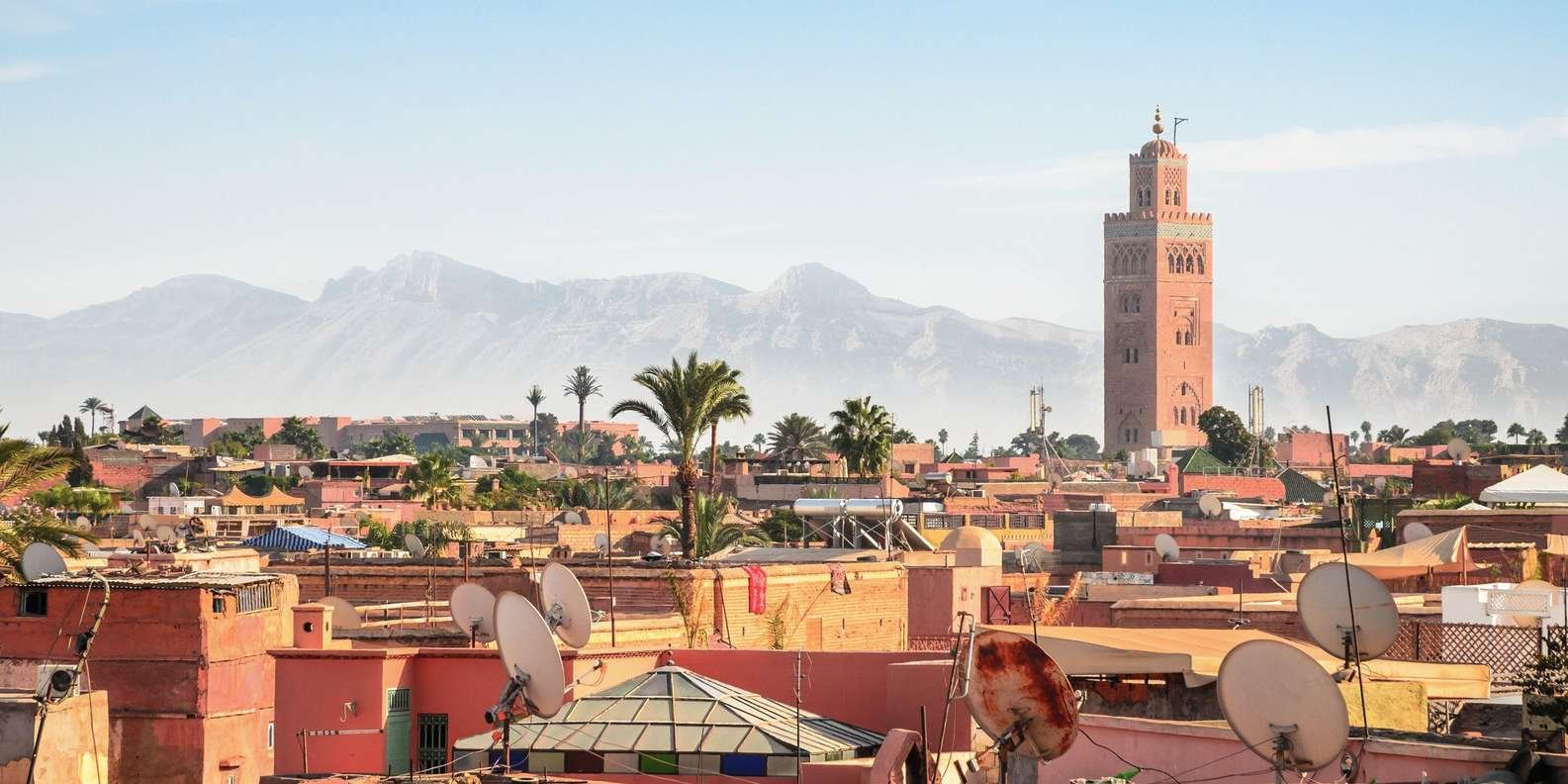
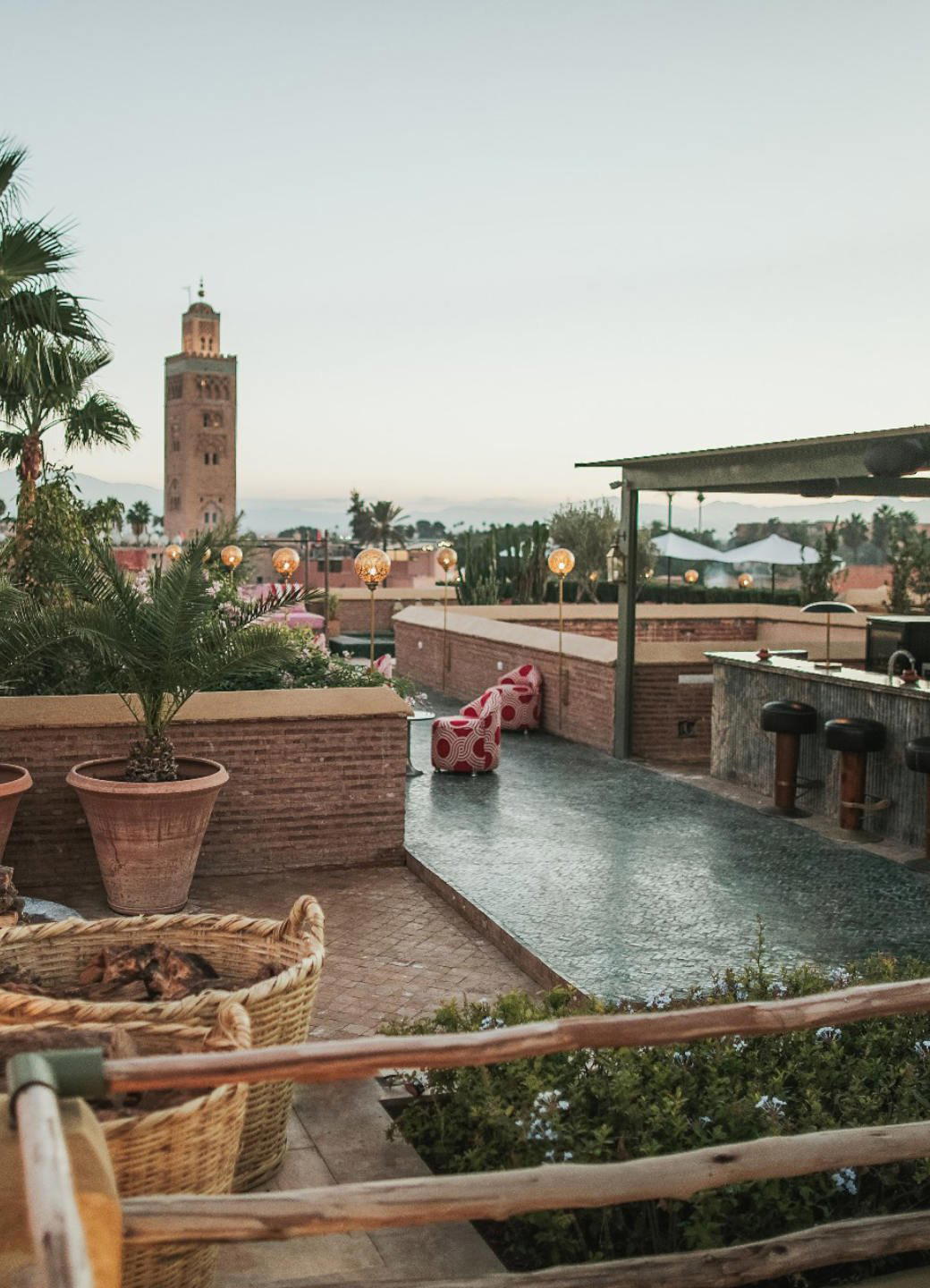
The rooftop matters not as a selling feature but as a vantage point that clarifies what Kaat Benahid actually is. From above, the medina reads as a dense horizontal field of terracotta and plaster, punctuated by minarets and satellite dishes in roughly equal proportion. The rooftop at a riad of this size is not a pool deck or a bar. It is a platform for looking at the city that holds you, which is, in its quieter way, the point of the stay.
Planning Your Stay at Dar Al Dall
The property operates five suites in a single riad structure at 97 Kaat Benahid, Marrakesh 40000, within the historic medina. The This Time Tomorrow brand frames the stay around intentional programming, workshops, hammam access, and kitchen participation are part of the experience rather than optional add-ons. Availability at a property of this scale moves quickly; early advance booking is the practical approach for anyone targeting peak Marrakech season, which runs October through April when the climate is cooler and the city at its fullest. For broader context on how Dar Al Dall fits into the wider Marrakech accommodation picture, the full Marrakesh restaurants and hotels guide maps the city's options by neighbourhood and category. Elsewhere in Morocco, travellers who respond to this kind of programme-led intimacy may find corresponding properties worth considering: Hotel Sahrai, an SLH Hotel in Fes, and Hotel Sahrai in Fez each operate in a different register but share the emphasis on considered scale. Further afield, the Banyan Tree Tamouda Bay in Fnideq, Fairmont Tazi Palace Tangier, Fairmont La Marina Rabat Salé, Fes Marriott Jnan Palace, Hyatt Regency Casablanca, Hilton Taghazout Bay Beach Resort and Spa, and Château Roslane round out a country-wide picture for travellers planning a longer Moroccan itinerary.
How Riad Dar Al Dall Marrakech compares with similar nearby venues.
| Venue | Awards |
|---|---|
| Riad Dar Al Dall - This Time Tomorrow in Marrakech | Michelin 1 Key |
Recognition history
Dated appearances from independent guides and award organizations, with the underlying list record or original source where available.
Michelin 1 Key
Michelin
Continue exploring
More in Marrakech
Hotels in Marrakech
Browse all →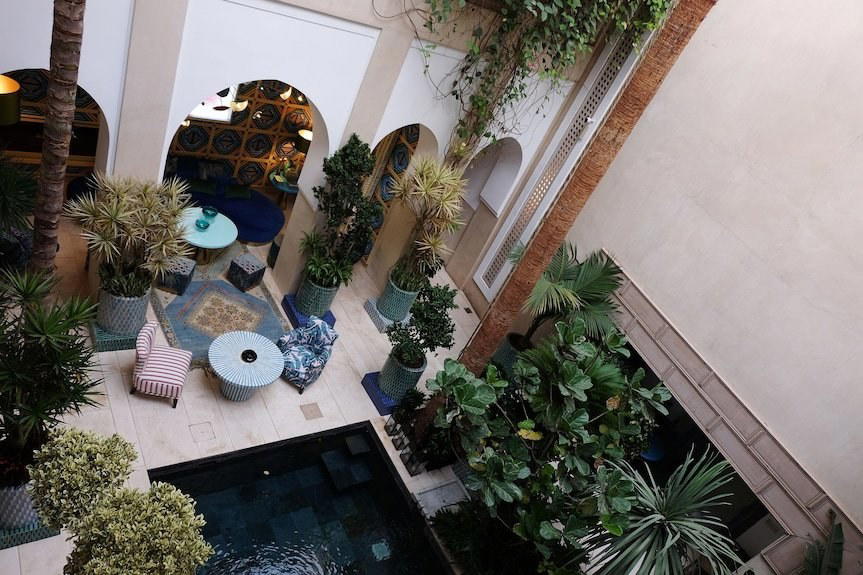
Bars in Marrakech
Browse all →
Restaurants in Marrakech
Browse all →
Wineries in Marrakech
Browse all →
At a Glance
- Quiet
- Elegant
- Intimate
- Cozy
- Sophisticated
- Romantic Getaway
- Honeymoon
- Anniversary
- Weekend Escape
- Garden
- Terrace
- Historic Building
- Wi Fi
- Pool
- Spa
- Restaurant
- Room Service
- Concierge
- Garden
- Garden
- Wi Fi
- Pool
- Spa
- Restaurant
- Room Service
- Concierge
- Garden
Tranquil and relaxing oasis with dappled sunlight through palms, gentle fountain sounds, warm lighting from curated art and alcoves, providing calm amidst city bustle.
Know Before You Go
- Getting there
- 97 Kaat Benahid, Marrakesh 40000