
Dar Housnia is a riad-style property in the heart of Marrakech's medina, recognised in La Liste's Top Hotels 2026 with 93 points. The address places guests inside the labyrinthine derb system, a few steps from the noise of Jemaa el-Fna but shielded from it by thick pisé walls. For travellers who want immersion in medina life rather than distance from it, this is the operative choice.
Pearl is the En Primeur Club membership app — saves, bookings, and concierge access live there. Same editors, same standards.
- Address
- 2 Derb lalla Azouna, Marrakesh 40000
- Phone
- +212 5 24 37 66 97
- Website
- dar-housnia.com
- Directions
- Get directions
 Saves & bookings on Pearl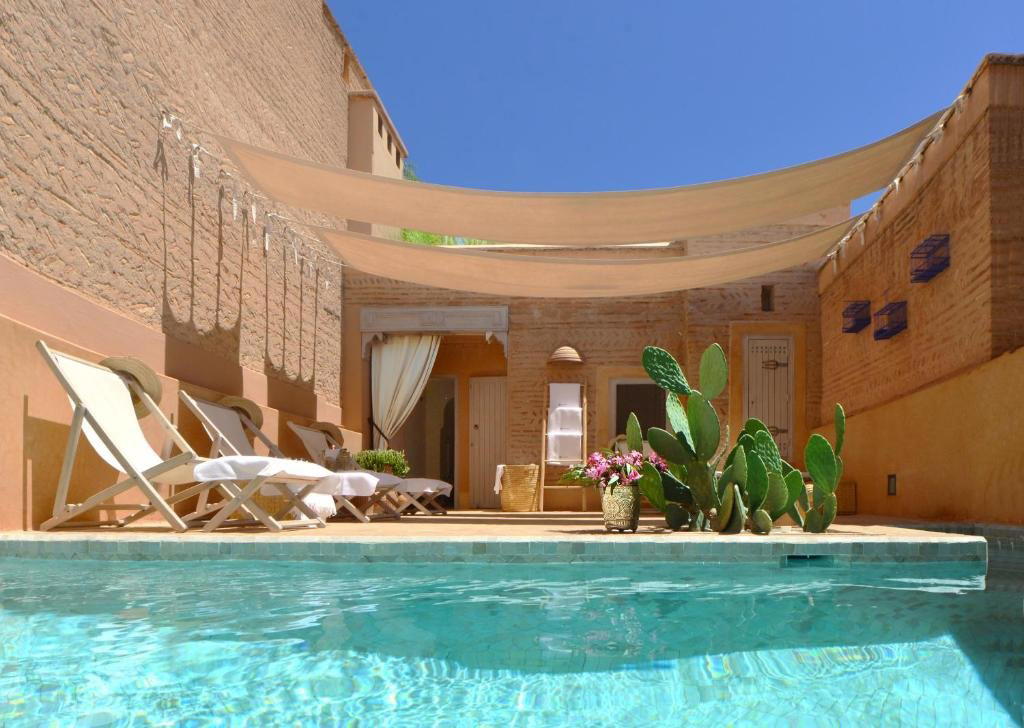
Inside the Medina Wall: What Dar Housnia Gets Right
Marrakech's riad category has fragmented sharply over the past decade. At the entry level, converted houses with shared plunge pools and four-room inventories crowd the Airbnb tier. At the leading, a smaller cohort has separated itself through architectural integrity, service depth, and recognition from bodies that apply consistent cross-market criteria. Dar Housnia, at 2 Derb Lalla Azouna, sits in that upper bracket: its 93-point score in the La Liste Leading Hotels 2026 ranking places it alongside properties measured against international standards, not merely local ones. That credential matters in a city where the term 'riad' covers a spectrum from lovingly restored to superficially renovated.
The medina address is specific in a way that hotel websites often obscure. A derb is a semi-private lane, typically gated, that branches off the main arteries of the old city. It is a residential typology, not a tourist corridor. Staying inside one means mornings that begin with the smell of bread baking in a communal oven two doors away and evenings when the lane quiets to near-silence while Jemaa el-Fna, less than a kilometre distant, remains in full session. Properties in this position, like Dar Les Cigognes and AnaYela, trade on exactly this contrast: insulation from the medina's intensity while remaining embedded in its grain.
The Room as the Point
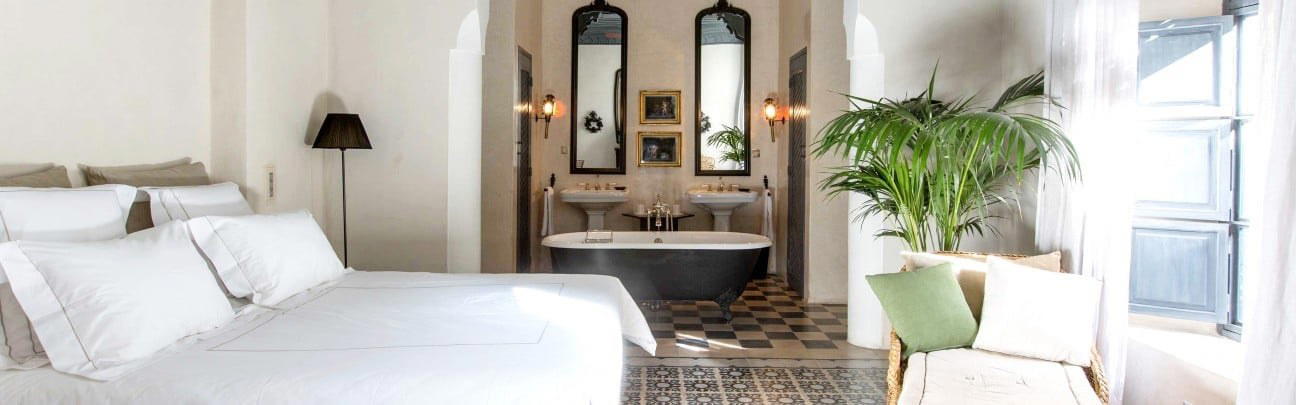
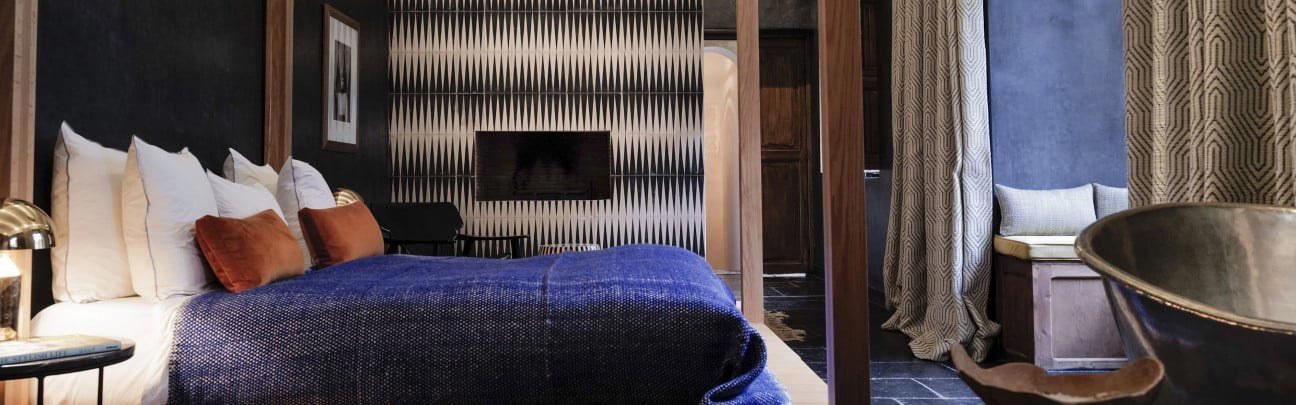
In riad properties of this tier, the room is not merely a place to sleep. It is the architectural argument the building makes for itself. Traditional Moroccan interiors work through a logic of concealment and revelation: plain exteriors giving way to courtyards, courtyards giving way to salons, salons to private terraces. The bedroom in a well-executed riad sits at the end of that sequence, and the quality of the execution shows in the details. Zellige tilework, carved stucco, and cedar woodwork are the period vocabulary, but the gap between properties lies in whether those elements are sourced locally and finished by artisans who still hold the craft, or replicated in cheaper composite materials imported from outside the region.
La Liste's 93-point placement is a signal about that gap. The ranking methodology incorporates a wide base of source data and applies quality filters that correlate with physical and experiential standards. For a medina riad operating without a major hotel group affiliation, that positioning carries weight.
For those comparing options in the same category, Hotel La Maison Arabe and Dar Rhizlane represent the longer-established end of Marrakech's high-end riad spectrum, with documented culinary programs and larger footprints. Es Saadi Palace sits in a different register entirely, offering the resort-scale experience that riad stays specifically do not. Dar Housnia belongs to the intimate, architecture-first camp, where the room count stays low and the experience stays personal.
Overnight in the Medina: The Texture of the Stay
The overnight experience at a medina riad is shaped by factors that fall outside the room itself. Sound is one: despite the thick walls, the call to prayer from a nearby mosque will arrive before dawn, and no property in the medina can entirely exclude it. This is not a flaw. For many travellers it is precisely the point, the reason a riad stay differs from a night in a soundproofed international hotel tower. The question is whether the property frames this texture as part of the experience rather than apologising for it.
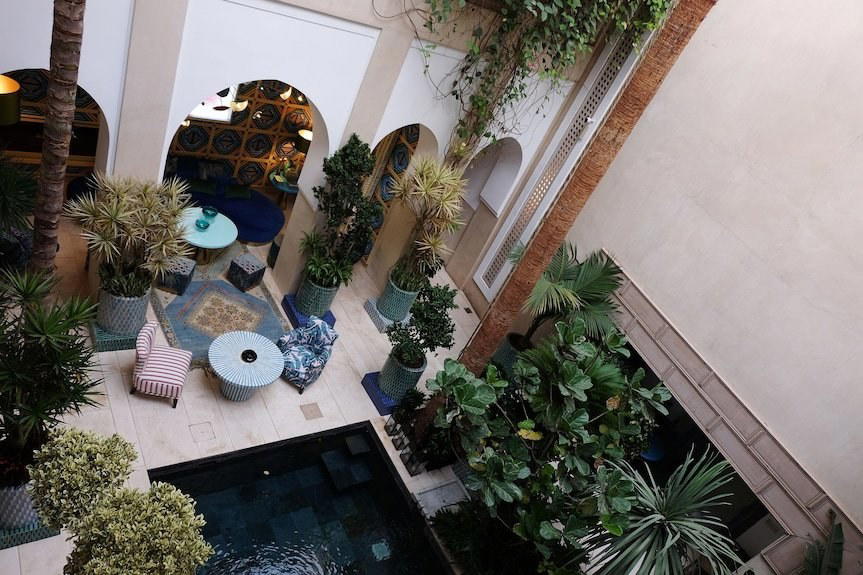
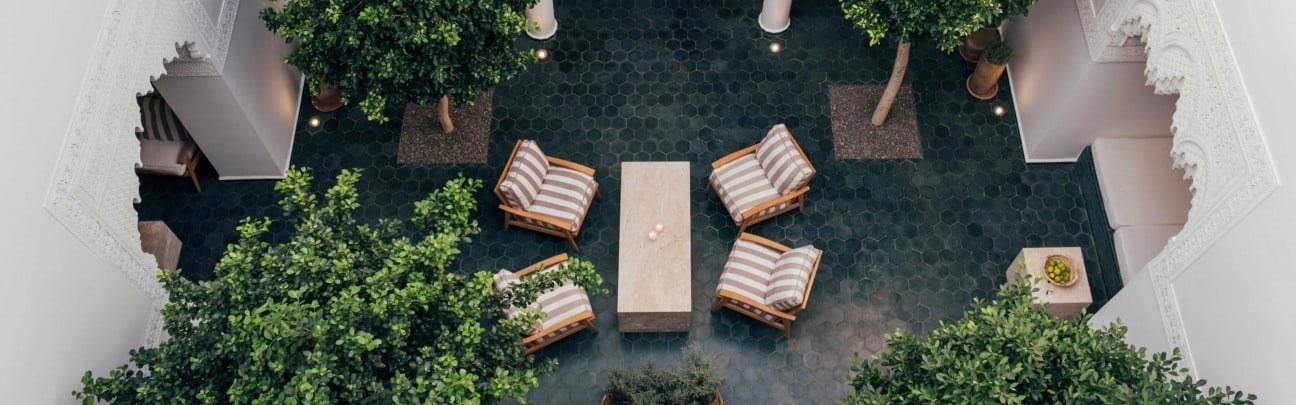
Morning is typically when a riad property earns or loses its argument. The courtyard, if properly proportioned, catches early light in a way that flat-roofed modern hotels cannot replicate. Breakfast served around a central fountain, with the ambient geometry of the central space working as the dining room, is the format that riad stays promise. Properties that deliver this well tend to be those with limited key counts and hands-on management, characteristics more common in the Dar Housnia tier than in larger, group-managed inventories.
The Marrakech medina's geography also affects practical planning in ways worth knowing before arrival. Streets in the derb system are rarely drivable. Luggage typically travels the final stretch by handcart, and check-in logistics require a meeting point or clear directions communicated ahead of arrival. This is standard for the category, not specific to this property, but it catches first-time medina visitors off guard. For context on how Marrakech's small luxury properties handle this, and on the broader medina hotel cluster, the full Marrakech guide maps the relevant options across price tiers and neighbourhoods.
Morocco's Broader High-End Hotel Conversation
Dar Housnia operates within a Moroccan luxury hotel market that has grown considerably in profile. The country's high-end tier now runs from medina riads to coastal resorts to desert camp formats. INARA CAMP and Jnane Tamsna represent the garden and camp-style formats that attract a different kind of Marrakech visitor. Outside the city, Dar Ahlam in Ouarzazate, Dar al Hossoun in Taroudant, and Dar Maya in Essaouira show how the dar typology extends across the country's different geographies. In the north, Hotel Sahrai in Fes and Fairmont Tazi Palace in Tangier cover the urban luxury end of a Morocco itinerary, while Banyan Tree Tamouda Bay and Hilton Taghazout Bay address the coastal resort segment. La Mamounia remains the reference point at the top of the Marrakech tier, against which all other local luxury addresses are implicitly measured. Hyatt Regency Casablanca, Fairmont La Marina Rabat Salé, Fes Marriott Jnan Palace, and Château Roslane extend the picture into business travel and wine country categories respectively. For travellers building a longer Morocco itinerary, understanding where Dar Housnia sits, as a medina-immersion specialist rather than a resort or palace-scale property, clarifies what to book here and what to book elsewhere.
For reference points beyond Morocco, the riad model has loose analogues in other cities where historic urban fabric has been converted into small luxury hotel stock: the palazzo hotel in Venice (see Aman Venice) and the converted townhouse category in New York (see The Fifth Avenue Hotel and Aman New York) share the logic of intimate key counts and architectural specificity, even if the cultural context differs entirely. Beldi Country Club in Marrakech represents a further comparison: a garden-estate format that draws on Moroccan craft traditions in a different spatial register from the compressed medina riad.
Planning Your Stay
Dar Housnia is located at 2 Derb Lalla Azouna, Marrakesh 40000. Given the absence of a listed website or phone number in public records, the most reliable booking route is through platforms that have verified the property directly; checking La Liste's own directory, where the 2026 recognition appears, is a reasonable starting point for contact information. Marrakech's medina properties in this tier frequently book out weeks in advance during the October-to-April high season, when temperatures are moderate and the city draws significant European visitor volume. Summer arrivals in July and August face intense heat and should plan accordingly. Arrival logistics in the medina require advance coordination for luggage transfer from the nearest vehicle drop-off point to the derb entrance.
How Dar Housnia Marrakech compares with similar nearby venues.
| Venue | Awards |
|---|---|
| Dar Housnia | La Liste Top Hotels (2026): 93pts |
Recognition history
Dated appearances from independent guides and award organizations, with the underlying list record or original source where available.
La Liste Top Hotels
La Liste
Continue exploring
More in Marrakech
Hotels in Marrakech
Browse all →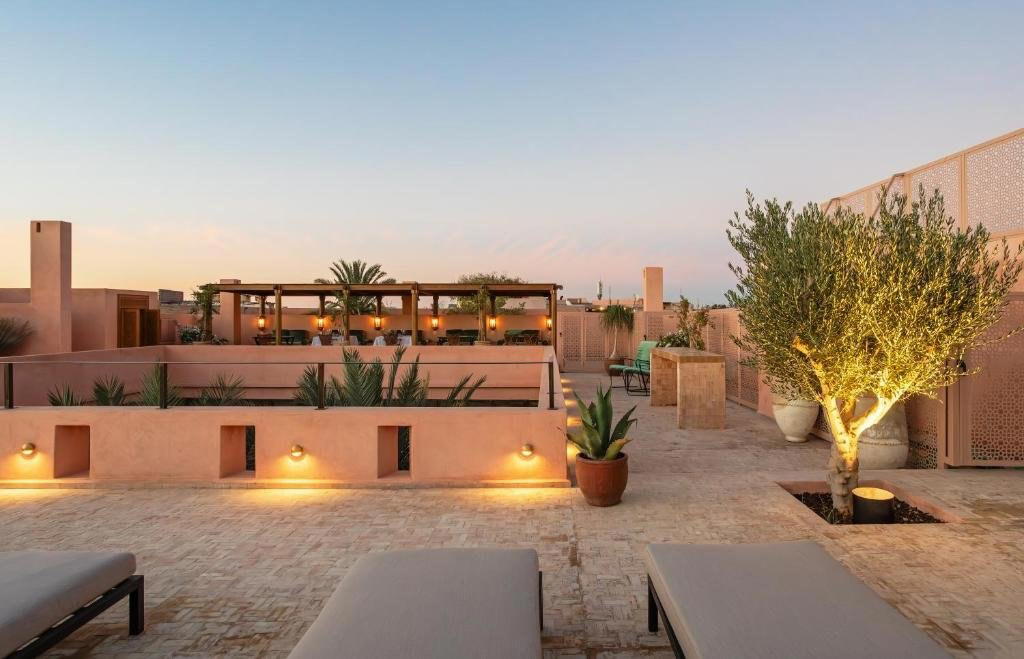
Bars in Marrakech
Browse all →
Restaurants in Marrakech
Browse all →
Wineries in Marrakech
Browse all →
At a Glance
- Romantic
- Elegant
- Intimate
- Sophisticated
- Scenic
- Romantic Getaway
- Honeymoon
- Anniversary
- Weekend Escape
- Private Villa
- Rooftop Pool
- Destination Spa
- Garden
- Terrace
- Historic Building
- Panoramic View
- Butler Service
- Wi Fi
- Pool
- Spa
- Massage
- Concierge
- Restaurant
- Bar
- Room Service
- Air Conditioning
- Laundry Service
- Garden
- Mountain
- Street Scene
- Wi Fi
- Pool
- Spa
- Massage
- Concierge
- Restaurant
- Bar
- Room Service
- Air Conditioning
- Laundry Service
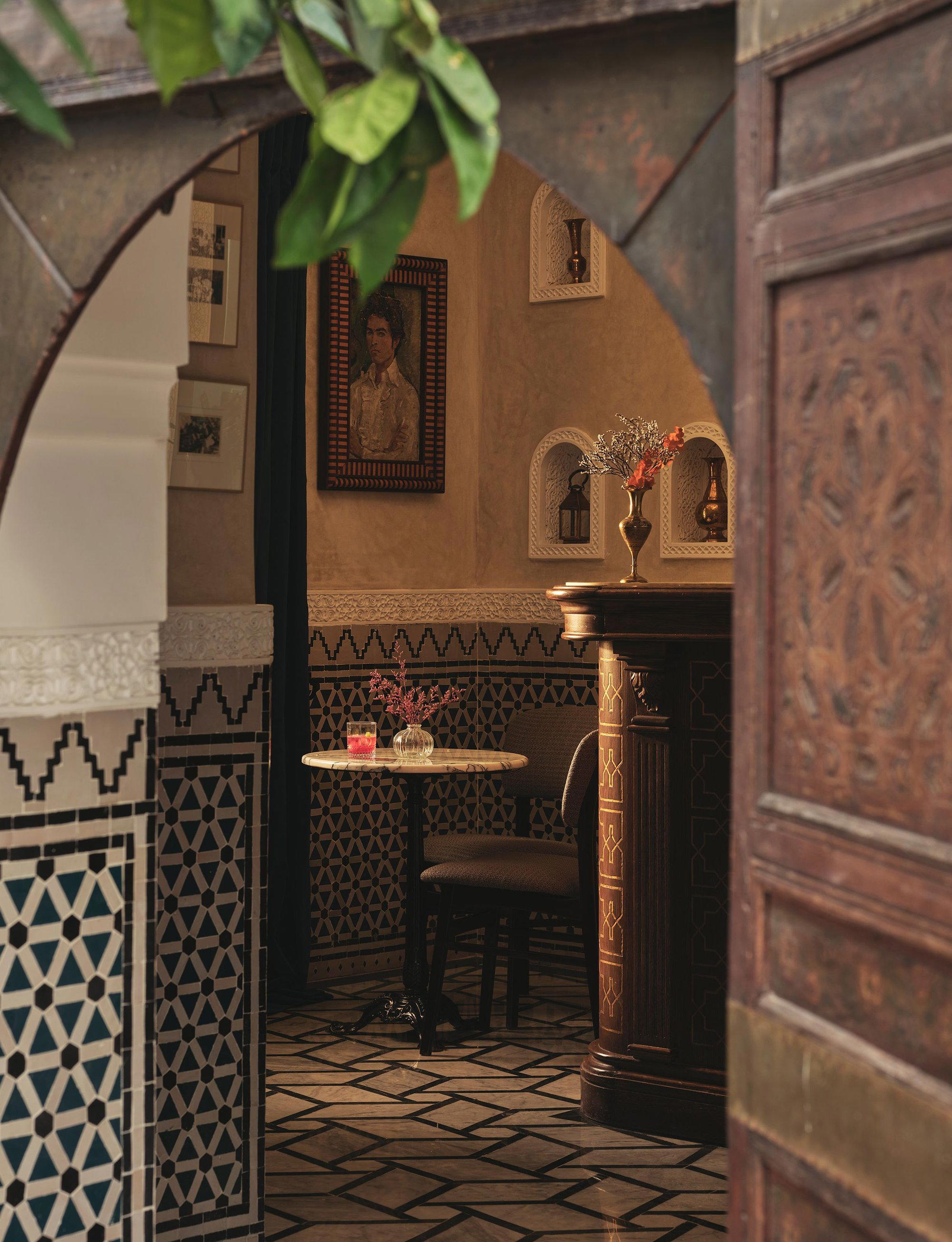
Serene and tranquil oasis with warm, intimate lighting from traditional Moroccan design elements, open-air courtyards, and peaceful rooftop spaces that contrast with the lively medina outside.
Know Before You Go
- Getting there
- 2 Derb lalla Azouna, Marrakesh 40000