Six kilometres from Marrakech's medina walls, Beldi Country Club occupies a sprawling rose garden compound that operates at a register entirely different from the city's riad hotels. The format is day-club-meets-estate: gardens, pools, hammam, and Moroccan dining spread across grounds that absorb crowds without feeling congested. It is the kind of place that rewards arriving early and leaving late.
Pearl is the En Primeur Club membership app — saves, bookings, and concierge access live there. Same editors, same standards.
- Address
- KM6 route du Barrage BP 210, Marrakech 40000, Morocco
- Phone
- +212 5243 83950
- Website
- beldicountryclub.com
- Directions
- Get directions
 Saves & bookings on Pearl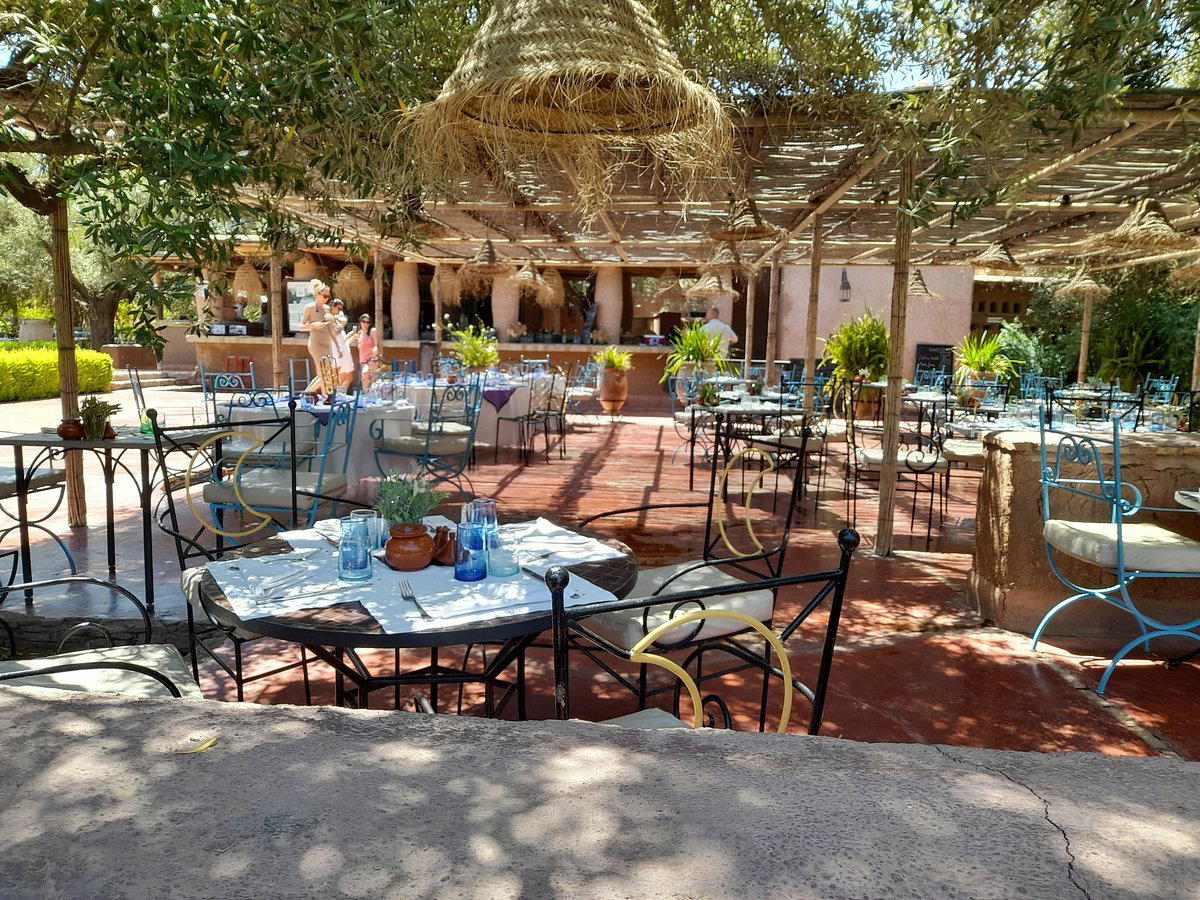
A Different Speed of Marrakech
The road south from Marrakech toward the Barrage reservoir runs through a stretch of olive groves and rose farms that feels disconnected from the medina's compression. At kilometre six, Beldi Country Club announces itself not with a grand facade but with a turn onto a track through gardens, the city noise dropping away before you reach the entrance. This is deliberate: the property is built around the idea that Marrakech at its most restorative is not the souk or the square, but the orchard, the hammam, and the long lunch that becomes dinner by accident.
This kind of format, the estate-as-day-destination rather than hotel-as-room-provider, occupies a specific niche in Moroccan hospitality. Properties like Jnane Tamsna and Dar Rhizlane have developed in a similar direction: grounds and gardens as the primary offer, accommodation as the overnight extension of an experience centered on place rather than programme.
The Grounds as the Point
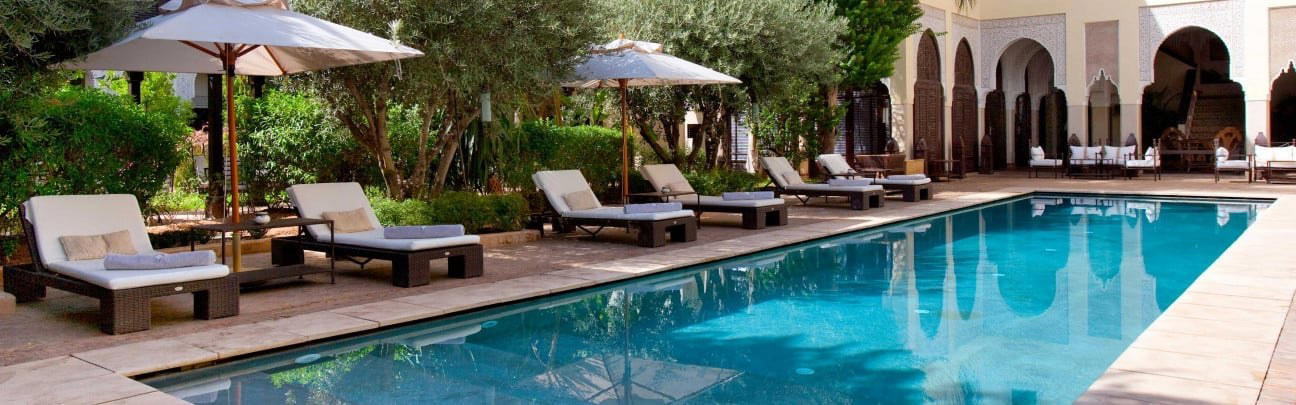
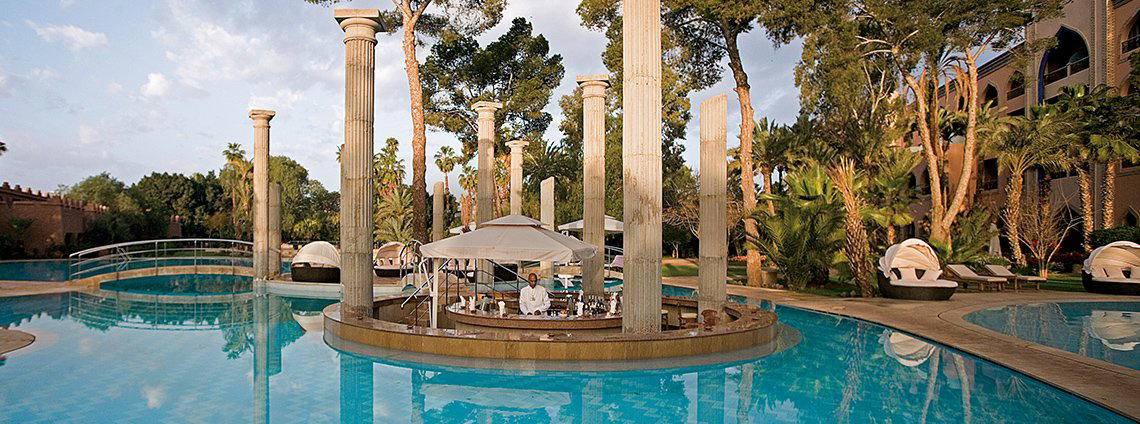
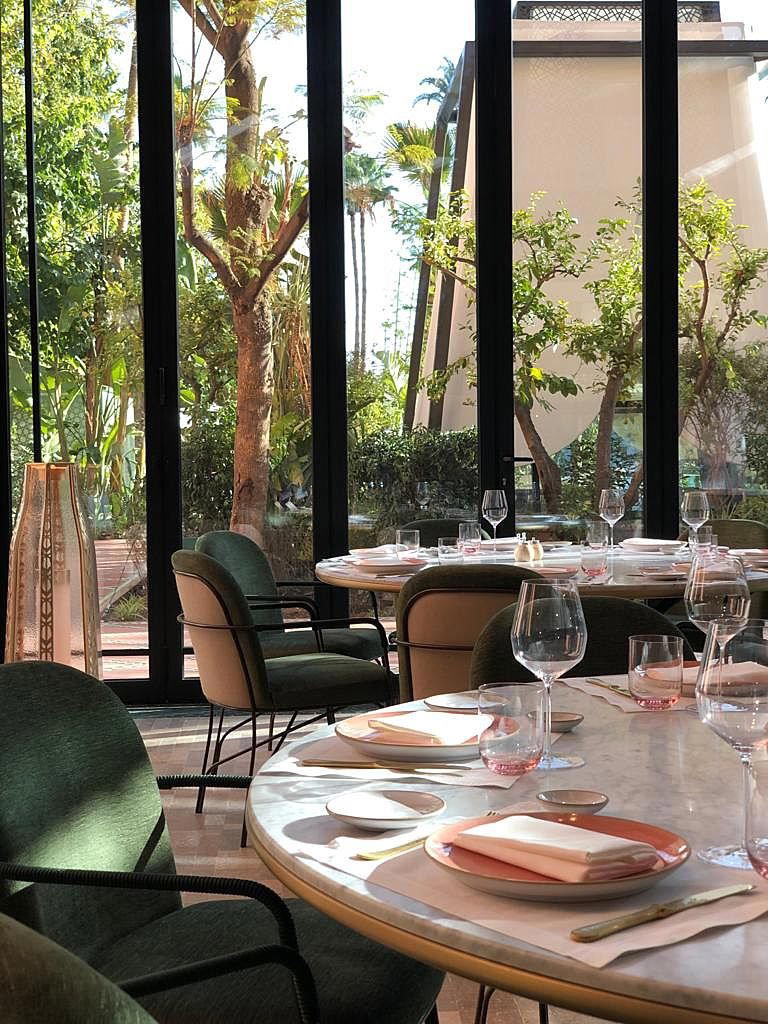
Beldi's acreage is among the most generous of any private property in the Marrakech palmery fringe. The gardens include rose plantations, vegetable plots that feed the kitchen, and a series of distinct outdoor spaces: shaded pavilions, open pool terraces, and quieter corners that require some exploration to find. That scale means the property absorbs large numbers without concentrating them into a single focal point, which is exactly how Marrakech's smarter garden properties manage the tension between commercial viability and atmosphere.
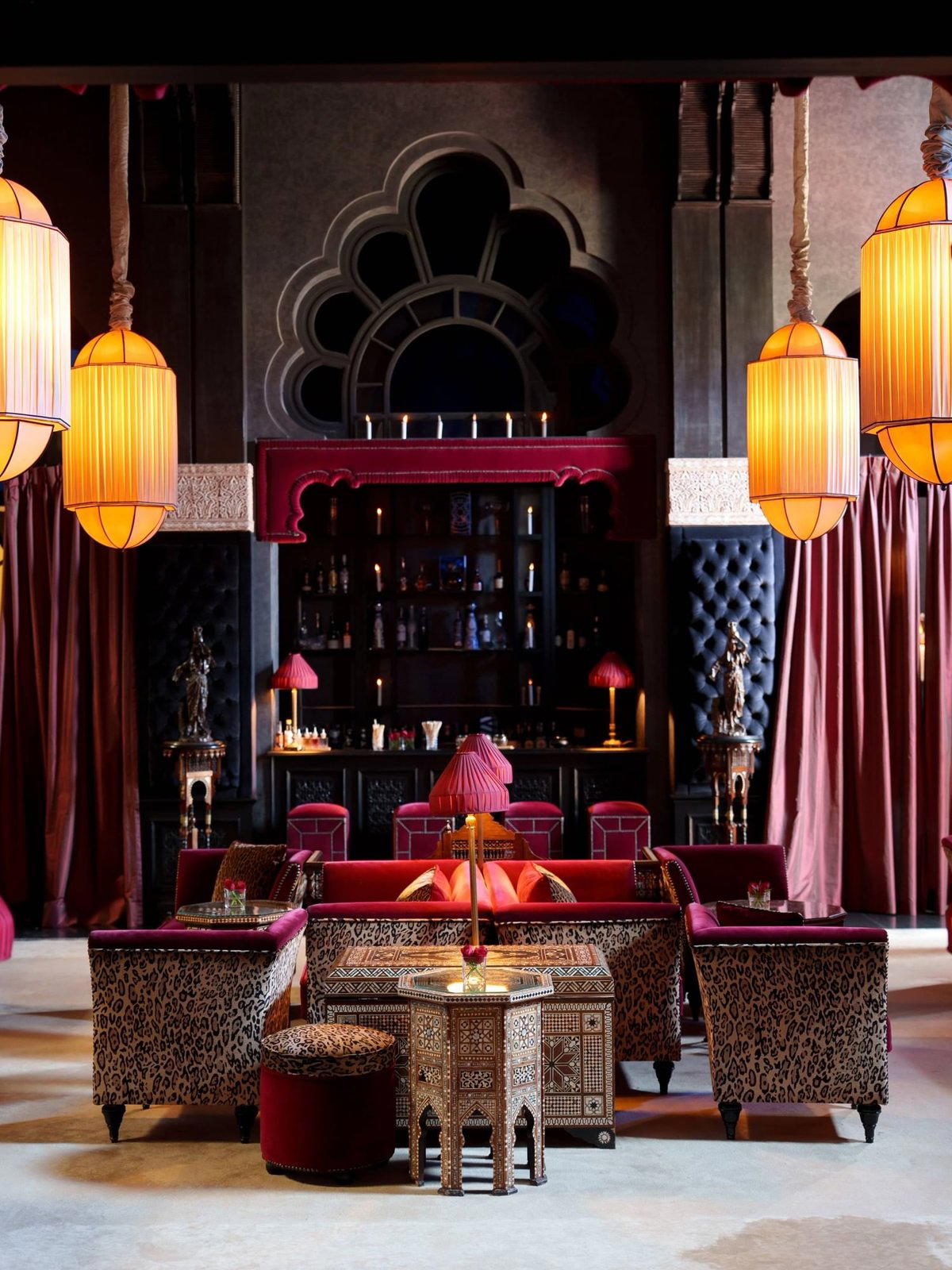
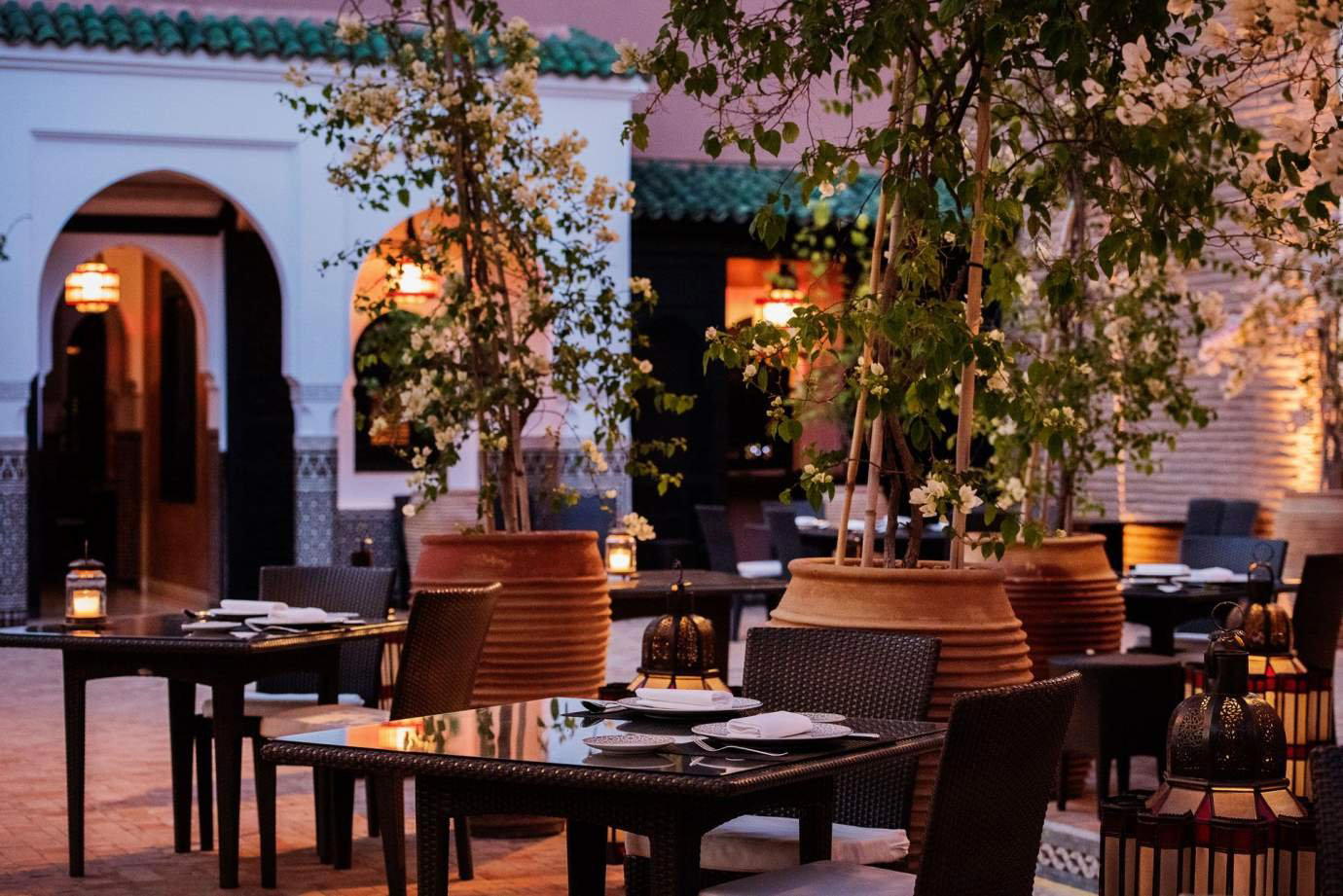
The architectural language draws on southern Moroccan vernacular: tadelakt walls in earthy tones, carved plasterwork in the covered areas, and ironwork lanterns that read differently at midday than they do at dusk. What it avoids is the over-curated riad aesthetic that can make some Marrakech properties feel more like stage sets than places to spend time. Here, the wear on the furniture and the weight of the bougainvillea overhead signal that the grounds have been lived in, not installed.
Service at Beldi: The Estate Rhythm
In many Marrakech properties, the tension in hospitality is between the traditional Moroccan model of warm but reactive service and the anticipatory format that international visitors increasingly expect. Beldi has resolved this in a particular way: by training staff to operate at the property's own tempo rather than the guest's impatience. Drinks arrive when the garden dictates the pace, not when a timer suggests efficiency. This is not slowness as failure; it is the service equivalent of the long lunch, and guests who arrive understanding that tend to find it the most restorative part of the experience.
The day-visitor format means staff handle a broad range of guest types across a single afternoon, from overnight guests using hammam facilities to day visitors arriving for lunch to groups booking the gardens for private events. Managing that variety without the experience fragmenting requires a particular kind of operational intelligence. Properties that get this right, as Hotel La Maison Arabe does in the medina with its cooking workshops, tend to do so by giving staff genuine authority to read and respond to each table or group independently.
The Kitchen and Moroccan Table
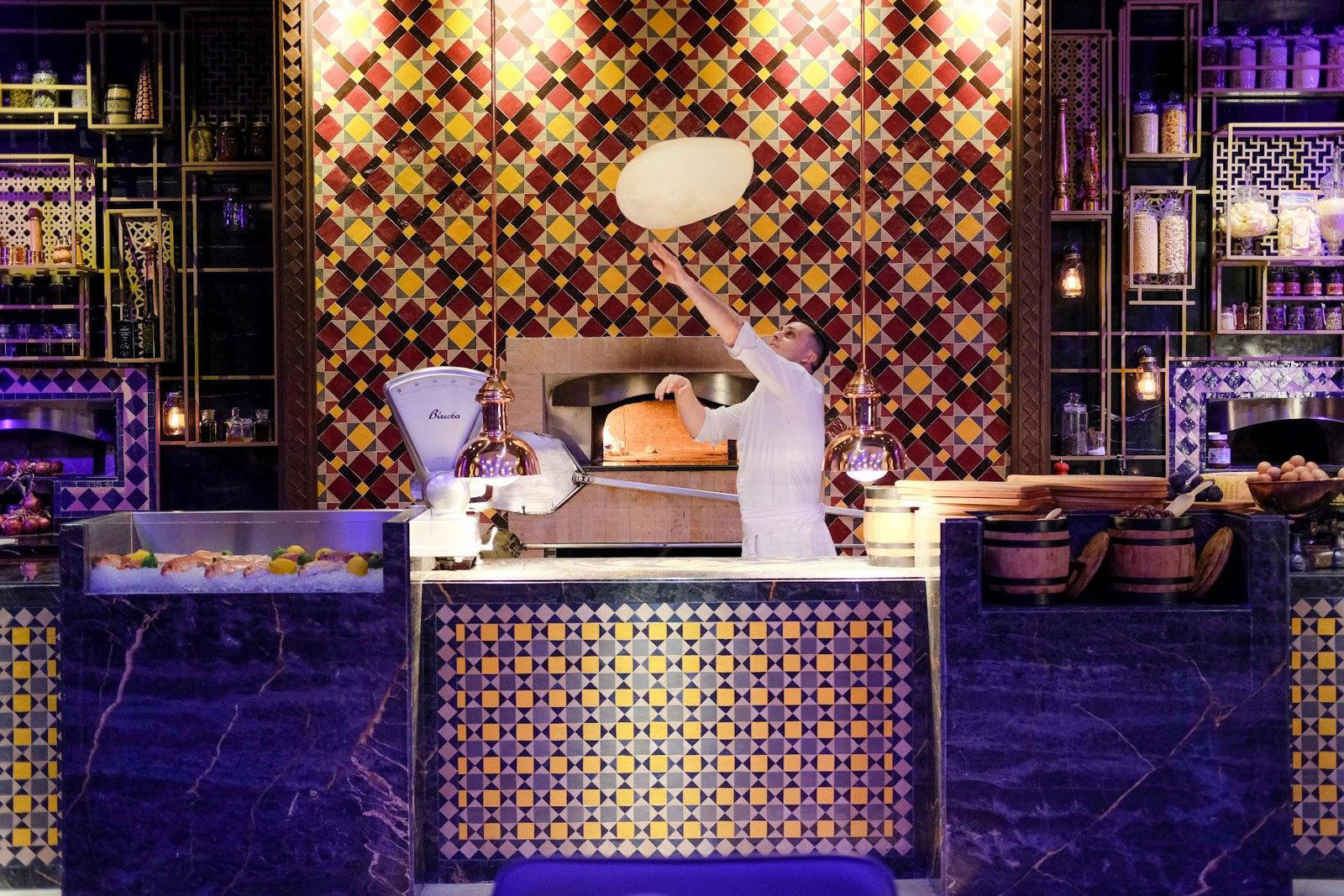
Moroccan hospitality at this level is built around the communal format: tagines, couscous, mechoui, and salads served in quantity rather than composed as individual plates. Beldi's kitchen draws on the property's own gardens for herbs and vegetables, which in practical terms means the cooking follows a seasonal logic even when the menu doesn't explicitly advertise it. The rose harvest in April and May is the most visually dramatic expression of this, the rose water and petal preparations appearing across both the kitchen and the hammam treatments during those weeks.
AnaYela and Dar Les Cigognes both operate with similar commitments to sourcing from within or near the property. What distinguishes Beldi is the scale at which it does this: the vegetable and herb plots are productive enough to supply a kitchen serving well beyond the overnight guest count, which gives the day visitor offer a credibility it might otherwise lack.
Positioning in Marrakech's Property Set
Marrakech's hospitality offer splits broadly into three tiers: the grand-scale palace hotels anchored by La Mamounia in Marrakesh and Es Saadi palace; the intimate riad format represented by properties like Dar Housnia; and the garden-estate format where Beldi operates. The estate tier requires a different decision-making framework from the visitor. You are not choosing between rooms or selecting a restaurant; you are choosing to spend a significant portion of a day in one place, which means the quality of the grounds and the hospitality rhythm matter more than thread counts or star ratings.
For visitors spending time elsewhere in Morocco, the contrast with other cities is instructive. Hotel Sahrai, an SLH Hotel in Fes, operates with a similarly design-led sensibility, while Dar Ahlam in Ouarzazate takes the estate-as-destination format to its most theatrical expression in the south. Beldi sits between those poles: more grounded than Dar Ahlam, more spatially generous than the city riads.
Planning a Visit
Beldi Country Club sits at kilometre six on the Route du Barrage, approximately a fifteen-minute drive from the medina by taxi. Day visitors and overnight guests both use the property, so arriving mid-morning secures the leading choice of garden position before the lunch period fills the more shaded areas. The hammam and pool are accessible to day visitors subject to availability, and the property has historically hosted private events that can affect general access on certain dates, so confirming in advance is advisable. The rose season, running from April into mid-May, is the single most compelling time to visit: the gardens are at their most productive and the kitchen makes the most direct use of what the land is growing. For broader Marrakech context, the our full Marrakech restaurants guide maps the city's dining and hospitality offer across neighbourhoods and formats. Those extending their Morocco itinerary south might also consider Dar al Hossoun in Taroudant or Dar Maya in Essaouira for similarly garden-anchored experiences in different regional settings.
Continue exploring
More in Marrakech
Hotels in Marrakech
Browse all →
Bars in Marrakech
Browse all →
Restaurants in Marrakech
Browse all →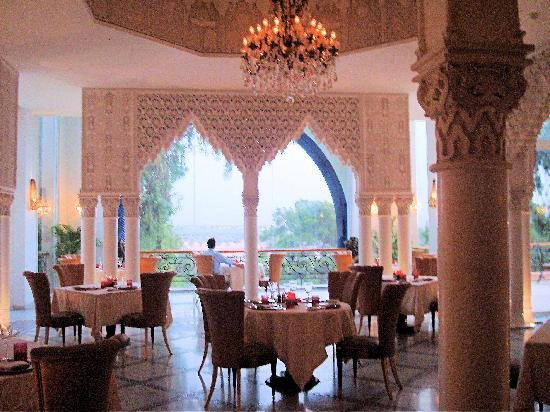
Wineries in Marrakech
Browse all →
At a Glance
- Romantic
- Scenic
- Elegant
- Rustic
- Cozy
- Honeymoon
- Romantic Getaway
- Family Vacation
- Destination Wedding
- Group Retreat
- Garden
- Golf Course
- Pool
- Spa
- Tennis
- Fitness Center
- Room Service
- Concierge
- Kids Club
- Garden
- Mountain
- Pool
- Spa
- Tennis
- Fitness Center
- Room Service
- Concierge
- Kids Club
Relaxed and romantic with candlelit evenings, shaded courtyards, and garden views.
Know Before You Go
- Getting there
- KM6 route du Barrage BP 210, Marrakech 40000, Morocco