Dar Rhizlane occupies a privileged position on Avenue du Président Kennedy, one of Marrakech's principal addresses for palace-scale riad hotels. The property sits within the city's upper tier of traditional Moroccan hospitality, where architecture, garden setting, and dining ritual carry as much weight as room count. Guests looking for a considered alternative to the medina's more frenetic offerings will find the address worth examining.
Pearl is the En Primeur Club membership app — saves, bookings, and concierge access live there. Same editors, same standards.
- Address
- Av. du Président Kennedy, Marrakech 40020, Morocco
- Phone
- +212 5244 21303
- Website
- dar-rhizlane.com
- Directions
- Get directions
 Saves & bookings on Pearl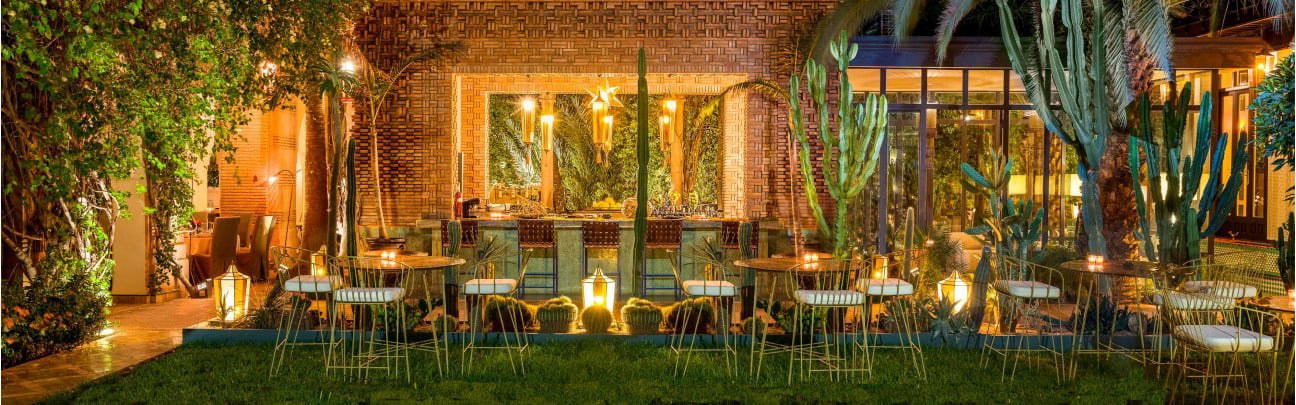
Avenue du Président Kennedy and the Grammar of Marrakech's Palace Hotels
Marrakech has two distinct hotel registers. The first clusters inside or just outside the medina walls, where riad conversions range from modest guesthouses to elaborately restored mansions. The second runs along the city's wider boulevards, where larger plots allowed for the kind of garden-scale properties that the medina's dense urban fabric could never accommodate. Dar Rhizlane, addressed at Avenue du Président Kennedy, belongs to the second register. That address places it near a corridor of established palace hotels, each competing on grounds where landscaping, architectural volume, and culinary programme do as much to justify rates as thread count or spa square footage. For the traveller comparing options in this tier, understanding what differentiates one address from another requires looking past the shared vocabulary of carved plasterwork and mosaic tiling that all properties in this category deploy.
The broader Marrakech hotel market has undergone a meaningful shift over the past decade. Properties that once competed primarily on historical prestige now contend with a wave of design-led boutique openings. AnaYela and Jnane Tamsna represent the garden-estate model at smaller key counts, while La Mamounia in Marrakesh anchors the heritage-flagship end. Es Saadi palace sits in a comparable neighbourhood band to Dar Rhizlane, with a larger footprint and an entertainment-linked identity.
The Dining Identity of a Marrakech Palace Property
In this tier of Marrakech hospitality, the dining programme is rarely incidental. Across the city's palace-scale riad hotels, food and drink have become increasingly central to how a property positions itself, particularly as the gap between good and mediocre hotel restaurants has widened. Hotel La Maison Arabe built its reputation partly on cooking classes that became a destination activity in their own right. BELDI COUNTRY CLUB extended its culinary identity into garden-grown produce and farm-to-table Moroccan cooking. The expectation, when booking into this segment, is that dinner is not an afterthought resolved by proximity to the medina's restaurant street.
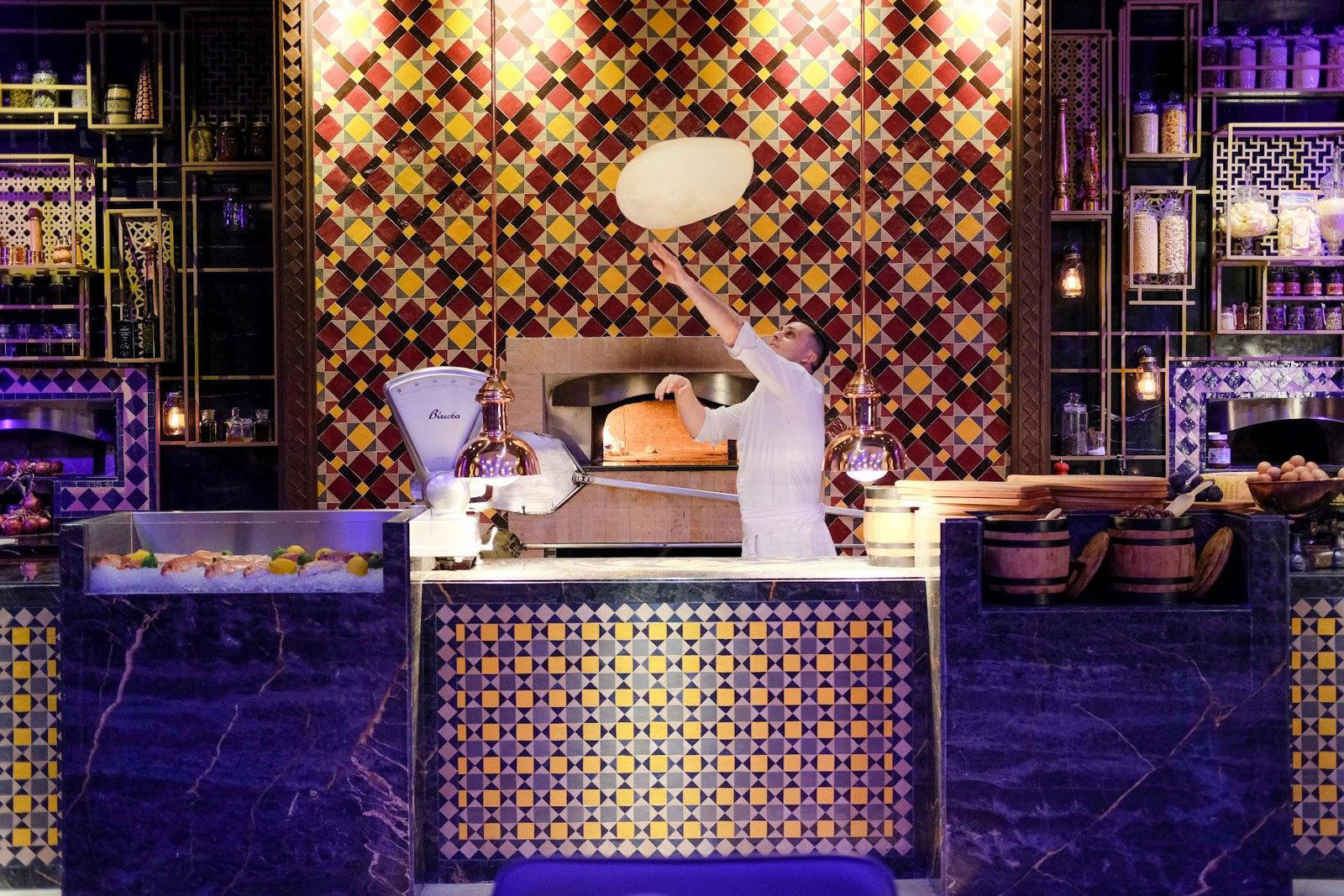
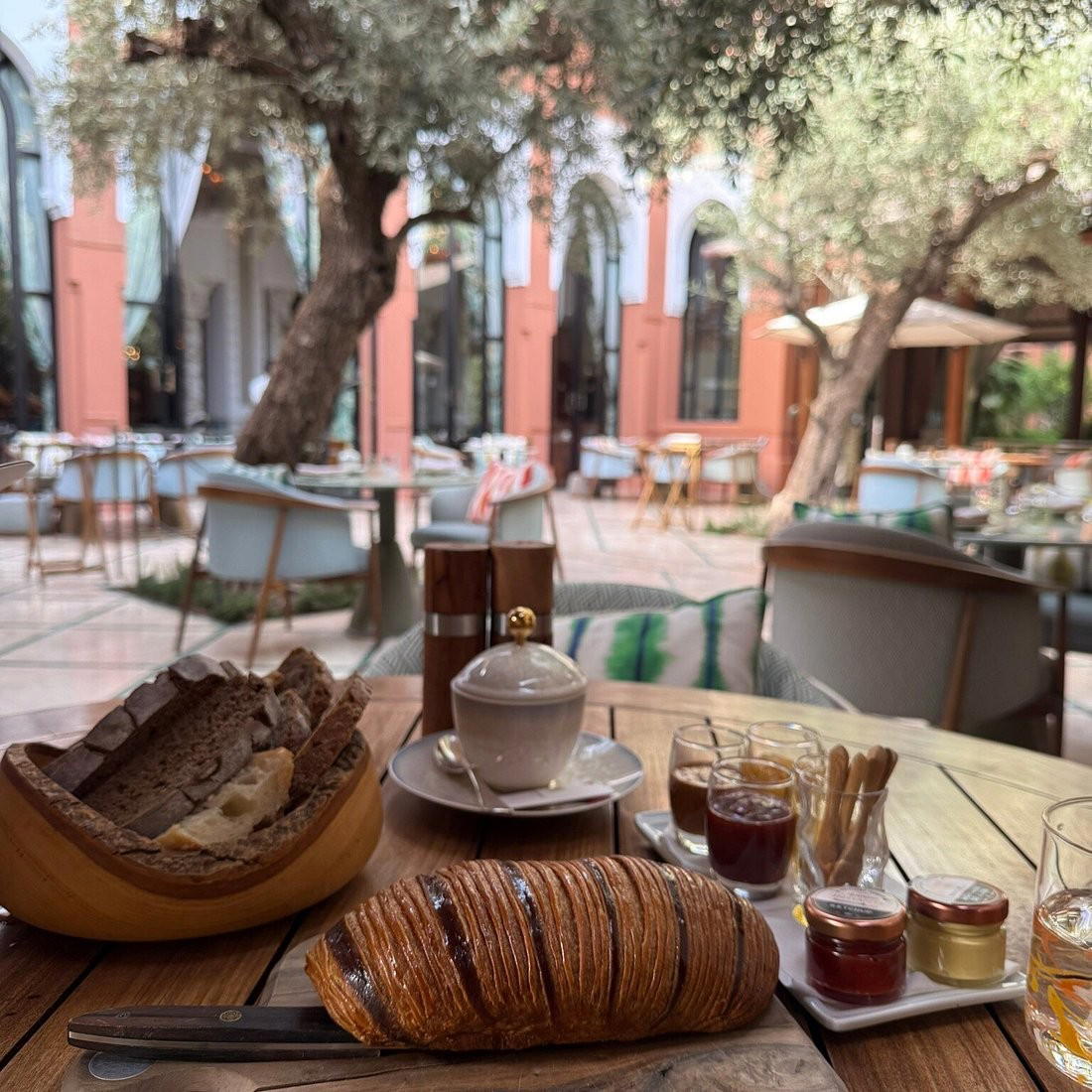
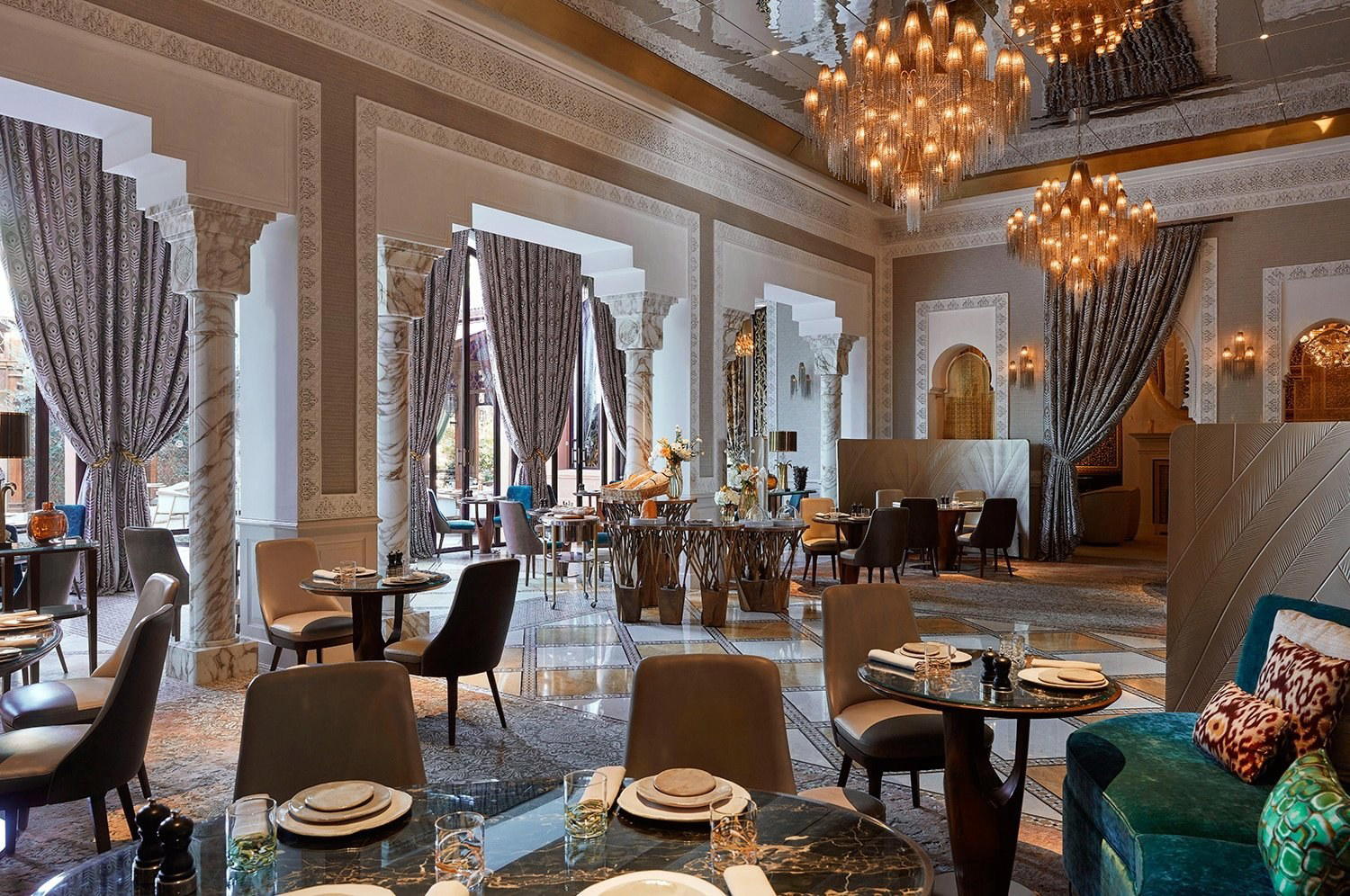
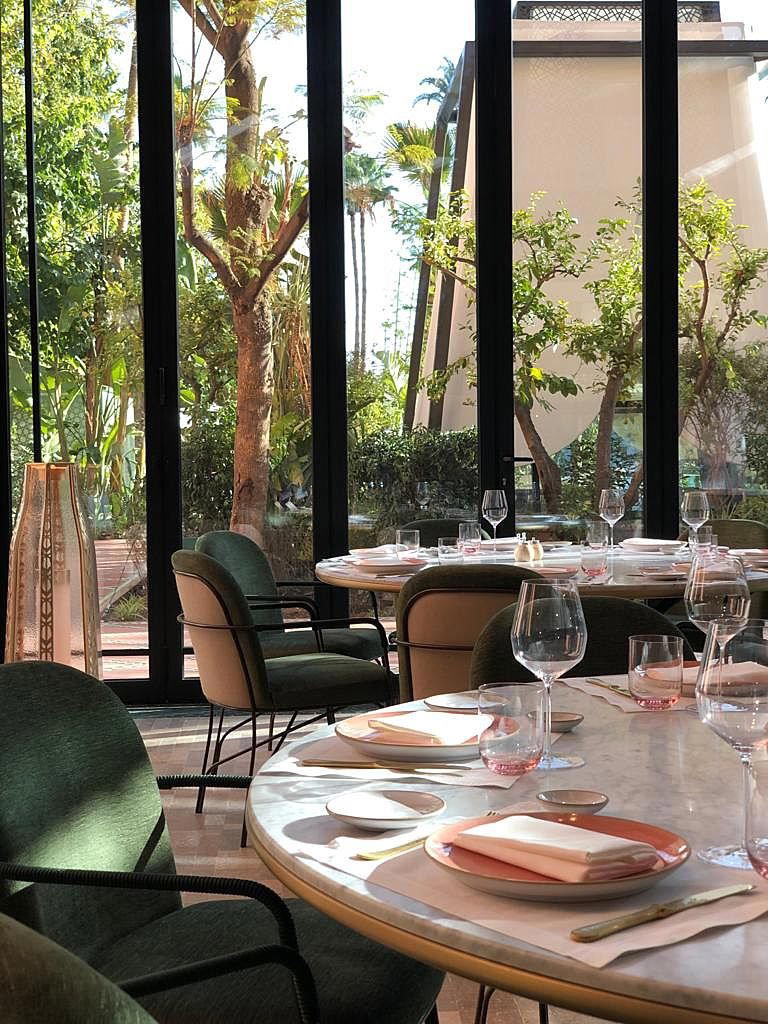
Moroccan palace hotel dining characteristically moves between two poles: the theatrical set-piece of a multi-course diffa, where bastilla, tagine, and couscous arrive in ceremonial sequence, and the quieter register of garden dining that allows the architecture and planting to carry the atmosphere. Properties at Dar Rhizlane's address level are expected to deliver both registers with some confidence. The quality signal in this context is not the menu's length but its coherence, and whether the kitchen demonstrates genuine engagement with Moroccan culinary tradition rather than a simplified version assembled for international palates.
For travellers who treat the riad hotel dining room as a serious part of the stay rather than a fallback option, the relevant comparisons extend beyond Marrakech. Dar Ahlam in Ouarzazate has built an international reputation around its table as an experience inseparable from the property itself. Dar al Hossoun in Taroudant operates a similar model in the Souss, where the dining room functions as a specific reason to book rather than simply a convenience. Dar Rhizlane's location in Marrakech places it within reach of the city's broader restaurant scene, which means the property dining room competes not just against other hotel tables but against the medina's specialist restaurants and the wave of European-influenced addresses that have opened in the Guéliz and Hivernage neighbourhoods.
Situating Dar Rhizlane in the Wider Moroccan Hotel Market
Morocco's hotel market has diversified substantially in the past five years. International brands have expanded into previously boutique-dominated cities: Fairmont Tazi Palace Tangier in Tangier and Fairmont La Marina Rabat Salé Hotel And Residences in Salé have brought flag-brand infrastructure to coastal and capital addresses. Hotel Sahrai, an SLH Hotel in Fes demonstrated that Small Luxury Hotels affiliation could function as a credible alternative trust signal to Michelin or Forbes ratings in the Moroccan context. Against these reference points, independent palace hotels in Marrakech like Dar Rhizlane operate without the marketing infrastructure of a global brand, which means the property must generate its authority through direct guest experience and word-of-mouth positioning.
Travellers moving through Morocco across multiple properties will find useful comparators in the outlying regions. Dar Maya in Essaouira and Château Roslane in Icr Iqaddar, with its wine estate context, show how Moroccan hospitality extends well beyond the Marrakech riad format. For those planning desert itineraries, INARA CAMP represents the experiential premium that comes from remoteness rather than architectural elaboration.
Accessing Dar Rhizlane and Planning Logistics
The Avenue du Président Kennedy address positions Dar Rhizlane south of the medina, in a zone that gives reasonably efficient access to both the historic centre and the Hivernage district's restaurants and bars. Marrakech Menara Airport sits roughly twenty minutes from this part of the city in normal traffic conditions, making arrival logistics more manageable than properties requiring navigation through the medina's vehicle-restricted alleys. The shoulder seasons, broadly April through May and September through October, offer the most comfortable conditions for garden-centric stays of the type that properties in this tier are designed to deliver. Peak summer temperatures in Marrakech frequently exceed 38 degrees Celsius, which concentrates outdoor dining activity into early evening hours and changes the character of a garden-estate stay considerably.
For travellers considering Marrakech's broader hotel spectrum alongside Dar Rhizlane, the medina's smaller riad properties provide a contrasting format: Dar Les Cigognes, Dar Housnia, and similar addresses offer the immersive quality of staying within the historic fabric rather than adjacent to it. The trade-off between the two formats, medina-embedded versus boulevard-address, is fundamentally a question of how much the surrounding city texture should be part of the stay experience. See our full Marrakech restaurants guide for broader context on where Dar Rhizlane's dining programme sits against the city's standalone restaurant addresses.
Recognition history
Dated appearances from independent guides and award organizations, with the underlying list record or original source where available.
Mr & Mrs Smith Smith Seal of Approval
Mr & Mrs Smith
Continue exploring
More in Marrakech
Hotels in Marrakech
Browse all →
Bars in Marrakech
Browse all →

Restaurants in Marrakech
Browse all →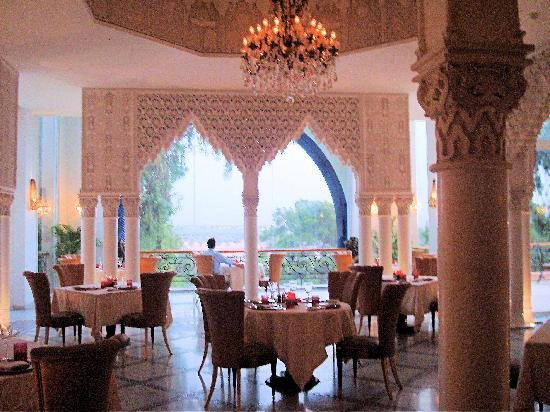
Wineries in Marrakech
Browse all →
At a Glance
- Romantic
- Elegant
- Intimate
- Sophisticated
- Ornate
- Romantic Getaway
- Honeymoon
- Anniversary
- Garden
- Terrace
- Historic Building
- Pool
- Spa
- Wi Fi
- Room Service
- Concierge
- Restaurant
- Garden
- Pool
- Spa
- Wi Fi
- Room Service
- Concierge
- Restaurant
Peaceful and elegant with romantic lighting from lanterns and candles reflecting on garden waters, creating an intimate and luxurious atmosphere amid lush gardens.
Know Before You Go
- Getting there
- Av. du Président Kennedy, Marrakech 40020, Morocco