Hardenberg BurgHotel


1 Michelin Key · Relais Chateaux Award
A Relais & Châteaux property at the foot of a thousand-year-old castle ruin in Lower Saxony, Hardenberg BurgHotel occupies a carefully restored half-timbered estate with 42 rooms and suites, a spa, and a restaurant drawing on regional produce. Rates start from around US$198 per night.

Pearl is the En Primeur Club membership app, where members save venues, book tables and use the concierge.
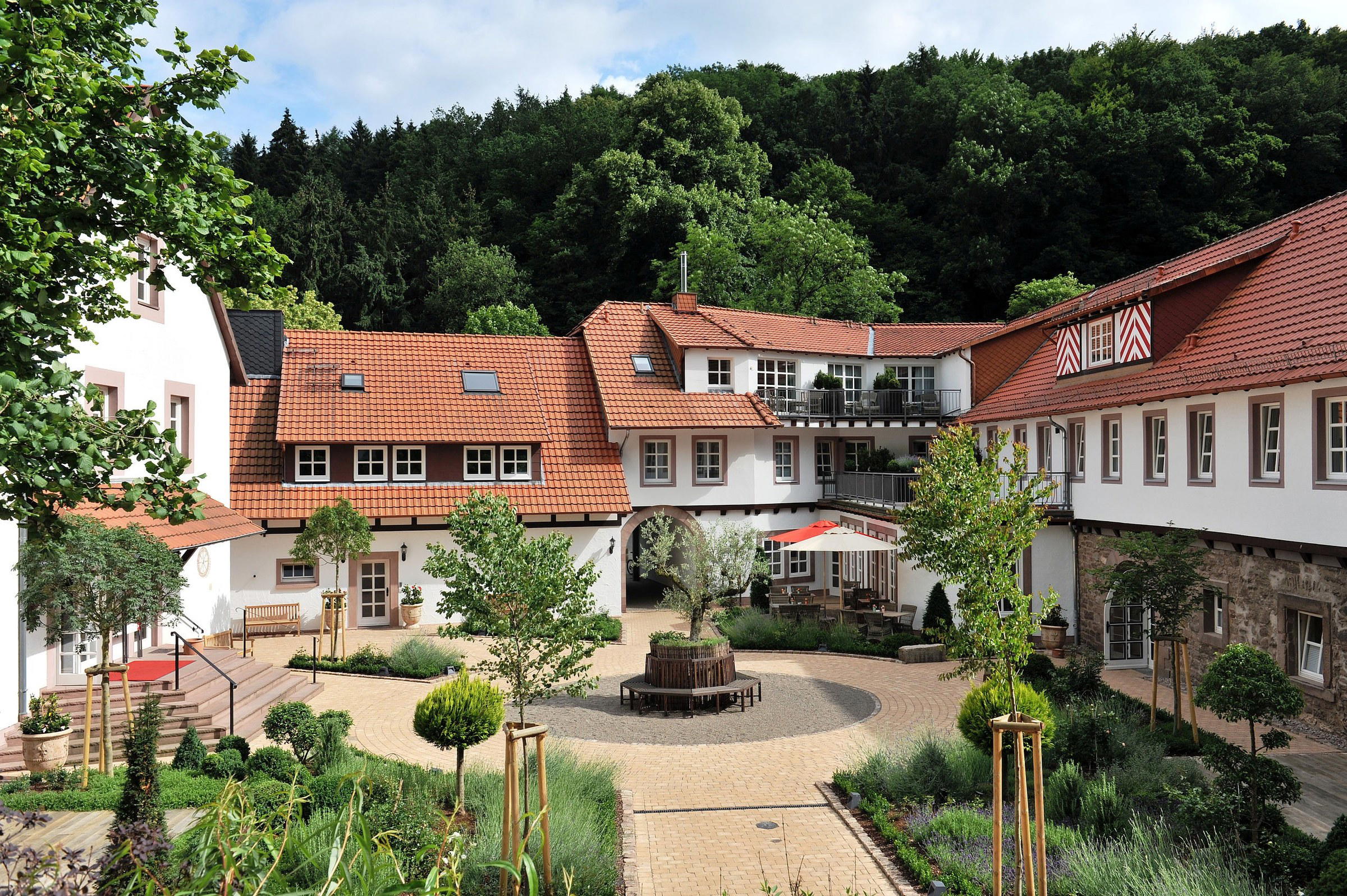
Castle Walls and Half-Timbered Gables: The Architecture of Hardenberg BurgHotel
Germany's country-house hotel tradition operates on a spectrum that runs from converted aristocratic seats to purpose-built wellness resorts dressed in rural clothes. Hardenberg BurgHotel occupies a specific and less common position on that spectrum: a property whose physical context is not decorative but genuinely historical, where the ruin looming above the roofline is not a landscaping decision but a thousand-year-old clifftop monument that predates the hotel itself by several centuries. The Hardenberg castle ruin rises above the surrounding terrain in the southern reaches of Lower Saxony, and the hotel below it was constructed in the 18th century on the grounds of the same noble estate, after the family had already vacated the castle above. That sequencing matters architecturally. The building is not a castle conversion; it is an estate outbuilding that grew into a hotel, which gives it a domestic rather than palatial scale.
The exterior reads immediately as northern German vernacular: a red-shingled roof, half-timbered gables, and a symmetry that suggests restrained prosperity rather than theatrical grandeur. The restoration has preserved those proportions rather than inflating them. Approaching the property, the visual tension between the modest, well-tended hotel building and the ruined medieval towers above it gives Hardenberg BurgHotel a compositional quality that few purpose-designed resort hotels can manufacture.
Inside: Materials, Scale, and Sense of Place
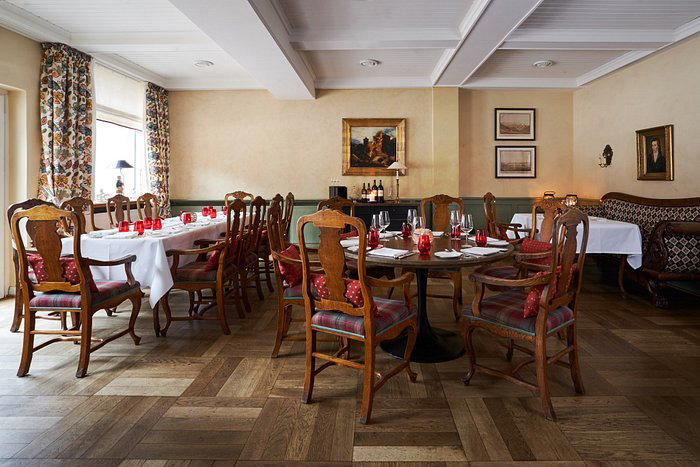
The interior design follows the logic of the building rather than imposing a separate identity on it. Native wood flooring and exposed stone walls are structural inheritances as much as design choices, and the antique furnishings are calibrated to feel continuous with the building's age rather than curated for Instagram contrast. The scale throughout is residential. There are 42 rooms and suites in total, distributed between the main house and a renovated mill next door, which means the property never generates the corridor-and-lift anonymity of a larger hotel. That room count places Hardenberg BurgHotel in the smaller-footprint tier of Relais & Châteaux properties, where intimacy is a structural feature rather than a marketing claim.
Rooms are described as spacious and finished with coffered walls and original artwork. Bathrooms include tubs, and private balconies or terraces are standard. The orientation of individual rooms varies: some face the castle ruins, others look toward the courtyard or the riding grounds, which means aspect is worth specifying at booking. Sitting areas in every room are large enough to function as the primary living space, and the complimentary spirits from the estate's own distillery are a detail that speaks to the property's relationship with the broader estate rather than standard minibar economics. Rates begin at approximately US$198 per night, which positions the hotel competitively within the European Relais & Châteaux country-house tier, particularly given the historic setting and the included estate access.
Among the German properties in a comparable category, Hardenberg BurgHotel is the one most explicitly defined by its adjacency to a specific medieval monument. Properties such as Hotel Ketschauer Hof in Deidesheim or Bülow Palais in Dresden draw identity from their urban architectural heritage; Das Kranzbach in Kranzbach or Gut Steinbach in Reit im Winkl are defined by landscape. Hardenberg sits in a third register, where the defining element is specifically historical rather than scenic or civic.
The Estate as Extended Property
The castle ruin, the old distillery, the tavern, and the castle park are still operational and form part of the guest experience in ways that are embedded in the property's programming rather than bolted on as optional excursions. The Sunday guided tour of the castle ruins is complimentary and runs on a fixed schedule, which is a practical detail worth noting when timing a visit. The estate distillery produces spirits that appear in guest rooms as part of the standard offering, which means the connection between the hotel and its surrounding estate is tangible rather than ceremonial.
This model, where the hotel functions as an access point to a living estate rather than simply occupying a picturesque site, is relatively uncommon in the German country-hotel category. It is more typically a feature of properties in Austria or the French countryside, where estate agriculture or production has been integrated with hospitality more systematically. At Hardenberg, the mechanism is the distillery and the historic grounds, and the hotel's position as a Relais & Châteaux member gives guests reasonable assurance that the integration has been done with some care for consistency and quality.
Dining and the BurgSpa
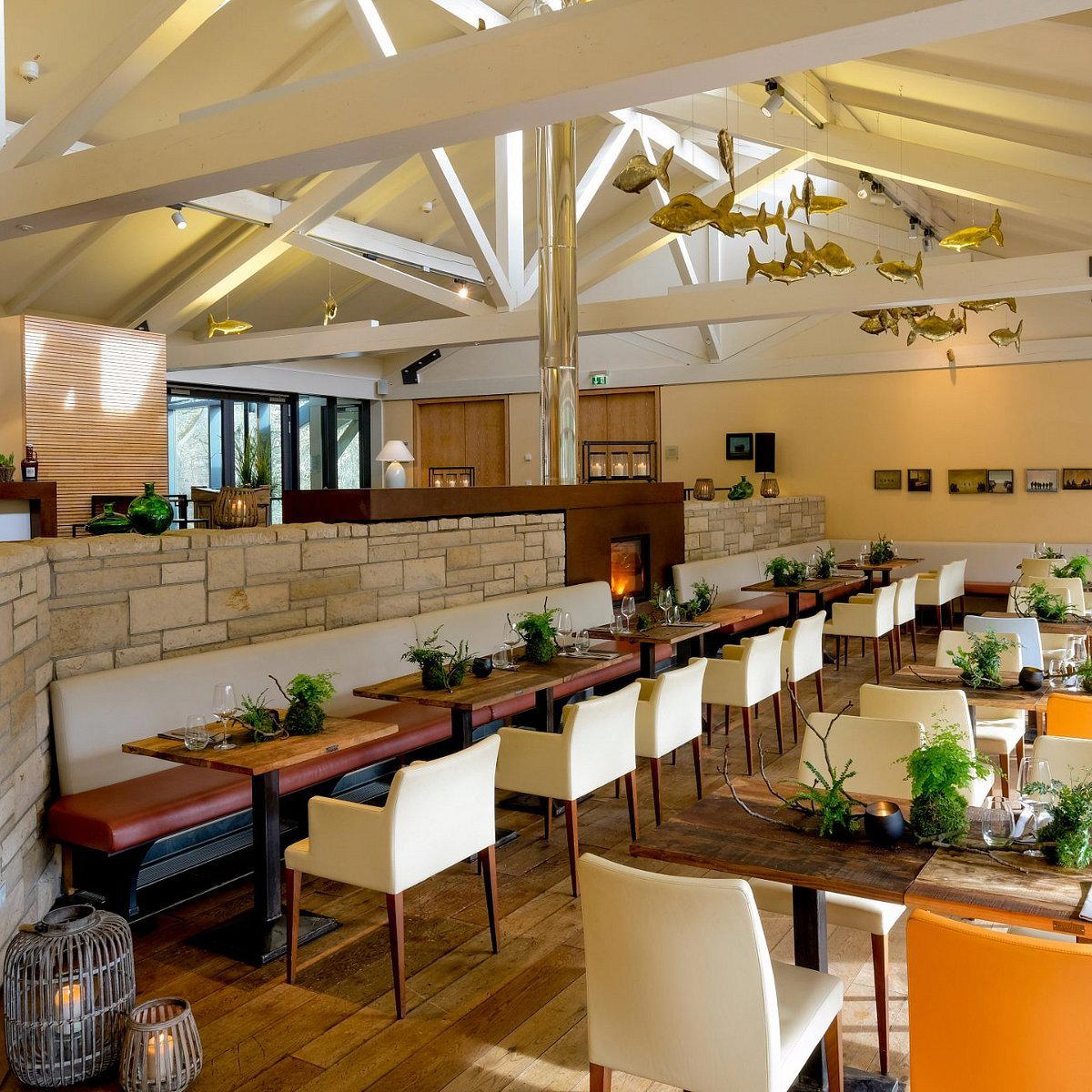
The hotel's restaurant, Novalis, operates on a seasonal and regional sourcing model, with locally caught fish and game forming the backbone of the menu. The breakfast buffet draws on regional and organic products, including homemade jams and eggs from a nearby farm, which is a logistical signal about the kitchen's relationship with local supply chains rather than a marketing formulation. Dining on the hotel's wood-lined terraces when weather permits is a reasonable priority given the backdrop the castle ruin provides. The golf resort dimension of the property, which is noted as a highlight in the Relais & Châteaux listing, broadens the activity profile for guests who want structured outdoor programming beyond the estate walks and castle visit.
The BurgSpa is on the lower level and includes a fireplace and whirlpools with views toward the castle. That orientation, directing the spa's primary focal point toward the ruin above, is a design decision that reinforces the property's central architectural argument: the ruin is not background, it is the building's primary interlocutor. Properties in the German spa-hotel category, such as Althoff Seehotel Überfahrt in Rottach-Egern or Kempinski Hotel Berchtesgaden, orient their wellness spaces toward water or mountain panorama; Hardenberg's equivalent view is medieval stonework, which makes for a genuinely different atmospheric register.
Property is also pet-friendly, which is a practical detail for guests traveling with dogs and a feature that is consistent with the country-estate character of the hotel. A property that accommodates dogs is making an implicit statement about its relationship with the outdoors and with a certain kind of relaxed travel pace.
Planning a Stay
Hardenberg BurgHotel is located at Hinterhaus 11A in Nörten-Hardenberg, a small town in the Göttingen district of Lower Saxony, accessible by car from Göttingen to the south or Hanover to the north. The 42-room scale means availability can tighten over weekends and during the warmer months when the terraces and castle grounds are at their most usable. Rates from US$198 per night represent the entry point; rooms facing the castle ruin or overlooking the courtyard are likely to command a premium over standard orientations. Sunday visits capture the complimentary castle tour, making mid-week to Sunday a logical booking window for guests who want to cover the full range of estate programming.
For context on how Hardenberg fits within Germany's broader premium hotel offering, our full Nörten-Hardenberg guide covers the wider area. Those building a longer German itinerary might also consider Fairmont Hotel Vier Jahreszeiten in Hamburg, Hotel de Rome in Berlin, Excelsior Hotel Ernst in Cologne, or the design-driven Luisenhöhe in Horben as complementary stops with a different architectural and regional character. Country-house alternatives in the German spa register include Hotel Bareiss in Baiersbronn and Der Öschberghof in Donaueschingen. Other European properties worth considering for those drawn to historically embedded estates include Aman Venice and Villa Contessa in Bad Saarow.
Quick Comparison
Comparable venues nearby, for context on price, style, and recognition.
| Venue | Cuisine | Price | Awards | Notes |
|---|---|---|---|---|
| Hardenberg BurgHotelThis venue (the venue you are viewing) | Castle-side luxury retreat with premium amenities | $200–300 | 1 Michelin Key · Relais Chateaux Award | Not listed |
| Hotel Maximilian's | Historic luxury boutique with modern updates | Not listed | 1 Michelin Key · Preferred Hotels L.V.X. Collection | city center |
| The Wellem | Historic courthouse with modern luxury suites | $100–200 | 1 Michelin Key | Altstadt |
| Der Birkenhof Spa & Genuss Resort | Luxury spa resort set in scenic Bavarian countryside | Not listed | 2 Michelin Keys | Hofenstetten |
| Hotel Die Sonne Frankenberg | Historic half-timbered boutique with modern comforts | Not listed | 1 Michelin Key | Frankenberg Old Town |
| Burg Schwarzenstein | Historic castle estate with modern annexes | Not listed | 1 Michelin Key · Relais Chateaux Award | Geisenheim |
Recognition history
Dated appearances from independent guides and award organizations, with the underlying list record or original source where available.
Michelin 1 Key
Michelin
Relais Chateaux Award
Relais Chateaux
Full recognition history (4 entries)
Michelin 1 Key
Michelin
Relais Chateaux Award
Relais Chateaux
Continue exploring
More in Nörten-Hardenberg
Hotels in Nörten-Hardenberg
All hotels in Nörten-Hardenberg →
Details
- Romantic
- Scenic
- Elegant
- Cozy
- Quiet
- Romantic Getaway
- Weekend Escape
- Anniversary
- Historic Building
- Golf Course
- Panoramic View
- Terrace
- Wi Fi
- Spa
- Sauna
- Fitness Center
- Pool
- Restaurant
- Room Service
- Concierge
- Garden
- EV Charging
- Mountain
- Garden
- Elevator
Cozy and elegant with warm lighting, fireplaces, and serene castle views praised for relaxing retreat atmosphere.