Skip to Main Content
← Collection
CuisineContemporary
Executive ChefJoe Morris
Price€€€€
Michelin

HILMAR Aerzen elevates fine dining to aristocratic heights within the Renaissance walls of Schlosshotel Münchhausen, where Chef Stephan Krogmann's French-inspired five-course tasting menu unfolds beneath 16th-century molded ceilings and crystal chandeliers in Germany's most romantic castle restaurant.

HILMAR restaurant in Aerzen, Germany
About

Dining Inside the Walls of Schlosshotel Münchhausen

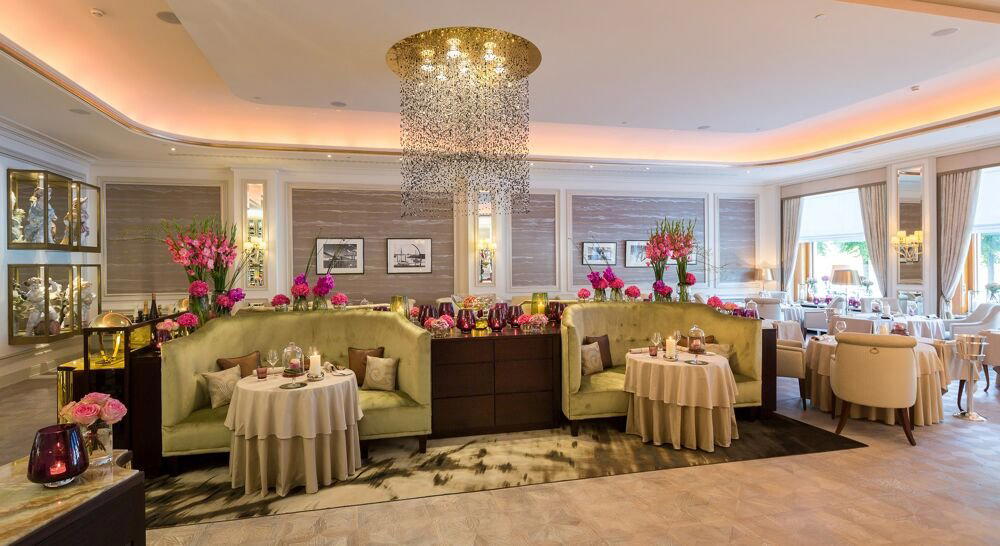
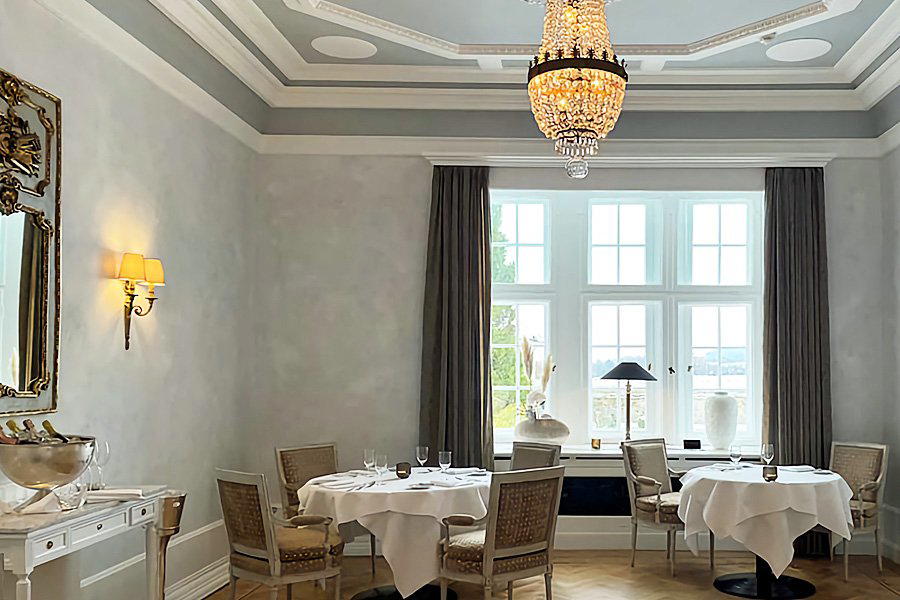
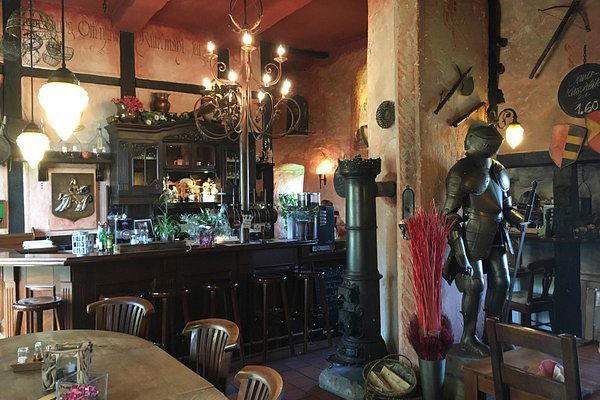
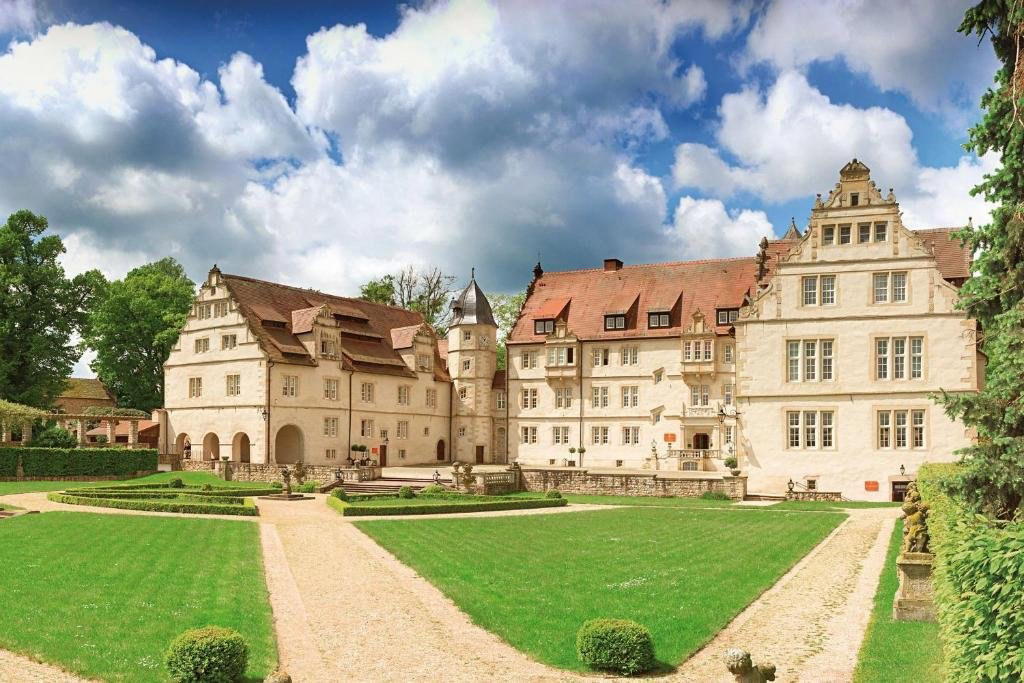
The approach to Schwöbber 9 tells you something before you reach the door. Schlosshotel Münchhausen, a stately home dating from 1570, sits in the Lower Saxony countryside outside Aerzen, its park and grounds framing the entrance in a way that few dedicated restaurant buildings can manage. Parquet floors, moulded ceilings, and chandeliers mark the interior, and the dining room at HILMAR occupies that historical architecture without apology. The setting is formal but not stiff, the kind of room that earns its price point through physical fact rather than design ambition.

French Culinary Tradition in a German Country House

HILMAR sits at the intersection of two traditions that German fine dining has long negotiated: the inherited grammar of French haute cuisine and the expectation, increasingly present in regional Michelin circuits, that high-end menus speak to local produce and character. The kitchen here works from a French culinary foundation, applying techniques associated with classical French cooking to ingredients sourced with attention to quality and origin. The Breton-coast monkfish roasted on the bone is one documented example from the menu, a dish that signals both the provenance standards at play and the kitchen's preference for letting primary ingredients carry their own weight.

That emphasis on restraint is worth registering. Across Germany's contemporary fine dining tier, including at €€€€ operations such as Aqua in Wolfsburg and Schwarzwaldstube in Baiersbronn, the question of how much technical layering serves the plate versus how much editing serves the guest has become a defining tension. HILMAR's five-course set menu takes a position on the restraint side of that argument, with courses described as pared-down and precisely crafted rather than architecturally complex. The amuse-bouche sequence provides its own register, demonstrating technical range without requiring the main courses to carry that burden alone.

Chef Stephan Krogmann and the Gutshaus Stolpe Lineage

The trajectory of a fine dining kitchen in a historic country-house hotel depends heavily on whether the chef in post treats the setting as backdrop or as context. Stephan Krogmann, who previously served as head chef at Gutshaus Stolpe, a property with its own heritage-dining pedigree, arrived at HILMAR with credentials that fit the format. Country-house fine dining in Germany operates as a distinct sub-category, one where the relationship between architecture, grounds, and plate is expected to cohere. Krogmann's background at Gutshaus Stolpe suggests familiarity with that particular discipline, where the rhythm of service and the proportion of a menu matter as much as any individual dish.

The kitchen's current position, a Michelin one-star as of the 2024 guide, places HILMAR in a peer group of French-influenced German contemporaries operating at the €€€€ price tier. For comparison, Vendôme in Bergisch Gladbach holds two stars at the same price level, while ES:SENZ in Grassau and Restaurant Haerlin in Hamburg operate in the same French-rooted contemporary bracket. Within that context, HILMAR's one star reads as a confirmed position in the upper tier of regional German fine dining rather than a ceiling.

What the Set Menu Format Signals

Across the contemporary fine dining circuit, the set menu has become the default format for Michelin-starred kitchens managing ingredient quality and kitchen tempo simultaneously. HILMAR's five-course structure places it in a category that includes operations like Schanz in Piesport and Waldhotel Sonnora in Dreis, where a fixed progression of courses is the proposition rather than an option within a broader menu. This format disciplines both the kitchen and the guest experience: the kitchen can focus sourcing and preparation around a defined number of plates, and guests move through an intentional arc rather than assembling their own meal from a list.

The amuse-bouche sequence at HILMAR merits specific attention within this structure. In a five-course format, the amuse-bouches carry disproportionate weight as mood-setters, and the Michelin description notes them specifically as a strength. At country-house properties at this price range, where a meal is typically part of a longer stay rather than a standalone evening, that early signal matters to how the rest of the experience registers.

The Hotel as Context

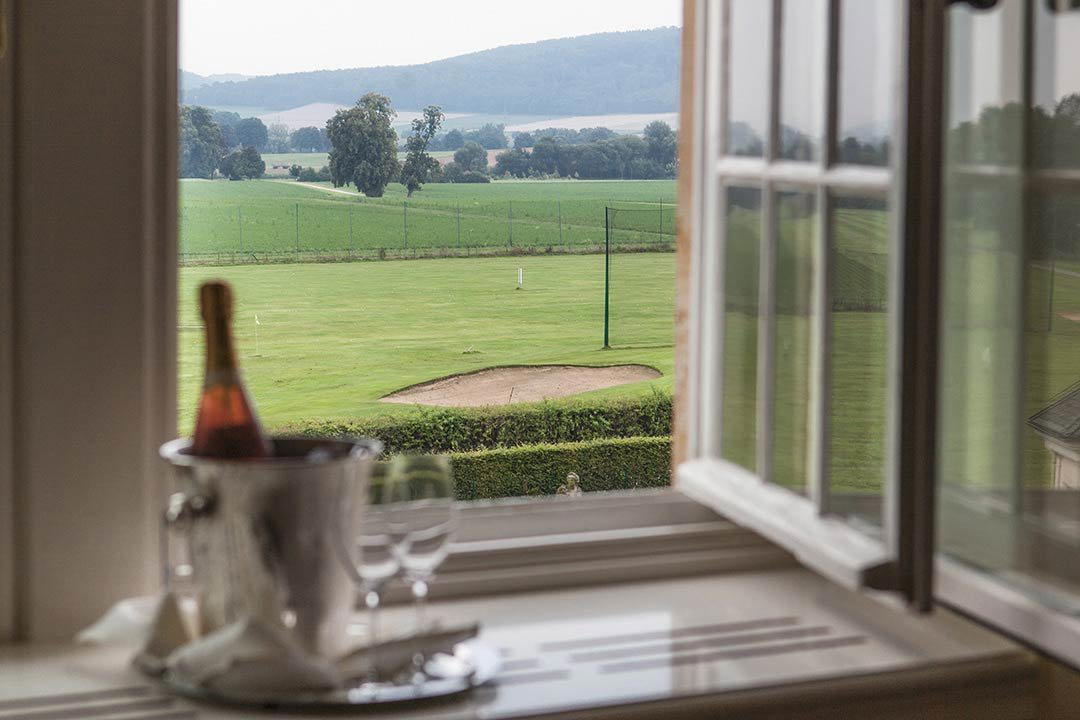
The restaurant does not exist in isolation from the broader Schlosshotel Münchhausen property. The park, the golf course, and the guestrooms are documented draws that encourage overnight stays rather than destination dining from a distance. This is consistent with a pattern common to country-house fine dining across Europe, where the friction of travel is absorbed into a multi-day stay, and the meal becomes part of a larger residential proposition. For guests approaching from Hannover or further afield, the hotel context converts what would otherwise be a challenging destination into a weekend structure. Aerzen's position in Lower Saxony, rural and without the immediate draw of a major city, reinforces rather than complicates this calculus.

For those planning around the dining programme specifically, the property's offer is coherent: arrive for the grounds and accommodation, stay for the kitchen. The service at HILMAR has been noted as friendly and highly adept, which in a country-house context means the front-of-house operation matches the physical setting without the formality sometimes associated with urban starred rooms. That register, warm but technically assured, suits the format well.

Where HILMAR Sits in German Fine Dining

Germany's Michelin-starred restaurant map skews toward urban centres and recognisable wine regions, but a meaningful portion of starred addresses occupy rural or semi-rural country-house settings. The logic is consistent across borders: historic architecture, grounds, and an accommodation component create a proposition that urban restaurants cannot replicate. HILMAR is one of the more remote addresses in this category, which makes it a deliberate choice rather than a passing visit. Restaurants in accessible cities, such as JAN in Munich or CODA Dessert Dining in Berlin, compete on different terms, where foot traffic and urban dining culture feed a different kind of demand. HILMAR operates without that infrastructure and earns its position through the coherence of its total offer.

Within the French-influenced contemporary segment, HILMAR's kitchen is working a register that connects it to a broader European tradition. At the same price tier, kitchens like Victor's Fine Dining by Christian Bau in Perl and Bagatelle in Trier draw similar comparisons, as do international contemporary addresses such as César in New York City and Jungsik in Seoul, though the country-house format is distinct from all of them in what it asks of the guest and what it delivers in return.

Planning Your Visit

HILMAR operates within Schlosshotel Münchhausen at Schwöbber 9, 31855 Aerzen, Germany. Given the property's rural location in Lower Saxony, the most practical approach for most guests is to book accommodation at the hotel alongside the dining reservation, treating the visit as a stay rather than a single evening out. The Michelin 2024 recognition confirms the kitchen's current standing and makes advance reservation advisable. For those building a wider understanding of what the region and country offer in this category, our full Aerzen restaurants guide maps the local context, while broader property options appear in our full Aerzen hotels guide. Supplementary listings for drinks and leisure appear in our full Aerzen bars guide, our full Aerzen wineries guide, and our full Aerzen experiences guide.

Frequently asked questions

How It Stacks Up

These are the closest comparables we have in our database for quick context.