Campo de Fiori Suits occupies a medieval address on Vicolo dei Chiodaroli, a narrow lane within walking distance of one of Rome's most animated market squares. The property sits in a neighbourhood where independent accommodation has long competed on location density rather than scale, placing it in a different conversation from the grand hotel corridor along Via Veneto.
Pearl is the En Primeur Club membership app — saves, bookings, and concierge access live there. Same editors, same standards.
- Address
- Vicolo dei Chiodaroli, 15, 00186 Roma RM, Italy
- Phone
- +39 06 6880 6865
- Website
- hotelcampodefiori.com
- Directions
- Get directions
 Saves & bookings on Pearl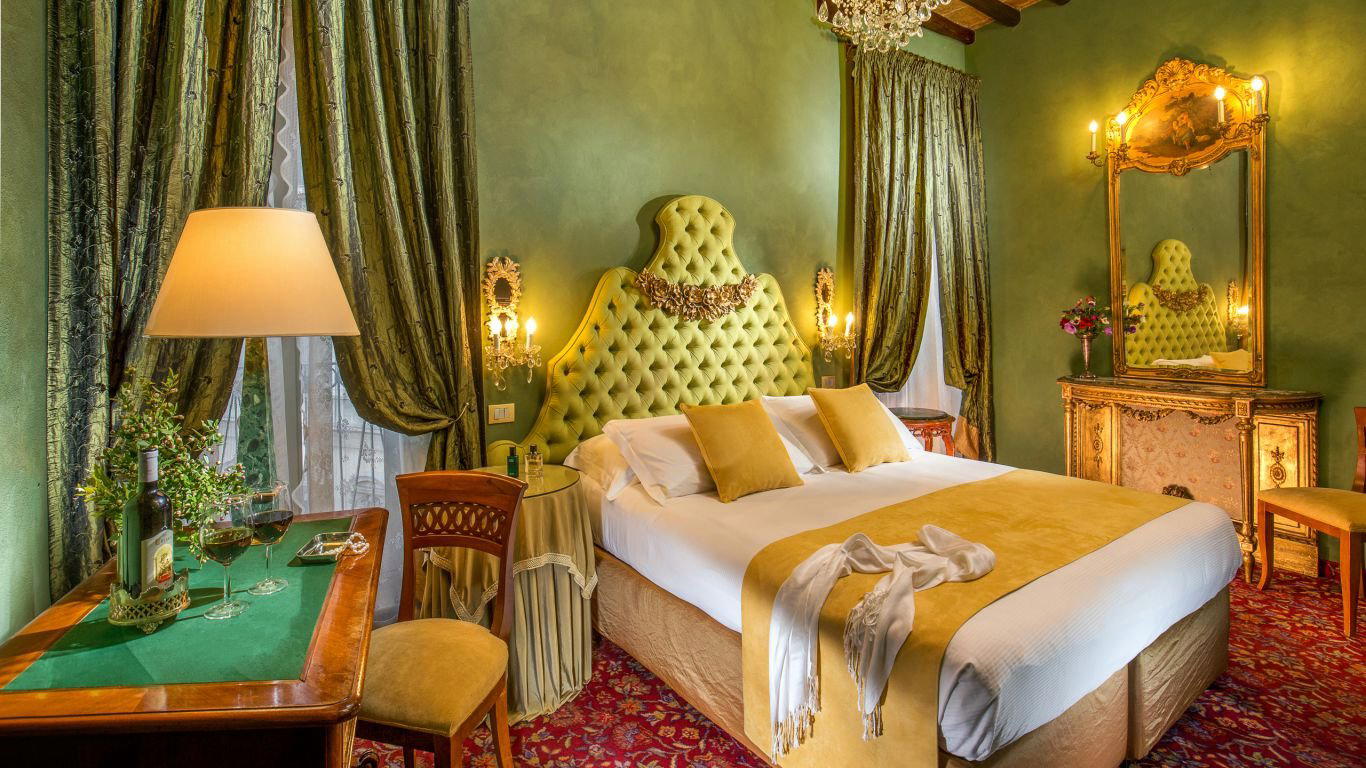
Where the Market Quarter Meets the Medieval Street
Vicolo dei Chiodaroli is the kind of address Rome does quietly. The lane runs through the dense residential and commercial fabric just east of Campo de' Fiori, the square that has anchored the Rione Parione neighbourhood for centuries as a working market by morning and a gathering point by evening. Accommodation in this district has traditionally operated on a different logic from the grand hotel belt further north: proximity to daily Roman life, smaller footprints, and buildings whose age tends to be measured in centuries rather than decades. Campo de Fiori Suits sits inside that pattern, at number 15 on the vicolo, in central Rome.
The broader context matters here. Central Rome's accommodation split has sharpened over the past decade between large-footprint international properties, the Bulgari Hotel Roma, Hotel Eden, and Hassler Roma occupying the prestige northern tier, and a smaller cohort of address-driven independent properties concentrated in the historic centre. The Campo de' Fiori district belongs emphatically to the latter category, where the building itself carries more weight than any hotel amenity list, and where sustainability, in the broadest sense, often means working within centuries-old structures rather than constructing new ones.
A Neighbourhood Built Around Permanence
The area around Campo de' Fiori has a particular urban density that shapes how any property within it functions. The square itself hosts a daily morning market that has operated in some form since the 15th century, meaning the neighbourhood retains a functional rhythm that most tourist-facing Roman districts have long since lost. Streets like Vicolo dei Chiodaroli are narrow by design, built for pedestrians and handcarts, not traffic, which creates an intrinsic low-impact character. In this context, small-scale accommodation is not a niche positioning choice so much as a structural response to the built environment.
This aligns with a broader trend visible across Italian historic centres, from Corte della Maestà in Civita di Bagnoregio to Castello di Reschio in Lisciano Niccone: properties that treat the existing fabric as the asset, and whose environmental footprint is constrained by the walls they occupy. Adaptive reuse of historic Roman buildings carries inherent sustainability credentials, thermal mass, reduced construction demand, embedded cultural material, that newer builds cannot replicate regardless of certification. For travellers whose environmental calculus includes the carbon cost of construction, an address inside a medieval Roman lane carries a different kind of logic from a purpose-built resort.
Positioning Within the Rome Accommodation Market
Rome's central accommodation ranges from internationally managed five-star hotels to short-let apartments with no common areas at all. Campo de Fiori Suits occupies the space between those poles: a named property in a fixed historic address, without the scale or amenity infrastructure of a full-service hotel. Its comparable set is the cluster of design-led and independently operated properties concentrated between Campo de' Fiori, Piazza Navona, and the Pantheon, a corridor where Hotel Vilòn, Maalot Roma, and Portrait Roma each take different approaches to the same density challenge.
What distinguishes properties in this zone from those on the Via Veneto axis is operational philosophy. The northern hotels, including JK Place Roma and Hotel Locarno, operate with full-service infrastructure: restaurants, spas, concierge programs, and the staffing ratios those require. Properties in the Campo de' Fiori district typically trade some of that infrastructure for immediacy of location and a lower operational footprint per guest. For a certain traveller profile, that is a deliberate preference rather than a compromise.
For comparison, Italy's wider premium independent sector shows how this approach plays out at scale: Borgo Santandrea on the Amalfi Coast, Il Pellicano in Porto Ercole, and Passalacqua in Moltrasio each demonstrate that small-key independent properties can anchor their reputation on location and physical specificity rather than brand infrastructure. The logic translates to urban Rome, even if the execution differs from those coastal and lake-district counterparts.
The Case for the Campo de' Fiori District
Guests choosing accommodation in this district are typically making a neighbourhood decision before a property decision. Campo de' Fiori itself is fifteen minutes on foot from the Vatican, ten minutes from the Pantheon, and within the same walkable radius as Piazza Navona, Largo di Torre Argentina, and the southern end of the Jewish Ghetto. That concentration of sites within a low-traffic, predominantly pedestrian zone means that a stay here has a lower daily transport footprint than equivalent stays in the northern hotel districts, where the Tridente and Via Veneto addresses require more movement across the city to reach the same set of monuments.
The morning market dynamic is also worth noting as a practical sustainability signal: the Campo de' Fiori market provides direct access to fresh produce at the neighbourhood level, and the surrounding streets, Via dei Giubbonari, Via del Pellegrino, host a density of independent food shops, bakeries, and trattorie that operate on local supply chains rather than hotel procurement networks. For travellers who factor community-level economic circulation into their accommodation choices, the neighbourhood itself performs well.
Italy's broader premium travel geography is worth mapping for those building a longer itinerary. The historic centre properties in Rome sit at one end of a circuit that might extend to Four Seasons Hotel Firenze or Portrait Milano in the north, Casa Maria Luigia in Modena for a regional detour, Aman Venice for the Veneto, or south toward Borgo Egnazia in Puglia, Il San Pietro di Positano, or JK Place Capri. Within that geography, a Rome base in the historic centre functions as a compact, low-movement hub rather than a transit point.
For full Rome hotel and restaurant context, see our Rome city guide.
Planning Your Stay
Campo de Fiori Suits is located at Vicolo dei Chiodaroli, 15, in Rione Parione, central Rome. The address sits within the ZTL (zona a traffico limitato) pedestrian restriction zone, which means vehicle access is limited and arrival by taxi or private transfer requires coordination with local access rules, a consideration worth factoring into arrival logistics. The nearest major transit points are Piazza Venezia and Largo di Torre Argentina, both within ten minutes on foot, connecting to several bus lines that serve the broader city. The hotel's nightly rate starts at about $223.
Budget Reality Check
Comparable venues nearby, for context on price, style, and recognition.
| Venue | Price | Awards | Notes |
|---|---|---|---|
| Campo de Fiori SuitsThis venue — the venue you are viewing | $$$ | 4-Star | Not listed |
| Trastevere | $$$ | 4-Star | Borgo, Historic convent transformed into elegant boutique hotel |
| Mama Shelter Roma | $$$ | 4-Star | Monte Mario, Playful urban design hotel blending classical modernism with postmodern irreverence and street art aesthetics. |
| Room Mate Filippo | $$$ | 4-Star | Colonna, contemporary boutique with classic Roman influences |
| Hotel Viminale | $$$ | 4-Star | Monti, Refined historic hotel blending timeless elegance with contemporary design. |
| citizenM Roma Isola Tiberina | $$$ | 4-Star | Isola Tiberina, affordable design hotel in historic mid-century building |
Continue exploring
More in Rome
Hotels in Rome
Browse all →
Bars in Rome
Browse all →
Restaurants in Rome
Browse all →

At a Glance
- Romantic
- Elegant
- Classic
- Cozy
- Intimate
- Romantic Getaway
- Anniversary
- Weekend Escape
- Terrace
- Historic Building
- Panoramic View
- Wi Fi
- Air Conditioning
- Concierge
- Skyline
- Wi Fi
- Air Conditioning
- Concierge
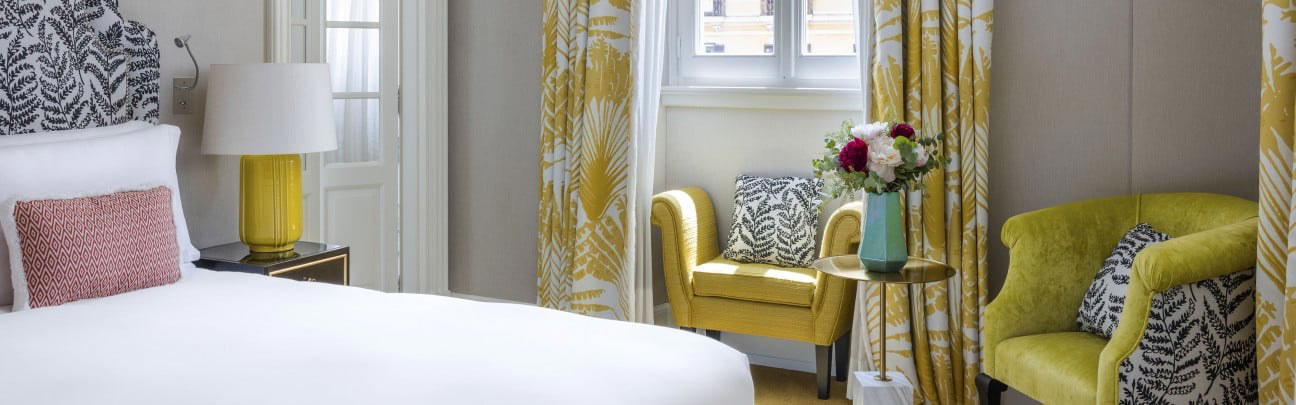
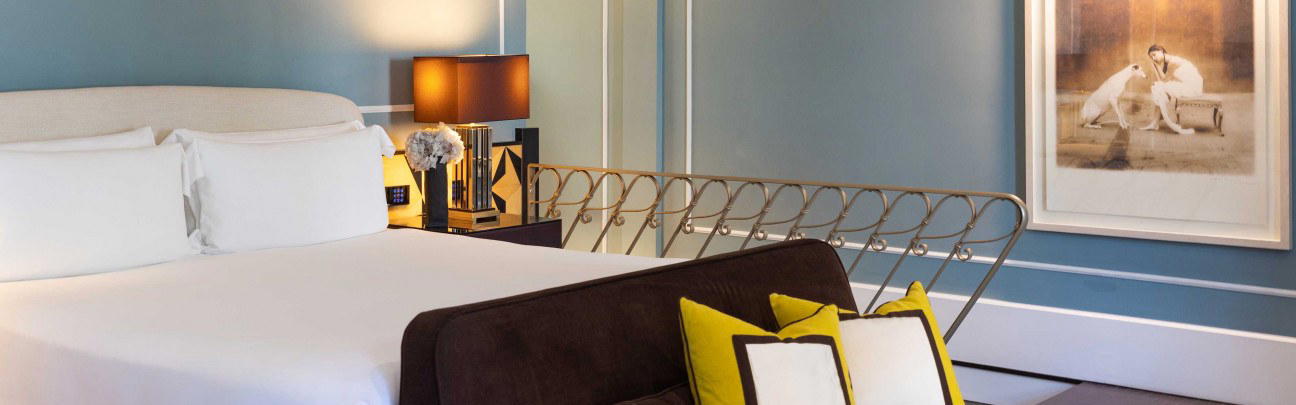
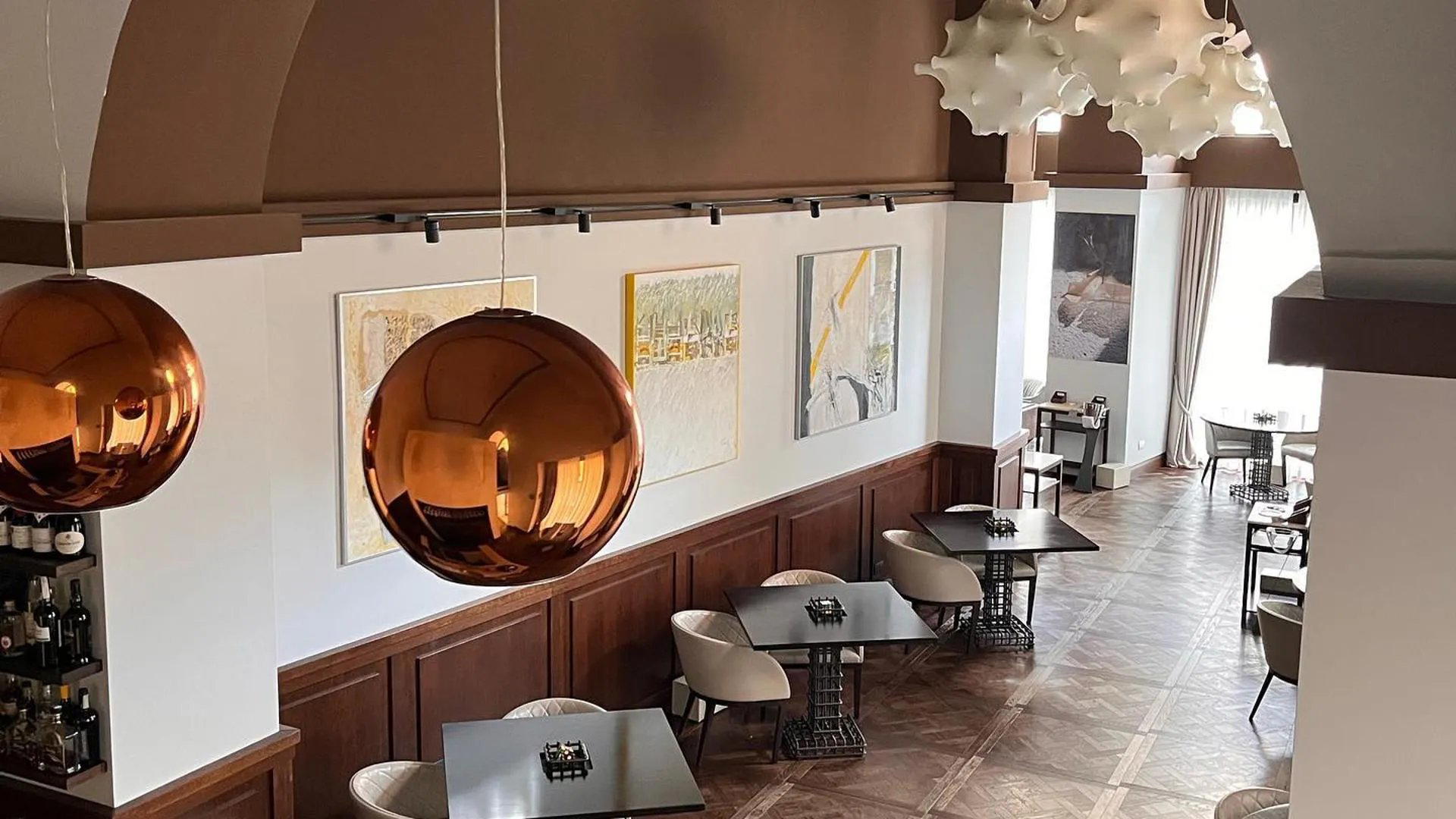
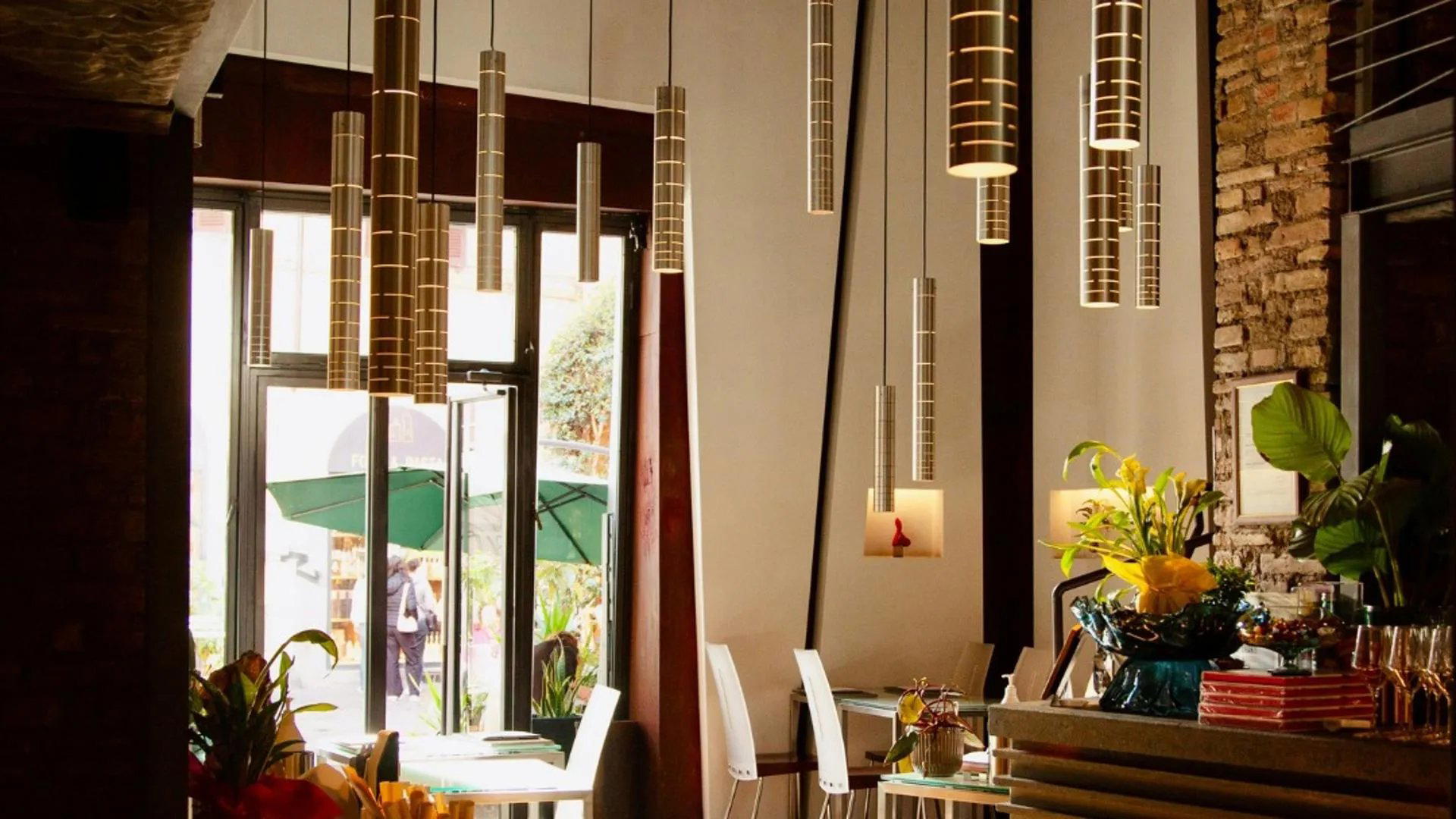
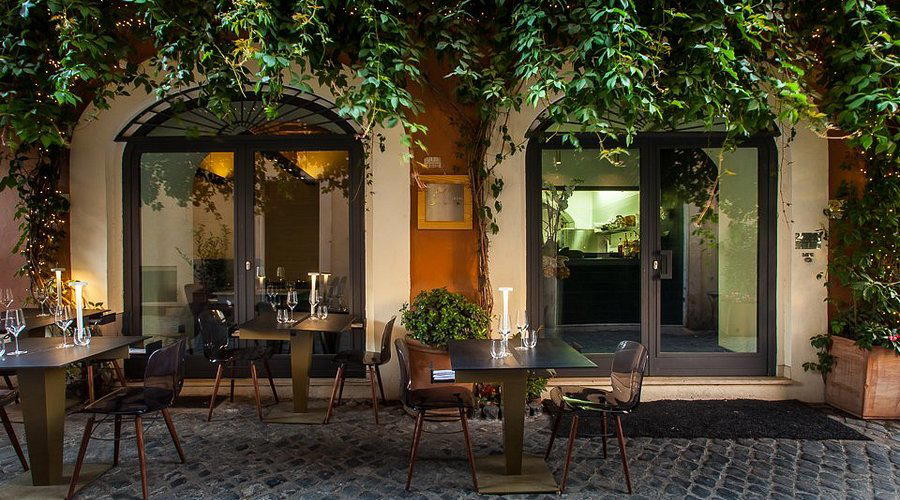
Elegant and romantic atmosphere featuring exposed brick, neoclassical designs, coffered ceilings, and antique furnishings lit by elaborate chandeliers.