Skip to Main Content
← Collection
Imabari, Japan

Shinoda

LocationImabari, Japan
Tabelog

A four-seat kaiseki counter in Imabari, Ehime, Shinoda holds consecutive Tabelog Bronze Awards (2025, 2026) and a 4.17 score, placing it among Japan's most closely watched regional Japanese cuisine tables. Reservation-only seatings at 12:30 and 18:30 run as course-only meals, with dishes built around the day's available ingredients from the Seto Inland Sea and surrounding Ehime farms.

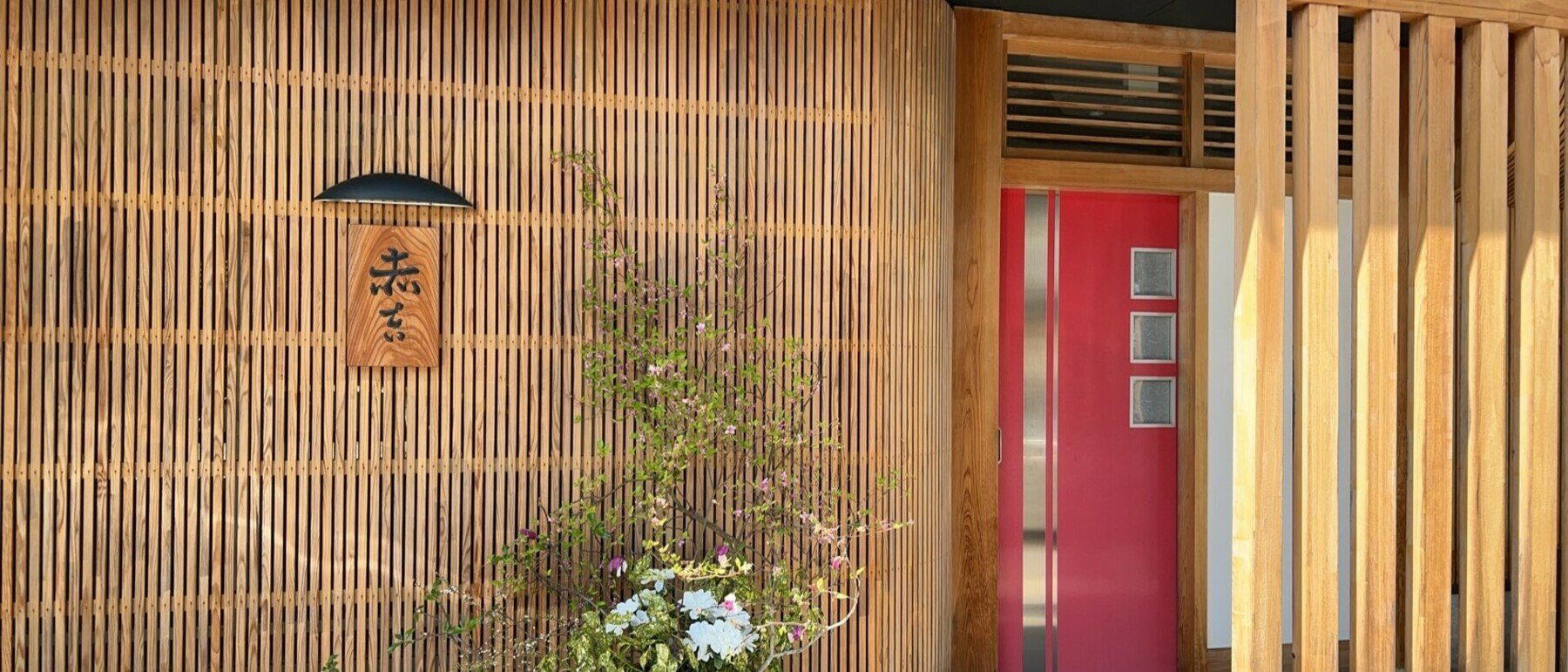
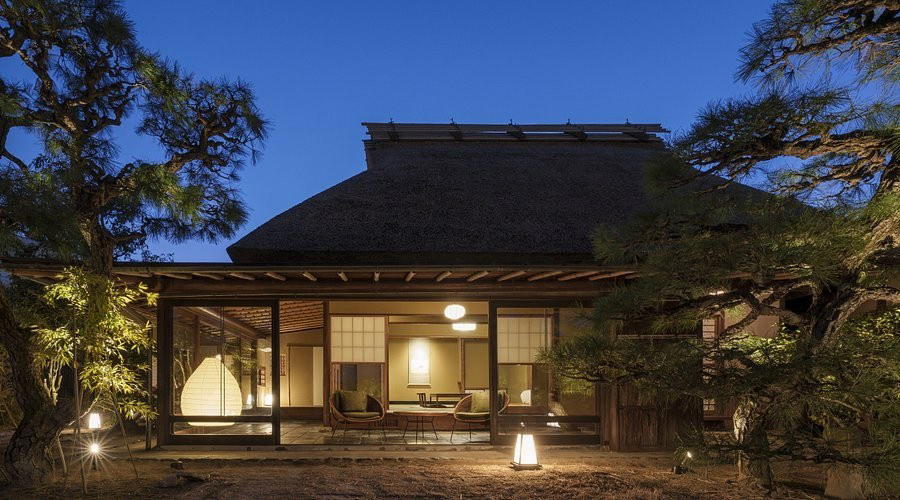
Shinoda restaurant in Imabari, Japan
About

Four Seats, One Sitting, No Credit Cards

Japan's most serious regional dining operates on terms that the casual visitor rarely anticipates. In Imabari, a port city on the northeastern coast of Shikoku overlooking the Seto Inland Sea, the constraints at Shinoda are stark enough to state plainly before anything else: four seats, two fixed seatings per day (12:30 and 18:30), reservations through the OMAKASE platform only, cash payment required, and a 100 percent cancellation charge from seven days before the booking. These are not inconveniences bolted onto a restaurant concept. They are the structural expression of how a certain tier of Japanese cuisine actually functions, where the ratio of preparation time to seated guests demands conditions that would be unusual anywhere else.

That four-seat count places Shinoda in a cohort of Japanese restaurants where intimacy is architectural rather than atmospheric. The table does not fill a room designed for forty; the space itself is scaled to the meal. Arriving at 12:30 with three other guests, you are not one table among many. You are the entire service.

Members Only

The shortlist, unlocked.

Hard-to-book tables, cellar releases, and concierge-planned trips.

Get Exclusive Access →

The Ritual of the Course Meal in Ehime

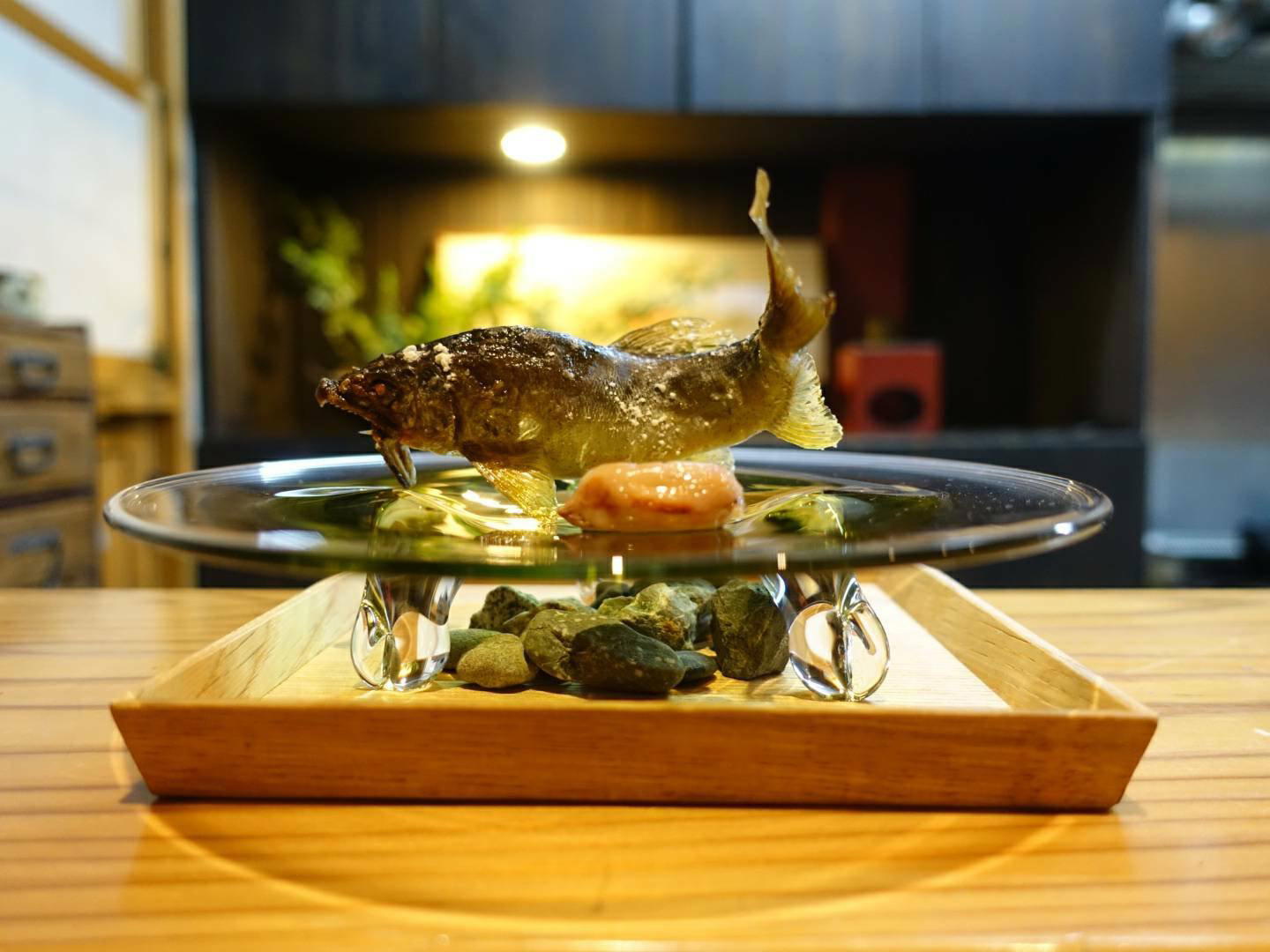
Course-only kaiseki at this price range, JPY 30,000 to JPY 39,999 per person as listed (with review-based averages suggesting dinner can reach JPY 40,000 to JPY 49,999), follows a discipline common to the highest tier of Japanese dining: the kitchen decides, the timing is fixed, and the meal is built around what is available that day. Shinoda's own reservation notes frame this directly: "We provide dishes that capture the energy of the ingredients available on that day and moment."

This is not a rhetorical flourish about freshness. In practice, it means the menu is genuinely variable between sittings, tied to what the Seto Inland Sea and Ehime's farms yield on any given morning. The region supplies materials that do not appear in metropolitan kitchens with the same regularity: sea bream from the strait between Imabari and Oshima, citrus from Ehime's groves, and river fish from the interior. A course built entirely from these sources, prepared for four guests, operates at a granularity of sourcing that a 40-seat restaurant in Osaka or Tokyo structurally cannot replicate.

For context, acclaimed kaiseki counters like Gion Sasaki in Kyoto or the kaiseki work embedded in multi-Michelin restaurants such as HAJIME in Osaka draw on comparable philosophies of seasonal precision, but at considerably larger scale and in cities where the competition for named ingredients is intense. At Shinoda, the source materials are local and the competitive audience for those materials is narrow. That is a meaningful structural advantage for a kitchen of this ambition.

Tabelog Recognition and Where Shinoda Sits in the National Ranking

The Tabelog Award system is the closest Japan has to a nationally calibrated restaurant ranking outside Michelin, and its Bronze tier is not a consolation prize. Tabelog Bronze designates a restaurant among the leading three percent of its category in Japan. Shinoda holds consecutive Bronze awards for 2025 and 2026, carries a 4.17 score on Tabelog's scale (where anything above 3.5 marks a serious kitchen), and has been selected for the Tabelog Japanese Cuisine WEST "Tabelog 100" list in 2025, which identifies the one hundred most significant Japanese cuisine restaurants in western Japan.

That selection deserves emphasis. Western Japan's Japanese cuisine landscape includes Kyoto's long-standing kaiseki institutions, Osaka's deep bench of Japanese-style restaurants, and a range of Michelin-starred counters. Being placed inside the top 100 of that pool from a four-seat operation in Imabari is a signal that the food here is being evaluated against the most rigorous regional standard available, not merely a local one.

For reference, well-reviewed Japanese cuisine operations in regional cities often plateau at Tabelog scores in the 3.5 to 3.8 range. A score of 4.17 from 23 Google reviews (4.3 average) puts Shinoda in a position more comparable to urban counters in Fukuoka, Yokohama, or Nara. The comparable ambition of places like Goh in Fukuoka, 1000 in Yokohama, or akordu in Nara suggests the kind of peer set against which Shinoda's recognition should be read.

Getting There and Planning the Visit

Imabari is accessible by limited express from Okayama (the Shiokaze service), by bus from Fukuyama (the Shimanami Liner), or by connecting train and bus from Matsuyama Airport. From Imabari Station, the restaurant is approximately ten minutes by taxi. The closest metro reference is Imabari Metro Matsumoto Station, with the address at a two-minute walk from Exit 2. Those arriving via the Shimanami Kaido expressway, one of the more photographed cycling routes in Japan, will find Imabari at its western terminus.

The practical requirements deserve repeating clearly: reservations must be made through the OMAKASE booking platform, not by telephone during service hours. Phone enquiries are accepted only between 9:00 and 11:00 in the morning or between 16:00 and 17:00 in the afternoon. Cash only, no electronic or QR code payments. A 20 percent service charge is added. Allergy information must be provided in advance, at the time of booking. Late arrivals are accommodated with whatever courses are already prepared, so punctuality at the single-time seating functions as a condition of the full experience rather than a courtesy.

Private rooms are not available, but the restaurant can be reserved for private use by a group. Given the four-seat capacity, this effectively means booking the entire operation for an evening, which changes the occasion considerably.

Imabari's wider dining options are covered in our full Imabari restaurants guide. For those spending multiple days, our Imabari hotels guide covers accommodation across the city, while the bars guide, wineries guide, and experiences guide round out the itinerary. Within Imabari's restaurant scene, Akakichi and Nijikichi represent further local reference points across different formats and price levels.

The Broader Context: Small-Counter Japanese Cuisine Outside the Major Cities

The pattern Shinoda represents is increasingly visible in Japan's secondary cities and regional towns: a single highly skilled operation, minimal seating, reservation-only format, and sourcing built around local supply chains rather than national wholesale markets. This is a different model from the flagship kaiseki institutions of Kyoto and Tokyo, and it functions precisely because it does not attempt to replicate the metropolitan scale.

Comparisons to Harutaka in Tokyo or internationally recognised counters like Le Bernardin in New York City or Atomix in New York City are useful not because the categories overlap but because they share the logic of severely constrained capacity enabling a quality of attention per guest that larger restaurants cannot sustain. Regional operations like Shinoda, or similarly positioned places such as affetto akita in Akita and Abon in Ashiya, demonstrate that serious cooking is distributing itself more evenly across Japan's geography. The Tabelog 100 western Japan designation is partly a product of that redistribution: reviewers finding, and formally acknowledging, that Imabari can produce a counter worth travelling to.

Also worth noting for Shikoku travellers: 6 in Okinawa follows a comparable logic of place-specific sourcing and minimal seating, and the contrast between how Ehime's Seto Inland Sea ingredients and Okinawa's subtropical materials each produce distinctly different course meals within the same Japanese cuisine tradition is instructive.

Frequently Asked Questions

What should I order at Shinoda?
Shinoda operates as a course-only restaurant, so there is no individual ordering. The kitchen sets the menu based on available ingredients for that day. Allergy requirements are the one item you can and must communicate in advance, through the OMAKASE booking platform. The restaurant holds Tabelog Bronze Awards for both 2025 and 2026, with a score of 4.17, and has been named to the Tabelog Japanese Cuisine WEST 100 list for 2025.
What is Shinoda leading at?
The Tabelog 100 selection and consecutive Bronze awards point toward consistency in Japanese cuisine that foregrounds local Imabari and Ehime sourcing. At four seats and with a course-only format, the kitchen's focus is on daily-market ingredients from the Seto Inland Sea and surrounding region. The score of 4.17 places it in the same ranking tier as serious urban Japanese cuisine counters in larger Japanese cities.
What if I have allergies at Shinoda?
Allergy information must be provided at the time of booking through OMAKASE. Shinoda does not accept walk-ins or mid-booking phone changes during service. For direct enquiries, phone contact is available between 9:00 and 11:00 AM or 4:00 and 5:00 PM. The restaurant's website is ehime-shinoda.com, and its Imabari address is 2 Chome-2-4 Matsumotocho, Imabari, Ehime.
How far in advance do I need to book Shinoda, and what is the cancellation policy?
Shinoda operates on reservation-only terms through the OMAKASE platform, and with only four seats across two daily seatings, availability is limited relative to demand for a Tabelog Bronze, 4.17-rated counter. The cancellation policy charges 100 percent of the cost for any cancellation made within seven days of the reservation, which is among the stricter policies in Japan's high-end Japanese cuisine sector. Booking lead time will vary by season, but the combination of a national award, minimal capacity, and a fixed cancellation window makes early booking practical.

What It’s Closest To

A fast peer set for context, pulled from similar venues in our database.

Collector Access

Need a table?

Our members enjoy priority alerts and concierge-led booking support for the world's most difficult tables.

Get Exclusive Access
Members Only

The shortlist, unlocked.

Hard-to-book tables, cellar releases, and concierge-planned trips.

Get Exclusive Access →