Bar Albatross occupies a narrow building in Nishishinjuku, where Tokyo's tradition of the serious standing bar collides with a curated back bar that rewards careful attention. The space draws from the city's deep culture of bar craft, positioning itself in the orbit of Shinjuku's layered drinking culture rather than the more polished Ginza circuit. Come prepared to look up, look closely, and let the room do most of the talking.

Pearl is the En Primeur Club membership app, where members save venues, book tables and use the concierge.
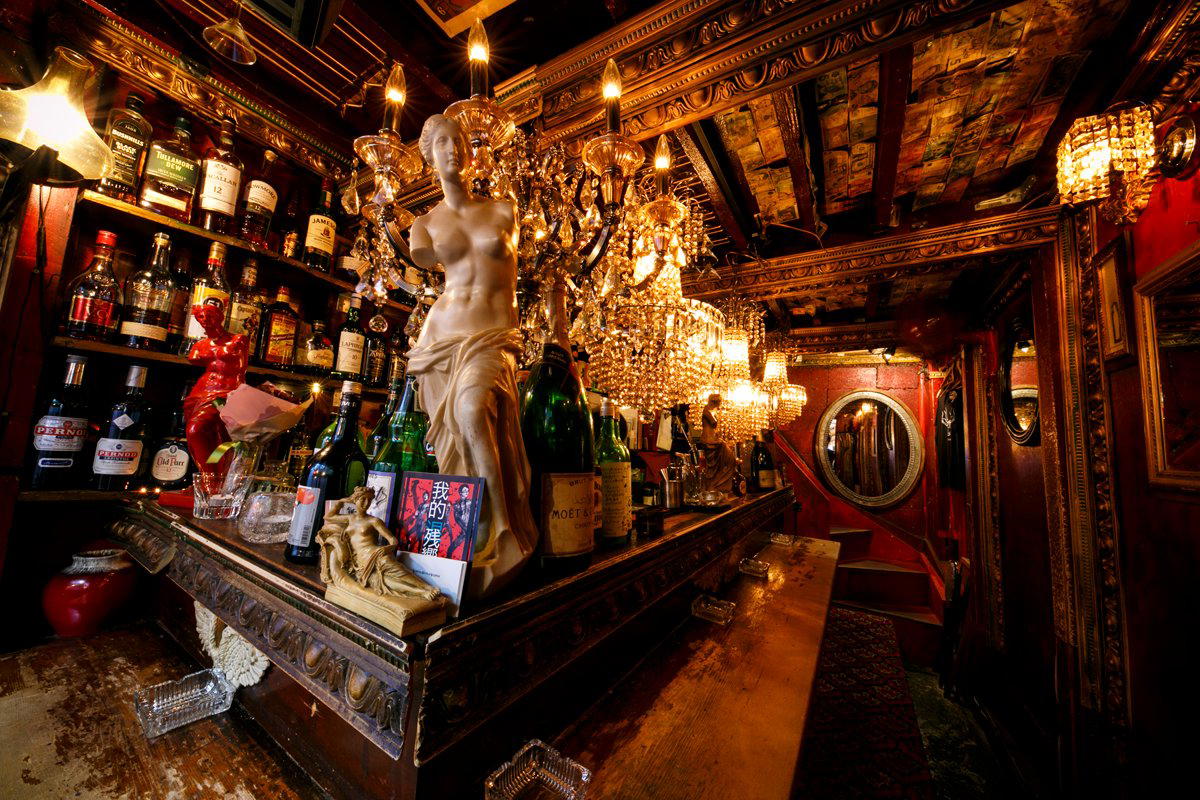
Shinjuku's Vertical World and the Art of the Back Bar
Tokyo's bar culture has always operated on vertical logic. The city's real drinking rooms are rarely at street level: they climb upward through narrow stairwells, behind unmarked doors, into spaces that only reveal themselves once you're already inside. Shinjuku concentrates this tendency more densely than any other district. The area around Nishishinjuku and the adjacent Golden Gai alleys has long produced bars that reward patience and repeated visits over the kind of first-impression spectacle you'd find in Ginza or Roppongi. Bar Albatross, located at 1 Chome-2-11 Nishishinjuku, sits inside this tradition, a building that gives almost nothing away from the street and delivers considerably more once you ascend.
In Tokyo bar culture, the physical experience of arriving matters. The approach to Bar Albatross is characteristically Shinjuku: narrow, slightly compressed, with the sense that the building is doing more work than its footprint suggests. This is the architectural language of bars that have traded square footage for character, stacked rooms, low ceilings, the kind of space where a well-edited back bar becomes the dominant feature by necessity. What gets placed behind the counter under these conditions is not incidental. It is the statement.
A Back Bar as Editorial Position
The serious bar collections in Tokyo tend to fall into a few legible categories. Some houses anchor their identity in whisky, particularly Japanese single malts and Scotch expressions that have appreciated sharply in value since the late 2000s. Others build around aged rum or Armagnac, categories that remain undervalued relative to their depth and age. The most considered back bars in the city do something more compositional: they place bottles in conversation with each other across categories and eras, so that the selection functions less like a list and more like an argument about what deserves attention.
Bar Albatross operates within Shinjuku's longer tradition of bars that take the back bar seriously as a form of curation. Shinjuku has historically supported a different calibre of bar operation than its reputation for neon and volume might suggest, the neighbourhood's layered geography, with its above-ground and below-ground drinking rooms coexisting within a few blocks, has generated a culture of regulars who return not for novelty but for depth. The bottles that accumulate behind a bar in this environment over years tell a different kind of story than a carefully designed hotel bar opening with a pre-selected prestige list.
For reference points within Tokyo's broader bar scene, Bar Benfiddich in Shinjuku has built its reputation around rare spirits and house-made botanical preparations, while Bar High Five in Ginza represents the capital's classical cocktail counter tradition at its most disciplined. Bar Orchard Ginza and Bar Libre occupy adjacent positions in the premium Tokyo bar circuit, each with distinct editorial identities. Bar Albatross draws from a different source: the accumulated, unsystematic character of a Shinjuku room that has been part of the neighbourhood's fabric across multiple bar generations.
The Shinjuku Drinking Room in Context
To understand what Bar Albatross represents, it helps to understand what Shinjuku's bar culture has built over decades. The district is one of the few places in Tokyo where you can trace a direct line from postwar drinking culture through the jazz kissa era, into the craft cocktail moment of the 1990s and the whisky boom of the 2000s, without the thread snapping. Bars here have survived by accumulating regulars rather than chasing press cycles. The spaces themselves carry that accumulation in their furniture, their bottle selection, their proportions.
This is the context in which Albatross has to be read. It is not a concept bar with a launch moment and a signature serve designed for photography. It belongs to the more durable category of Tokyo bar that operates on the assumption that the customer who finds it and returns to it is a different customer than the one who needs to be convinced. That distinction runs through how space is used, how the back bar is assembled, and what kind of conversation happens across the counter.
For those extending a Japan bar itinerary beyond Tokyo, the broader circuit is worth mapping carefully. Bar Nayuta in Osaka, Bee's Knees in Kyoto, and Lamp Bar in Nara represent the Kansai tier of serious bar culture, each with its own logic. Further south, Yakoboku in Kumamoto operates in a regional register that rewards those who move beyond the obvious cities. And for something entirely different in register, anchovy butter in Osaka Shi and Kyoto Tower Sando in Kyoto Shi sit at the intersection of food and drink culture that defines the Kansai scene. Across the Pacific, Bar Leather Apron in Honolulu brings a comparable attention to spirits to a very different context.
Finding It, Using It
Bar Albatross is at 1 Chome-2-11 Nishishinjuku, Shinjuku City, a short walk from Shinjuku Station's west exits, in the corridor of streets that sits between the station's commercial density and the quieter residential grid further west. The building's location places it within easy reach of the Golden Gai pocket further east and the broader Kabukicho entertainment zone, but its character is distinct from both. The address is findable; the experience requires arriving without assumption about what the room will deliver. For a fuller map of Tokyo's bar and restaurant culture, our full Tokyo restaurants and bars guide provides the broader context.
The sensible approach, consistent with how most serious Tokyo bars operate, is to arrive on a weeknight, allow time to settle, and let the back bar offer the structure that a printed menu might not.
Budget and Context
A quick peer list to put this venue’s basics in context.
| Venue | Cuisine | Price | Awards |
|---|---|---|---|
| Bar AlbatrossThis venue (the venue you are viewing) | Not listed | $20–30 | Not listed |
| Bar Benfiddich | Not listed | $20–30 | World's 50 Best #62 · Tatler Listed in Best Bars Asia-Pacific |
| Bulgari Ginza Bar | Not listed | $50–100 | World's 50 Best #86 · Forbes Travel Guide Hotel Star Bar |
| Star Bar Ginza | Not listed | Not listed | World's 50 Best |
| The Bellwood | Sushi | $50–100 | World's 50 Best #79 · Tatler Listed in Best Bars Asia-Pacific |
| Tender Bar | Not listed | $50–100 | Not listed |
Continue exploring
More in Tokyo
Bars in Tokyo
All bars in Tokyo →



Restaurants in Tokyo
All restaurants in Tokyo →




Bar Albatross
The drinks
- Craft cocktails
Signature drinks: Sakura, absinthe cocktails.
Details
- Trendy
- Cozy
- Whimsical
- Late Night
- Casual Hangout
- Group Outing
- Speakeasy
- Seated Bar
- Lounge Seating
- Craft Cocktails
- Sake
Current opening hours
- Monday
- 5 PM–2 AM
- Tuesday
- 5 PM–5 AM
- Wednesday
- 5 PM–2 AM
- Thursday
- 5 PM–5 AM
- Friday
- 5 PM–2 AM
- Saturday
- 5 PM–2 AM
- Sunday
- 5 PM–2 AM
Hours can change for holidays and private events. Hours as of .
Enchanting speakeasy feel with ruby red walls, rickety staircase, eclectic kitschy decor including chandeliers and art gallery space, lively and whimsical atmosphere.