Set against the Grampians ranges in western Victoria, Royal Mail Hotel in Dunkeld occupies a position that few regional Australian properties can match: a serious kitchen, a cellar of significant depth, and accommodation that draws visitors willing to drive three hours from Melbourne. It is a destination in the fullest sense, built around the land it sits on rather than the city it draws from.

Pearl is the En Primeur Club membership app, where members save venues, book tables and use the concierge.
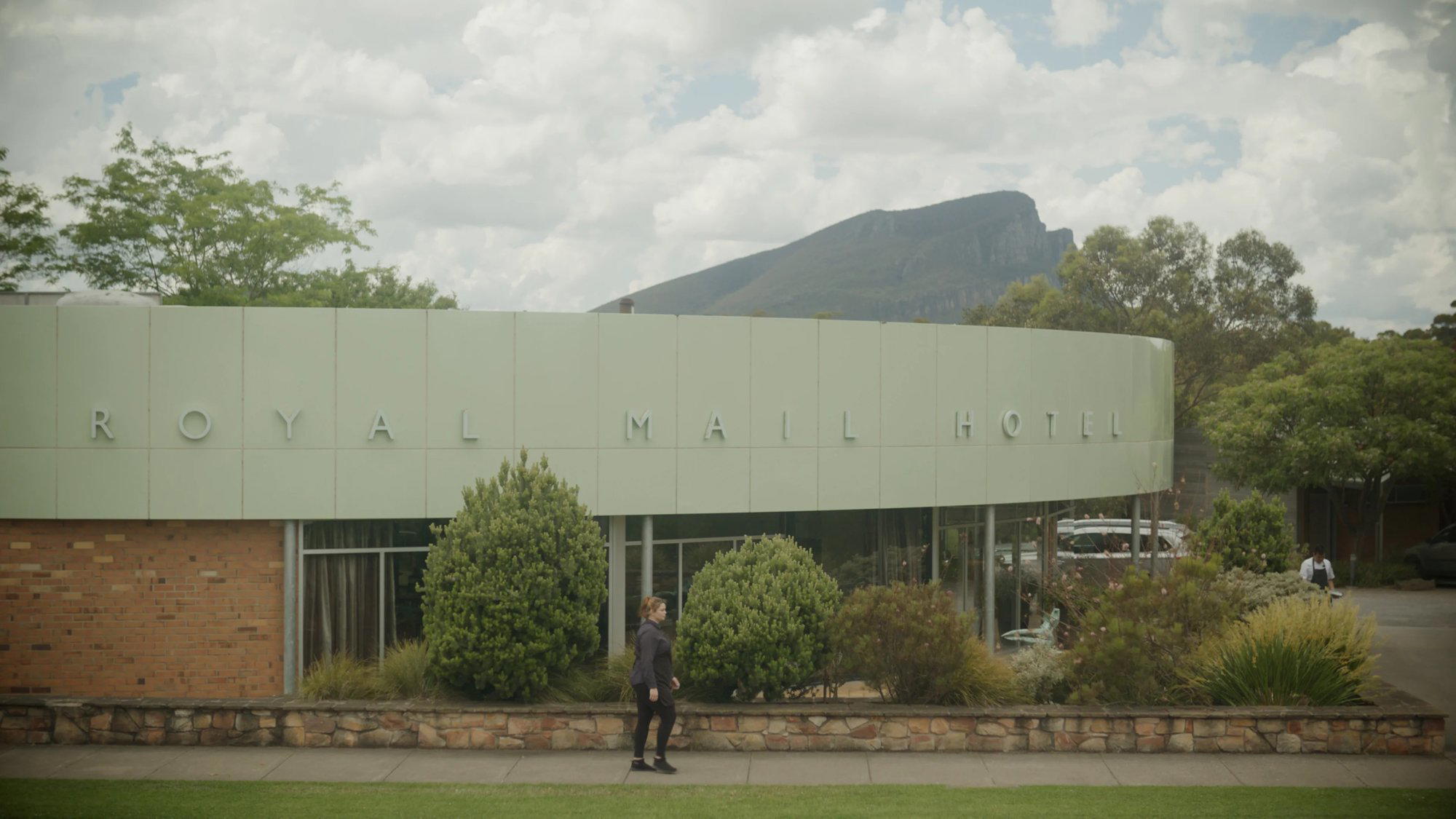
Where the Grampians Meet the Table
The road into Dunkeld from the Western Highway drops you into a town of roughly 400 people, with Mount Sturgeon and Mount Abrupt rising sharply to the north. The Royal Mail Hotel sits on Parker Street, a two-storey bluestone and weatherboard structure that reads less like a hotel and more like the kind of building that has simply always been there. That visual weight is not accidental. The property's physical presence, grounded in materials native to the region's pastoral history, anchors the entire experience before you step inside. In a category of Australian regional hospitality where design often signals arrival through imported aesthetics, Dunkeld's approach is the opposite: everything here points outward, toward the ranges and the kitchen gardens that run between them.
This matters architecturally because the Grampians region has historically attracted visitors for its geology and wildlife, not its hospitality infrastructure. The Royal Mail Hotel occupies a distinct position in that context: a property that functions simultaneously as a pub, a fine-dining restaurant, and a country retreat, each component occupying the same heritage fabric. The tension between those uses, and how the building holds them together, is what gives the place its character.
Design That Works With the Terrain
Regional Australian properties at the upper end of the market have generally moved in one of two directions over the past two decades. The first is the contemporary pavilion model, where low-slung glass structures are positioned to frame views without competing with them. The second, rarer approach uses existing built fabric as the design anchor, layering contemporary hospitality programming into structures that predate the tourism economy entirely. The Royal Mail Hotel belongs firmly to the second category. The bluestone fabric of the original 1850s building, a material common across western Victoria's goldfields-era architecture, sets the thermal and visual register for the whole property.
That commitment to the existing structure shapes the guest experience in ways that purpose-built retreats cannot easily replicate. Corridors are narrower, ceilings are lower in the historic section, and the transitions between old and newer additions are legible rather than concealed. For guests who have spent time at design-led properties elsewhere in Australia, such as The Calile in Brisbane or Capella Sydney, the Royal Mail Hotel offers something those projects cannot: a building that has metabolised its own history rather than constructed a version of it. The result is a physical environment that feels contingent and specific rather than resolved and repeatable.
The kitchen garden, one of the more photographed elements of the property, extends well beyond the decorative. It feeds directly into the restaurant's production calendar and represents a significant land commitment for a property operating at this scale in a town of this size. In the broader pattern of Australian regional dining, where farm-to-table has often meant a few raised beds and a herb wall, the scale of Dunkeld's kitchen garden places it in a different tier, closer to the kind of horticultural infrastructure you find at properties like Southern Ocean Lodge or Cape Lodge in Wilyabrup, where the landscape is both setting and supply chain.
The Restaurant and the Cellar
The dining program at Royal Mail Hotel operates at a register that would be noteworthy in Melbourne and is genuinely singular in regional Victoria. The restaurant draws from the kitchen garden and from the broader Grampians agricultural zone, a region that produces lamb in particular of notable quality, raised against a backdrop of native grassland that gives the meat a flavour profile distinct from coastal or irrigated-country equivalents.
Wine cellar has historically been the property's most-discussed asset among serious visitors. Western Victoria's wine geography is less consolidated than the Yarra Valley or the Mornington Peninsula, but the region's cool-climate credentials, especially for Grampians Shiraz and Great Western sparkling, are well established. A cellar program built around deep vertical access to regional producers represents a curatorial position rather than simply a purchasing strategy. For wine-focused travellers accustomed to properties like Lake House in Daylesford, which operates in a similar regional-destination register, the Royal Mail Hotel's wine depth functions as a primary draw rather than a supporting amenity.
Booking the restaurant, particularly for weekend dinners, requires planning well in advance, especially during the Grampians' spring wildflower season from September through November, when visitor numbers across the region increase substantially. The property's remoteness, approximately three hours from Melbourne and roughly four from Adelaide, means that most guests who book the restaurant are also staying overnight, which concentrates the dining experience and gives it a different social rhythm than a city restaurant drawing from a local population.
Accommodation and the Question of Room Choice
The accommodation offer at Royal Mail Hotel spans the original hotel rooms within the historic building and a set of newer cottage-style rooms positioned further into the garden. The choice between them maps roughly onto two different priorities. Guests drawn by the design and heritage character of the property will find the original building's rooms more embedded in what makes the place architecturally distinctive, even if they trade some spatial comfort for that proximity to the bluestone fabric. Guests prioritising space and a degree of separation from the main building's activity will find the garden cottages better suited, particularly for multi-night stays.
In the broader category of Australian boutique retreats with serious dining programs, the Royal Mail Hotel occupies a niche that properties in more accessible locations have found difficult to hold. Bells at Killcare on the New South Wales coast and Jonah's at Palm Beach operate in the same general category but draw from Sydney's weekend-escape market. Dunkeld's more demanding geography means its guest profile skews toward committed visitors rather than opportunistic ones, which tends to produce a quieter, more focused atmosphere than weekend-escape properties closer to major cities.
Planning Your Visit
Dunkeld is reached by car from Melbourne via the Western Highway to Ararat, then south on the Glenelg Highway. The drive takes approximately three hours depending on traffic out of the city. There is no practical public transport option for most visitors. Spring and autumn are the preferred seasons: spring for wildflowers across the Grampians and the kitchen garden at its most productive; autumn for the wine vintage context and cooler temperatures suited to the restaurant's heavier regional cooking register. Summer can bring extreme heat to western Victoria, and mid-winter, while atmospheric, limits some of the outdoor access that the property's setting rewards. For international visitors building a broader Victoria itinerary, pairing Dunkeld with a Daylesford stop or a Great Ocean Road route gives the journey more geographic logic.
For travellers comparing regional Australian retreats before committing, the EP Club's full Dunkeld restaurants guide provides additional context on the local dining scene. Those considering similar destination-hotel formats elsewhere in Australia might also look at Wildman Wilderness Lodge in Marrakai or, for a comparable commitment to place and food, The Tasman in Hobart, which operates in a different architectural register but with the same priority on rooted, regionally specific hospitality.
Comparable Spots, Quickly
| Venue | Price | Awards |
|---|---|---|
| Royal Mail Hotel, DunkeldThis venue (the venue you are viewing) | $100–200 | Not listed |
| Capella Sydney | Not listed | 2 Michelin Keys · World's 50 Best #16 |
| Four Seasons Hotel Sydney | $500–750 | 1 Michelin Key · La Liste Top Hotels |
| Grand Hyatt Melbourne | $300–500 | Forbes Recommended |
| InterContinental Sydney | Not listed | Michelin Selected · Virtuoso Luxury Hotel Partner |
| Park Hyatt Melbourne | Not listed | Michelin Selected · La Liste Top Hotels |
Continue exploring
More in Dunkeld
Restaurants in Dunkeld
All restaurants in Dunkeld →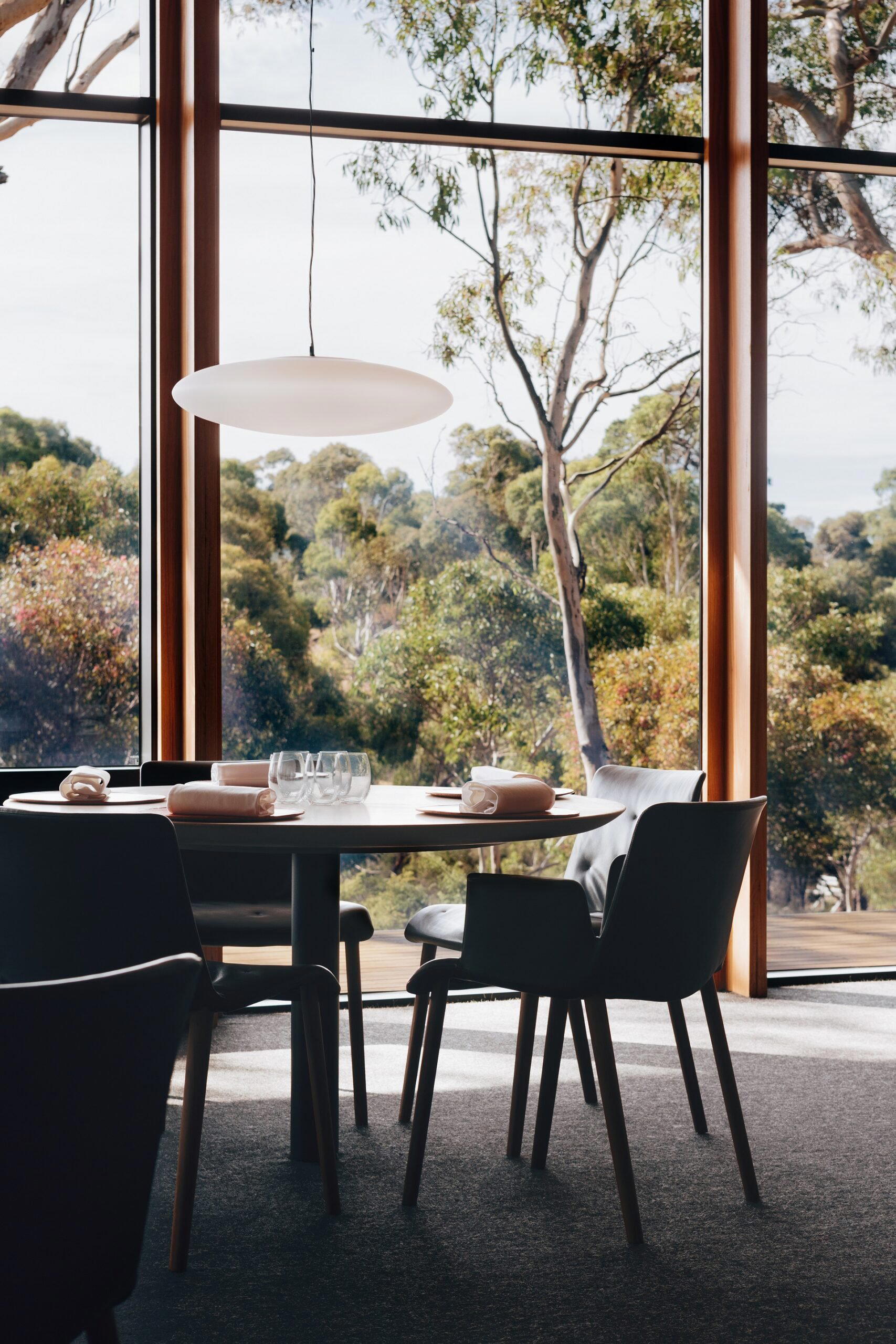
Details
- Scenic
- Rustic
- Elegant
- Romantic
- Romantic Getaway
- Weekend Escape
- Family Vacation
- Destination Wedding
- Group Retreat
- Historic Building
- Garden
- Panoramic View
- Terrace
- Wi Fi
- Pool
- Room Service
- Concierge
- Garden
- Meeting Rooms
- Restaurant
- Bar
- Mountain
- Garden
- Wheelchair Accessible
Contemporary luxury blended with historic 1855 bluestone architecture; warm earthy tones, natural light through floor-to-ceiling windows, and mountain views create a sophisticated yet relaxed regional retreat.