1 Michelin Star · La Liste Top Restaurants
Our verdict
A Michelin-starred Cantonese address in Chaoyang, Zijin Mansion is dressed in hand-embroidered orange fabric rather than the expected lacquer-and-gilt formula. The Hakkanese chef works within Cantonese tradition while folding in regional touches, most notably a braised pork belly rib dish built around rose myrtle fruit wine from his home county. At ¥¥¥ pricing, it sits at a more approachable tier than Beijing's top Cantonese competitors.

Pearl is the En Primeur Club membership app, where members save venues, book tables and use the concierge.
The menu
What to order
- Zijin Metropolitan
- Roasted pigeon with crispy skin
- Double-boiled chicken and fish maw soup with conch
- Pan-fried Boston lobster with boletus mushrooms
Orange Walls, Cantonese Fundamentals
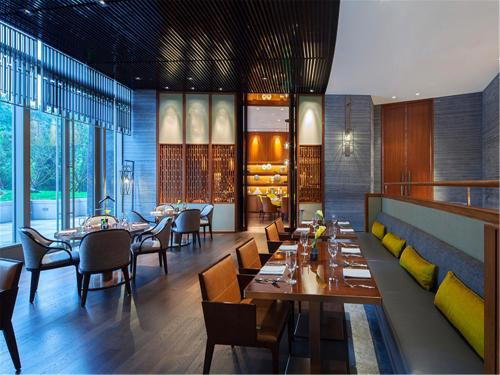
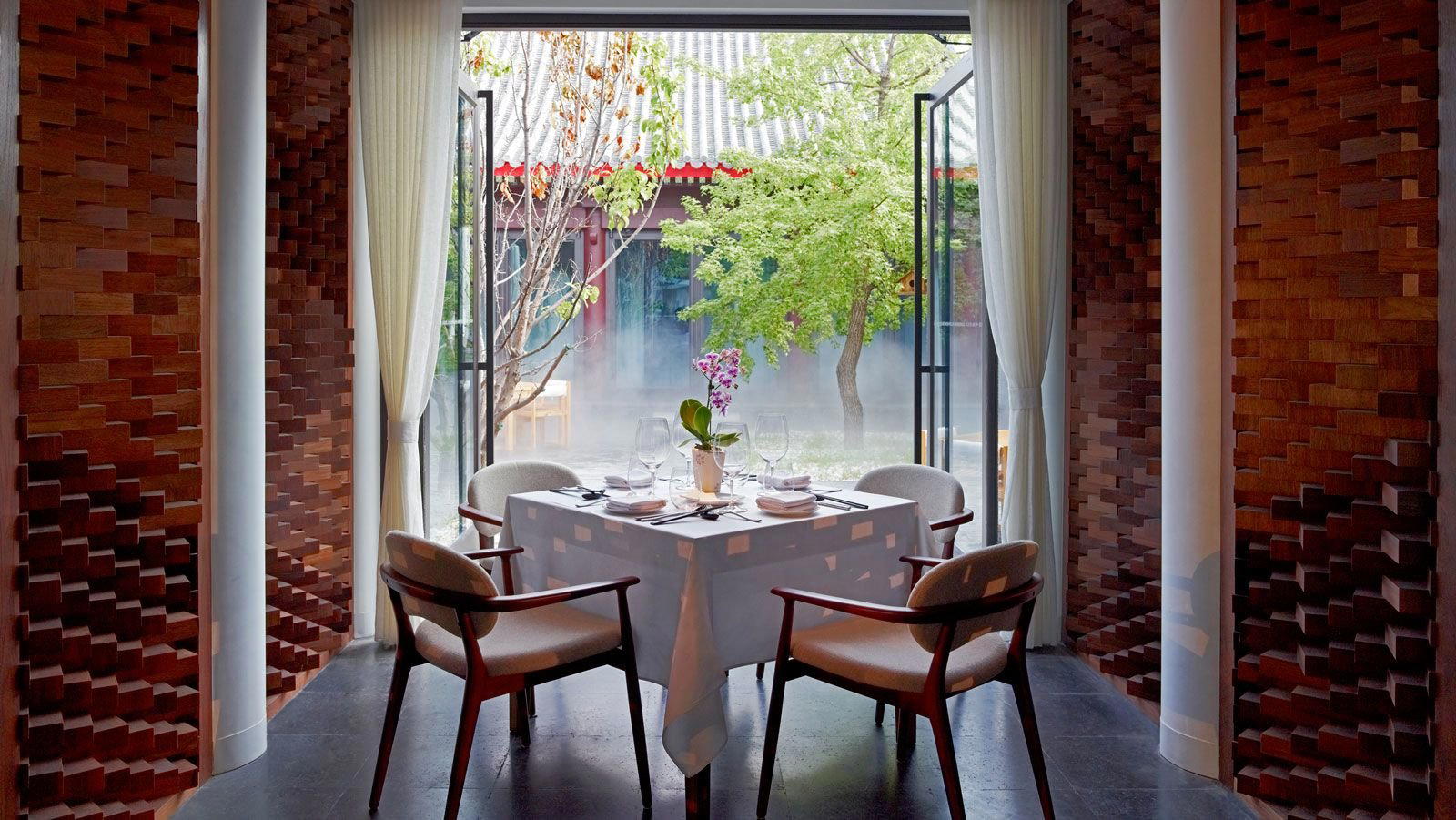
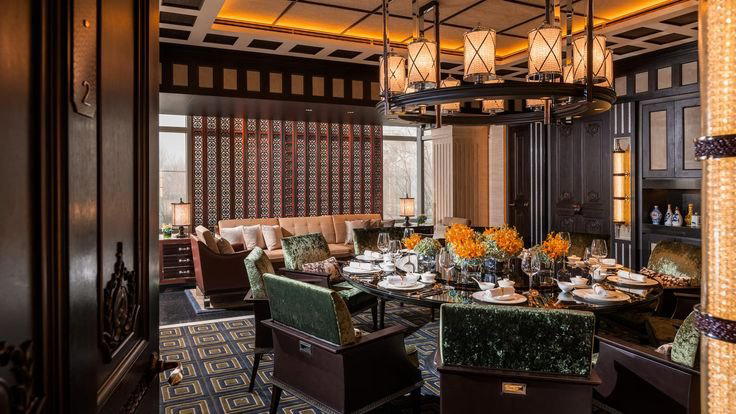
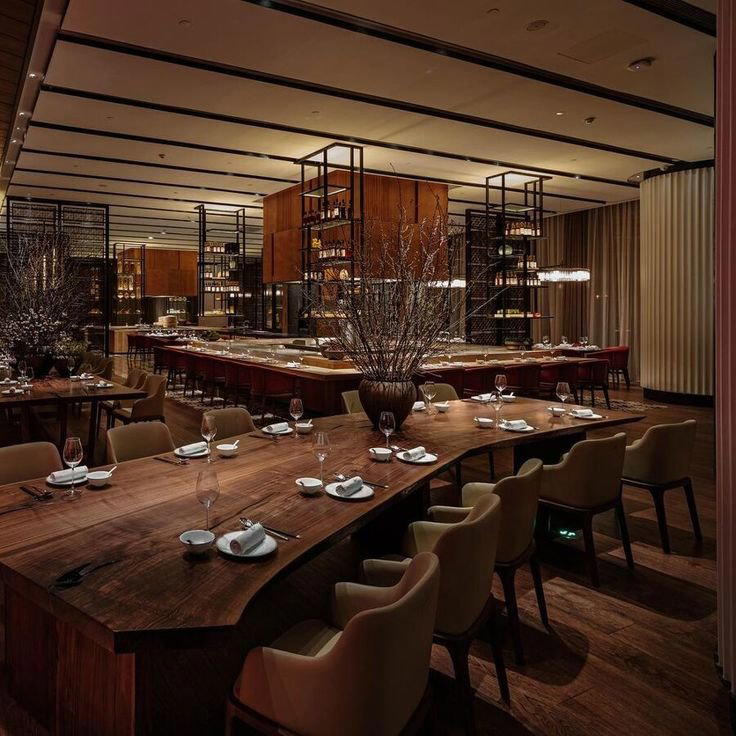
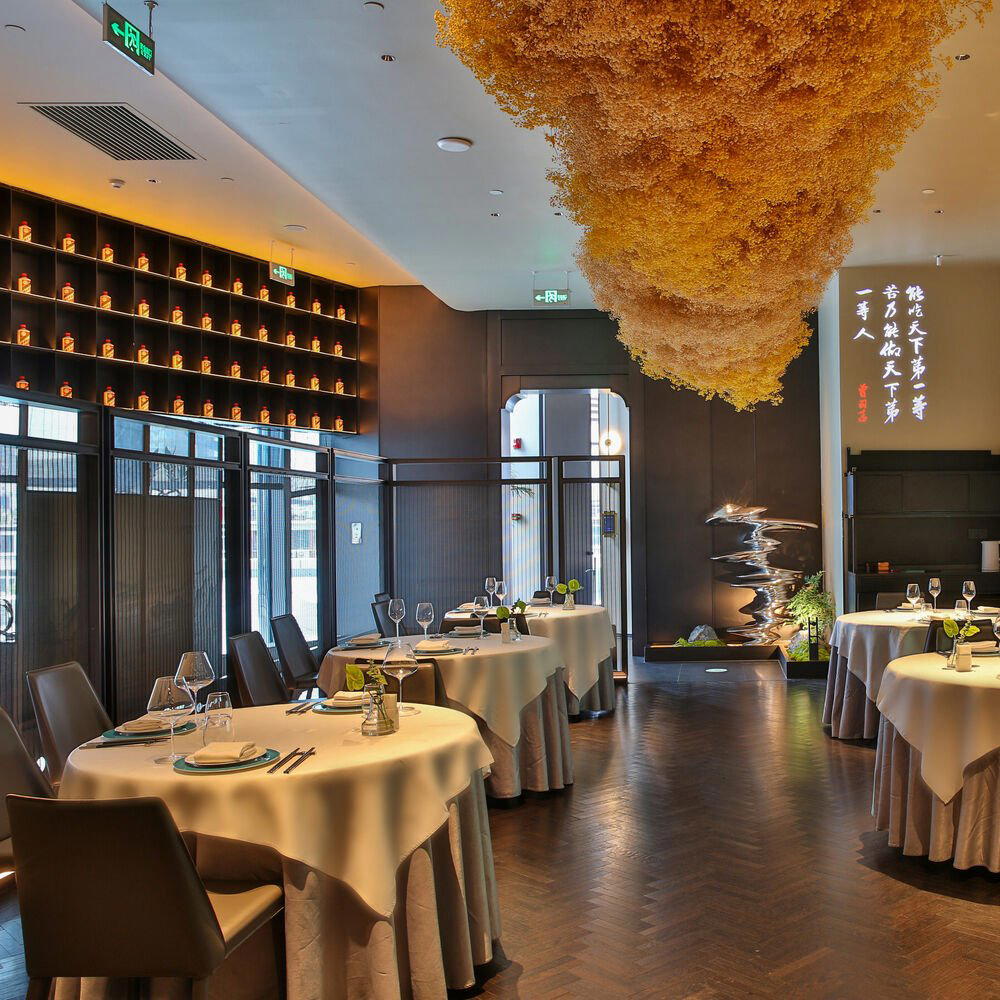
Walk into most Michelin-starred Cantonese restaurants in Beijing and you encounter a predictable visual register: dark wood panelling, brushed gold hardware, ink-wash paintings. Zijin Mansion departs from that formula at the door. The interior is clad in hand-embroidered orange fabric running a bird motif across the walls, warm and close rather than grand and ceremonial. The name itself translates as 'purple and gold', but the room reads as something more intimate, more like a private dining house than a formal banquet hall. That physical register sets the expectation accurately: this is Cantonese cooking with focused intent rather than an exercise in scale.
The restaurant holds a Michelin one-star rating as of 2024, placing it within Beijing's small but growing cohort of recognised Cantonese addresses. For context, Cantonese fine dining in the capital occupies a different position than in Guangzhou or Hong Kong, it is, by definition, a transplanted cuisine, competing for credibility against its home-city exemplars. That competition has pushed Beijing's better Cantonese kitchens toward articulation: not just cooking the canon but explaining through the menu why their particular approach merits attention. Zijin Mansion's answer involves a Hakkanese chef who reinterprets the Cantonese framework while introducing selective regional inflections. The result is a tighter, more personal menu than the sweeping Cantonese compendiums offered at some of the city's larger hotel-based competitors.
How the Menu Reads Against Its Peers
Beijing's Michelin-recognised Cantonese tier includes Lei Garden (Jinbao Tower) and several other operators whose kitchens are trained firmly in the Cantonese orthodoxy of Guangdong and Hong Kong. For reference points from the broader Chinese fine-dining tradition, Forum in Hong Kong and Le Palais in Taipei represent how Cantonese cooking performs at the highest tier across the region. Zijin Mansion is not attempting to compete at that scale. Its ¥¥¥ price bracket, sitting below the ¥¥¥¥ positioning of several Beijing competitors including Chao Shang Chao and Jingji, signals a deliberate choice to operate within reach of a broader dining audience while maintaining the standard that Michelin recognition demands.
That positioning matters when reading the menu. Cantonese cooking at the ¥¥¥¥ tier in Beijing tends toward elaborate banquet-format service: a procession of dishes with large tables in mind, built for corporate entertaining and celebratory gatherings. Zijin Mansion's cosy room and more moderate pricing suggest a different use case, smaller groups, personal dining, and the kind of meal where attention is on the food rather than the occasion around it. For those tracking the broader picture of fine Chinese dining across the mainland, Xin Rong Ji in Chengdu and Ru Yuan in Hangzhou illustrate how regional Chinese cuisines are staking similar claims to refinement outside their home territories. Closer to Cantonese tradition, Imperial Treasure Fine Chinese Cuisine in Guangzhou and Dai Yuet Heen in Nanjing show how transplanted Cantonese kitchens function in southern mainland cities.
The Hakkanese Dimension
Cantonese cuisine encompasses several sub-regional traditions, and Hakka cooking, historically the food of a migratory Han Chinese group spread across Guangdong, Fujian, and beyond, sits adjacent to but distinct from the Cantonese mainstream. Where classical Cantonese technique prizes freshness, delicacy, and restraint in seasoning, Hakka cooking has historically favoured preserved ingredients, longer braising times, and a closer relationship with fermented and pickled components. The kitchen at Zijin Mansion uses this secondary tradition as a point of contrast and enrichment rather than as a replacement for the Cantonese base.
The braised pork belly ribs with preserved mustard greens are the clearest demonstration of this approach. Preserved mustard greens (mui choy in Cantonese, a classic Hakka ingredient) appear in Cantonese cooking but rarely at fine-dining tables where the preference runs toward cleaner flavours. Here, the technique is further personalised by the use of rose myrtle fruit wine from the chef's home county, a specific local product that anchors the dish in a geography rather than a generic culinary tradition. This is a verifiable point of specificity that gives the dish a provenance story audible in the flavour. At Chef Tam's Seasons in Macau, a comparable philosophy of reinterpreting Cantonese tradition through a personal regional lens has earned sustained critical recognition; Zijin Mansion is operating in a similar register, at a different scale and market.
The double-boiled chicken and fish maw soup with conch points toward the classical Cantonese end of the spectrum. Double-boiling is a time-intensive technique that produces clean, deeply concentrated broths without the cloudiness associated with direct heat. Fish maw, dried swim bladder, is a prestige ingredient in Cantonese cooking valued for its collagen content and ability to absorb the flavours of the stock around it. The combination with conch adds a mineral quality that extends the umami depth of the soup. This is technically demanding Cantonese cooking that has nothing Hakkanese about it; its placement on the same menu as the preserved-greens pork is the point.
Lunch Versus Dinner at Zijin Mansion
Cantonese dining in any city operates across two meaningfully different formats depending on time of day. Lunch at serious Cantonese restaurants has traditionally centred on dim sum, a repertoire of small steamed, fried, and baked items that function more as a social ritual than a formal meal. Dinner moves toward multi-course or à la carte ordering that showcases the kitchen's range with proteins, soups, and whole-ingredient preparations.
In Beijing's Cantonese dining scene, the evening service is where Michelin-starred kitchens make their case most clearly. The technical dishes, particularly slow-cooked soups and braised preparations requiring long lead times, are almost exclusively dinner items. If the goal is to experience the Hakkanese-inflected dishes described in the Michelin citation, an evening reservation is the appropriate frame. Dinner also aligns better with the room's aesthetic: the embroidered walls and bird motifs read warmer under evening lighting than under the flat brightness typical of lunch service.
For those building a wider Beijing itinerary around fine Chinese dining, Fu Chun Ju, The House of Dynasties, and The Beijing Kitchen (Jianguo Road) represent different stylistic positions in the city's premium dining map. Café Zi occupies a different price tier and mood. The full picture is available in our full Beijing restaurants guide. For broader city planning, see also our full Beijing hotels guide, our full Beijing bars guide, our full Beijing wineries guide, and our full Beijing experiences guide. For those tracking how Cantonese fine dining travels across Chinese cities, 102 House in Shanghai offers another data point in the Shanghai market.
Know Before You Go
Cuisine: Cantonese with Hakkanese influences
Price range: ¥¥¥
Awards: Michelin one star (2024)
Location: Chaoyang district, Beijing
Booking: Advance reservation advised given the room's limited size; specific booking channel not confirmed
Hours: Not confirmed, verify directly before visiting
Phone / website: Not listed, search the venue name in Chaoyang for current contact details
Frequently asked questions
Is Zijin Mansion Michelin-listed?
Zijin Mansion has received recognition including: Though its name means "purple and gold", this cosy restaurant is clad in hand-embroidered orange fabric with a bird theme. The Hakkanese chef reinterprets traditional Cantonese fare with a refined touch and occasional Hakkanese twists. The ….
How would you describe the cuisine at Zijin Mansion?
What's the signature dish at Zijin Mansion?
The braised pork belly ribs with preserved mustard greens is the dish most directly tied to the kitchen's identity. It's made with rose myrtle fruit wine sourced from the Hakkanese chef's home county, a detail that separates it from the standard Beijing Cantonese version of the same preparation. The double-boiled chicken and fish maw soup with conch is equally noted for its layered umami depth. Both dishes appear in the Michelin committee's 2024 one-star recognition of the restaurant.
What's the pricing like at Zijin Mansion?
Pricing at Zijin Mansion is listed as ¥¥¥.
What's the address for Zijin Mansion?
Zijin Mansion is located at China, Bei Jing Shi, Chaoyang 邮政编码: 100026, Beijing.
Awards and Standing
| Venue | Cuisine | Price | Awards | Notes |
|---|---|---|---|---|
| Zijin MansionThis venue (the venue you are viewing) | Modern Cantonese with Beijing Specialties | $150–200 | 1 Michelin Star · La Liste Top Restaurants | Not listed |
| Jing | Modern French with Asian Influences | $300–500 | 1 Michelin Star · Black Pearl 1 Diamond | French Contemporary |
| Xin Rong Ji (Xinyuan South Road) | Taizhou Chinese Fine Dining | $300–500 | 3 Michelin Stars · World's 50 Best #84 | Taizhou |
| Chao Shang Chao (Chaoyang) | Modern Teochew (Chaoshan) Fine Dining | $200–300 | Michelin Plate · La Liste Top Restaurants | Chao Zhou |
| Lamdre | Modern Plant-Based Chinese Vegetarian | Not listed | 2 Michelin Stars · World's 50 Best #17 | Vegetarian |
| Jingji | Imperial Beijing Royal Cuisine | $200–300 | 2 Michelin Stars · La Liste Top Restaurants | Beijing Cuisine |
Recognition history
Dated appearances from independent guides and award organizations, with the underlying list record or original source where available.
Michelin 1 Star
Michelin
La Liste Top Restaurants
La Liste
Full recognition history (3 entries)
Michelin 1 Star
Michelin