
Uokyu Eat-in Ajimise Honten brings Ningyocho’s workday lunch culture into a compact second-floor seafood cafeteria with counter and table seating. Its selection for Tabelog 100 - Diner - 2026 places it in Tokyo’s serious everyday-dining tier, where format, turnover, and fish-focused cooking matter more than ceremony.
Pearl is the En Primeur Club membership app — saves, bookings, and concierge access live there. Same editors, same standards.
- Address
- 東京都中央区日本橋人形町1-1-20 京粕漬 魚久 本店 2F
- Phone
- +81336663848
- Website
- uokyu.co.jp
 Saves & bookings on Pearl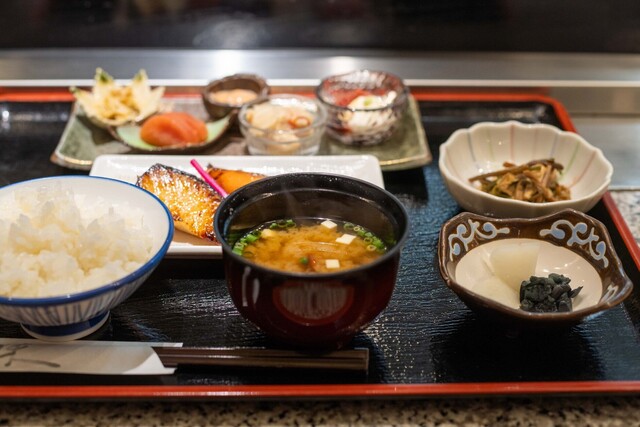
The approach is pure Ningyocho: commercial Tokyo at street level, then a climb to a second-floor room built for lunch, not lingering theatre. The format matters. Tokyo splits sharply between destination counters designed around ceremony and workday rooms where the meal’s architecture is practical: a seat, a tray, fish at the centre, and little tolerance for wasted motion. Uokyu Eat-in Ajimise Honten belongs to the latter tradition, which is why it reads differently from the city’s more scripted seafood experiences.
Nihonbashi and Ningyocho have long rewarded restaurants that understand office rhythms, old shopping streets, and the Japanese appetite for precise, repeatable lunch sets. Here, a dining room needs no theatrical lighting or long chef introduction to earn attention. It needs a clear point of view, reliable execution, and a room that can absorb solo diners, pairs, and small groups without turning lunch into an event. The Tabelog 100 - Diner - 2026 selection gives that everyday category public weight, especially because diners in this genre compete on consistency rather than spectacle.
A second-floor fish lunch room, not a stage set
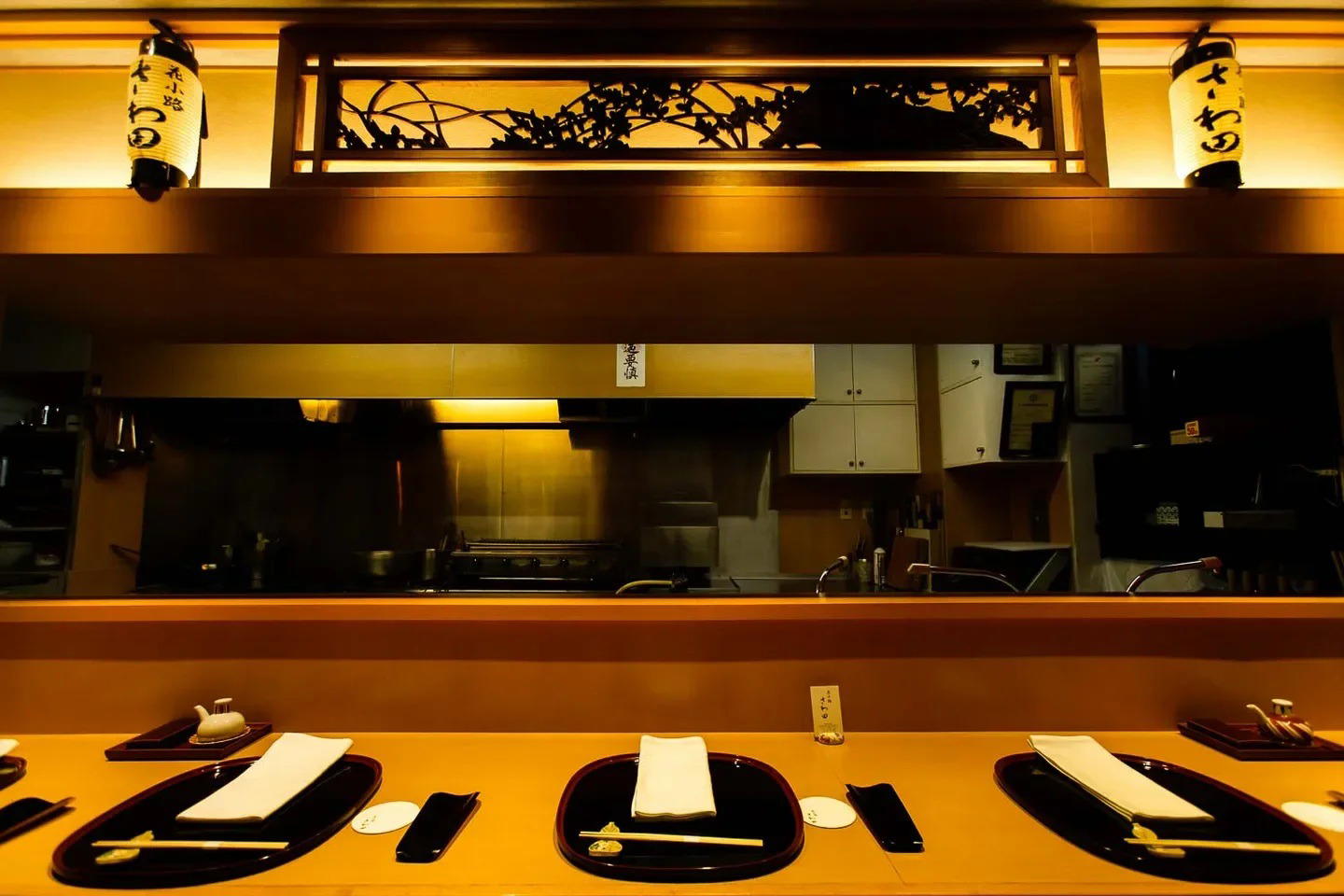
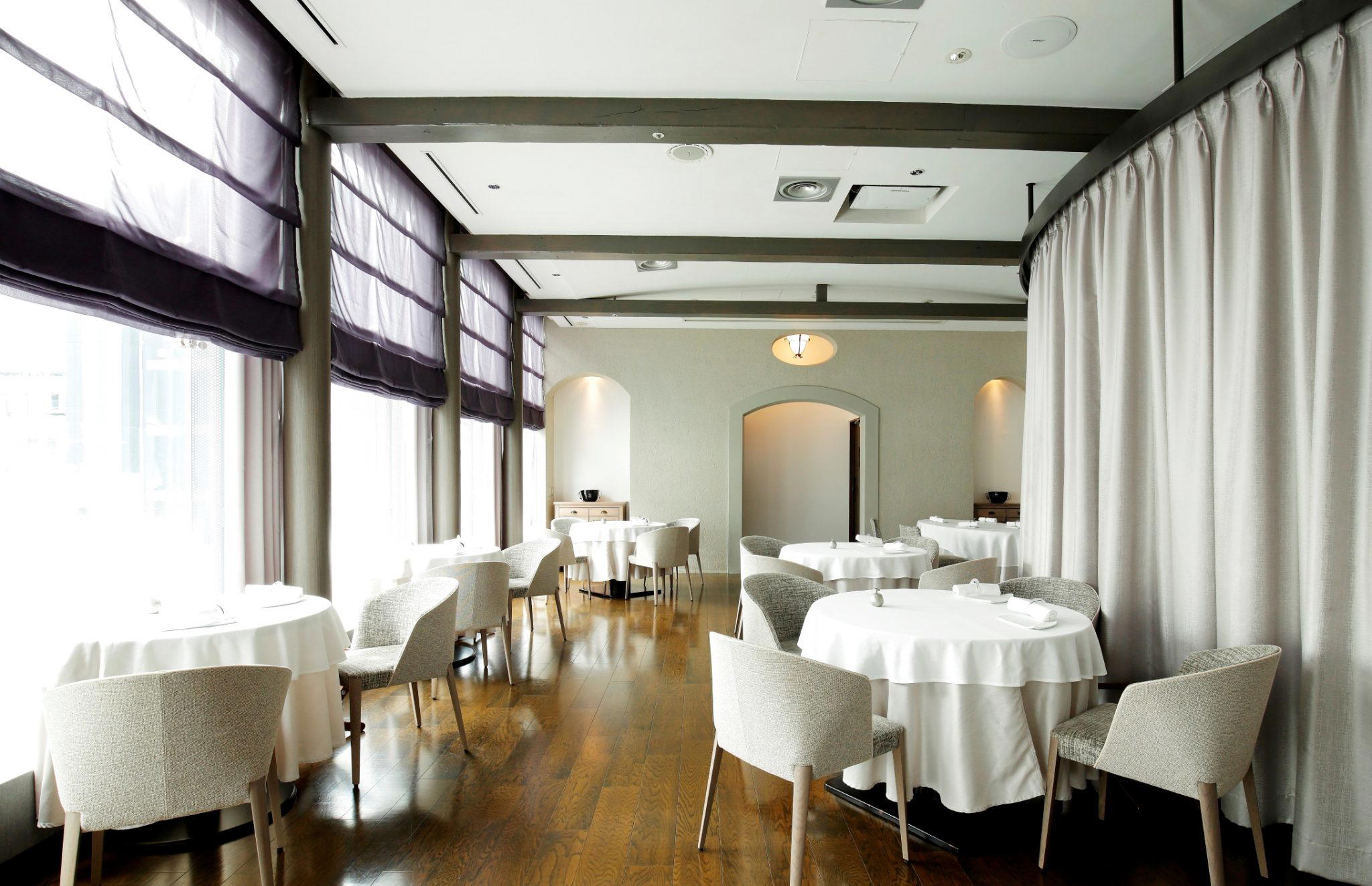
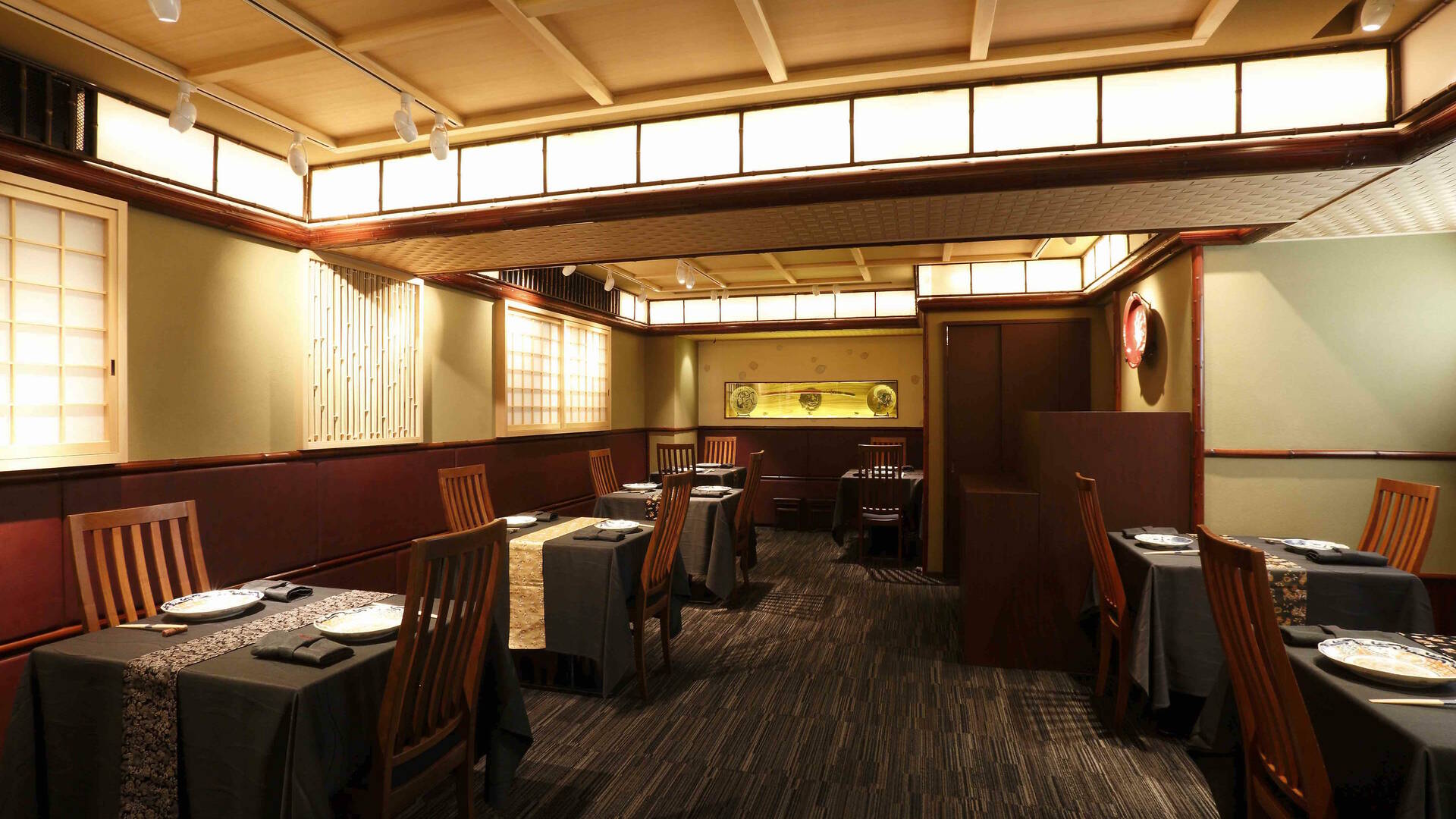
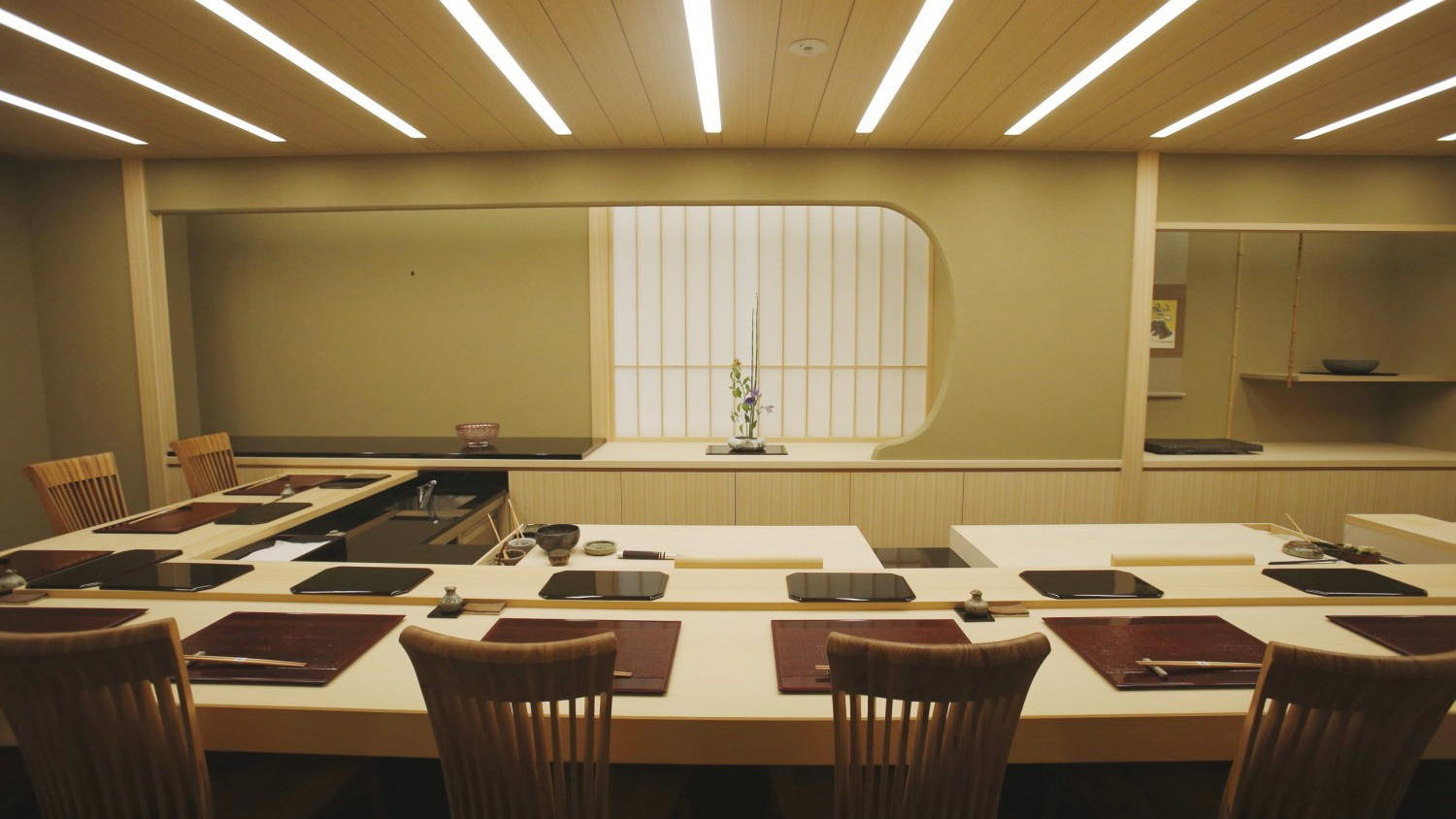
The room’s composition explains the experience before the first order: 37 seats split between counter and tables. That mix is central to Tokyo cafeteria and teishoku culture. Counter seats handle the solo diner, office worker, and quick meal; tables give the same food a looser social setting without making the place a long-form restaurant. The physical container keeps the emphasis on food and flow, not performance.
That makes the venue useful for understanding a Tokyo dining category visitors often under-cover. Premium travellers chase omakase counters, hotel dining rooms, and tasting menus, but the city’s daily eating intelligence is often clearer where fish, rice, soup, pickles, and tea do the heavy lifting. The category is not casual because it is careless; it is casual because the form has been refined enough to look simple.
Seafood is the organising principle, with the restaurant classified as cafeteria and seafood and noted for fish-focused cooking. That separates it from curry houses, kissaten-style cafés, and yakitori counters in the same broad everyday-dining universe. For a wider Tokyo map, compare its functional specificity with the charcoal-and-fish signal at . 鮪と炭火焼き うお炭 秋葉原店, the yakitori grammar at 124. KAGURAZAKA (Yakitori), or the curry-house focus at 3 Chome no Curry Ya San. Each belongs to Tokyo’s disciplined single-lane dining culture, but each uses a different lane.
Why Ningyocho suits this kind of meal
Ningyocho is not skyline-dining Tokyo. Its better food moments tend to be compact, street-level or upstairs, shaped by department-store proximity, office traffic, old merchant culture, and Nihonbashi’s residual memory as a commercial centre. In that context, a fish cafeteria on an upper floor makes sense. It is not competing with Ginza counters or Roppongi dining rooms. It is closer to the city’s lunch infrastructure, where recognition comes from repeat use and a narrow promise fulfilled with discipline.
The award context matters because Tabelog’s Diner category captures excellence different from luxury guides. Selection in 2026, alongside earlier Tabelog 100 recognition in 2024 and 2021, signals durability within a crowded field of Japanese everyday restaurants. The point is not trophy-chasing; it is that a modest-format room can sit inside serious evaluation culture when the cooking has repeat appeal.
Tokyo’s dining scale is easier to read across categories. A small room such as 12/10 Shinjuku ten plays in a different urban register from a graphic café such as 2D Cafe, while higher-budget rooms such as Kongst shift the question toward longer meals and more formal spending. Uokyu Eat-in Ajimise Honten sits closer to Kappou Sanyu’s everyday price logic than to that higher-spend category, though here the target is fish cafeteria rather than kappo. In Tokyo, price tier often predicts not just cost but posture: how long one sits, how much conversation the room invites, and whether the meal is a pause or a planned evening.
For travellers building a wider itinerary, this address pairs better with neighbourhood walking than a dressed-up night out. It belongs with old Tokyo food streets, department-store basements, standing bars, and lunchtime counters rather than hotel dining circuits. Use Our full Tokyo restaurants guide for the broader dining spread, then cross-check the city’s other layers through Our full Tokyo hotels guide, Our full Tokyo bars guide, Our full Tokyo wineries guide, and Our full Tokyo experiences guide.
How to place it in a Japan-wide eating itinerary
The appeal is strongest for travellers who care about form as much as fame. A 37-seat lunch room tells a sharper Tokyo story than another interchangeable luxury counter, showing how the city turns limited space into a reliable eating machine. Counter seating gives the room its solo-diner spine; table seating keeps it useful for friends and families. Non-smoking operation and card, transit IC, and QR payment acceptance also put it in contemporary Tokyo’s mainstream rather than an old cash-only nostalgia category.
Outside Tokyo, similar lessons appear differently. Regional dining may lean into beef in Kamakura at -Grilled beef Sukiyaki- KAMAKURA TANUKIAN 鎌倉 たぬき庵 in Kamakura, café culture at.cafe in Osaka, or a tighter local format at.know in Kumamoto. The comparison is not ranking; it is seeing how Japanese cities express everyday dining through space: upstairs rooms, counter ratios, short menus, and formats that make repeat visits plausible.
For international context, the Japanese lunch-set instinct travels well. Jōdo Saké Bar in Los Angeles and Onigiri Time in Pasadena show how Japanese drinking and rice-based formats adapt abroad, while (Shoku) Vietnam in Kawasaki, [Curry Senmon Ten] Maruyama Kyoju. in Sapporo, and [ki:] in Kyoto underline focused small-format dining across Japan. Against that map, Uokyu Eat-in Ajimise Honten is valuable precisely because it is narrow: fish, lunch, a compact room, and a neighbourhood that rewards efficiency with taste.
Pricing, Compared
Comparable venues in the metro at similar price points.
| Venue | Cuisine | Price |
|---|---|---|
| Uokyu Eat-in Ajimise HontenThis venue — the venue you are viewing | Chūō, Traditional Japanese Kasuzuke | $$ |
| Re:s Cafe Bar & Sweets | Nishi Waseda, Japanese Dessert Cafe | $$ |
| Hongoku Tei | Chūō, Japanese curry bar | $$ |
| Kuriya Kurogi | Taitō, Japanese sweets & kakigori cafe | $$ |
| Tonkatsu Kenshin | Shinjuku, Tonkatsu | $$ |
| CENTRE THE BAKERY Aoyama ten | Shibuya, Japanese shokupan bakery | $$ |
Recognition history
Dated appearances from independent guides and award organizations, with the underlying list record or original source where available.
Tabelog 100 #95 · No. 95
Tabelog · Tabelog 100 - Diner - 2026


At a Glance
- Classic
- Quiet
- Cozy
- Casual Hangout
- Family
- Solo
- Standalone
- Historic Building
- Local Sourcing
- Street Scene
Traditional, no-frills, and focused on the food; the setting is described as a historic shop with an eat-in area rather than a destination for flashy design.